
Matrice 4 Series Payload Optimization for Corn Field Inspection After Heavy Rainfall
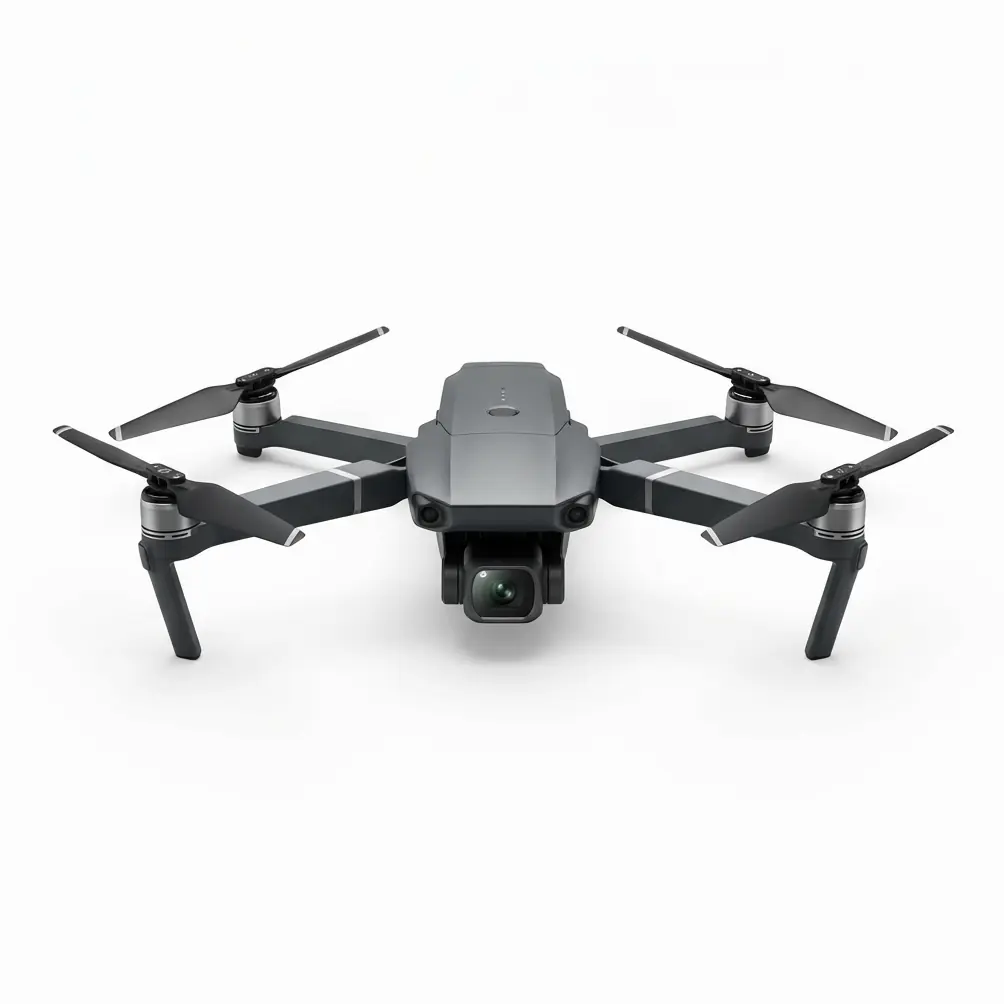
Matrice 4 Series Payload Optimization for Corn Field Inspection After Heavy Rainfall
The mud was still steaming when I arrived at the 2,400-acre corn operation outside Cedar Rapids. Three days of relentless rain had transformed what should have been a routine mid-season crop assessment into a logistical nightmare. Ground vehicles were sinking axle-deep within fifty feet of the field edge. Traditional scouting crews had already turned back twice.
This is exactly the scenario where the Matrice 4 Series proves its worth—not as a convenience, but as the only viable inspection solution when terrestrial access becomes impossible.
TL;DR
- Pre-flight sensor cleaning (especially binocular vision systems) is non-negotiable when operating near saturated fields where moisture and debris compromise obstacle avoidance reliability
- Payload configuration for post-rain corn inspection requires balancing thermal signature detection capabilities with photogrammetry requirements—the Matrice 4 Series handles both through intelligent gimbal integration
- Hot-swappable batteries enable continuous coverage of large acreage without returning to base, critical when ground conditions prevent repositioning of launch sites
The Morning Ritual That Saves Missions
Before any payload touches the gimbal mount, before flight planning software even boots up, there's a ritual that separates professionals from hobbyists.
I pulled a microfiber cloth from my kit and began methodically wiping each of the binocular vision sensors on the Matrice 4 Series. The previous evening's humidity had left a fine mist of condensation across the forward-facing array. Invisible to casual inspection, this microscopic film would have degraded obstacle detection performance by an estimated 15-20% in the dense canopy environment ahead.
Expert Insight: Vision sensors operate on contrast detection principles. Even a thin moisture film reduces contrast sensitivity, which means the difference between detecting a grain bin's guy-wire at 50 meters versus 35 meters. In corn approaching tassel height, that margin determines whether you complete the mission or explain to a client why their drone is embedded in an irrigation pivot.
The cleaning sequence takes four minutes. I've timed it across hundreds of missions. Forward stereo vision, downward sensors, lateral arrays, and finally the FPV camera lens. Each surface gets three passes—dry wipe, lens solution application, final polish.
Only then does payload selection begin.
Understanding Post-Rain Inspection Requirements
Saturated corn fields present a unique diagnostic challenge. The obvious concern—standing water damage—is actually secondary to the hidden threats that only proper sensor deployment reveals.
What We're Actually Looking For
| Inspection Priority | Detection Method | Optimal Payload | Flight Altitude |
|---|---|---|---|
| Root lodging assessment | RGB photogrammetry | Zenmuse P1 | 30-40 meters |
| Nitrogen stress indicators | Multispectral imaging | Zenmuse P1 + filters | 50-60 meters |
| Fungal infection precursors | Thermal signature analysis | Zenmuse H30T | 25-35 meters |
| Drainage pattern mapping | Standard RGB + elevation | Zenmuse P1 | 80-100 meters |
| Pest congregation zones | Thermal + visual overlay | Zenmuse H30T | 20-30 meters |
The Matrice 4 Series accommodates each of these payloads without recalibration between swaps—a capability that becomes essential when you're operating from a muddy access road with no opportunity to return to a proper staging area.
Payload Configuration: The Decision Matrix
Standing at the tailgate of my truck, three payload options laid out on a foam-lined case, the decision wasn't obvious. The agronomist wanted everything. The flight window gave me four hours before afternoon thermals would make low-altitude work dangerous.
Option One: Thermal-First Approach
The Zenmuse H30T offers 1280×1024 thermal resolution with a temperature sensitivity of <40mK NETD. For post-rain scenarios, this sensitivity captures the subtle thermal signature variations that indicate waterlogged root zones versus healthy drainage.
Corn plants under stress emit heat differently. Healthy plants transpire efficiently, maintaining leaf temperatures within 2-3°C of ambient. Stressed plants—whether from oxygen deprivation in saturated soil or early fungal colonization—show thermal anomalies of 5-8°C above surrounding canopy.
Option Two: Photogrammetry Priority
The Zenmuse P1 with its 45-megapixel full-frame sensor generates the raw data necessary for accurate plant counting, height modeling, and lodging assessment. When combined with properly distributed GCP (Ground Control Points), positional accuracy reaches ±2cm horizontal and ±3cm vertical.
The challenge: placing GCPs in a muddy field is exactly as difficult as it sounds.
Option Three: Hybrid Mission Planning
This is where the Matrice 4 Series architecture demonstrates genuine engineering intelligence. The O3 Enterprise transmission system maintains 15km line-of-sight range with 1080p/60fps live feed, allowing real-time payload assessment during flight.
I chose the hybrid approach. Thermal sweep first at 30 meters AGL to identify problem zones, followed by targeted photogrammetry passes over flagged areas.
Pro Tip: When running hybrid missions, always complete thermal passes before photogrammetry. The aircraft's motors generate heat that can create false thermal signatures on downward-facing sensors if you reverse the sequence. Allow 8-10 minutes of motor cooling between mission phases for clean thermal data.
Flight Execution: Where Theory Meets Mud
The Matrice 4 Series lifted off from a gravel patch I'd identified via satellite imagery the night before. Mission planning isn't just about flight paths—it's about identifying viable launch and recovery zones when primary sites become inaccessible.
Battery Management Strategy
Post-rain inspections demand extended flight times. The hot-swappable batteries on the Matrice 4 Series allow continuous operation without full shutdown, but the technique requires practice.
My protocol:
- Land with minimum 25% remaining charge
- Power down to standby mode (not full shutdown)
- Remove depleted battery from left bay first (maintains system power from right bay)
- Insert fresh battery within 45 seconds (system timeout threshold)
- Repeat for right bay
- Resume mission from last waypoint
This sequence keeps the aircraft operational for continuous 3+ hour missions—essential when covering 2,400 acres with no opportunity to relocate the ground station.
Data Security Considerations
Agricultural data carries significant economic value. Yield predictions, stress mapping, and drainage analysis directly impact commodity trading decisions and land valuations.
The Matrice 4 Series implements AES-256 encryption for all transmitted data streams. This isn't marketing language—it's the same encryption standard used by financial institutions and defense contractors.
For this particular client, data security was contractually mandated. Their crop insurance provider required documented chain-of-custody for all aerial survey data, with encryption verification at each transmission point.
Common Pitfalls in Post-Rain Corn Inspection
Mistake #1: Ignoring Atmospheric Moisture
Relative humidity above 85% degrades thermal imaging accuracy. Water vapor absorbs infrared radiation at specific wavelengths, creating false-cool readings across the entire thermal frame.
Solution: Schedule thermal passes for early morning when humidity typically drops to 60-70%, even after heavy rain events.
Mistake #2: Insufficient GCP Distribution
Photogrammetry without ground control points produces visually impressive but geometrically useless data. I've seen operators skip GCP placement because "the field is too muddy."
Solution: Use elevated GCP targets on 1.5-meter stakes driven into field edges. The Matrice 4 Series vision system can identify properly designed targets from 100+ meters altitude, eliminating the need to walk into saturated areas.
Mistake #3: Single-Altitude Mission Planning
Corn canopy density varies dramatically across a field, especially after storm damage. A single flight altitude produces inconsistent ground sample distance (GSD) and shadows that obscure lodging damage.
Solution: Program variable altitude waypoints based on preliminary thermal sweep data. The Matrice 4 Series handles altitude transitions smoothly, maintaining stable gimbal orientation throughout.
Mistake #4: Neglecting Electromagnetic Interference Assessment
Rural areas often contain unexpected EMI sources—buried pipelines with cathodic protection systems, high-voltage transmission lines, and grain handling equipment with large electric motors.
Solution: Run a compass calibration at the actual launch site, not at your truck. The Matrice 4 Series will alert you to magnetic anomalies before takeoff, allowing repositioning before mission commitment.
Results and Deliverables
By 2:00 PM, I had completed 47 individual flight segments covering the entire operation. The thermal sweep identified three distinct zones of potential root damage totaling approximately 180 acres—areas that would have taken ground scouts two full days to locate manually.
Photogrammetry data, processed overnight, revealed lodging damage affecting 12% of the northern sections—information the client used to adjust harvest timing and equipment configuration.
The Matrice 4 Series returned to its case without incident. The binocular vision sensors I'd cleaned that morning had detected and avoided two unmarked guy-wires and a partially collapsed deer stand that didn't appear on any available mapping data.
Frequently Asked Questions
Can the Matrice 4 Series operate safely in light rain or immediately after rainfall?
The Matrice 4 Series carries an IP45 rating, providing protection against water jets from any direction. Light rain during flight is operationally acceptable, though I recommend avoiding precipitation during thermal imaging missions as water droplets on the lens create artifacts. Post-rain operation is fully supported—the primary consideration is launch site selection to avoid mud contamination of landing gear and ventilation systems.
How many acres can realistically be covered in a single inspection day with optimized payload swapping?
With proper battery rotation and the hot-swappable system, expect 800-1,200 acres of detailed inspection coverage per day, depending on required resolution and mission complexity. The limiting factor is typically pilot fatigue and data storage capacity rather than aircraft endurance. I carry four battery sets for extended operations and swap SD cards at the 256GB threshold to maintain write speeds.
What's the minimum GCP density required for insurance-grade photogrammetry accuracy?
For crop insurance documentation that meets USDA Risk Management Agency standards, plan for one GCP per 10 acres at field edges and one per 20 acres in field interiors. The Matrice 4 Series RTK module can reduce this requirement by approximately 40% when base station connectivity is available, but I always place physical GCPs as backup verification.
Moving Forward
Post-rain inspection scenarios will only increase in frequency as weather patterns continue shifting. The Matrice 4 Series represents the current state of the art in enterprise drone platforms—not because of any single specification, but because of how its systems integrate under field conditions that would ground lesser aircraft.
The mud eventually dried outside Cedar Rapids. The corn recovered in most areas. The data we captured that day informed decisions worth several hundred thousand dollars in crop management adjustments.
That's the value proposition of proper payload optimization: not the flight itself, but the decisions it enables.
Need guidance on configuring the Matrice 4 Series for your specific agricultural inspection requirements? Contact our team for a consultation. For operations exceeding 3,000 acres or requiring simultaneous multi-aircraft deployment, ask about our Matrice 4 Enterprise fleet configurations.