
Mavic 4 Pro for High-Altitude Vineyards: A Practical Field
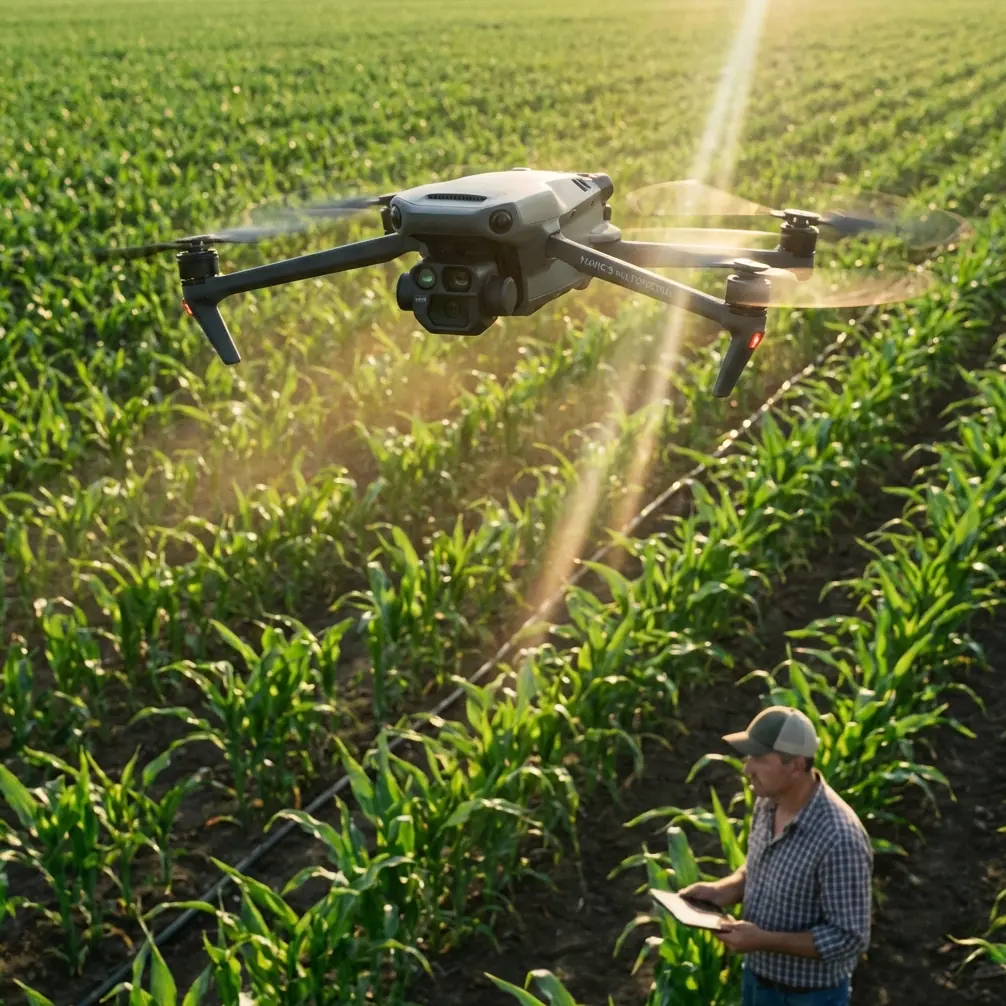
Mavic 4 Pro for High-Altitude Vineyards: A Practical Field Tutorial
META: Learn how to use Mavic 4 Pro in high-altitude vineyards with smarter altitude awareness, safer tracking, and better imaging workflow built around real sensor principles.
High-altitude vineyards are beautiful from the ground and demanding from the air. Steep rows, shifting wind, uneven terraces, and fast weather changes make drone work less forgiving than a flat-field mapping job. If you’re planning to fly a Mavic 4 Pro over vineyard blocks at elevation, the hardest part is rarely image quality alone. It’s altitude consistency, terrain-relative decision-making, and keeping tracking stable when the aircraft is constantly dealing with vertical change.
That’s where a more technical approach helps.
A useful insight comes from sensor-fusion research in a hexacopter design paper discussing height estimation under noisy conditions. One detail stands out: atmospheric pressure fluctuations can create a few meters per hour of drift in height. That sounds small until you’re flying along vine rows on a mountainside, trying to keep a repeatable camera angle or maintain clean obstacle margins near trellis lines, trees, nets, and slope breaks. Another key point from the same material is that vertical acceleration from an IMU is drift-prone when integrated over time, especially during dynamic movement, so relying on one source alone is a poor strategy for precise height behavior.
Those ideas matter directly to Mavic 4 Pro vineyard operations.
This tutorial breaks down how to fly the Mavic 4 Pro more intelligently in high-altitude vineyard conditions, using those sensor principles to shape your workflow. I’ll also touch on one third-party accessory that can make field execution easier.
Why altitude behavior matters more in vineyards than many pilots expect
In a vineyard on rolling or steep terrain, “height” is not just a telemetry number. It affects:
- obstacle avoidance reliability near rising ground
- subject tracking consistency when following vehicles or workers along rows
- repeatability for seasonal comparison flights
- framing for canopy health documentation
- safety margins around wires, posts, and shelter belts
Many pilots casually assume GPS altitude and onboard sensing will smooth everything out. In reality, vineyard terrain can expose every weakness in vertical estimation. The reference material points to three issues that are especially relevant:
- Barometric drift from unstable weather
- Noise and low update limitations in some altitude sources
- IMU integration drift during dynamic movement
That combination becomes visible when you’re flying across alternating ridgelines and dips. Your Mavic 4 Pro may still fly well, but the difference between “good enough” and “professionally repeatable” comes down to how you plan, monitor, and cross-check height in the field.
Step 1: Treat the weather as an altitude variable, not just a comfort variable
The source document highlights that unstable weather can shift atmospheric pressure enough to produce measurable height drift. For vineyard operators, this has an operational consequence: on a long morning session, the aircraft’s apparent altitude relationship to the vineyard may slowly diverge from what you expect, even if the drone itself is functioning normally.
In practical terms, that means:
- Do not assume an early flight profile will match a later one exactly.
- Recheck low-clearance routes before repeating them.
- Be more conservative near top wires, taller boundary trees, and slope edges.
This is especially relevant if your goal is to capture matching footage for growth-stage comparison, irrigation assessment, or marketing visuals across multiple passes. A small height error can change the apparent spacing of rows, alter canopy overlap in the frame, and reduce consistency in hyperlapse sequences.
For Mavic 4 Pro users shooting in D-Log, that consistency matters even more. D-Log gives you room in post, but it does not fix sloppy acquisition geometry. If your altitude varies pass to pass, the footage grades fine yet still feels mismatched.
Field habit that pays off
Before your main mission, do one short reference pass over a known row section and note your visual clearance relative to trellis tops and terrain. If weather is changing quickly, repeat that check later rather than trusting the initial setup.
Step 2: Don’t overtrust a single altitude source during dynamic flight
The reference material discusses a two-state Kalman filter approach for fusing measurements. You do not need to build your own filter to benefit from the lesson. The lesson is simpler: height is more reliable when multiple sources inform it, and less reliable when one sensor is forced to carry the load.
The paper specifically notes that integrated vertical acceleration from the IMU is vulnerable to drift. That becomes relevant when the Mavic 4 Pro is making frequent pitch changes while climbing along a slope, braking at row ends, or tracking a moving subject. During these dynamic transitions, the aircraft is constantly resolving motion, orientation, and acceleration. If a pilot assumes the displayed altitude equals real clearance in every instant, that’s asking too much from a fast-moving sensor stack in difficult terrain.
Operationally, this means you should fly high-altitude vineyard missions with a layered mindset:
- visual observation
- aircraft obstacle awareness
- terrain familiarity
- conservative route planning
- repeated checkpoint verification
The better your route knowledge, the less you force the aircraft to solve every problem in real time.
Step 3: Build routes around terrain transitions, not just row geometry
Many tutorial-style vineyard flights focus on row direction, sun angle, and reveal shots. Useful, but incomplete. In elevated vineyards, the real challenge is where terrain changes abruptly.
Mark these areas mentally before takeoff:
- terrace breaks
- retaining walls
- drainage cuts
- isolated tall trees
- utility lines at block edges
- service roads that drop below row level
Why? Because obstacle avoidance works best when the aircraft has time and geometry to respond. On a rising slope, your clearance can disappear faster than it appears on a screen. Mavic 4 Pro’s obstacle avoidance and subject tracking features are most effective when you give them margin.
If you’re using ActiveTrack to follow a vineyard utility vehicle or worker path, avoid starting the track at the steepest section of the property. Instead, acquire the subject on gentler terrain, confirm tracking stability, then move into more complex elevation only after you know your framing and subject lock are behaving well.
That reduces the chance of altitude surprises and lets the aircraft prioritize subject continuity rather than recovering from poor initial geometry.
Step 4: Use ActiveTrack and subject tracking with altitude discipline
The context here includes subject tracking, and vineyards are one of the better places to use it responsibly for civilian workflows. Good examples include:
- following an ATV during row inspection
- documenting harvest logistics movement
- tracking a walking manager through problem sections for visual notes
- producing educational training footage for vineyard staff
But subject tracking in high-altitude vineyards is not just about locking onto a person or vehicle. It’s about choosing a tracking lane that keeps enough vertical and lateral clearance for the aircraft to maneuver without overcommitting to a slope contour.
A smart approach:
- Start with a wider, safer framing.
- Confirm obstacle behavior near posts, row ends, and side vegetation.
- Only tighten the composition once the route proves clean.
- If the subject enters a steeper contour zone, pause and reestablish.
This is where the sensor-fusion insight matters again. When the aircraft is asked to track a moving subject while also coping with changes in pitch and vertical profile, small estimation errors become more noticeable. A pilot who understands that will fly smoother missions.
Step 5: QuickShots and Hyperlapse work best after a reference flight
The temptation with scenic vineyards is obvious: launch, grab a dramatic automated move, and let the landscape do the work. Sometimes that works. On steep vineyard properties, it’s better to reverse the order.
First fly a manual reference pass. Then decide whether QuickShots or Hyperlapse make sense.
Why manual first?
Because automation benefits from reconnaissance. You want to identify:
- wind channels through rows
- changes in canopy height
- rising terrain behind the subject
- reflective surfaces that may complicate visual sensing
- bird activity near ridges
Once you know the property’s problem areas, automated modes become much safer and more usable.
For Hyperlapse in particular, altitude drift and route inconsistency can ruin the effect. Even if the final clip is stable, changing height relation to the vineyard rows can make the sequence feel uneven. If the weather is pressure-unstable, shorter hyperlapse segments are often better than one long ambitious route.
Step 6: Add one accessory that genuinely helps in vineyard fieldwork
A third-party accessory worth considering is a high-brightness tablet monitor mount or sunhood system for your controller setup. It doesn’t change the aircraft’s flight physics, but it improves something just as important in mountain vineyard work: your ability to interpret terrain and clearance in bright, reflective conditions.
On pale soil, dry leaves, and high-angle sunlight, screens can become deceptive. Better viewing reduces misreads of slope rise and obstacle proximity. That directly supports safer use of obstacle avoidance and more accurate framing decisions.
If you’re comparing field setups or need help choosing accessories that actually suit vineyard operations, you can message our drone team directly on WhatsApp.
That is a more meaningful upgrade than piling on generic gear. In this environment, visibility and decision quality matter.
Step 7: A practical capture workflow for vineyard documentation
Here’s a field-tested sequence for Mavic 4 Pro use in high-altitude vineyard blocks.
A. Pre-flight terrain review
Walk or visually inspect the block from the ground if possible. Identify the highest hazard points, not just the best-looking rows.
B. Weather and drift awareness
If pressure is changing or wind is unstable, assume your altitude reference may not stay perfectly steady over time. That “few meters per hour” drift discussed in the source is enough to matter around tight margins.
C. Short manual calibration pass
Fly a brief low-risk route over a representative section. Confirm visual clearance against actual vine and trellis geometry.
D. Main capture in layers
Use three pass types:
- one high overview pass for block context
- one medium pass aligned to row structure
- one lower cinematic or inspection-oriented pass only where confirmed safe
E. Tracking content
Use ActiveTrack on service movement or walking inspections, but start in easier terrain. Don’t initiate subject tracking at the sharpest elevation break.
F. Automated content
After reconnaissance, add QuickShots or Hyperlapse only if terrain clearance remains generous throughout the move.
G. Color workflow
If your end use involves promotional content, training modules, or long-term archive footage, shoot in D-Log where appropriate for better post flexibility. Just remember that disciplined flight geometry matters more than log profile alone.
Step 8: Know what the sensors can and cannot solve for you
The source material also references orientation error affecting height estimation. That’s a subtle but important point. In a drone context, when the aircraft’s attitude is changing, altitude interpretation is not isolated from the rest of the motion model. This is another reason aggressive inputs on sloped vineyard terrain can create sloppier results than many operators expect.
So the Mavic 4 Pro strategy is not to “trust less” in a vague sense. It is to trust appropriately.
Trust the platform to:
- stabilize well
- capture excellent imagery
- support obstacle-aware flight
- assist with subject tracking
But do not expect it to erase:
- pressure-related drift
- difficult terrain geometry
- poor route planning
- overaggressive automation choices
That distinction separates casual flying from professional field use.
What this means for vineyard managers, creators, and agronomy teams
If you’re a creator like Chris Park documenting premium vineyard landscapes, this approach gives you cleaner repeatability and less stress in the air. If you’re an agronomy or operations team using Mavic 4 Pro for observational passes, it gives you more reliable capture logic on difficult terrain. And if your goal is staff training or seasonal comparison, understanding barometric drift and IMU limitations helps you structure flights that are easier to repeat across changing weather windows.
That’s the real lesson from the reference data. Not that sensors are flawed. Every airborne system works within sensor constraints. The advantage comes from knowing where those constraints show up first.
In high-altitude vineyards, they show up in the vertical dimension.
Fly with that in mind, and the Mavic 4 Pro becomes a far more capable tool for the job.
Ready for your own Mavic 4 Pro? Contact our team for expert consultation.