
Mavic 4 Pro for Mountain Vineyards: A Field-Ready How
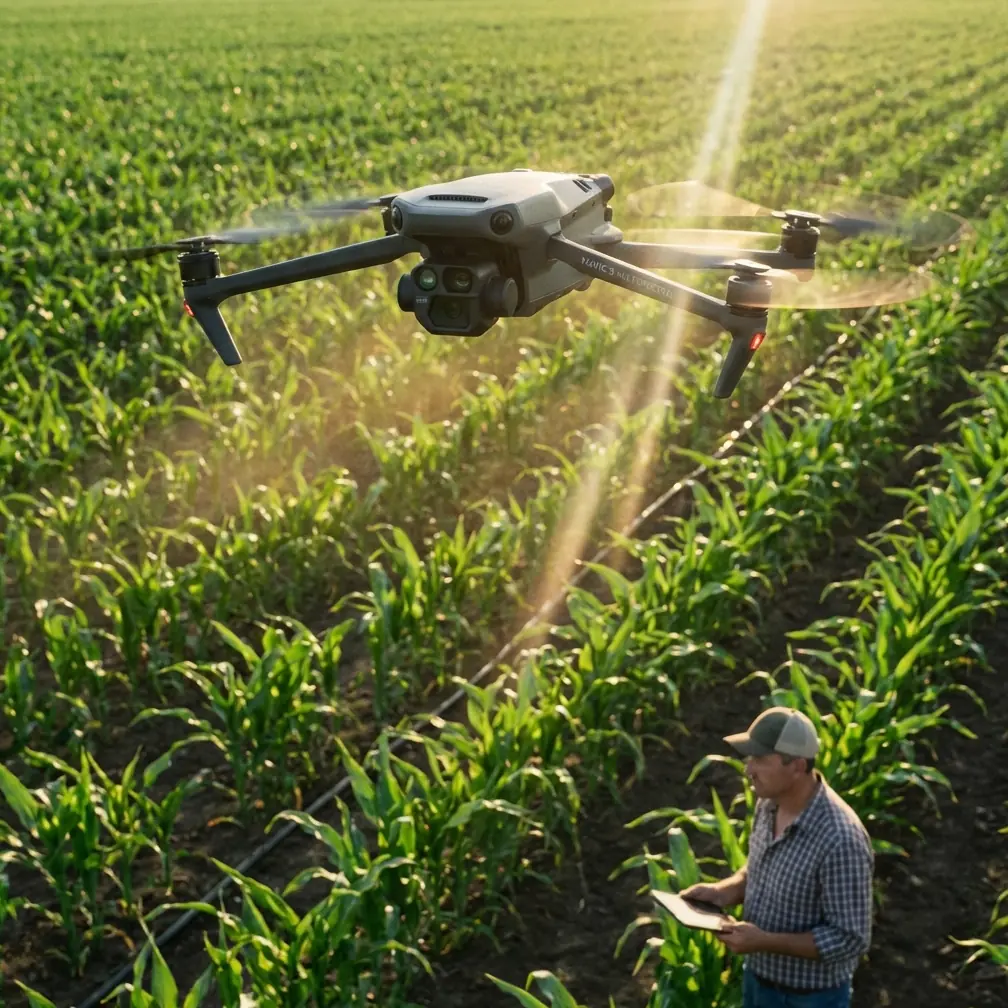
Mavic 4 Pro for Mountain Vineyards: A Field-Ready How-To from a Photographer’s Perspective
META: Learn how to use the Mavic 4 Pro in steep vineyard terrain with practical tips on obstacle avoidance, ActiveTrack, D-Log, Hyperlapse, and a critical pre-flight cleaning routine.
Mountain vineyards are beautiful until you try to film them properly.
Rows bend with the slope. Light changes by the minute. Wind behaves differently at the top of a terrace than it does in the lower blocks. Add trellis wires, narrow access lanes, tree lines, and sudden elevation shifts, and the Mavic 4 Pro stops being a simple camera drone and becomes a precision tool that demands disciplined setup.
I approach this as a photographer first. That matters, because vineyard work is rarely about grabbing a dramatic reveal and leaving. You are often documenting growth stages, checking row consistency, producing polished visuals for a winery, or repeating the same route across a season so footage remains comparable. In mountain terrain, repeatability is everything. A beautiful clip is useful. A beautiful clip you can reliably recreate in changing conditions is far more valuable.
That is where the Mavic 4 Pro earns its place. Not because it promises magic, but because its obstacle sensing, subject tracking options, QuickShots, Hyperlapse modes, and flat color capture workflows can be used with real discipline in difficult landscapes. If you fly vineyards on slopes, especially where access is tight and every battery counts, the difference comes from how you prepare before takeoff and how deliberately you use those tools in the air.
Start with the least glamorous step: clean the vision system
Before I even think about route planning, I clean the aircraft.
This is not cosmetic. It is a safety procedure.
Mountain vineyards are dusty. Fine soil gets lifted by utility vehicles, boots, and wind moving across dry rows. In the morning, you can also have moisture and residue from misty conditions settling on the drone while it sits in a bag or vehicle. The Mavic 4 Pro relies heavily on obstacle avoidance sensors and vision-based positioning to interpret the environment around it. If those lenses or sensing windows are smeared, dusty, or streaked, the drone can misread contrast, struggle with low-angle glare, or become less confident when navigating close to posts, wires, and canopy edges.
That matters operationally in vineyards because a mountain block is full of repetitive patterns. Vine rows can look visually similar from the air. The drone is already working hard to read depth in a scene full of lines and texture. A dirty sensor stack reduces margin right where you need it most.
My pre-flight cleaning step is simple and non-negotiable:
- Inspect the forward, rear, side, and downward sensing areas in direct light.
- Use a clean lens cloth or air blower designed for optics.
- Check the main camera glass too, especially if you plan to shoot into sunrise or late afternoon backlight.
- Confirm there are no fingerprints from folding and unfolding the aircraft.
This takes about 60 seconds. Those 60 seconds protect the two features vineyard operators lean on most in complex terrain: obstacle avoidance and tracking.
Build your flight around terrain, not around the shot list
The most common mistake I see in vineyard drone work is planning from a creative idea alone.
People decide they want a sweeping pass over the rows, a pullback from the tasting room, or a dramatic orbit around the ridge. Those shots can work, but mountain vineyards punish flights that are planned as if the sky is empty.
Instead, build your mission in this order:
- Terrain and wind exposure
- Obstacles and escape routes
- Light direction
- Subject movement
- Shot design
That order sounds conservative, but it produces better footage. On steep vineyard sites, the safe route and the cinematic route often become the same route once you understand where the drone can climb cleanly, where crosswind shear is likely, and where trellis infrastructure creates a trap for low lateral moves.
If I am filming a utility vehicle moving between rows or a vineyard manager walking a steep block, I first identify where the slope steepens and where the drone’s relative altitude could become deceptive. A drone that looks comfortably above the vines from your launch point may be far closer to the canopy as the hill rises beneath it. Obstacle avoidance helps, but it is not a substitute for terrain awareness. In vineyards, wires and fine branches are exactly the kind of elements that require extra caution even with advanced sensing systems onboard.
Use ActiveTrack selectively, not lazily
ActiveTrack is one of the most useful tools for mountain vineyard work, especially when you are following a person inspecting rows, an ATV climbing a service path, or a vehicle crossing a ridgeline. But this is where experienced flying differs from casual use.
Tracking works best when the subject is visually distinct and the route gives the drone room to solve movement smoothly. In a vineyard, those conditions can break down quickly. A worker wearing earth tones can blend into the rows. A vehicle may pass under overhanging branches or near tall posts. Terraced layouts can create abrupt foreground interference. If you simply lock on and trust the system without evaluating the path, you are asking the drone to make hard decisions in a cluttered scene.
Operationally, ActiveTrack is most effective in three vineyard situations:
- Following a subject along a clear service road with row structure on both sides
- Tracking from a higher angle where the subject is visually separated from the vines
- Recording repeated inspection routes where you already know the problem areas
What matters is not that the Mavic 4 Pro can track. What matters is when you choose to let it track. In mountain vineyards, I often begin with tracking enabled, then switch to manual control near tighter structures or changing elevation. That handoff is where clean sensor surfaces and good route discipline pay off. The drone’s awareness features support you, but they work best when you avoid putting them into confused visual situations.
QuickShots are useful when time and battery are tight
QuickShots often get dismissed by serious pilots, which is a mistake.
In vineyard environments, battery efficiency matters because launch sites are not always convenient. You may be parked on a narrow mountain road, standing beside a stone wall, or hiking to a viewpoint above a block. If the weather window is short and you need dependable sequences fast, QuickShots can help you capture structurally clean clips without wasting air time improvising.
The real advantage is consistency. If a winery wants similar content across early growth, midsummer canopy, and harvest, controlled automated motion can help standardize the visual language. A short orbit around a hillside parcel or a reveal over a terrace can become part of a repeatable documentation workflow, not just a social media flourish.
The key is to use QuickShots in areas where the geometry is obvious and uncluttered. I do not use them close to irregular tree lines, utility cables, or tight ridge contours. I use them where the drone has room to execute and where the resulting movement clearly communicates the shape of the site.
That distinction matters. The goal in vineyard filmmaking is not flashy movement. It is legible movement. The viewer should understand slope, row direction, and the relationship between the vines and the mountain. A clean automated move can do that very well.
Hyperlapse makes seasonal storytelling stronger
If you document vineyards over time, Hyperlapse is one of the most underused capabilities in the toolkit.
A mountain vineyard is never visually static. Shadows climb across the slope. Fog clears unevenly. Workers move through terraces. Vehicles appear and disappear on winding tracks. Hyperlapse compresses those changes into something a still frame cannot fully explain.
There is also a practical use beyond aesthetics. Hyperlapse can show how wind direction reveals itself across different elevations, how cloud shadow impacts one parcel before another, or how harvesting activity flows from block to block. That kind of footage can support both storytelling and operational review.
For the Mavic 4 Pro, the challenge is stability of concept, not just stability of flight. Choose one idea per sequence:
- cloud movement over a ridge block
- morning light crawling across terrace lines
- harvest traffic through a service road junction
Do not try to capture everything at once. In vineyards, the most effective Hyperlapse shots are usually the simplest. A fixed relation between rows and sky often says more than a complicated route.
D-Log is worth the effort in harsh vineyard light
Vineyards in mountain settings create one of the hardest lighting mixes you will face from the air: bright sky, reflective leaves, pale dust roads, dark tree edges, and shadowed rows all in one frame.
That is exactly why D-Log matters.
A flatter profile gives you more room to hold detail in high-contrast scenes, especially when the sun is low and the slope creates uneven illumination across the frame. If you are shooting winery marketing footage, harvest documentation, or comparative seasonal visuals, preserving highlight and shadow information makes grading far easier later.
This is not just a colorist’s preference. It affects field decisions. When I know I am capturing D-Log footage, I frame with post-production in mind. I avoid overcommitting to a baked-in look created by the moment’s glare or haze. Mountain vineyards regularly present scenes that look dramatic to the eye but can clip badly in standard profiles if you are not careful.
The operational significance is simple: D-Log gives you tolerance. In a location where the lighting can change across a single pass, that tolerance is valuable.
Obstacle avoidance is a support system, not permission to fly carelessly
The phrase “obstacle avoidance” can create false confidence.
In vineyards, you are not navigating city blocks with clear edges. You are flying around posts, wires, netting, vegetation, changing ground elevation, and sometimes birds that are not pleased to see you. The Mavic 4 Pro’s sensing systems are there to reduce risk, but they do not replace spacing discipline.
I fly mountain vineyard passes with more lateral clearance than I think I need. I also give myself vertical escape options whenever possible. If a tracked subject changes direction or the wind pushes the aircraft off line near a terrace edge, the safest correction is often upward into known open air, not sideways through a visually dense corridor.
That matters even more near sunrise and sunset. Low-angle light is beautiful in vineyards, but it can also create glare and reduced contrast for both the pilot and the aircraft’s vision systems. Again, this loops back to the pre-flight cleaning step. A spotless sensor window and camera lens are small details until they prevent a bad read in golden-hour light.
A practical mountain-vineyard workflow with the Mavic 4 Pro
Here is the method I use when the assignment is to track a vineyard on steep terrain and return with footage that is both attractive and useful.
First, I walk the launch and recovery area. I look for dust, loose gravel, overhead branches, and how the slope may affect my visual line of sight after takeoff.
Second, I clean the aircraft’s sensing surfaces and main lens. No exceptions.
Third, I identify the one or two most important deliverables. Maybe it is a high tracking shot of a manager walking the rows and a wide Hyperlapse showing afternoon light crossing the site. Limiting the mission keeps decisions sharper in the air.
Fourth, I do a short reconnaissance pass before any hero shots. I watch how the drone behaves near the slope, whether the wind changes over the ridge, and whether any reflective surfaces or row patterns make visual interpretation messy.
Fifth, I shoot manual coverage first, then use ActiveTrack or QuickShots only where the scene supports them cleanly.
Finally, I leave with enough battery margin to land calmly, not dramatically. In remote vineyard work, a rushed final minute is where preventable mistakes happen.
If you are building a more repeatable workflow for vineyard mapping, promotional visuals, or seasonal documentation, it helps to compare notes with operators who understand both drone behavior and agricultural terrain. I sometimes share setup references through this quick field contact option: message me here.
What makes the Mavic 4 Pro especially suited to this job
For mountain vineyards, the value of the Mavic 4 Pro is not one headline feature. It is the way several systems combine.
Obstacle avoidance helps when terrain and row structures compress your margin. ActiveTrack helps when a person or vehicle gives the scene scale and narrative. QuickShots help standardize repeatable visual sequences when time is short. Hyperlapse helps communicate environmental change across elevation. D-Log helps preserve detail when bright skies and dark vine shadows collide in the same frame.
Taken together, those tools make the drone especially useful for vineyard work that lives between art and operations.
That is the real point. A mountain vineyard is not just scenic. It is structured, seasonal, and physically demanding. If you want your footage to show what the place actually feels like, the Mavic 4 Pro can do it. But the results come from method, not mythology. Clean the sensors. Read the slope. Respect the wind. Use tracking intelligently. Let automation save time where it truly helps. Capture color with enough latitude to survive difficult light.
Do those things, and the drone stops being a gadget in the sky. It becomes a reliable camera platform for one of the most visually complex agricultural landscapes you can film.
Ready for your own Mavic 4 Pro? Contact our team for expert consultation.