
Expert Tracking With Mavic 4 Pro in High-Altitude Vineyards
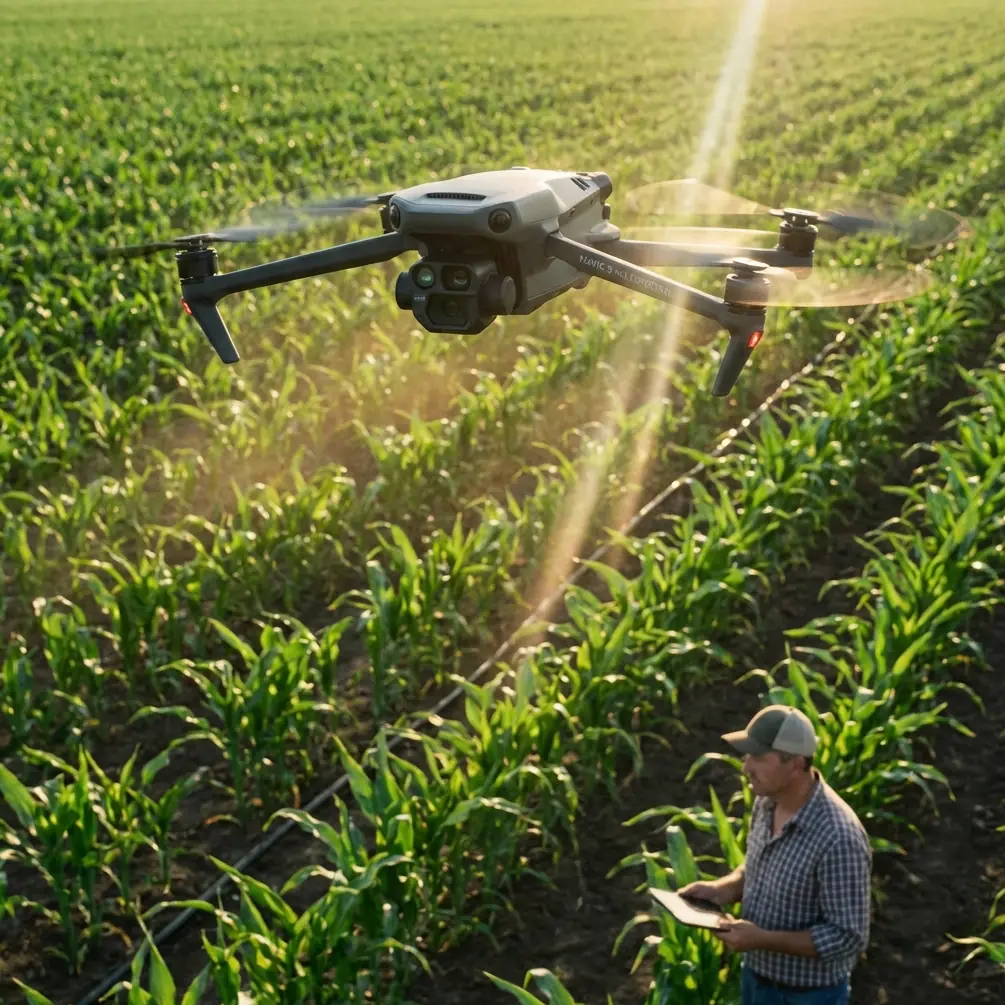
Expert Tracking With Mavic 4 Pro in High-Altitude Vineyards
META: A technical review of using the Mavic 4 Pro for high-altitude vineyard tracking, with field-focused insight on obstacle avoidance, ActiveTrack, D-Log, Hyperlapse, and battery management.
High-altitude vineyard work asks more from a drone than most landscape or real-estate flights ever will. Sloped terrain distorts depth perception. Trellis lines create repetitive visual patterns that can confuse tracking systems. Afternoon mountain winds shift fast, and colder air can make a battery look healthier on the ground than it feels in the sky. In that environment, the Mavic 4 Pro is not just a camera platform. It becomes a decision-making tool.
I approach this as a photographer first, but vineyards have a way of forcing you to think like an operator. You are not simply chasing a pretty reveal over rows of vines. You are trying to build a repeatable workflow that can document canopy uniformity, follow utility vehicles along narrow service roads, and capture cinematic footage without putting the aircraft in a bad position near wires, posts, or rising terrain. That is where the Mavic 4 Pro earns attention.
The reason this aircraft matters for vineyard tracking is not any single spec on a product page. It is the combination of obstacle avoidance, subject tracking, D-Log capture, QuickShots, Hyperlapse, and ActiveTrack behavior under pressure. In a high-altitude agricultural setting, those systems stop being conveniences and start affecting whether a mission is smooth, useful, and safe.
Why vineyard tracking is different
Vineyards are visually orderly, but operationally messy. Long rows can make movement look simple from above, yet the route between those rows is full of hazards. End posts, irrigation hardware, anti-bird netting, service vehicles, and workers move through the same space. Add elevation, and the aircraft must constantly reconcile forward motion with changing ground clearance.
This matters because obstacle avoidance in a vineyard is less about dramatic last-second braking and more about subtle path correction. If the drone interprets a trellis edge too late, your tracking shot gets ruined even if the aircraft avoids contact. Good obstacle sensing should preserve continuity, not just survival. For anyone filming vineyard inspections or brand footage, that difference is everything.
The Mavic 4 Pro’s obstacle avoidance suite is especially relevant here because vineyards present both vertical and low-profile hazards. Posts and wires challenge perception in one way. Uneven hillside contours challenge it in another. On steep blocks, an aircraft can seem comfortably high above the vines at the start of a pass and then drift into a much tighter clearance as the slope rises beneath it. A capable sensing system reduces the cognitive load on the pilot, which means more attention can stay on framing and route discipline.
ActiveTrack where rows repeat endlessly
Subject tracking sounds straightforward until the subject moves through repeating geometry. A worker in a jacket walking between near-identical rows, or a tractor moving through alternating sun and shadow, is much harder to hold than a cyclist on an open road. Vineyards produce visual clutter with rhythm. That rhythm can trick a less stable tracking algorithm into drifting, hesitating, or switching priority.
This is where ActiveTrack becomes operationally significant. In a vineyard, the tracking system needs to do more than identify a subject once. It has to maintain confidence through partial obstructions, row intersections, and changes in contrast. If the aircraft can keep a utility cart or vineyard manager centered while navigating side obstacles, you gain two things at once: cleaner footage and less need for manual correction in tight spaces.
For documenting vineyard activity, I have found this especially useful when following slow-moving vehicles on access lanes that border planted blocks. That route gives the drone enough lateral separation to maintain a credible tracking angle while still capturing the texture of the vines. ActiveTrack is not magic, and I would never delegate judgment entirely to automation, but in this context it can turn a difficult manual orbit into a controlled, repeatable pass.
The bigger point is that subject tracking in agriculture should not be judged by whether it works in an open field. It should be judged by whether it keeps coherence in structured environments. Vineyards are exactly that kind of test.
D-Log is not just for colorists
A lot of pilots treat D-Log as a box to check when they want “professional” footage. In vineyard work, that mindset misses the real advantage. D-Log helps preserve tonal separation in scenes where contrast changes constantly across the frame. At high altitude, bright sky, reflective leaves, pale soil, and dark machinery can all sit together in the same shot. Standard profiles can make you choose what to sacrifice. D-Log gives you more room later.
That matters for practical reasons, not just artistic ones. If you are tracking vine vigor visually, or producing footage that needs to show detail across shaded lower canopies and sunlit upper leaves, latitude in post becomes useful evidence, not cosmetic luxury. You are protecting information. Midday flights in mountain vineyards are notorious for hard light, and that is exactly when log capture starts paying for itself.
I still tell newer operators not to use D-Log casually. If your delivery timeline is tight and your grading pipeline is weak, a standard profile may be the smarter call. But when the goal is serious vineyard coverage, especially for mixed editorial and operational use, the flexibility of D-Log is worth the extra post-production discipline.
Hyperlapse and QuickShots with a real purpose
QuickShots and Hyperlapse are often dismissed as flashy automated modes. In vineyards, they can be surprisingly useful if you apply them with intent.
Hyperlapse is excellent for showing changing weather over an estate, traffic flow during harvest staging, or fog burn-off across slope-facing blocks. In mountain wine regions, atmosphere shifts are not background decoration; they influence labor timing, spray windows, and visual storytelling. A well-planned Hyperlapse can reveal movement that a normal real-time shot hides.
QuickShots are more situational, but they can help when you need concise visual assets without building a complex flight path from scratch. For example, a controlled reveal from the end of a row into a wider estate view can communicate terrain and planting density quickly. That is useful for winery communications teams, agritourism content, and even internal presentations.
The key is restraint. Automated modes should support the mission, not replace piloting judgment. In vineyards, where obstacles and elevation changes are constant, I use them only after I know the terrain and understand my escape routes.
Battery management tip from the field
If there is one habit I would insist on for high-altitude vineyard flying, it is this: never trust the first battery percentage reading alone when launching into cold morning air.
I have seen too many pilots step off with a pack showing a healthy charge, climb into thinner, cooler air, push into a headwind over a ridge, and then watch the remaining percentage drop faster than expected on the return leg. The issue is not usually a defective battery. It is the mismatch between how a battery presents at rest and how it performs under load in colder conditions.
My field routine is simple. After takeoff, I hover briefly and make a short, controlled forward push before committing to the main route. That early load gives me a more honest read on voltage behavior. If the pack sags more than expected, I shorten the plan immediately. I also avoid opening with a long uphill run away from the launch point. On sloped vineyard sites, it is smarter to work the more distant or elevated section first only if the wind and battery response justify it. Otherwise, capture your priority pass, stay conservative, and save the more decorative shots for the second pack.
For operators covering multiple blocks in a day, label batteries by real-world behavior, not just charge cycles. One pack may still be perfectly serviceable for shorter establishing shots while another is better reserved for longer tracking runs. That kind of sorting becomes valuable over time, especially in mountain conditions where margins tighten.
This is not glamorous advice, but it is the kind that saves missions. Battery discipline in vineyards is less about maximizing airtime and more about preserving optionality. A drone with 30 percent remaining is only useful if that 30 percent is still strong enough to handle wind, elevation, and a safe return.
Obstacle avoidance on slopes and near trellis systems
Obstacle avoidance in vineyard environments deserves a more technical reading than it usually gets. Rows create corridors, which can tempt pilots into flying lower and faster than the site really permits. The trouble is that these corridors are not clean. A row may look open from one angle and then reveal protruding growth, wire tensioners, or temporary equipment as the aircraft shifts position.
That is where the Mavic 4 Pro’s sensing and route stability matter most. You want the aircraft to recognize when an intended path is narrowing before the movement becomes abrupt. In filming terms, smooth deceleration is a quality issue. In safety terms, it is a margin issue.
High-altitude vineyards intensify this because slope compresses your visual read. Looking through the monitor, it is easy to underestimate how quickly the terrain rises under the drone, especially in telephoto-style compositions where depth is flattened. Obstacle avoidance helps, but the real discipline is to use it as backup while maintaining your own altitude buffer. I generally want more vertical cushion than I think I need when crossing rows on an incline. The footage is cleaner, and the stress level drops immediately.
What the Mavic 4 Pro does well for this use case
For vineyard tracking, the Mavic 4 Pro stands out less as a novelty and more as a balanced field tool. Its real strength is how its intelligent systems support a pilot who is working in a structured but unpredictable environment.
ActiveTrack helps maintain subject consistency where repetitive row geometry would otherwise increase manual workload. Obstacle avoidance supports safer, smoother movement through terrain that changes faster than it first appears. D-Log protects highlight and shadow detail in punishing midday light. Hyperlapse and QuickShots, used carefully, expand the storytelling range without requiring every shot to be built from scratch.
This matters whether your goal is documenting a harvest team, following an ATV carrying sampling equipment, or building visual assets for a winery with steep, dramatic acreage. The drone does not remove complexity. It gives you better tools for handling it.
I would still caution buyers and operators against assuming any premium aircraft can substitute for site knowledge. Vineyards are full of pattern traps. Even experienced pilots can become overconfident when rows create a false sense of order. The best results come when you combine automation with a deliberate route plan, a conservative battery strategy, and a clear idea of what the footage needs to achieve.
Practical setup advice before a vineyard mission
Before any serious tracking session, I recommend a brief reconnaissance flight at a higher altitude than your intended working passes. It reveals hidden line crossings, service activity, and terrain transitions that are not obvious from the ground. It also helps you decide whether ActiveTrack is appropriate for the subject route or whether a manual parallel pass will be cleaner.
If you are shooting for both operational review and polished delivery, separate the two tasks. Record your analytical passes first, with stable framing and predictable altitude. Then move to cinematic footage using QuickShots or a controlled Hyperlapse sequence. Trying to combine both objectives in one battery often leads to compromises in each.
And if you are coordinating with an estate manager or visual team, I have found that sending a quick pre-flight route note through a simple channel like a direct WhatsApp planning message avoids confusion once propellers are spinning. Small communication habits matter when the site is large and time windows are short.
Final assessment
The Mavic 4 Pro makes real sense for high-altitude vineyard tracking because the environment exposes exactly the features that separate a capable drone from a merely convenient one. Obstacle avoidance is not a marketing bullet here; it is a practical layer of protection in tight agricultural geometry. ActiveTrack is not just for athletes and cars; it becomes useful when following workers or vehicles through structured rows. D-Log is not creative excess; it is insurance against brutal contrast. Hyperlapse and QuickShots are not gimmicks if they are tied to specific visual goals.
For photographers, survey teams, and vineyard operators who work in mountainous terrain, that combination is compelling. The aircraft supports precision without flattening the human skill required to use it well. And that is the right balance. In complex places, the best drone is not the one that promises to do everything for you. It is the one that gives you better odds of getting the shot, keeping the margin, and coming back with footage that actually holds up under scrutiny.
Ready for your own Mavic 4 Pro? Contact our team for expert consultation.