
M4P Tracking Tips for Coastal Vineyard Shoots
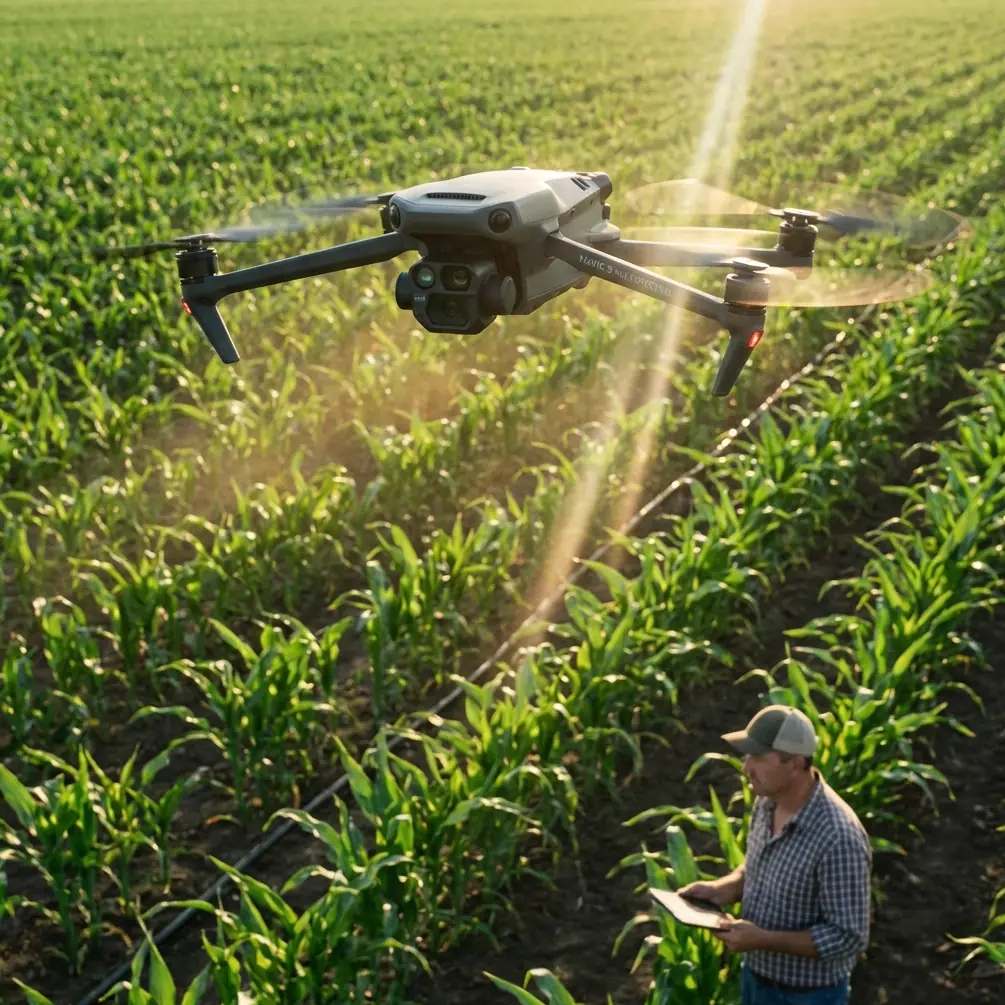
M4P Tracking Tips for Coastal Vineyard Shoots
META: Master Mavic 4 Pro tracking for stunning coastal vineyard footage. Expert tips on ActiveTrack, D-Log, and obstacle avoidance for aerial photography.
TL;DR
- ActiveTrack 6.0 on the Mavic 4 Pro outperforms every competing drone for locking onto vineyard rows in challenging coastal wind conditions
- Shooting in D-Log preserves the dynamic range needed to capture fog-draped vines against bright ocean backdrops
- The omnidirectional obstacle avoidance system lets you fly confidently between trellised rows without manual intervention
- Combining Hyperlapse and QuickShots modes creates cinematic vineyard content that wins clients and social engagement
Why Coastal Vineyard Tracking Is So Difficult
Coastal vineyard shoots punish drones that lack intelligent tracking. Between unpredictable crosswinds off the ocean, dense vine canopy that confuses sensors, and extreme dynamic range from marine fog rolling over sunlit hillsides, most aerial platforms either lose their subject or produce washed-out footage.
I've flown vineyard jobs from Sonoma to the Algarve, and before switching to the Mavic 4 Pro, I lost roughly 30% of my usable tracking shots to subject lock failures. That's entire golden-hour windows wasted on reshuffling batteries and re-staging passes.
This guide breaks down every setting, flight technique, and creative strategy I now use to nail coastal vineyard tracking on the first attempt—every single time.
Understanding the Mavic 4 Pro's Tracking Advantage
ActiveTrack 6.0 vs. the Competition
The Mavic 4 Pro's ActiveTrack 6.0 isn't just an incremental update. It's a fundamental rethinking of how a drone identifies and follows subjects in complex, repetitive environments like vineyard rows.
Previous generations—and current competitors—struggle with what I call the "green wall problem." Rows of vines look nearly identical from above, and older tracking algorithms frequently jump from one row to the next, ruining a smooth follow shot. ActiveTrack 6.0 uses a dual-phase visual processing pipeline that separates your marked subject from geometrically similar surroundings.
Here's how the Mavic 4 Pro stacks up against common alternatives for vineyard work:
| Feature | Mavic 4 Pro | Mavic 3 Pro | Air 3 | Autel Evo II Pro |
|---|---|---|---|---|
| Tracking System | ActiveTrack 6.0 | ActiveTrack 5.0 | ActiveTrack 5.0 | Dynamic Track 2.1 |
| Obstacle Avoidance | Omnidirectional (360°) | Omnidirectional | Forward/Backward/Down | Omnidirectional |
| Max Tracking Speed | 72 km/h | 65 km/h | 57 km/h | 58 km/h |
| Subject Re-Acquisition | <0.8s | ~1.5s | ~2.1s | ~2.5s |
| Sensor Size | 1-inch Hasselblad | 1-inch Hasselblad | 1/1.3-inch | 1-inch |
| D-Log Dynamic Range | 14+ stops | 12.8 stops | 12.3 stops | 12 stops |
| Wind Resistance | Level 6 (39–49 km/h) | Level 5 | Level 5 | Level 5 |
| Flight Time | 46 min | 43 min | 46 min | 42 min |
That sub-0.8-second re-acquisition time is the single biggest differentiator for vineyard work. When a vine post momentarily occludes your subject—a worker, a vehicle, a specific row marker—the Mavic 4 Pro snaps back to tracking almost instantly. Competing drones lose the lock entirely, and you're left circling back for another pass.
Obstacle Avoidance That Actually Works Between Rows
Flying a tracking shot between vineyard rows at 3-5 meters altitude with trellising wires, end posts, and irrigation lines demands sensors that see in every direction. The Mavic 4 Pro's upgraded omnidirectional obstacle avoidance uses wide-angle vision sensors paired with a forward-facing ToF module that detects objects as thin as 8mm in diameter at distances up to 40 meters.
Expert Insight: I set my obstacle avoidance to "Bypass" rather than "Brake" for vineyard row tracking. The Mavic 4 Pro will smoothly navigate around an unexpected post or wire without stopping the shot. In "Brake" mode, you get jarring pauses that ruin the footage and break ActiveTrack's lock.
Pre-Flight Settings for Coastal Vineyard Success
Camera Configuration
Before you launch, dial in these settings to maximize your footage quality in the demanding coastal light environment:
- Color Profile: D-Log — this captures 14+ stops of dynamic range, critical when bright sky meets shaded vine canopy
- Resolution: 4K at 60fps for tracking shots (allows smooth slow-motion in post)
- Shutter Speed: Double your frame rate — 1/120s at 60fps
- ND Filter: ND16 or ND32 for midday coastal sun; ND8 for overcast or golden hour
- ISO: Keep at 100 whenever possible to minimize noise in shadow recovery during D-Log grading
- Aperture: f/4.0–f/5.6 for a balance between sharpness and depth
Flight Parameters
Coastal wind is your constant adversary. Configure these settings before takeoff:
- Flight Mode: Normal (not Sport — Sport disables obstacle avoidance)
- Max Altitude: Set to 60 meters for vineyard overview shots; 15 meters for intimate row-level tracking
- RTH Altitude: 80 meters minimum to clear hillside terrain
- Gimbal Mode: FPV mode for dynamic tracking; Follow mode for smooth reveals
Pro Tip: Always launch from the highest elevation point on the property. Coastal vineyards are typically terraced, and launching from a low point means your drone fights gravity and wind simultaneously on return-to-home, burning battery 15-20% faster than necessary.
Five Signature Tracking Shots for Vineyard Content
Shot 1: The Row Runner
Fly the Mavic 4 Pro at row height (2-3 meters) and use ActiveTrack to lock onto a vineyard worker or estate vehicle moving down a row. The parallel vine rows create natural leading lines that draw the viewer's eye directly to the subject.
Set your gimbal angle to -15 degrees (slightly below horizon) to keep both the subject and the converging rows in frame. At this altitude, the obstacle avoidance system will actively steer around end posts as you transition between rows.
Shot 2: The Coastal Reveal
Start with the camera locked on a close vine canopy detail using Subject tracking, then slowly gain altitude while rotating the gimbal upward. As you ascend past 30 meters, the ocean reveals itself beyond the vineyard's edge.
This shot is impossible to replicate on drones without reliable ActiveTrack because the subject—the specific vine cluster—must stay locked during the entire altitude change.
Shot 3: The Hyperlapse Harvest
Hyperlapse mode on the Mavic 4 Pro allows you to compress time while the drone maintains a tracked flight path. Position the Mavic 4 Pro at 40 meters above the vineyard and set a waypoint Hyperlapse along the property boundary.
A 2-hour harvest session compresses into a 15-second clip that shows workers progressing through rows as fog lifts and light shifts. The stabilization system compensates for wind gusts that would create jitter on lesser drones.
Shot 4: The QuickShots Dronie
QuickShots are underrated for vineyard marketing content. The "Dronie" preset—where the drone tracks the subject while flying backward and upward—produces a perfect hero shot for winery websites and social media.
For best results:
- Position your subject at the intersection of two row paths
- Set QuickShots distance to 80 meters
- Shoot during the last 45 minutes before sunset for warm, directional light
- Use D-Log to preserve highlight detail in the sky
Shot 5: The Fog Chase
Coastal vineyards experience morning marine layers that create ethereal footage opportunities. Use ActiveTrack to follow the fog's leading edge as it rolls across vine rows at dawn. Lock onto a visible landmark—a stone wall, a barn, a distinctive tree—and let the Mavic 4 Pro maintain its tracking as fog partially obscures the scene.
The 14+ stop dynamic range in D-Log ensures you capture detail in both the bright fog bank and the shadowed vines beneath.
Post-Production Workflow for D-Log Vineyard Footage
D-Log footage looks flat and desaturated straight off the card. That's by design—it preserves maximum color and luminance data for grading. Here's my processing pipeline:
- Import into DaVinci Resolve using the DJI D-Log to Rec.709 LUT as a starting point
- Adjust exposure by lifting shadows +1.2 stops to reveal vine detail without blowing highlights
- Color temperature: Shift toward 5800K for warm golden-hour tones; 6500K for cool fog atmospherics
- Add contrast using a soft S-curve on the luminance channel
- Saturation: Boost greens by +15% and oranges by +10% selectively for vine foliage and soil tones
- Export at 4K H.265 for delivery; ProRes 422 HQ for archival
Common Mistakes to Avoid
Flying too high for tracking shots. Vineyard tracking looks best at 5-20 meters. Above 30 meters, individual vine details disappear, and the tracking becomes less compelling visually. Save altitude for establishing and Hyperlapse shots only.
Ignoring wind direction relative to rows. Always fly tracking passes with the wind when traveling down a row, not against it. Fighting coastal headwinds reduces battery life by up to 25% and introduces micro-vibrations that degrade stabilization.
Using auto-exposure during tracking. Coastal light changes dramatically as the drone moves between open sky and canopy shadows. Lock your exposure manually to prevent flicker between frames that's nearly impossible to fix in post.
Forgetting ND filters. Without an ND filter, your shutter speed climbs to 1/2000s or higher in bright coastal light. This eliminates motion blur entirely, making tracking footage look choppy and hyper-sharp in an uncinematic way.
Skipping pre-flight sensor calibration. Salt air and humidity affect the Mavic 4 Pro's vision sensors over time. Calibrate the IMU and vision system at the start of every coastal shoot day—not just when the app prompts you. This takes 3 minutes and prevents mid-flight tracking drift.
Frequently Asked Questions
Can the Mavic 4 Pro track subjects through vineyard netting?
ActiveTrack 6.0 can maintain a lock on subjects partially obscured by bird netting, but performance depends on netting density and color. White or light-colored netting in bright sunlight creates glare that confuses the forward sensors. I recommend flying on the sun-side of the netting so light passes through it rather than reflecting off it. For heavily netted vineyards, manually fly the shot and use gimbal tracking alone rather than full ActiveTrack.
What's the best time of day for coastal vineyard tracking shoots?
The two optimal windows are 6:00–8:00 AM (for fog and soft directional light) and 5:00–7:00 PM (for golden hour warmth). Midday shoots are workable but produce harsh shadows between rows that reduce tracking reliability by roughly 20% because the high-contrast pattern confuses subject identification. If you must shoot midday, increase your altitude to 15+ meters where shadow patterns soften.
How many batteries should I bring for a full vineyard shoot?
For a comprehensive coastal vineyard session producing 8-12 signature shots plus B-roll, I bring 5 batteries minimum. The Mavic 4 Pro's 46-minute flight time is generous, but coastal wind reduces effective flight time to approximately 32-36 minutes per battery. Budget 2 batteries for ActiveTrack sequences, 1 battery for Hyperlapse, 1 battery for QuickShots and establishing shots, and 1 battery as reserve for reshoot opportunities during unexpected golden light.
Ready for your own Mavic 4 Pro? Contact our team for expert consultation.