
Mavic 4 Pro for Dusty Venue Tracking: The Monitor Setup
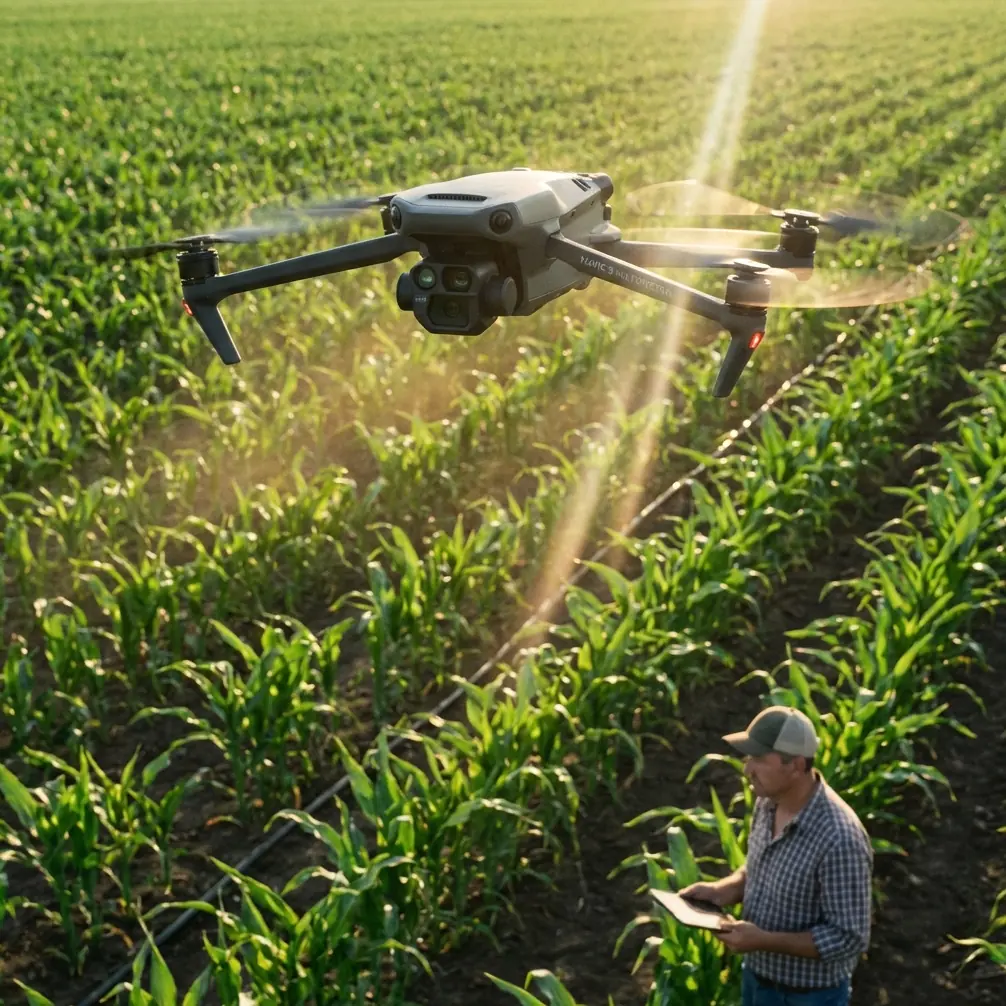
Mavic 4 Pro for Dusty Venue Tracking: The Monitor Setup Mistake Most Pilots Make
META: A field-tested guide to using Mavic 4 Pro in dusty venue tracking, with practical advice on screen choice, glare control, GPS-enabled tablets, and antenna handling under interference.
Dust changes the way a drone job feels.
On paper, venue tracking with a Mavic 4 Pro sounds straightforward: map the perimeter, follow moving assets or personnel, capture reference footage, and keep enough situational awareness to work safely around structures, vehicles, fencing, and temporary installations. In reality, dusty sites expose weak points fast. Visibility gets harsher, sunlight reflects off every surface, screens become harder to read, and pilots start making tiny control errors because they are fighting the display instead of reading the scene.
That is where a lot of otherwise capable Mavic 4 Pro operations begin to wobble.
The surprising part is that the bottleneck often is not the aircraft. It is the screen attached to the controller.
For venue tracking jobs, especially in dry, bright environments, the monitor-device decision has operational consequences. It affects whether ActiveTrack stays easy to supervise, whether obstacle avoidance prompts are noticed in time, whether a live map remains usable, and whether a pilot can hold a stable control posture for an entire session instead of fatiguing halfway through. If you are flying a Mavic 4 Pro in dusty conditions, your display setup deserves the same attention as your camera profile, subject tracking mode, or antenna position.
Why screen choice matters more in dusty environments
Dusty venues usually come with strong ambient light. Even when the sun is not directly overhead, airborne particles and pale ground surfaces create a washed-out visual environment. That increases reliance on a bright, stable display. If the screen struggles, the pilot loses confidence in framing, track confirmation, route verification, and warning awareness.
Field experience from an ArcGIS integrated field-collection solution highlights something many drone teams have learned the hard way: iOS devices delivered noticeably better app stability and user experience than Android devices in real-world testing, so Apple hardware was recommended for field work. That matters for Mavic 4 Pro crews because dusty venue work is not just about flying. It often combines live navigation, visual verification, image reference layers, and repeated adjustments while moving between takeoff points.
Stable app behavior becomes more than a convenience when you are using subject tracking around temporary structures, grandstands, event barriers, or utility setups. A crash or lag spike at the wrong moment is not a minor irritation. It can interrupt tracking continuity and force the pilot to rebuild situational awareness under pressure.
The small-screen advantage nobody likes admitting
Many crews instinctively prefer larger tablets because they look more professional and feel easier to operate on a bench. But venue tracking is not done on a bench. It is done standing, rotating, repositioning, and often holding the controller for long stretches while adjusting body orientation to maintain signal quality.
The field notes are blunt: older iPhone-class devices such as iPhone 6s through iPhone X were rated highly for Mavic users because their smaller size made them easier to carry and less tiring to hold for extended periods. That is a simple detail, but it connects directly to Mavic 4 Pro tracking work.
When you are using ActiveTrack or reviewing obstacle avoidance behavior near venue edges, hand fatigue matters. A lighter phone-based setup helps the pilot maintain a more consistent grip and antenna angle. That has a knock-on effect on link stability, especially when electromagnetic interference is present from temporary venue power systems, LED walls, communications equipment, or dense metal infrastructure.
There is a tradeoff, though. The same field reference notes that these phone screens were relatively dim outdoors. Under strong sunlight, they became difficult to read, and when brightness was pushed to maximum, overheating could trigger forced dimming in a little over 10 minutes. In dusty venues, where high brightness is almost mandatory, that limitation becomes serious.
So the phone setup wins on fatigue and controller ergonomics, but it can lose badly on visibility.
Why large tablets are not automatically the answer
The obvious response is to move up to a tablet. That helps with map reading, framing, and interface visibility. The same field data showed that iPad Air and iPad Air 2 variants could run for more than 6 continuous hours in testing, with larger screens that were easier to operate. For long venue documentation sessions, that endurance is attractive.
But then the practical problem appears: large tablets are heavy once mounted with the controller, and prolonged holding becomes tiring. More importantly, those models were noted as too large to fit the Mavic remote without extra support. The iPad Pro was called out specifically as being too large to adapt directly to the drone controller and requiring a third-party bracket.
That single fact has real significance for Mavic 4 Pro operators.
A third-party mount changes the balance point of the controller. In dusty venue tracking, where you may need to adjust your stance repeatedly to keep line of sight and reorient antennas away from interference sources, an awkward top-heavy setup can slow reaction time. It also makes it harder to hold the controller at the correct angle when the aircraft moves behind light structures or around corners of large temporary builds.
Bigger is easier to see. Bigger is not always easier to fly with.
The underrated middle ground for Mavic 4 Pro field work
This is why the most practical setup often sits in the middle: a compact cellular tablet or a bright dedicated monitor, selected with full awareness of controller fit and field posture.
The reference material points to two details that matter a lot for this kind of operation.
First, 3G/4G-capable iPads were strongly recommended because they can download imagery basemaps in real time and include onboard GPS for positioning. For venue tracking, that is not a minor software perk. If you are documenting progress across a dusty event site, industrial yard, outdoor exhibition area, or temporary construction venue, live basemap access helps confirm route context and reference points. Built-in GPS on the display device also supports more reliable positioning workflows during field coordination.
Second, iPad mini-class devices were noted as offering more than 4 hours of continuous operation, with a screen large enough for easier control yet a total weight that remained manageable for long holding periods. That balance is close to ideal for many Mavic 4 Pro crews. You gain better map readability and interface clarity than on a phone, without pushing the controller into the awkward, oversized territory of larger tablets.
For dusty venue work, that compromise usually outperforms the “largest screen possible” mindset.
Bright displays change the job
There is also a more specialized route: a high-brightness field monitor. The CrystalSky display in the source material was given top-tier marks for several reasons: over 6 hours of continuous use, low screen reflectivity, good operation in strong light without a sun hood, resistance to high and low temperatures, and fast, stable response.
If you spend much of your Mavic 4 Pro work outdoors in bright, dusty locations, those qualities are hard to ignore. A low-reflection screen can be the difference between confirming a tracking box instantly and squinting at a glare-filled display while the subject moves out of ideal framing. Strong thermal tolerance matters too. Dusty venues often mean heat, and heat is where ordinary consumer screens begin to fade.
The catch, again, is software support. The same reference notes that while the display hardware was strong, Android-based third-party app support was only average. That limitation may push some teams back toward iOS if their workflows depend on broader app compatibility, field data tools, or integrated mapping.
This is the real decision framework for Mavic 4 Pro pilots: not “Which screen is biggest?” but “Which screen lets me keep control, see clearly, and maintain workflow continuity for the whole job?”
Handling electromagnetic interference without overcomplicating it
Dust is one challenge. Venue electronics are another.
Temporary sites and active commercial spaces often produce electromagnetic noise from generators, power distribution units, wireless systems, staging equipment, network gear, and metal-rich structures. When link quality starts to fluctuate, many pilots immediately blame the aircraft. Sometimes the simpler fix is body position and antenna discipline.
For Mavic 4 Pro tracking work, antenna adjustment should be treated as a live control skill, not a one-time setup step. If interference appears, reorient the controller so the antenna faces are properly aligned with the aircraft’s position instead of pointing the antenna tips directly at it. Then move a few steps, especially if you are standing beside metal barriers, vehicles, portable power equipment, or structural steel. A small lateral reposition can clean up the signal path dramatically.
This matters even more when your controller-device combination is heavy or poorly balanced. A clumsy mount makes pilots less likely to keep optimal antenna geometry during tracking. That is another reason compact, well-fitted screens tend to outperform oversized ones in operational reality.
In dusty venues, smooth tracking with ActiveTrack is not only about the aircraft’s subject recognition. It depends on the pilot’s ability to monitor the feed continuously, catch signal weakness early, and adapt posture without fighting the hardware in their hands.
What this means for obstacle avoidance and intelligent modes
Readers looking at Mavic 4 Pro for venue tracking usually focus on the aircraft-side features: obstacle avoidance, subject tracking, QuickShots, Hyperlapse, and color workflows like D-Log. Those tools matter. But their usefulness drops if your display setup makes the information hard to act on.
Obstacle avoidance warnings are only helpful if you can see them instantly under harsh light. Subject tracking is only trustworthy if you can confirm what the aircraft is actually locking onto. QuickShots and Hyperlapse become risky or inefficient if glare masks distance cues or route context. D-Log capture only pays off if you can confidently assess exposure and shot continuity on location.
That is why the display discussion is not separate from flight performance. It is part of flight performance.
A Mavic 4 Pro used for dusty venue tracking should be built around three practical priorities:
- Readable screen under strong light
- Controller balance that supports long holding periods
- Reliable device behavior with mapping and positioning support where needed
The source facts back this up clearly. iOS was preferred for app stability. Large iPads could exceed 6 hours of operation but were cumbersome and often incompatible with the Mavic controller without extra hardware. Smaller iPhones were easier to hold but suffered in bright light and could dim after about 10 minutes at full brightness due to heat. High-brightness monitors solved the glare problem well but introduced app ecosystem constraints.
That is not theory. That is the field reality your workflow has to respect.
A practical setup recommendation for dusty venue tracking
If I were configuring a Mavic 4 Pro specifically for civilian venue tracking in dusty conditions, I would avoid extremes.
I would not default to a large iPad Pro-style setup unless the mission absolutely demanded a third-party bracket and stationary operating posture. The reference makes it clear that those oversized screens do not naturally fit the controller, and that matters more in active field use than many teams expect.
I would also be cautious about relying solely on a phone if the site is hot and bright all day. The portability is excellent, but overheating-related brightness reduction after 10-plus minutes at maximum brightness is a real issue when dusty ground light is washing out the display.
The most balanced route is usually a compact, bright, field-appropriate screen with good controller ergonomics. A cellular-capable compact tablet can make sense if live basemap access and onboard GPS matter to the job. A dedicated high-brightness display may be the better tool if visibility is the dominant challenge and your software stack supports it.
And no matter which route you choose, add glare management. The source material specifically recommends a sun hood for compatible controllers because strong outdoor light is expected in field work. That advice may sound basic, but it solves a real problem. A modest reduction in glare improves not just comfort, but track verification and warning response.
If your team is evaluating monitor setups or field workflows for venue operations, you can share your scenario here: https://wa.me/85255379740
The bigger lesson for Mavic 4 Pro operators
Dusty venue tracking punishes assumptions.
A pilot can have excellent flight habits and still end up fighting the job because the display is too dim, too heavy, too reflective, too hot, or too awkwardly mounted. The aircraft’s intelligent features do not erase those weaknesses. They expose them.
The reference data may come from a field collection workflow rather than a Mavic 4 Pro product brief, but that is exactly why it is useful. It shows what happens when real operators spend hours outside and discover which screen choices hold up. More than 6 hours of runtime sounds great until the device is too large for the controller. A small phone feels agile until the sun makes it unreadable. A bright dedicated monitor solves glare but may complicate app compatibility. A cellular tablet with onboard GPS helps when real-time imagery and positioning matter.
Those are not abstract tradeoffs. They shape whether a Mavic 4 Pro can track smoothly, safely, and efficiently across a dusty venue.
Ready for your own Mavic 4 Pro? Contact our team for expert consultation.