
Mavic 4 Pro Best Practices for Dusty Power Line Tracking
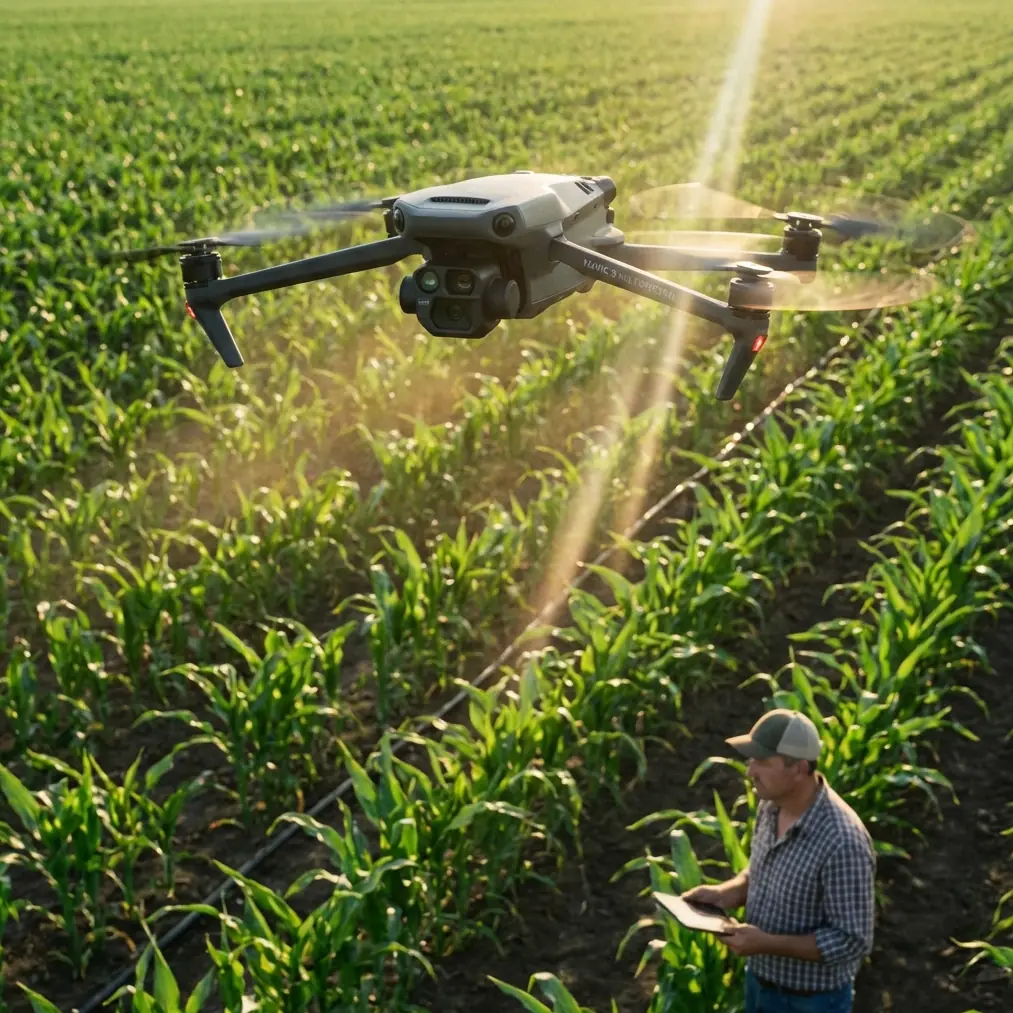
Mavic 4 Pro Best Practices for Dusty Power Line Tracking in a Low-Altitude Economy Era
META: A practical expert guide to using the Mavic 4 Pro for dusty power line tracking, with workflow tips on obstacle avoidance, ActiveTrack, D-Log capture, and handling electromagnetic interference in low-altitude inspection operations.
Power line inspection is changing. Not just because aircraft are getting smarter, but because the business environment around drones is shifting too. A recent industry roundup from 无人机网 covering April 12 to April 18, 2026 pointed to something bigger than a product cycle: China’s low-altitude economy has been folded into a strategic emerging development plan, and that matters for every operator building repeatable inspection workflows. When policy moves, infrastructure work usually follows. Utilities, contractors, training providers, service firms, and regional operators all start asking the same question: which platform can work reliably, efficiently, and safely in real conditions?
For teams tracking power lines in dusty terrain, the Mavic 4 Pro sits in an interesting position. It is compact enough for rapid deployment, sophisticated enough for high-quality image capture, and practical enough for recurring corridor work where setup time, flight confidence, and data consistency often decide whether the mission is profitable.
This guide is not a generic overview. It is built around a specific operating scenario: using the Mavic 4 Pro to follow power infrastructure in dusty environments where visibility, signal quality, and obstacle proximity are all active concerns. And because the broader market is being energized by low-altitude economic policy and expanding application cases, the real value is not just getting airborne. It is building a method that can scale.
Why the timing matters for Mavic 4 Pro operators
The reference material from 无人机网 makes two points that deserve more attention than they usually get.
First, the low-altitude economy is now being treated as a strategic growth area. Operationally, that means drone work is no longer just experimental or promotional. It is becoming embedded in transport, infrastructure, tourism, industrial services, and regional development. Once that happens, inspection clients expect consistency rather than novelty. A Mavic 4 Pro crew working on power lines is no longer just “using a drone.” They are participating in a larger service layer that is expected to be dependable.
Second, the same weekly roundup highlighted a 45-minute validation flight connecting Bifengxia to Wolong in a low-altitude cultural tourism scenario, showing how applications are moving beyond urban fringe use into deeper terrain. That detail matters even if your mission is utility inspection rather than tourism. Why? Because it signals a wider operational trend: drone use is extending into more complex topography, longer route logic, and less forgiving environments. Dusty transmission corridors, remote access roads, hillsides, and exposed ridgelines fit that pattern perfectly.
In other words, the Mavic 4 Pro is entering a market where infrastructure inspection is likely to become more normalized, more competitive, and more performance-driven.
Start with the right mission profile, not the right feature list
A common mistake in power line tracking is building the mission around camera features first. Subject tracking, obstacle avoidance, QuickShots, Hyperlapse, D-Log, ActiveTrack—these are useful tools, but they are not the mission. The mission is to document asset condition while maintaining safe stand-off distance, preserving line-of-sight awareness, and capturing footage that can be reviewed without ambiguity.
In dusty conditions, that starts with three assumptions:
- Visibility can degrade during the flight, not just before takeoff.
- Fine particles can lower image clarity and reduce contrast around conductors and hardware.
- Electromagnetic interference may affect control confidence, heading stability, or transmission quality near energized infrastructure.
The Mavic 4 Pro should therefore be set up for controlled inspection passes, not cinematic improvisation.
Pre-flight setup for dusty utility corridors
Before the aircraft leaves the ground, define the inspection objective in one sentence. For example: “Capture insulator strings, attachment points, and conductor alignment across a one-kilometer section with repeatable angle consistency.” That sentence affects every setting choice after it.
Camera and color settings
For inspection work, D-Log can be useful when lighting is uneven, especially if the corridor includes bright sky, reflective hardware, and deep shadow under crossarms or towers. The advantage is not artistic. It is information retention. If the footage will be reviewed later for condition assessment, preserving highlight and shadow detail gives your team more room to identify subtle defects.
That said, not every pass needs D-Log. If the goal is quick field verification and immediate handoff, a standard color profile may speed up review. Use D-Log when post-processing and documentation quality matter more than fast same-minute playback.
Flight path planning
Dust tends to be worst near unsealed access roads, dry cut slopes, and open maintenance tracks. Plan takeoff points upwind when possible. You want the aircraft to climb through the cleanest air available rather than into a particle cloud kicked up by vehicles or foot traffic.
For power line tracking, avoid flying directly under or too close to the line path unless the inspection objective absolutely requires that perspective and local procedures support it. Offset lateral tracking usually provides better control margin and cleaner framing.
Obstacle avoidance configuration
Obstacle avoidance is a support system, not a substitute for route discipline. Along power lines, the system can help with trees, poles, crossarms, and terrain edges, but thin wires and visually cluttered backgrounds can still challenge automated sensing. In dusty air, detection confidence may also be affected by lower visual clarity.
Use obstacle avoidance as a layer of protection while maintaining conservative spacing. If you need a tight visual on a fitting or connector, slow the aircraft first, then approach deliberately. Speed amplifies small errors.
ActiveTrack and subject tracking: useful, but only in the right part of the mission
The Mavic 4 Pro’s tracking functions can help maintain composition on linear assets, access vehicles, or moving ground teams. But for power lines, think of ActiveTrack and subject tracking as controlled aids rather than default navigation modes.
Where they can help:
- Following a maintenance vehicle along a service road for contextual documentation
- Holding framing on a tower or structure during a controlled orbit
- Maintaining a visual relationship with a ground reference while the pilot focuses on spacing and environmental awareness
Where they are less useful:
- Close conductor inspection
- Dense tower geometry with overlapping lines
- Dust-heavy scenes where edge contrast drops
- Areas with heavy electromagnetic clutter and frequent signal variation
For line work, manual flight with stabilized camera control is often the better choice during the critical inspection segment. Tracking features are most valuable on the transitions between detailed checks.
Handling electromagnetic interference with antenna adjustment
This is where many operators become either too casual or too reactive.
Power infrastructure can create electromagnetic interference that affects the confidence of your link, especially when aircraft orientation, tower geometry, and terrain combine in awkward ways. The wrong response is to continue the pass as if nothing changed. The second wrong response is making abrupt control inputs while staring only at the screen.
The better response is structured.
Step 1: recognize early warning signs
You are looking for small cues before they become a real control issue:
- Brief signal quality drops
- Momentary video breakup
- Unexpected heading corrections
- Delayed response feel
- Telemetry behavior that becomes inconsistent near a specific structure
If these patterns repeat in one zone, treat that spot as an interference pocket rather than a one-off glitch.
Step 2: adjust aircraft position before assuming hardware failure
Sometimes a modest lateral offset or a small altitude change can improve link stability. Power line environments are full of reflective and obstructive geometry. A few meters of repositioning may change the radio path enough to stabilize the connection.
Step 3: reorient the remote and adjust antenna alignment
Antenna adjustment is not glamorous, but it matters. Keep the antenna orientation optimized toward the aircraft rather than letting it drift into a casual position during a long pass. Many pilots slowly lose ideal alignment while concentrating on framing. In EMI-sensitive work, that can be the difference between a clean inspection and a compromised one.
The practical rule: do not point the antenna tips directly at the aircraft if your controller design relies on the broadside of the antenna pattern. Instead, maintain the strongest transmission face toward the drone, and recheck that relationship every time the aircraft changes direction, altitude, or offset.
Step 4: break off the pass if signal instability persists
If repositioning and antenna adjustment do not restore stable performance, terminate the close inspection run and reset from a cleaner location. There is no value in forcing a pass near energized assets with degraded link confidence. A second attempt from a different angle is almost always cheaper than a preventable incident.
If your team is refining an inspection workflow and wants field-oriented setup advice, it can help to message a drone specialist directly and compare mission assumptions before deploying to a difficult corridor.
Dust changes how you should fly, not just how you should clean
A lot of dusty-environment advice focuses on maintenance after the flight. That matters, but the larger issue is aerodynamic and visual discipline during the mission.
Fly smoother than you think you need to
Dust reduces scene clarity. When visibility and contrast are slightly degraded, abrupt yaw and aggressive lateral movement make footage harder to interpret later. Slow, deliberate passes produce cleaner frames and make it easier to inspect fittings, spacers, insulators, and conductor alignment.
Use angle variety with purpose
A straight corridor pass tells one story. A slight oblique pass tells another. For power line tracking, combine:
- A wider establishing pass for route context
- Mid-distance passes for tower-to-tower continuity
- Tight controlled shots for components of interest
This layered capture strategy matters because dust can hide minor detail from one angle while revealing it from another. Sun position and particle haze can make one side of hardware look flat and the opposite side readable.
Watch prop wash near loose ground
Low hover work over dry soil can create its own visibility problem. If you are launching near powdery surfaces, climb cleanly and move out before settling into inspection altitude. During landing, commit to a stable descent rather than a long low hover that kicks debris into the airframe and camera path.
QuickShots and Hyperlapse have a role, but not the one most people think
In a utility context, QuickShots are not there to make the operation look dramatic. They can be useful for stakeholder communication, progress summaries, training reviews, and client reporting when you need a clear visual explanation of corridor access, tower placement, or surrounding terrain.
Hyperlapse can also serve a practical purpose. For recurring inspections, a carefully repeated time-compressed view of the same route segment can help illustrate environmental change, vegetation growth, dust movement patterns, access condition, or broader project progress. Used this way, it becomes a documentation tool rather than a novelty.
The key is separation. Capture inspection data first. Use automated cinematic modes only after the mission-critical material is secure and only where the airspace, spacing, and line geometry make it sensible.
Building a repeatable inspection workflow with the Mavic 4 Pro
The strongest Mavic 4 Pro operations are not built on isolated good flights. They are built on consistency.
A simple repeatable workflow looks like this:
1. Site read
Assess wind, dust source, sun angle, tower spacing, terrain shape, and likely interference zones.
2. Stand-off plan
Choose lateral offsets and altitude bands that preserve both visibility and control margin.
3. Capture order
Start with broad context, then medium corridor tracking, then component-specific close work.
4. Signal discipline
Monitor transmission quality continuously and treat antenna orientation as an active task.
5. Data logic
Record in a way that matches how reviewers will inspect the footage later. Random beautiful shots are less useful than systematic coverage.
6. Post-flight notes
Log where EMI appeared, where dust reduced clarity, and which angles produced the best component visibility. That turns a one-day mission into a better procedure next time.
This is where the broader industry context comes back into view. When low-altitude operations are being elevated as part of a strategic development framework, the market rewards crews who can standardize outcomes. The Mavic 4 Pro is capable, but capability alone does not create inspection value. Method does.
The real advantage of the Mavic 4 Pro in this scenario
For dusty power line tracking, the aircraft’s value is not one isolated feature. It is the combination of mobility, modern sensing support, stable imaging options, and flexible capture modes that let a small team adapt quickly to changing site conditions.
Obstacle avoidance helps preserve margin around terrain and structures. ActiveTrack and subject tracking can support secondary documentation tasks. D-Log improves information retention in difficult lighting. QuickShots and Hyperlapse can strengthen reporting and training output after core inspection work is done.
But the decisive factor remains operator judgment, especially around electromagnetic interference and environmental discipline. The best Mavic 4 Pro results in utility work come from crews who understand when to trust automation, when to slow down, and when to reset the entire pass because signal quality is no longer where it needs to be.
That is the standard the market is moving toward. And with the low-altitude economy now getting stronger structural support, that standard is only going to rise.
Ready for your own Mavic 4 Pro? Contact our team for expert consultation.