
Mavic 4 Pro Field Report: What New Airspace Security
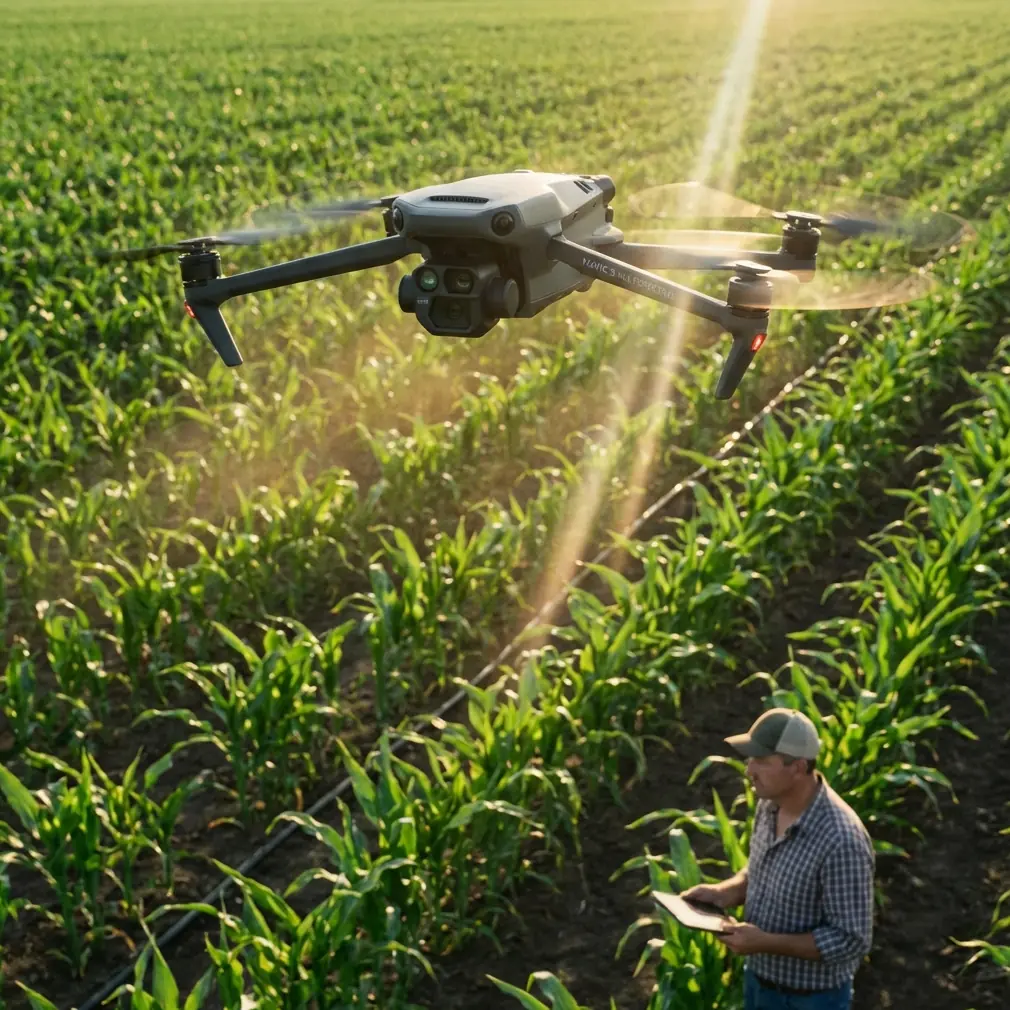
Mavic 4 Pro Field Report: What New Airspace Security and eVTOL Safety Signals Mean for Coastal Power Line Tracking
META: Expert field report on how new counter-drone integration and eVTOL safety developments shape real-world Mavic 4 Pro operations for coastal power line inspection.
The Mavic 4 Pro does not fly in a vacuum. That matters more than many pilots admit.
If your job is tracking power lines along the coast, the aircraft itself is only half the story. The other half is the environment around it: busier airspace, more scrutiny around infrastructure, and a much sharper industry focus on how unmanned aircraft coexist with security systems and emerging passenger-grade low-altitude aviation. Two recent developments bring that into focus. Fortem Technologies signed a new contract with Lockheed Martin to integrate the Fortem DroneHunter and TrueView Radar into the Sanctum counter-UAS framework for critical infrastructure protection. Around the same time, an eVTOL test flight and operations seminar in Chengdu put safety and practical deployment back at the center of the conversation.
At first glance, neither headline is about the Mavic 4 Pro. In practice, both are.
For coastal utility work, this is exactly the kind of outside signal that changes how a Mavic 4 Pro mission should be planned, flown, and documented.
Why these two news items matter to Mavic 4 Pro operators
Let’s start with the Fortem and Lockheed Martin story. The key fact is not simply that a contract was signed. It is that Fortem’s drone-focused hardware, including DroneHunter and TrueView Radar, is being integrated with Lockheed Martin’s Sanctum mission management software to protect critical infrastructure. That tells us something very specific: infrastructure sites are moving toward layered drone detection and response, not just passive awareness.
If you inspect transmission corridors, substations, switching yards, or shoreline energy assets, you may soon be operating near systems built to identify, classify, and potentially escalate responses to drone activity. For a Mavic 4 Pro pilot, that raises the operational bar. It means flight legitimacy, pre-authorization, geospatial discipline, and flight profile predictability become part of mission success just as much as image quality or battery management.
The second news item, centered on an eVTOL test flight and operations workshop in Chengdu, points to another reality. The industry is no longer treating advanced low-altitude flight as a novelty. Safety, flight testing, and operational readiness are becoming mainstream requirements across aircraft classes. Even though an eVTOL workshop and a compact camera drone occupy different corners of the market, they share the same strategic direction: the airspace is being prepared for more complex activity, and tolerance for casual or poorly structured drone operations will shrink.
That is why the Mavic 4 Pro conversation needs to mature. The best aircraft is not just the one with the sharpest image or most polished tracking mode. It is the one that helps a pilot perform inside a stricter, smarter operating environment.
Coastal power line work is where the pressure shows up first
Coastal inspections are messy. Salt haze reduces contrast. Crosswinds move unpredictably around towers and cliff edges. Sea glare confuses exposure. Bird activity is often higher than inland routes. Add infrastructure sensitivity and the mission stops looking like a simple visual line run.
This is where the Mavic 4 Pro earns its place.
A coastal power line tracking mission usually asks the aircraft to do several things at once: maintain stable framing on conductors or towers, preserve enough dynamic range to recover details from bright water and shadowed steel, avoid side collisions while moving laterally, and produce usable footage or stills without forcing repeated passes. The platform’s strength is not one headline feature. It is the way several systems can be used together.
Obstacle avoidance is not a marketing footnote in this setting. It is core risk control. When you are sliding along a line with structures, guy wires, uneven terrain, and wind-driven drift, having reliable sensing reduces the chance that a minor correction turns into a branch strike, tower encroachment, or abrupt stop that ruins the shot. In coastal work, that matters because repositioning can be costly in both battery time and operational exposure.
Subject tracking and ActiveTrack also take on a different meaning here. For recreational pilots, tracking often means following a cyclist or vehicle. For utility work, the practical value is repeatability. You need the aircraft to maintain coherent framing while the pilot concentrates on airspace awareness, line offset, and environmental cues. A stable automated tracking behavior can help reduce manual overcorrection, especially when following service paths or mapping a corridor edge parallel to a line route. That can produce cleaner datasets and fewer retakes.
QuickShots and Hyperlapse are not usually discussed in inspection circles, but they should not be dismissed. Utilities, contractors, and asset managers increasingly need more than fault imagery. They need contextual visuals for reporting, stakeholder briefings, environmental impact communication, and maintenance planning. A controlled Hyperlapse sequence of a corridor or a precise orbit around a coastal structure can add operational context that static images miss. On the Mavic 4 Pro, these modes can help produce supporting visuals without bringing a separate media platform into the field.
Then there is D-Log. Anyone who has tried to expose for coastal infrastructure knows why it matters. Bright reflective water and darker structural elements often exceed what a basic profile can handle gracefully. D-Log gives the pilot and editor more room to recover highlights and preserve shadow information. That is not just an aesthetic advantage. It can make corrosion, hardware wear, insulator condition, or vegetation encroachment easier to review after the flight.
The real edge over competitors is workflow confidence
Many drones can capture a clean image in calm conditions. Fewer maintain confidence when the mission profile gets narrow.
That is where the Mavic 4 Pro stands out against competitors in the same practical class. Some rivals may match headline video specs or claim sophisticated tracking, but coastal power line work is not won on spec-sheet symmetry. It is won on how confidently the aircraft lets the pilot manage a constrained corridor in shifting wind while still bringing home footage that can support technical review and decision-making.
The difference is often subtle. Better obstacle handling means fewer interrupted passes. More dependable subject tracking means less stick input during long lateral runs. A robust log profile means fewer lost details when the sun reflects off water beside a shaded lattice structure. When those advantages stack, the operator spends less effort fighting the aircraft and more effort reading the environment.
And that environment is about to become less forgiving.
The Fortem-Lockheed Martin integration is a useful warning sign. Critical infrastructure operators are adopting more capable counter-drone ecosystems, and one of the named components is radar: TrueView Radar. Radar-backed detection changes the expectation for how visible and accountable a drone mission is. In plain terms, coastal utility flights near protected sites are increasingly likely to be seen by systems designed specifically to understand drone activity. Sanctum, the mission management layer in this agreement, adds another piece: information is not just collected, it is organized for action.
For a legitimate Mavic 4 Pro operator, this does not mean panic. It means discipline. Flight plans should be tighter. Mission windows should be coordinated. Remote pilot behavior should be predictable and documented. If your team is building a repeatable inspection program, this is a good moment to tighten your preflight communication chain. If you need help designing a field-ready workflow around that reality, you can message our inspection team here.
What the Chengdu eVTOL safety discussion signals downstream
The Chengdu workshop on eVTOL test flight and operations may seem far removed from a folding prosumer-professional drone, but the strategic message is relevant. The industry is shifting from “can it fly?” to “how does it fly safely in real operations?” That question applies to everything.
For Mavic 4 Pro pilots, especially those working near coastlines and critical assets, that means mission structure starts to matter as much as hardware capability. Expect more emphasis on preflight risk assessments, route deconfliction, operational boundaries, pilot competency, and data handling. As low-altitude airspace becomes more populated and more regulated, the operators who thrive will be the ones who already treat even small-aircraft missions like professional aviation tasks.
This is not theoretical. Coastal power infrastructure creates a complicated risk picture:
- long linear routes with changing terrain
- reflective surfaces that can affect visual assessment
- weather shifts that happen faster than inland pilots expect
- proximity to roads, industrial facilities, ports, or marine traffic
- rising sensitivity around grid resilience and infrastructure security
The Mavic 4 Pro fits well into this picture because it can compress multiple mission needs into one aircraft: tracking, obstacle management, cinematic context capture, and color-flexible recording. But the news from security and eVTOL circles suggests something bigger. Capability alone is no longer enough. The better operator will be the one who can show intent, maintain procedural consistency, and produce reliable outputs without creating ambiguity for site owners or airspace stakeholders.
A practical field setup for this moment
If I were deploying the Mavic 4 Pro on a coastal line-tracking assignment under today’s conditions, I would build the mission around three priorities.
First, corridor predictability. Keep flight paths clean and easy to explain. Avoid unnecessary hovering near sensitive structures. Use ActiveTrack or carefully managed tracking only where it improves consistency rather than adding complexity. Predictable flight behavior is now part of trust-building.
Second, visual resilience. Shoot critical sequences in D-Log when lighting is harsh or rapidly changing. Coastlines create contrast traps. Capturing the widest usable tonal range gives the review team more flexibility later, especially when identifying issues on wires, connectors, or tower assemblies.
Third, collision margin. Use obstacle avoidance as a buffer, not a crutch. In side-on corridor work, the aircraft may need to maintain precise stand-off distances from structures while compensating for gusts. A drone that handles this calmly saves time and reduces stress. That is one of the strongest operational cases for the Mavic 4 Pro compared with aircraft that look similar on paper but inspire less confidence once wind, glare, and narrow geometry all show up at once.
QuickShots and Hyperlapse would be reserved for support visuals, not primary technical capture. But they still matter. A short reveal sequence showing shoreline approach to a transmission segment can be useful for maintenance briefings. A Hyperlapse of a broad corridor can help explain terrain exposure, access difficulty, or environmental context to teams that were never on site.
The bigger takeaway for Mavic 4 Pro buyers and pilots
The most useful reading of these two news items is not that the drone industry is becoming more complicated. It is that serious drone operations are becoming more integrated with the rest of aviation and infrastructure security.
Fortem’s contract with Lockheed Martin shows that counter-drone protection around critical assets is getting more coordinated, with hardware and software tied together in one operational chain. The Chengdu eVTOL seminar shows that safe flight and operational method are now central topics for the next generation of low-altitude aircraft. Put together, they point to the same conclusion: drone pilots working near real assets need aircraft that support disciplined, high-quality missions under pressure.
For coastal power line tracking, that is where the Mavic 4 Pro has a strong case. It is not just about image quality. It is about combining obstacle avoidance, subject tracking, ActiveTrack, D-Log flexibility, and efficient support modes into a platform that helps the pilot keep control of a difficult mission profile. Against competitors that may offer isolated strengths, this model stands out because it supports the full job: navigate the corridor, hold the shot, protect the aircraft, and return with footage people can actually use.
That is the standard now. Not flashy flying. Not feature collecting. Real operational value in a more watchful sky.
Ready for your own Mavic 4 Pro? Contact our team for expert consultation.