
What a New Multi-Domain ISR Alliance Means for Mavic 4 Pro
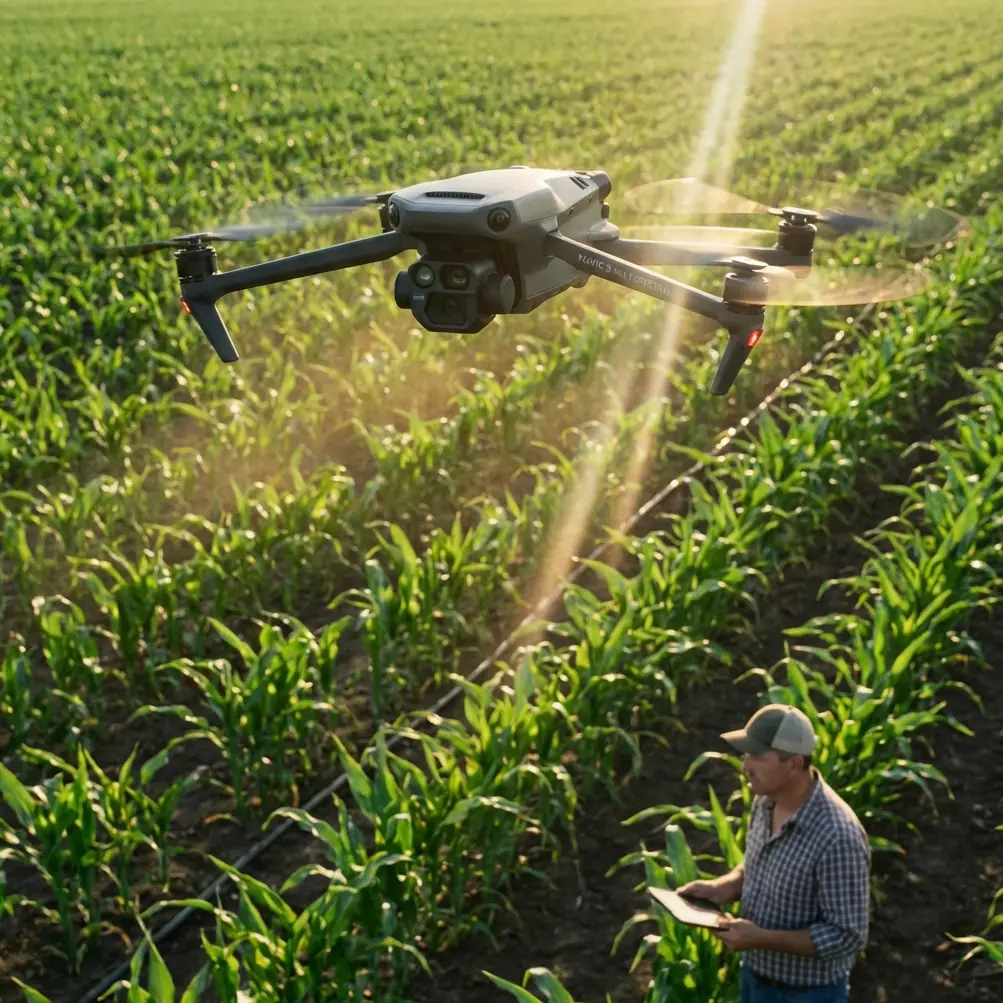
What a New Multi-Domain ISR Alliance Means for Mavic 4 Pro Highway Tracking in Mountain Terrain
META: Field report on how the Palantir, Ondas, and World View ISR partnership signals new expectations for mountain highway tracking workflows with the Mavic 4 Pro.
When a defense-facing technology partnership makes news, most Mavic 4 Pro pilots skip it. That is usually reasonable. A strategic announcement about ISR architecture can feel far removed from the daily reality of standing on a windy turnout, checking exposure, watching battery temperature, and trying to keep a highway corridor framed as it snakes through mountain terrain.
This one is different.
On March 19, 2026, DroneLife reported that Palantir, Ondas, and World View entered a strategic partnership to build an AI-enabled operational architecture for multi-domain ISR missions. The key detail is not just that three companies are working together. It is the structure of the collaboration: stratospheric, aerial, and land-based systems are being linked into an integrated command-and-control network. That matters well beyond large institutional programs, because it points to where expectations are heading for every aerial imaging workflow that involves movement, terrain, and decisions under pressure.
If you fly a Mavic 4 Pro to track highways in the mountains, you are already doing a scaled-down version of the same problem. You are pulling in visual data from the air, reacting to ground conditions, managing line-of-sight limits, and making quick route decisions as vehicles, light, wind, and terrain change minute by minute. The drone in your bag is not part of a defense ISR stack, but the operational logic is getting closer than many hobby and prosumer pilots realize.
That is the real story here.
A field lesson from the shoulder of a mountain road
I have spent enough mornings tracking road infrastructure in mountain corridors to know that the hard part is rarely the first takeoff. It is the third battery, when the valley wind shifts, shadows deepen faster than expected, and your launch point no longer feels like the right one for the segment you still need.
That is why this Palantir-Ondas-World View announcement caught my attention.
The phrase “multi-domain ISR” sounds abstract until you translate it into field behavior. Stratospheric platforms see the big pattern. Aerial systems capture the operational picture. Land-based systems ground-truth what is actually happening where vehicles, people, and infrastructure meet. An AI-enabled architecture sits over that stack and turns disconnected feeds into something closer to a usable decision layer.
Now pull that down to a Mavic 4 Pro mission tracking a highway through mountain terrain. You may not have a stratospheric balloon, but you still work across domains in a practical sense:
- The terrain map and route plan are your high-level layer.
- The drone camera feed is your live aerial layer.
- Your visual observer, vehicle position, or road-side scan is your ground layer.
Most failed mountain tracking sorties do not fail because the aircraft cannot fly. They fail because those layers are not synchronized. The pilot is solving one picture, the terrain is imposing another, and the road itself is changing the subject faster than the crew can reframe.
That is why this partnership is worth watching. It validates a direction of travel: isolated sensors are losing value compared with connected operational context.
Why this matters specifically for Mavic 4 Pro users
The Mavic 4 Pro sits in an interesting place. It is compact enough to deploy from difficult roadside pull-offs, yet advanced enough that pilots expect more than simple scenic footage. Readers looking at “tracking highways in mountain” conditions are not just asking whether the drone can record sharp video. They want to know whether it can maintain safe, stable, repeatable coverage of a moving route in a place where topography constantly interferes with both flight path and perception.
This is where the news becomes operationally relevant.
The reported partnership joins stratospheric, aerial, and land-based systems into one command-and-control network. That detail matters because mountain highway tracking is fundamentally a command-and-control problem disguised as a camera problem. The highway bends around ridgelines. Elevation changes distort your sense of distance. Vehicles disappear behind cut slopes and reappear in a completely different lighting zone. If you treat the mission as “just fly and follow,” the terrain wins.
On the Mavic 4 Pro, features like obstacle avoidance and ActiveTrack help, but they only work well when the pilot understands their limits in mountainous corridors. A guardrail, rock face, or tree line does not simply create collision risk. It also creates tracking ambiguity. The drone may interpret scene geometry differently as the subject moves from open roadway into a narrow section with vertical clutter. In practical terms, your aircraft can still “see” enough to avoid impact while losing the continuity needed for clean subject tracking.
That distinction matters. Avoidance is not the same thing as mission continuity.
The ISR partnership makes that point at a much larger scale. A command network is valuable because it reduces the gap between seeing something and understanding what to do next. For Mavic 4 Pro pilots, that means the strongest mountain-road workflow is the one that combines onboard intelligence with preplanned route segmentation, ground awareness, and disciplined battery timing.
The mountain highway problem is really a timing problem
Most people assume mountain tracking is mainly about obstacle avoidance. It is not. Timing is the deeper challenge.
A highway in the mountains creates repeating visual traps: tunnels of trees, blind curves, sudden elevation drops, reflective snow patches, intermittent shadows, and changing wind exposure on open ridges. Your aircraft might perform perfectly in one section and then struggle to maintain smooth tracking a few hundred meters later because the scene geometry changes faster than your setup does.
This is why the “AI-enabled operational architecture” detail from the March 19, 2026 report deserves attention. AI only matters in the field when it shortens the time between detection, interpretation, and action. For a Mavic 4 Pro operator, that translates into three questions before takeoff:
- Where will tracking likely break?
- Where will obstacle sensing become conservative or noisy?
- Where will I need to swap from automated following to manual reframing?
Those questions are not academic. They define whether you come home with a coherent route sequence or a folder full of disconnected clips.
I often break a mountain highway mission into short control zones rather than one long pursuit. It feels less cinematic at first, but the edit is cleaner because each segment has a defined risk profile. One zone might be best for a lateral ActiveTrack pass. Another may be safer as a high, slightly offset follow shot with more manual input. A third may work better as a reveal sequence using QuickShots rather than persistent tracking.
That style of planning mirrors the logic behind integrated ISR systems: do not force one sensor behavior across every environment. Match the method to the terrain.
Battery management tip from the field
Here is the battery habit that has saved me more than once on mountain roads: do not launch a fresh pack immediately after driving to a colder or higher section without letting the battery stabilize while you set up the shot.
Pilots talk about battery percentage constantly, but in mountain work, battery behavior matters more than the headline number on the screen. A pack that looked healthy at one elevation can feel different after a rapid location change, especially if the aircraft goes straight into a climbing track against wind. My rule is simple: while I’m checking framing, exposure, and obstacle path, I also let the battery settle into the ambient conditions for a few minutes. That tiny pause often gives you a more honest picture of how the pack will behave under load.
The second part of the tip is even more useful: reserve your strongest battery for the segment with the largest climb and the most uncertain recovery path, not for the opening shot. Early-mission excitement makes pilots burn their best pack on the easiest scene. In mountain terrain, that is backwards. Save the cleanest battery for the section where a tailwind on the outbound leg could become an unpleasant headwind on the return.
It sounds basic. In the field, it changes outcomes.
How the ISR news reframes feature priorities
When readers search for Mavic 4 Pro guidance, they often focus on visible features such as D-Log, Hyperlapse, QuickShots, or headline tracking modes. Those are all useful, but this news item nudges attention toward a more mature question: how does the aircraft fit into a broader observation workflow?
That is exactly what the Palantir, Ondas, and World View collaboration is about. Not a single sensor. A system.
For mountain highway work, that changes how I rank the Mavic 4 Pro’s strengths:
First, obstacle avoidance matters because mountain corridors compress reaction time. It is not just a protection feature; it expands the margin you have for composition decisions when road geometry suddenly tightens.
Second, subject tracking and ActiveTrack matter most when used selectively. On broad open stretches, they can reduce pilot workload and smooth pacing. In narrower sections with visual clutter, manual intervention is often the professional move. Knowing when to hand tracking back to yourself is part of being efficient, not a failure of the tech.
Third, D-Log becomes more valuable in mountains than many pilots expect because highway corridors often combine bright sky, dark forest, and reflective road surface in the same frame. That dynamic range pressure can destroy continuity between clips if you expose too aggressively for the highlights. A flatter profile preserves flexibility when the light changes faster than the route.
Fourth, Hyperlapse and QuickShots are best treated as support tools rather than the backbone of the mission. A Hyperlapse can establish geography beautifully, especially when you need to show how a road cuts across ridges and valleys. QuickShots can create useful transitions. But if your assignment is truly about tracking, the core work still depends on repeatable directional control and disciplined route logic.
A small-drone operator’s version of command and control
One reason this story stands out is that it confirms a cultural shift in drone operations. The center of gravity is moving away from aircraft-only thinking and toward workflow thinking.
A Mavic 4 Pro pilot tracking highways in the mountains does not need enterprise software to learn from that. What you need is a command habit:
- define the mission segment before takeoff,
- know the likely loss points,
- decide in advance where automation helps and where it hurts,
- keep your ground position aligned with your air picture,
- and never let the camera task override the recovery path.
That last point is where many mountain flights go off track. Pilots get absorbed in visual continuity and drift into poor return geometry. A drone that is technically safe in open air can become operationally awkward if the only practical landing option is now behind a stand of trees, across a slope, or below your current elevation line.
If you work with a spotter or roadside support vehicle, even informally, treat that arrangement as your own land-based input layer. A quick text or radio update about traffic density, wind at the next turnout, or a temporary road blockage can change the next launch decision. If you want to compare route setups or discuss a mountain-tracking workflow with a human team, this direct chat link is a practical starting point: message the crew here.
That kind of coordination is the small-team counterpart to what the news describes at a strategic level. Different domains. Shared picture. Better decisions.
The bigger takeaway for Mavic 4 Pro readers
This was not a product launch, and it was not written for consumer drone users. Still, the March 19, 2026 announcement carries a clear signal for anyone flying serious missions with a Mavic 4 Pro.
The future of aerial work is not just better cameras or smarter tracking. It is tighter integration between what sees, what interprets, and what decides.
Palantir, Ondas, and World View are pursuing that model by linking stratospheric, aerial, and land-based systems in one AI-enabled operational architecture. For a mountain highway pilot, the practical translation is straightforward: the strongest footage comes from operational alignment, not from relying on a single feature to solve every problem.
Use obstacle avoidance to protect your margins, not to justify risky path choices. Use ActiveTrack where the terrain supports it, not where the terrain confuses it. Use D-Log because mountain light is less forgiving than it looks from the turnout. And manage batteries like mission assets, not consumables.
That is the field lesson hidden inside this news item. Even at the compact-drone level, the pilots who perform best are the ones already thinking in systems.
Ready for your own Mavic 4 Pro? Contact our team for expert consultation.