
Mavic 4 Pro Tracking in High-Altitude Forests
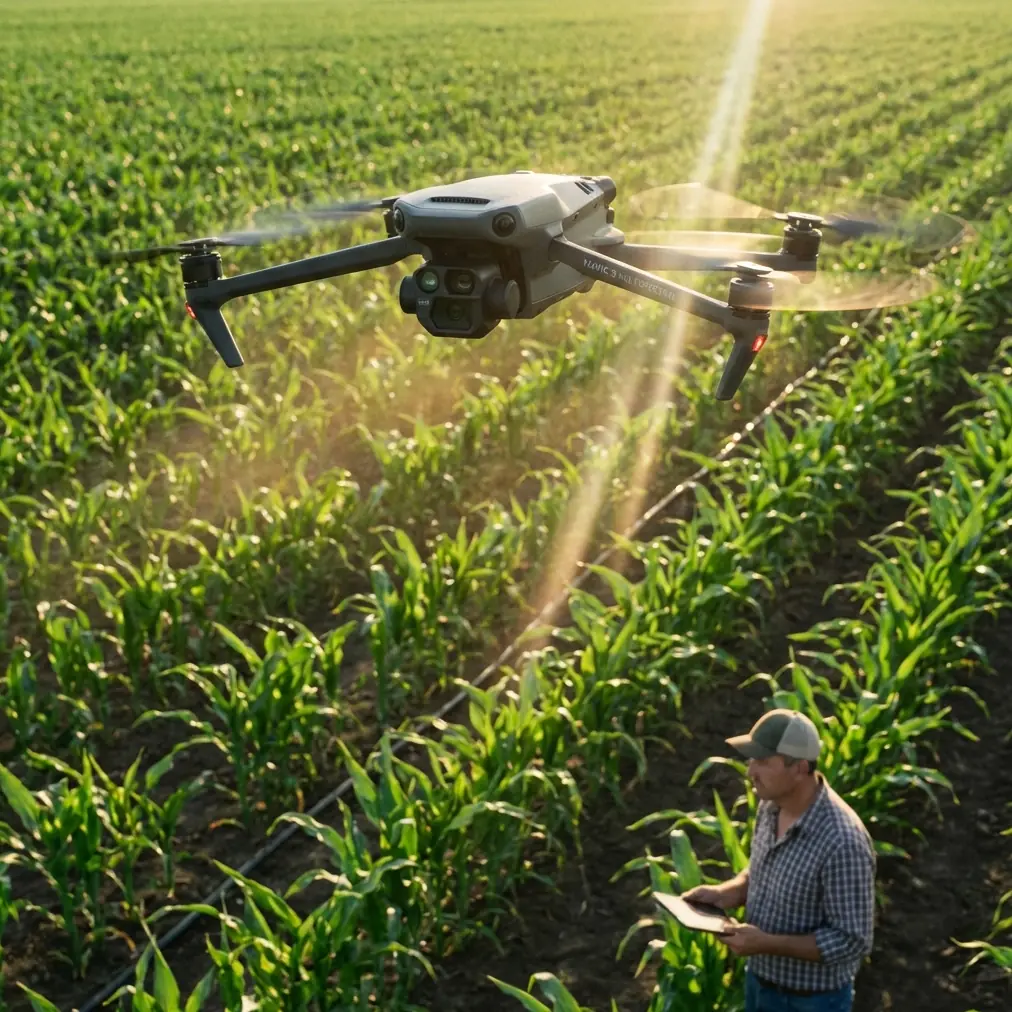
Mavic 4 Pro Tracking in High-Altitude Forests: What Actually Matters in the Field
META: A technical review of how the Mavic 4 Pro handles forest tracking at altitude, with practical insight on obstacle avoidance, ActiveTrack, D-Log, Hyperlapse, and mission planning.
High-altitude forests expose the difference between a drone that looks impressive on a spec sheet and one that stays composed when the air gets thin, the light shifts by the minute, and tree structure becomes a navigation problem instead of scenery. If your goal is to track wildlife corridors, map canopy edges, monitor treeline health, or simply hold a reliable moving subject through mountain timber, the Mavic 4 Pro sits in a very interesting place.
This is not because it is magically perfect in trees. No aircraft is. Dense branches, vertical terrain, uneven GPS quality in narrow valleys, and sudden wind shear can embarrass even experienced pilots. What makes the Mavic 4 Pro worth serious attention for this specific job is the way its core flight intelligence, obstacle sensing, tracking logic, and pro-grade imaging tools work together. In high forests, that integration matters more than any one headline feature.
I have spent enough time around UAV operations to be skeptical of marketing claims about “autonomous” tracking in wooded environments. Forests are messy. Branches do not present as clean obstacles. Fine twigs, dead snags, angled trunks, and shifting shadows can all confuse perception systems. Subject tracking can drift when the scene is visually cluttered. At altitude, reduced air density can soften the aircraft’s authority during aggressive corrections. So the right question is not whether the Mavic 4 Pro can track in a forest. The right question is where it maintains an operational edge, where it still needs pilot discipline, and whether it gives you better odds than competing prosumer platforms.
The answer, in practical terms, is yes. In this class, the Mavic 4 Pro is especially strong because it combines omnidirectional obstacle avoidance with mature subject tracking and flexible image profiles like D-Log. Those are not isolated conveniences. In mountain forests, they directly affect mission success.
Start with obstacle avoidance. In open terrain, obstacle sensing is often treated like a backup safety layer. In a conifer stand above the cloud line, it becomes part of the flight plan. The reason is simple: forest tracking is rarely about one obvious obstacle. It is about repeated micro-decisions. A drone following a hiker on a ridgeline trail, a survey team moving through sparse alpine larch, or a vehicle threading a logging road must continuously interpret trunks, side branches, and slope changes while maintaining framing. Omnidirectional sensing gives the Mavic 4 Pro a real advantage here because the threat profile is not only in front of the aircraft. Lateral drift matters. Rearward motion matters. Climbing over rising ground matters.
Compared with lower-tier systems that rely on forward-biased sensing or less confident side coverage, the Mavic 4 Pro is better suited to maintaining line and composition when the route bends through timber. That does not mean you should trust it blindly between close branches. It means the aircraft is less likely to force crude compromises, such as flying too high above the canopy just to stay safe or losing track whenever the subject passes under irregular cover. In operational use, that translates to fewer broken shots and fewer aborted passes.
Now add ActiveTrack to the equation. Forest work is where weak subject tracking reveals itself quickly. Open beach demos and road-following clips flatter almost every modern drone. Try keeping a subject locked while the background is a repeating wall of trunks and shadow bands, and the difference between tracking systems becomes obvious. The Mavic 4 Pro’s tracking behavior is valuable because it is built for dynamic subject isolation, not just simple follow mode. In cluttered scenes, that distinction matters.
A reliable ActiveTrack system helps the aircraft decide what the subject is, where it is moving, and how to maintain continuity when partial occlusion happens. In real forest conditions, partial occlusion is constant. A subject disappears behind a trunk for a second. A ridgeline cuts contrast. Sun patches flare one side of the frame. If the tracking engine is weak, the drone hesitates, drifts, or reassigns attention to the wrong object. If it is mature, the aircraft recovers more gracefully and keeps the sequence usable.
That is one area where the Mavic 4 Pro typically excels against competitors that may offer tracking on paper but struggle once the visual scene gets noisy. Some alternatives are competent in open fields yet become conservative or unstable in wooded terrain, either slowing to the point of uselessness or failing to preserve smooth composition. The Mavic 4 Pro is not immune to failure, but it generally keeps more of the workload manageable for the pilot. For solo operators in remote forest zones, that is a meaningful edge.
The operational significance of this becomes clearer when you think beyond cinematic use. If you are tracking forest boundaries at high altitude, your subject may not be a person at all. It may be a moving point of interest, a ridgeline path, or a line of travel that needs repeatable framing for comparative analysis. Stable subject handling reduces the number of re-flights required. In mountain environments, fewer re-flights means less battery wasted climbing back to working altitude and less exposure to weather shifts that can roll in fast.
Then there is imaging. A lot of pilots focus on tracking and forget that forest missions often fail in post, not in flight. High-altitude forests create ugly contrast. Snow patches, dark bark, deep shade under canopy, bright cloud edges, and reflective water cuts can all appear in the same sequence. This is where D-Log matters. Not as a buzzword. As a buffer against difficult light.
When you shoot in D-Log, you preserve more latitude for grading than with a baked-in standard profile. In forests, that means better odds of holding highlight detail in bright sky gaps while still recovering shadow texture in the understory. If your purpose is environmental monitoring, documentary work, or professional delivery to a client who needs clean, consistent footage across several passes, that extra flexibility is not optional. It is how you avoid a sequence where the treeline looks crushed and the sky looks clipped.
This is another point where the Mavic 4 Pro separates itself from drones aimed more squarely at casual creators. Plenty of aircraft can produce attractive footage on a sunny day. Fewer give you a profile robust enough to handle the tonal violence of alpine woodland. If your reader scenario is tracking forests in high altitude, D-Log is not a luxury feature. It is part of the workflow.
QuickShots and Hyperlapse also deserve a more serious reading than they usually get. These modes are often dismissed as social-media shortcuts, but in a technical field context they can be useful if you understand their limits. QuickShots can help standardize motion patterns for repeatable reveal shots over tree lines or isolated ridges. Hyperlapse can condense cloud movement over a monitored forest zone or show changing visibility through a valley system. Used carefully, these tools are not gimmicks. They are fast ways to create reference sequences that communicate landscape change and terrain relationships.
That said, I would not recommend leaning on automated modes deep inside dense timber. Their value increases in transitional areas: canopy edges, burn scars, open saddles, high meadows bordered by forest, and sparse alpine stands where the aircraft has room to maneuver. The Mavic 4 Pro gives you these options, but the pilot still has to decide when automation serves the mission and when it simply adds risk.
So how should you actually fly this platform in high-altitude forest tracking?
First, give the aircraft horizontal breathing room. Obstacle avoidance is a support system, not a license to thread narrow branch gaps. In a forest, the cleaner strategy is usually to track along edges, roads, creek corridors, or natural openings rather than directly through dense canopy breaks. The Mavic 4 Pro is good at maintaining subject continuity, but you improve its success rate dramatically when you design the route around visibility.
Second, watch speed. Reduced air density at altitude changes how any multirotor feels under load. Fast tracking passes that seem easy at lower elevations can become less tidy when the aircraft has to brake or sidestep around trunks. If the forest is visually complex, slower is usually better. A smooth pass at moderate speed is more useful than a dramatic one that forces tracking corrections every few seconds.
Third, use ActiveTrack selectively. If your subject is moving on a predictable route, let the system work, but stay ready to take over when the path enters dense cover or sharp terrain transitions. This is where experience beats automation. Good pilots know when to let the machine carry the shot and when to intervene before the system gets trapped by its own logic.
Fourth, expose with post-production in mind. D-Log gives you latitude, but only if you use it intelligently. Forest shadows can tempt you to overexpose. Resist that. Protect highlights in openings and sky breaks, then lift the darker zones in grading. You can recover a lot from a well-managed log file. You cannot reconstruct clipped clouds or blown snowfields.
Fifth, think in sequences rather than single hero shots. A forest mission at altitude benefits from multiple layers: a wider establishing pass, a medium tracking sequence through the route, a higher-angle environmental line, and a compressed Hyperlapse if weather or visibility patterns matter. The Mavic 4 Pro supports this kind of varied capture better than many drones because its flight intelligence and imaging pipeline are built to serve both movement and finishing quality.
The competitor comparison is where this aircraft becomes easiest to justify. In the prosumer segment, some drones may match parts of the package. One may offer respectable image quality. Another may have acceptable tracking in simple terrain. Another may fly well in open wind. But high-altitude forests are where fragmented capability becomes obvious. If the obstacle system is tentative, your tracking route shrinks. If the tracking is weak, your safe route still yields unusable footage. If the camera profile is limited, your successful flight still produces compromised material. The Mavic 4 Pro stands out because it is well balanced across all three demands.
That balance is exactly what forest operators need. Not perfection. Not hype. Balance.
One practical habit I recommend is creating a preflight checklist specific to forest tracking: wind at launch and at working altitude, sun angle over the route, expected points of occlusion, emergency climb path, return path that avoids ridge rotor, and one manual fallback shot if tracking fails. If you want a field-ready checklist format, I can share one directly through this quick chat link: message me here. In mountain forests, preparation is often the deciding factor between bringing home useful footage and bringing home a story about why the drone had to bail out.
The Mavic 4 Pro is not the drone you buy because forests are easy. It is the drone you choose because forests are difficult and you need a platform with enough sensing, tracking intelligence, and image flexibility to handle that difficulty with fewer compromises. Its obstacle avoidance has operational value because wooded mountain routes create threats from every direction, not just the front. Its ActiveTrack matters because occlusion and visual clutter are the norm, not the exception. Its D-Log matters because high-altitude light can punish a weaker camera workflow in a single pass.
If your work involves tracking forests above the valley floor, where terrain and timber keep rewriting the shot, that combination is what makes the Mavic 4 Pro more than just another flagship drone. It becomes a practical field tool.
Ready for your own Mavic 4 Pro? Contact our team for expert consultation.