
Mavic 4 Pro for Mountain Field Tracking: What Actually
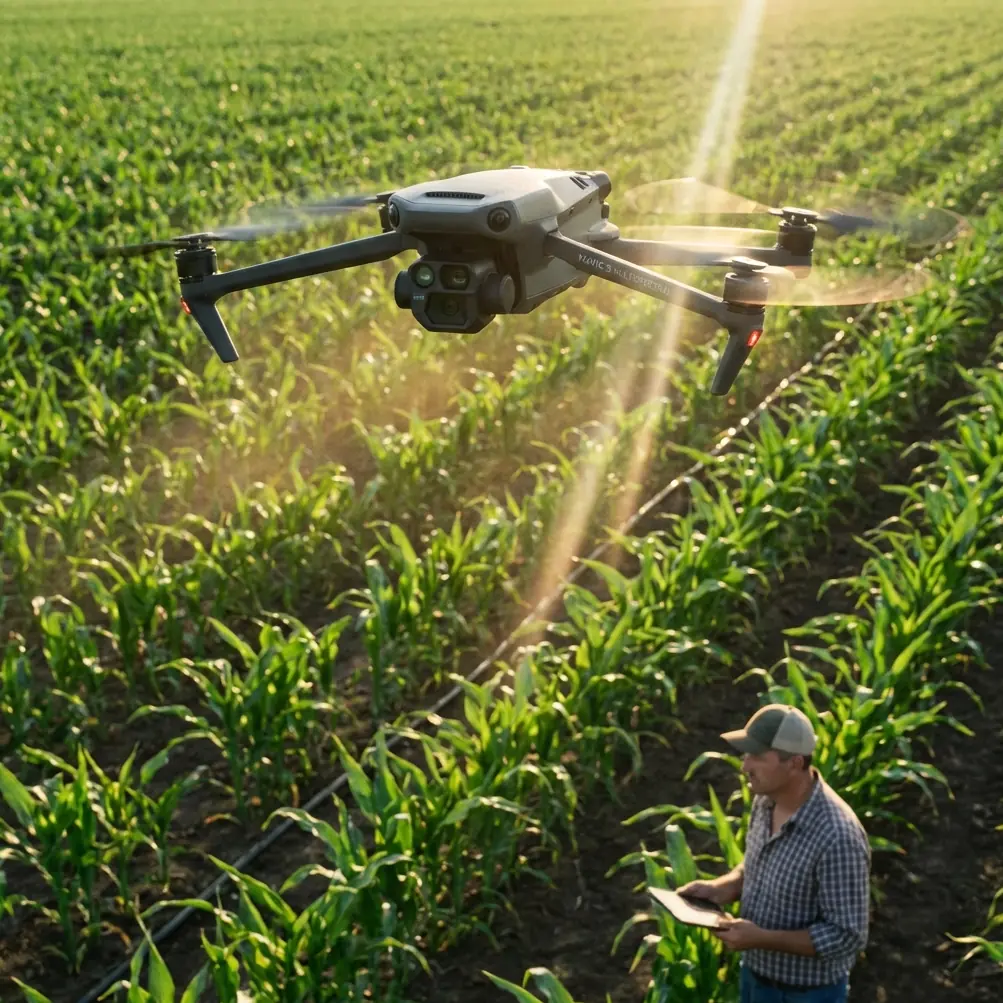
Mavic 4 Pro for Mountain Field Tracking: What Actually Matters Before You Take Off
META: A practical expert guide to using Mavic 4 Pro for tracking fields in mountain terrain, with emphasis on obstacle avoidance, ActiveTrack, D-Log workflows, and a critical pre-flight cleaning step.
Mountain field tracking looks simple from a distance. Launch the drone, follow the terrace line, capture a few sweeping passes, head home.
That fantasy usually ends the first time you work a real slope.
Ridges break signal paths. Light changes by the minute. Trees rise where maps looked clean. Dust, pollen, and mist collect on the aircraft faster than many pilots expect. And if you are using a Mavic 4 Pro to monitor agricultural plots in mountainous terrain, the drone’s intelligence is only as good as the visibility its sensors actually have.
I shoot landscapes, farms, and rural working land, and I’ve learned that the hardest part of mountain tracking is not getting dramatic footage. It is getting repeatable, usable footage that helps you understand what is happening on the ground. That means stable tracking, reliable obstacle sensing, and files that hold up when you need to inspect crop stress, water flow, access routes, or edge conditions across uneven terrain.
The Mavic 4 Pro is especially well suited to this kind of assignment because it combines autonomous tracking tools with high-end image capture options. But in mountain agriculture, capability on paper is not the same as field performance. The difference often comes down to workflow.
The real problem with tracking fields in mountain terrain
Mountain farmland is messy in all the ways drones dislike.
The ground elevation is constantly changing, so the aircraft can seem comfortably high on one pass and suddenly too close to a stand of trees or a utility pole on the next. Field boundaries are irregular. Access roads snake through narrow cuts. Wind wraps around slopes and creates subtle drift. If you are tracking a moving subject — a worker, a small utility vehicle, or even following a contour line for visual documentation — the drone has to interpret a scene full of visual noise.
That is where features like obstacle avoidance and ActiveTrack start to matter, not as marketing terms but as operational tools.
Obstacle sensing is your buffer against terrain surprises. ActiveTrack helps the aircraft maintain focus on a selected subject while you pay attention to terrain, light, and framing. QuickShots and Hyperlapse can also be useful, though not in the way many people assume. In mountain field work, those modes are less about flashy output and more about collecting consistent visual references from repeatable movement patterns.
Still, none of it works well if your sensors are partially obscured.
The pre-flight step too many pilots skip
Before any mountain tracking flight, I clean the vision sensors and camera glass. Every time.
This is not cosmetic. It is a safety and data-quality step.
If the aircraft has picked up fine dust from a dirt road, moisture from low cloud, or fingerprints from handling, the Mavic 4 Pro’s obstacle avoidance system can lose clarity precisely when you need it most. In mountain fields, that means reduced confidence near branches, wires, retaining walls, or terrace edges. For subject tracking, contamination can also interfere with how cleanly the aircraft identifies and follows a target against a textured background.
A lens wipe takes less than a minute. The value of that minute is enormous.
My usual sequence is simple:
- inspect front, rear, and downward vision areas
- check the main camera glass for haze or smears
- verify gimbal movement is unobstructed
- confirm there is no moisture buildup after moving from a cool vehicle interior into warmer outdoor air
This matters even more in mountain agriculture because environmental transitions are constant. You may start the morning in mist, climb into drier air, then descend near irrigation zones where humidity spikes again. A drone with excellent sensing can become an average drone very quickly if its optical systems are dirty.
Why Mavic 4 Pro makes sense for mountain field documentation
For this kind of work, the Mavic 4 Pro is not just a flying camera. It is a mobile observation platform. The practical advantage is that it can do several jobs in one flight window.
You can use ActiveTrack to follow a worker moving along a terrace path, then switch to wider passes for field overview, then capture a Hyperlapse sequence to show changing cloud shadows over planted rows, and finally record in D-Log when you know the footage will need grading to recover contrast from harsh mountain light.
That flexibility matters because mountain conditions compress time. You may have only a short stretch of stable wind and usable sunlight. A drone that shifts quickly between autonomous support and manual precision saves flights.
ActiveTrack in steep terrain
ActiveTrack is often discussed like a convenience feature. In mountain work, it is closer to a workload-management tool.
When following a person or vehicle across uneven ground, ActiveTrack reduces the amount of continuous stick input needed to maintain framing. That frees your attention for altitude, side clearance, and route decisions. You are still the pilot. You are still responsible for the aircraft. But the cognitive burden changes.
That is useful when your subject moves through visually complex spaces — tree lines, rock walls, irrigation cuts, scattered equipment. In open flatland, subject tracking is easy. On a mountainside, the drone must deal with changing background contrast and interrupted lines of sight. Good tracking support can be the difference between one clean pass and five wasted attempts.
Obstacle avoidance is not a substitute for route planning
This needs to be said plainly. Obstacle avoidance helps, but mountain flying still demands route discipline.
The Mavic 4 Pro’s sensing system can reduce risk when terrain narrows your options, but it should back up your decisions, not replace them. In practical terms, I still build my passes around known escape corridors. I avoid blind lateral moves along tree-covered ridges. I keep a mental map of safe hover points. And I never assume a downhill view tells me what is waiting just beyond the crest.
Cleaning the sensors before takeoff is what gives obstacle avoidance the best chance to do its job. Planning the route is what keeps you from asking too much of it.
The image side: why D-Log matters in mountain agriculture
If your only goal is quick social media footage, standard color can be enough. But mountain field tracking usually benefits from more flexible files.
D-Log is especially useful when you are filming under broken cloud, strong midday sun, or reflective surfaces like wet soil and irrigation channels. Those scenes often contain deep shadow on one side of the frame and bright highlights on the other. A flatter recording profile gives you more room in post to preserve detail.
That is not just about aesthetics.
When a grower, project manager, or landowner wants to compare conditions across sections of a mountain field, crushed shadows hide information. Blown highlights erase texture. Better dynamic range handling makes your footage more useful for actual review. You can distinguish path conditions, canopy density differences, runoff patterns, and the edge definition of planted blocks more reliably.
I often think of D-Log as insurance for difficult light. In the mountains, difficult light is normal.
QuickShots and Hyperlapse are more useful than they sound
A lot of experienced operators ignore automated creative modes because they seem too consumer-oriented. That is a mistake.
QuickShots can be valuable for generating standardized establishing views of a field section. If you need a repeatable visual summary of a terrace, access road, or ridge-side planting area, an automated movement pattern can create consistency from one visit to the next.
Hyperlapse has a different role. In mountain field work, it helps reveal slow environmental change:
- fog lifting off a slope
- moving cloud bands changing exposure over crop rows
- worker movement through a distributed field area
- traffic and access patterns on narrow farm roads
Those patterns can be more informative than a single still or a short normal-speed clip. The point is not style. The point is time compression.
A practical mountain workflow with Mavic 4 Pro
Here is the workflow I recommend when tracking fields in mountain terrain.
1. Start with the cleaning check
Do this before powering into the main flight sequence. Sensor clarity affects obstacle avoidance and subject tracking. In dirty or humid farm environments, it is foundational.
2. Walk the launch area first
Mountain terrain can distort your judgment once the drone is airborne. A short walk helps you spot overhead lines, unstable surfaces, tree overhang, and likely wind channels.
3. Use a reconnaissance pass before tracking
I prefer a short manual overview pass before engaging ActiveTrack. This gives you a current read on wind behavior, side clearance, and subject path options.
4. Track only where you have an exit plan
If a subject disappears behind a stand of trees or drops into a narrow cut, do not force the follow. Reposition and rebuild the shot. Safe continuity beats aggressive pursuit.
5. Capture one clean wide sequence in D-Log
Even if the immediate need is simple documentation, get at least one high-quality overview clip with grading latitude. It often becomes the most useful record later.
6. Add one standardized automated movement
That might be a QuickShot-style reveal or a controlled orbital movement around a field section. Consistency helps when comparing future flights.
7. Finish with a detail pass
Use the remaining battery window to inspect access points, drainage paths, retaining edges, or crop transitions that looked suspicious from the wider pass.
Why this matters beyond one flight
The strongest argument for using Mavic 4 Pro in mountain field tracking is not that it can produce beautiful footage, though it can. It is that the aircraft supports a repeatable documentation process.
That idea connects surprisingly well with a broader shift in education and innovation policy. Beginning in 2016, all universities in China were required to set innovation and entrepreneurship courses, according to guidance from the Ministry of Education. Around the same period, the State Council’s 2015 and 2016 policy direction pushed the development of maker spaces and encouraged universities and research institutions to build innovation platforms around their strengths.
Why mention that in an article about a drone over mountain fields?
Because the Mavic 4 Pro belongs to the same real-world pattern: technology is most valuable when it moves from novelty to structured practice. The policy emphasis on STEAM, maker education, and information technology application was not about gadgets for their own sake. It was about building problem-solving habits. In 2016, the Education Informatization “13th Five-Year Plan” explicitly encouraged qualified regions to explore information technology in maker spaces, cross-disciplinary STEAM learning, and new educational models to improve students’ information literacy, innovation awareness, and practical capability.
That operational mindset applies perfectly to drone fieldwork.
A pilot documenting mountain agriculture is doing a cross-disciplinary job. Flight control, visual analysis, environmental awareness, image science, and decision-making all intersect. The Mavic 4 Pro is most effective in the hands of someone who treats it like part of a disciplined workflow, not a shortcut.
The human side of the shot
As a photographer, I care about atmosphere. Mountain fields at first light can be extraordinary. But I have also learned that atmosphere causes problems. Haze lowers contrast. Moisture affects glass. Side light exaggerates terrain and can confuse distance judgment. The best operators stay calm and procedural without losing sensitivity to the scene.
That balance is where the Mavic 4 Pro shines. It gives you enough automation to reduce routine workload, enough image control to preserve difficult light, and enough sensing support to operate with confidence — if you prepare it properly.
If you want help refining your own mountain field workflow, from tracking settings to pre-flight checks, you can message a drone specialist directly.
The beauty of mountain agriculture from the air is obvious. The challenge is making each flight useful, safe, and repeatable. Clean the sensors. Respect the terrain. Let tracking and obstacle avoidance assist you, not seduce you into complacency. Record with intent. That is how the Mavic 4 Pro becomes more than a flying camera.
Ready for your own Mavic 4 Pro? Contact our team for expert consultation.