
Mavic 4 Pro Field Report: Tracking Wind-Swept Fields
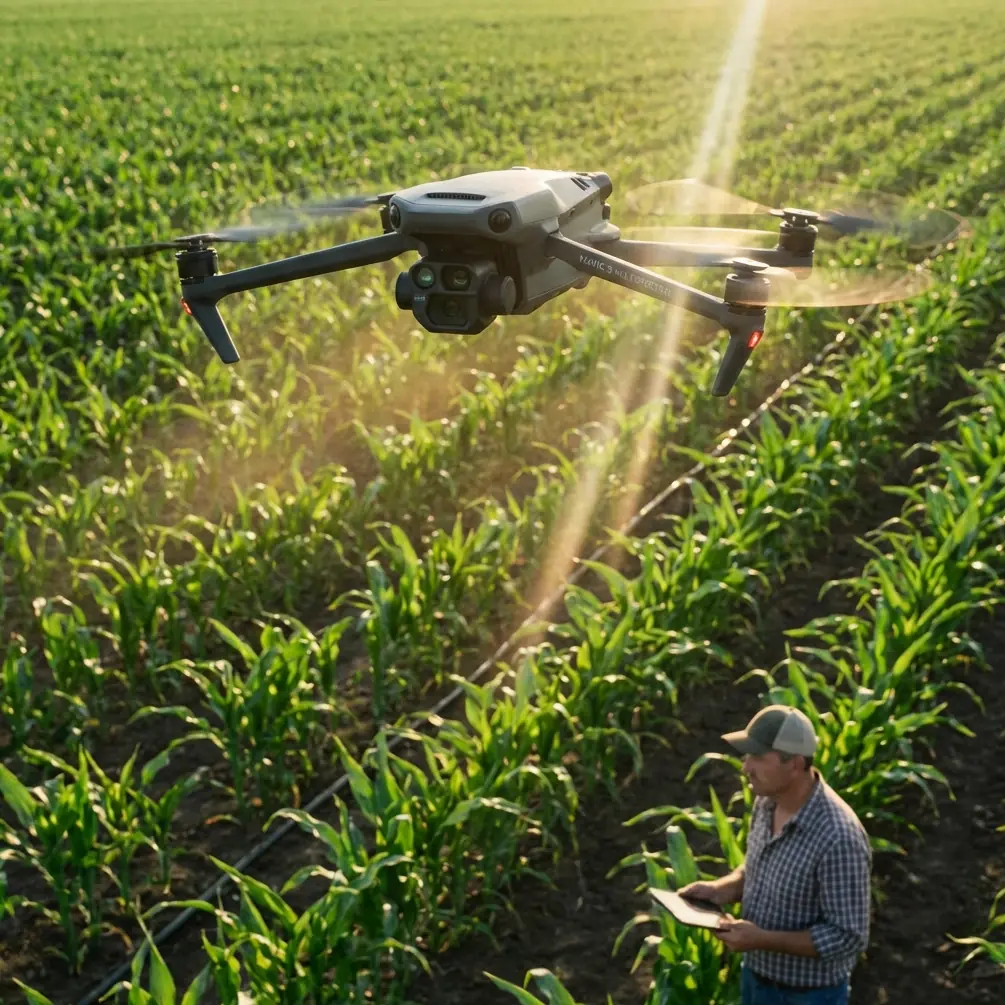
Mavic 4 Pro Field Report: Tracking Wind-Swept Fields Without Losing the Shot
META: A photographer’s field report on using the Mavic 4 Pro to track across windy fields, with practical tips on ActiveTrack, obstacle avoidance, D-Log, QuickShots, and setup choices that improve stability.
When you fly over open fields, the problem usually isn’t getting airborne. It’s keeping a moving subject framed when the landscape offers almost no visual shelter and the wind keeps rewriting your flight path. That is where the Mavic 4 Pro earns its place. Not because it makes hard conditions easy, but because it gives you enough control, awareness, and image flexibility to work in conditions that would normally force a reshoot.
I spent time thinking about the Mavic 4 Pro from the perspective that matters most to working pilots and photographers: not a spec sheet, but a field scenario. Picture a rider cutting along the edge of a harvested field, gusts rolling sideways across the open ground, tree lines appearing in bursts, and light changing every few minutes. In that environment, the aircraft’s value comes down to one question. Can it maintain dependable tracking while you still have room to make creative choices?
For this kind of work, the answer depends less on one headline feature and more on how several systems behave together. ActiveTrack is the obvious starting point, but subject tracking in windy farmland is really a test of the full stack: obstacle avoidance, route discipline, gimbal behavior, exposure strategy, and pilot restraint.
Open fields fool people. They look simple from above. In reality, they are messy tracking environments. Tall grass and crop rows create repeating visual patterns that can confuse framing. Irrigation equipment appears suddenly. Utility lines cut across the edge of the scene. Wind pushes the drone off axis just enough to change the composition and increase correction inputs. The aircraft may have plenty of sky to move through, yet the shot can still fall apart if the tracking system loses confidence or if the pilot overcorrects.
That is why obstacle avoidance matters here even when the location seems wide open. Most pilots associate it with forest edges, buildings, or tight industrial spaces. In farmland, the risk profile is different. You are often moving laterally near tree breaks, fence posts, farm structures, and uneven terrain transitions. A capable sensing system gives you a margin when the subject pulls unexpectedly toward a hedgerow or when a gust pushes the aircraft during a side-follow. Operationally, that means fewer abrupt manual saves and smoother footage because you are not flying in a constant defensive posture.
The real discipline with the Mavic 4 Pro in wind is choosing the right tracking angle before the action starts. If I were setting up a field run, I would avoid beginning with a dramatic crosswind orbit unless the air was stable. A rear-quarter follow is usually the better first move. It gives ActiveTrack a cleaner read on the subject, reduces aggressive lateral drift, and keeps the aircraft’s corrections from becoming too visible in the final clip. Once the drone proves it can hold position and maintain separation, then I would open up the shot.
That is also where QuickShots can be useful, though not in the way many people expect. In windy fields, automated moves are not there to replace piloting. They are best treated as pre-visualized motion templates for brief segments when the air settles and the subject path is predictable. A short reveal or pullback can add production value, but I would not hand over an entire tracking sequence to automation just because the field looks uncluttered. Wind punishes assumptions. Use QuickShots as controlled accents, not as your whole workflow.
Hyperlapse is even more selective in these environments. The temptation is obvious: broad fields, moving clouds, long leading lines. But if the wind is inconsistent, Hyperlapse becomes a test of patience and battery planning more than creativity. When it works, though, it tells a different story than real-time tracking. It shows the scale of the terrain and the movement of weather across it. If your main sequence follows a subject through the field, a Hyperlapse clip from a safe, elevated position can establish the atmosphere that the tracking shot alone cannot communicate.
Image capture settings matter just as much as flight mode. I would choose D-Log for this kind of location every time the job allows for grading. Fields in windy conditions often come with broken sunlight, bright sky, dark hedges, reflective wet patches, and dusty highlights all in the same pass. A flatter profile preserves more room to recover those transitions. Operationally, that means the aircraft is not just collecting a dramatic shot; it is collecting a resilient file. If the subject swings from open sun into the shadow of a tree line, D-Log gives you more latitude to smooth that change without crushing texture in the ground or clipping the clouds.
That flexibility becomes even more useful when the scene itself is visually repetitive. Agricultural landscapes can look flat on screen unless color and contrast are handled with care. A graded D-Log clip lets you separate the subject from the field through tone, not just framing. That may sound like post-production talk, but it has a direct field consequence: you can expose to protect the sky and still trust that the land will hold together later.
ActiveTrack, of course, is still the core of the mission. And the practical truth is this: in wind, the best tracking footage comes from pilots who know when not to fight the system. If the subject is moving unpredictably and gusts are forcing visible position corrections, sometimes the cleanest solution is to shorten the run. Capture three strong passes instead of one long, compromised chase. This is especially true in open fields, where the scale of the environment can make minor instability look bigger than it really is. A slight yaw adjustment that would disappear in a dense urban backdrop becomes obvious when the horizon is a long, uninterrupted line.
One accessory made a meaningful difference in my own thinking about this setup: a landing pad. It is not glamorous, and it certainly does not change the aircraft’s flight performance, but in windy field work a third-party pad can save time and reduce risk. Dry soil, straw, and dust are constant issues in agricultural locations. A stable launch surface keeps debris away from the motors and gimbal during takeoff and landing, and it gives you a repeatable home point marker when the ground itself is uneven or littered. That matters more than people think. Field efficiency starts before the drone leaves the ground.
I would argue that this kind of accessory improves the whole session, not just the first thirty seconds. Cleaner launches mean fewer interruptions to inspect the camera after every landing. Faster resets mean more batteries spent on useful flight time rather than troubleshooting. In a windy environment where weather windows can close quickly, that is a real operational advantage.
Another overlooked tactic is using the field itself as a tracking aid. In open terrain, parallel crop rows, tractor lines, and access roads create natural directional guides. If your subject can move along one of those lines, ActiveTrack tends to produce more coherent footage because the scene has a clearer visual structure. The drone’s job becomes easier. Your job becomes easier too, because you can anticipate where drift will be most visible and position yourself accordingly.
That does not mean relying blindly on automation. It means designing the shot around what the aircraft sees well. Good drone work often looks like effortless spontaneity, but in practice it comes from reducing variables. In windy fields, that might mean asking the subject to repeat a route along a farm track rather than cutting diagonally through mixed grass. It might mean holding altitude slightly higher than your first instinct to give obstacle avoidance more room near isolated trees. It might mean abandoning a dramatic front-track because the headwind forces constant backward acceleration that makes the footage feel tense instead of fluid.
As a photographer, I also think about how still-image instincts can hurt drone tracking if left unchecked. We are trained to chase perfect composition. But moving aerial footage over fields is more about maintaining believable motion than freezing an ideal frame. With the Mavic 4 Pro, the strongest clips in wind often come from accepting a little extra space around the subject so the aircraft can absorb gusts without making the scene feel unstable. Tight framing looks impressive until the corrections start. Then it looks nervous.
This is where the aircraft’s obstacle awareness and subject tracking combine in a way that genuinely matters. You are not simply asking the drone to follow. You are asking it to follow while preserving enough spatial intelligence to stay smooth near the unpredictable edges of a working landscape. A tree line, a parked trailer, a power pole at the margin of the field—those are not dramatic cinematic features, but they are exactly the objects that complicate rural tracking. A drone that can account for them while maintaining a subject lock is much more valuable than one that only performs well in ideal demo conditions.
If I were planning a repeatable workflow for windy field tracking with the Mavic 4 Pro, it would look something like this: launch from a clean pad, take a short calibration hover to read the gust pattern, run a conservative ActiveTrack pass from the rear quarter, review immediately for drift visibility, then expand into one or two more creative angles only if the aircraft is staying composed. I would reserve QuickShots for short inserts, use Hyperlapse separately as a location mood piece, and capture in D-Log whenever the light is variable enough to justify grading.
That workflow may sound restrained. It is. Wind punishes ego. The best field footage usually comes from pilots who build around conditions instead of trying to overpower them.
If you are sorting out your own field setup, I’d suggest using this quick WhatsApp check-in for mission planning: message us here. Sometimes a small preflight change saves the entire shoot.
What stands out most about the Mavic 4 Pro in this scenario is not one isolated capability. It is the way the aircraft supports decision-making under pressure. Subject tracking helps maintain intent. Obstacle avoidance protects margins when the location is less empty than it first appears. D-Log preserves image flexibility when the sky and ground refuse to cooperate. QuickShots and Hyperlapse expand the storytelling options, but only when used with discipline. And a simple third-party accessory like a landing pad can quietly improve reliability in exactly the kind of dusty, gusty field conditions where small problems compound fast.
That is the real story for anyone tracking across open land in wind. The Mavic 4 Pro is most useful when treated as a precision tool, not a shortcut. In the field, that distinction shows up immediately in the footage.
Ready for your own Mavic 4 Pro? Contact our team for expert consultation.