
Mavic 4 Pro for Low-Light Site Tracking: A Practical Field
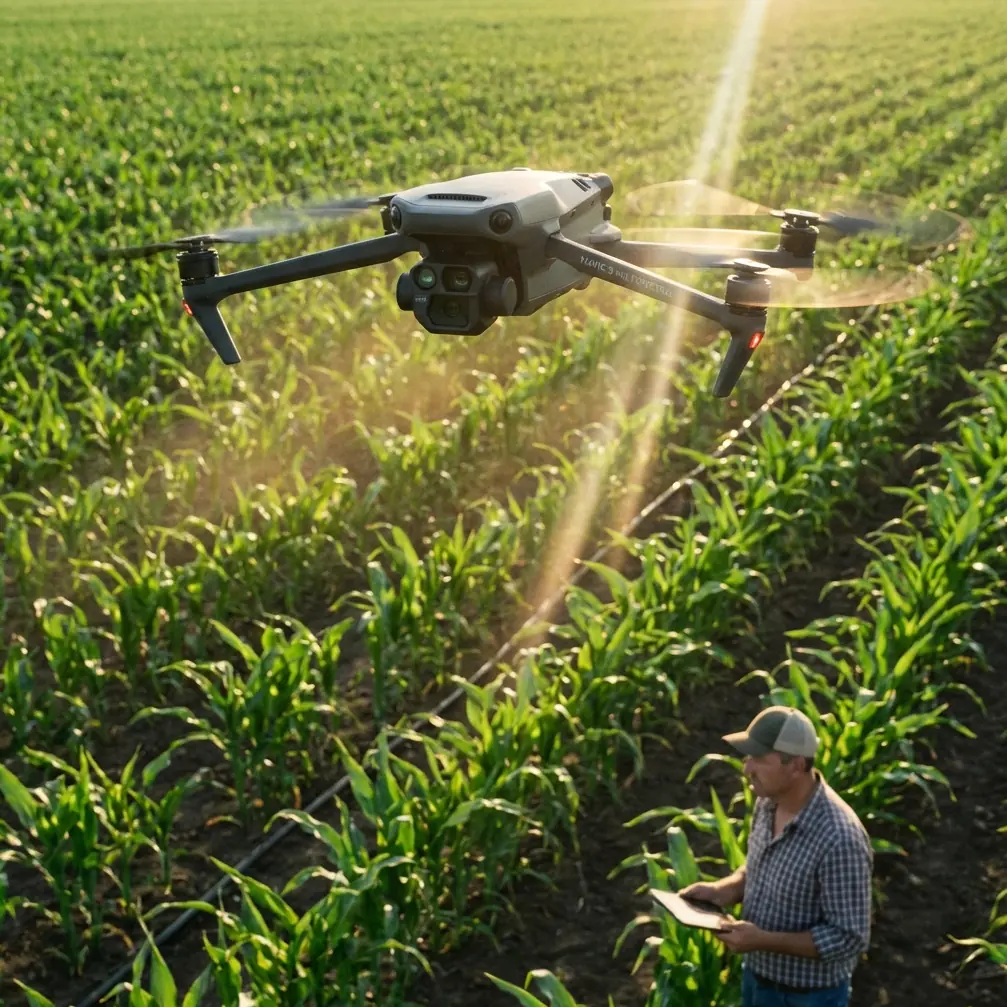
Mavic 4 Pro for Low-Light Site Tracking: A Practical Field Workflow for Construction and Mine Monitoring
META: Learn how Mavic 4 Pro can be used for low-light tracking on construction and mine sites, with a practical workflow built around UAV remote sensing, obstacle avoidance, ActiveTrack, D-Log, and fast terrain documentation.
Low-light drone work is where glossy spec sheets usually stop being useful.
A site can look simple at noon and become difficult an hour before sunrise or just after sunset. Haul roads flatten into dark ribbons. Stockpiles lose edge definition. Partially built structures turn into layers of shadow. If your job is to track change across a construction zone or open-pit mine, those conditions matter because the most important question is rarely “Can the drone fly?” It’s “Can the footage and map outputs still support decisions tomorrow morning?”
That is where the Mavic 4 Pro becomes interesting.
For photographers, low-light tracking often means smoother visuals, better color, and stable subject lock. For commercial operators, especially those monitoring active sites, the standard is higher. The aircraft has to do more than make attractive footage. It needs to help document excavation progress, identify material movement, follow equipment routes safely, and capture repeatable visual evidence when terrain is uneven and access on foot is a headache.
The strongest way to understand the Mavic 4 Pro in this role is not to treat it as a lifestyle drone. Treat it as a compact response platform for changing ground conditions.
Why low-light tracking matters on active sites
Construction and mining operations do not always wait for ideal daylight. Early starts are common. So are late inspections after weather events, schedule shifts, or safety checks. In those hours, site teams still need current visual data.
The reference material behind this discussion comes from a mine monitoring solution document built around UAV low-altitude remote sensing. Its core point is simple and still highly relevant: traditional mine monitoring is hard, slow, and labor-intensive because mines are often in remote areas with complex terrain and harsh natural conditions. That same logic applies to many large construction sites, quarry expansions, spoil areas, and hillside developments.
The document also makes a very practical claim: low-altitude drone remote sensing reduces field workload because the aircraft captures the ground from the air with strong mobility, relatively low operating cost, and less dependence on terrain access. Operationally, that matters more in low light than people often admit. When visibility drops, every unnecessary ground movement becomes a burden. If a drone can replace a long walk to a stockpile edge or an uneven access road with a stable aerial pass, it is not just convenient. It lowers friction in the inspection workflow.
What makes Mavic 4 Pro a fit for this job
The Mavic 4 Pro is best understood as a bridge between visual capture and operational awareness.
On one side, you have the image tools that photographers care about: D-Log for preserving dynamic range, subject tracking that stays composed while a vehicle or worker moves through a scene, and cinematic tools like Hyperlapse and QuickShots when documentation also needs stakeholder-friendly presentation.
On the other side, you have the field features that keep the mission useful: obstacle avoidance for navigating around cranes, partially built frames, berms, conveyors, and lighting poles; ActiveTrack for following moving site assets; and the agility to cover difficult terrain without sending someone across unstable ground.
Competitor models can capture low-light visuals, but many begin to feel compromised when the task is not just filming movement but maintaining reliable situational awareness around obstacles and changing elevation. This is where the Mavic 4 Pro stands out. It is not only about seeing in lower light. It is about staying workable when a tracked vehicle dips behind a spoil bank, when a concrete frame creates layered shadows, or when the operator needs to maintain framing while preserving safe clearance.
That distinction matters on real jobs.
The mine-monitoring lesson that carries directly into Mavic 4 Pro use
The reference solution highlights several outputs that drone remote sensing can produce quickly through office processing: high-precision orthophotos, digital elevation models, and 3D models of the mining area. It also notes that high-resolution onboard cameras can capture raw data at centimeter-level resolution.
Even if your immediate assignment with the Mavic 4 Pro is “track the site in low light,” the operational significance is bigger than one moving shot. A well-planned twilight flight can contribute to a repeatable archive of:
- changing excavation boundaries
- solid waste or spoil pile extent
- land occupation patterns
- haul path development
- stockpile geometry
- visual verification of work completed between shifts
The mine-monitoring document specifically calls out surveys of extraction point locations, extraction status, extraction methods, occupied land area, and the extent of solid waste accumulation. Those are not abstract GIS terms. They map directly to the kinds of questions project managers ask every week: Where did activity expand? What changed since the last flight? How much area is now occupied? Has dumped material spread beyond the expected footprint?
The Mavic 4 Pro becomes especially useful when you approach low-light tracking as the front end of that broader monitoring chain rather than a standalone camera exercise.
A practical low-light tracking workflow
Here is the field method I would use as a photographer working with site teams.
1. Define the tracking objective before launch
“Track the site” is too vague.
Decide whether the mission is about:
- following vehicle flow along a haul route
- documenting the perimeter of new excavation
- monitoring a stockpile and spoil area
- tracking progress around a structure under construction
- capturing a twilight pass for visual comparison against prior flights
The mine-monitoring reference emphasizes dynamic monitoring of mine development status. That phrase is operationally important because it pushes you toward repeatable flight objectives, not random footage collection. If your Mavic 4 Pro mission today cannot be compared to next week’s mission, its value drops fast.
2. Fly while there is still texture in the shadows
Low-light does not mean total darkness.
For construction and mining documentation, the most usable window is often the period when ambient light is fading but ground texture still reads clearly. This helps obstacle avoidance systems work more confidently, and it gives ActiveTrack a stronger visual basis for following a machine or vehicle.
The benefit over some competing platforms is that the Mavic 4 Pro’s overall tracking and avoidance package is more usable in mixed scenes where shadow and contrast shift rapidly. That is exactly the kind of environment you get around temporary fencing, uneven benches, rebar, scaffold, and cut slopes.
3. Use ActiveTrack selectively, not lazily
ActiveTrack is one of the most useful tools on the aircraft, but on a site it should be used with a purpose.
Good uses:
- follow a dump truck route to document circulation patterns
- trail a loader from a safe lateral position
- track movement around a structure to show access conditions
- create a consistent repeated pass over the same logistics corridor
Bad uses:
- following a target into cluttered areas without predefined escape space
- relying on tracking when visual separation between subject and background is poor
- using it as a substitute for route planning
The point is not just to let the drone chase something. The point is to preserve continuity in a scene where site managers want to understand movement in context.
4. Keep obstacle avoidance on, but plan like you do not have it
Obstacle avoidance is essential in low-light site work because hazards are rarely limited to the obvious. Cranes, cables, temporary barriers, earthmoving equipment, and projecting steel members can all turn a clean pass into a risky one.
That said, smart operators never treat obstacle sensing as permission to improvise.
On active sites, I recommend:
- wider lateral standoff from structures
- slower approach speeds
- avoiding direct flight into complex silhouettes near dusk
- building simple, repeatable lines rather than dramatic curves
This is another place where the Mavic 4 Pro compares well against weaker alternatives. Some drones are acceptable for open-field tracking but become less confidence-inspiring once the environment includes vertical clutter and variable contrast. The Mavic 4 Pro is more credible as a working platform because its intelligence supports the mission rather than merely decorating it.
5. Shoot in D-Log when the site has extreme contrast
Low-light construction scenes are rarely evenly lit. You might have illuminated cabins, dark spoil banks, reflective metal surfaces, and bright sky remnants all in one frame.
D-Log gives you more room to preserve highlight detail while holding shadow information that would otherwise collapse. For photographers and site communication teams, that creates cleaner grading latitude later. For documentation use, it helps keep critical edge detail visible in berms, piles, and structure lines.
This matters more than aesthetics. If your footage is later used to verify the visible extent of a work area or to compare conditions over time, tonal information has practical value.
6. Add one structured orbit or pullback for context
QuickShots and Hyperlapse are sometimes dismissed as flashy tools, but in the right hands they have a place in site documentation.
A controlled pullback can reveal how a new excavation relates to a haul road. A gentle orbit can show a stockpile’s position relative to drainage controls or staging zones. Hyperlapse can compress site movement patterns into something management can review quickly.
The rule is simple: cinematic tools are useful when they increase spatial understanding.
If the scene is too dark or too cluttered, skip them. But when conditions allow, they can make change easier to communicate to non-technical stakeholders.
Turning flight footage into monitoring value
The mine-monitoring reference points to a workflow that extends beyond capture: image processing, orthophoto production, digital elevation models, and 3D mine-area modeling. It even names tools in that ecosystem, including a five-lens oblique camera setup and Pix4Dmapper for processing.
The Mavic 4 Pro is not a direct substitute for every dedicated mapping stack, especially on large formal survey jobs. But that does not make it irrelevant to serious monitoring. Quite the opposite.
For many construction and smaller extraction sites, the value lies in speed and frequency. A compact aircraft that can be deployed quickly in low light may produce the first, freshest visual record of a changing condition. That record can then support:
- change detection between shifts
- pre-survey reconnaissance
- rapid response after slope movement or drainage issues
- progress reporting
- visual context before a heavier mapping workflow begins
The reference material specifically mentions rapid response capability for major mine events. In civilian operational terms, that is one of the strongest arguments for a platform like the Mavic 4 Pro. When something changes fast on site, a compact drone that can be in the air quickly is often more useful in the first hour than a more elaborate system that takes longer to mobilize.
Where this model beats the usual alternatives
The weak point of many competing drones in low-light site tracking is not image quality alone. It is the combination problem.
A drone may offer decent low-light video but weak subject follow. Another may track well in daylight but lose confidence near shadow-heavy structures. Another may be agile but less suited to polished color workflows.
The Mavic 4 Pro is compelling because it handles the overlap: tracking, avoidance, and flexible image capture in a package that works for both documentation and presentation. That makes it especially strong for mixed users—site inspectors who need evidence, project teams who need updates, and photographers who need footage that can be cleaned up and delivered professionally.
If your work includes both monitoring and communication, that balance is hard to dismiss.
Best practices for real operators
A few habits make a big difference:
- Build repeatable flight paths over the same corridors or pit edges.
- Use tracking only where the subject is visually distinct enough to hold reliably.
- Capture at least one wide contextual pass and one detail-focused pass.
- Preserve a stable altitude relative to terrain whenever possible.
- Archive flights by date, light conditions, and monitoring objective.
- If the site includes excavation, spoil, or stockpile activity, log visual observations alongside the footage so the imagery is easier to interpret later.
If you need help matching aircraft setup to your site workflow, this direct Mavic 4 Pro field support chat is a practical place to start.
The bigger takeaway
What the mine-monitoring solution gets right is that drones are not valuable just because they fly. They are valuable because they reduce the burden of collecting current ground information in places that are hard to access, complex to interpret, and changing too fast for slow manual methods.
That is exactly why the Mavic 4 Pro deserves attention for low-light tracking.
Its real advantage is not a single feature. It is the way obstacle avoidance, ActiveTrack, D-Log, and agile deployment combine into a useful field method. On a construction site or mine, that can mean less walking in difficult terrain, faster visual confirmation of change, stronger continuity in repeat inspections, and footage that still holds analytical value after the sun drops.
That is the threshold that separates a nice drone from a working one.
Ready for your own Mavic 4 Pro? Contact our team for expert consultation.