
Mavic 4 Pro Field Report: What a New ISR Alliance Means
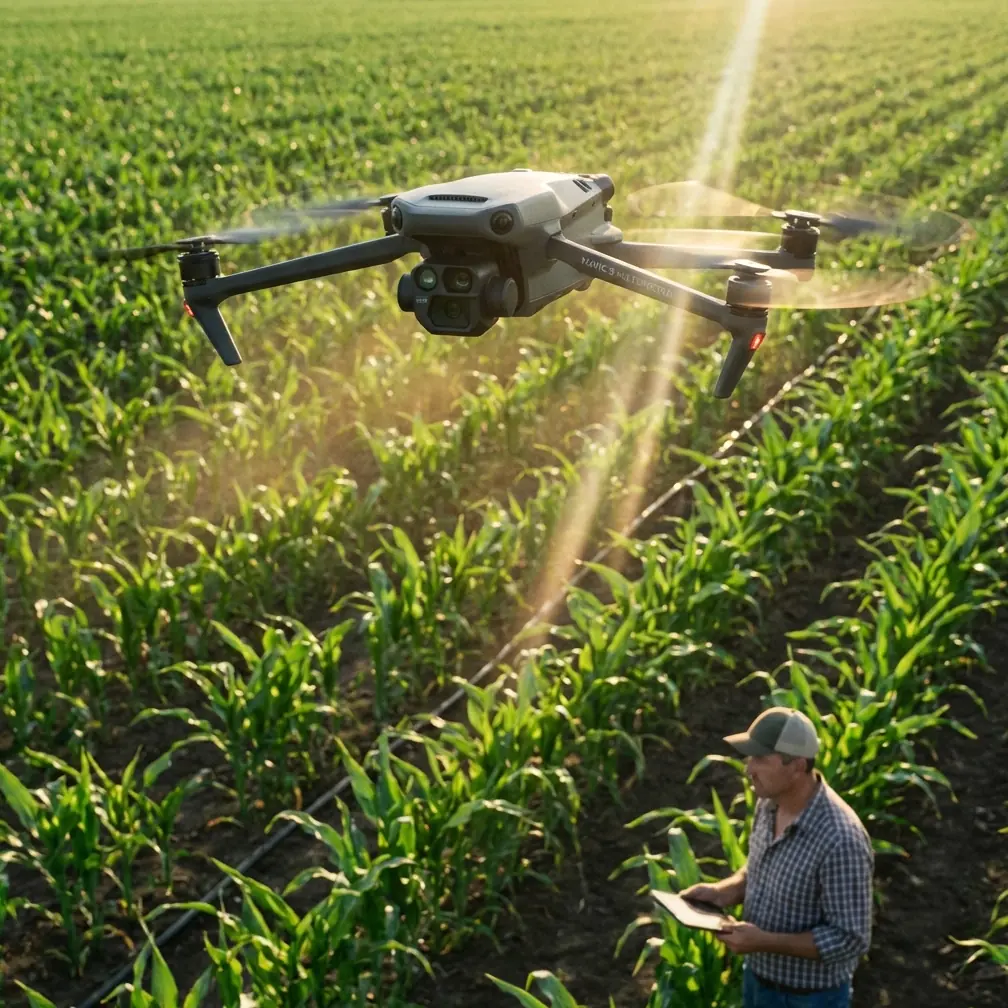
Mavic 4 Pro Field Report: What a New ISR Alliance Means for Tracking Mountain Construction Sites
META: Expert field report on how the Palantir, Ondas, and World View ISR partnership changes expectations for Mavic 4 Pro workflows on mountain construction sites.
I spend a lot of time thinking about where small drones fit once the headlines move past product launches and into real operations. That is why this week’s announcement from Palantir, Ondas, and World View deserves attention from anyone flying a Mavic 4 Pro over a mountain construction site. On paper, it is a partnership around multi-domain ISR. In practice, it signals where the broader drone ecosystem is heading: tighter links between airborne sensing, AI-assisted interpretation, and command decisions that happen across more than one layer of airspace.
That matters even if your aircraft is not a high-altitude platform and your mission is not military ISR.
For site teams working in steep terrain, the challenge is rarely just getting a drone in the air. The hard part is turning fragmented views into a reliable operational picture. A survey pass catches slope movement. A progress flight shows access-road changes. A quick orbit highlights crane placement. Then weather rolls in, a ridge blocks line of sight, and a wildlife detour forces a route adjustment. You are left stitching together isolated datasets while crews on the ground still need answers.
The Palantir-Ondas-World View collaboration points toward a different model. According to the announcement, the three companies are building an AI-enabled operational architecture for multi-domain ISR missions. Two details stand out immediately. First, they are connecting stratospheric, aerial, and land-based systems. Second, the architecture is centered on an integrated command-and-control network built around Palantir’s software environment. Those are not abstract buzzwords. They describe a structure in which data from different vantage points is not merely collected, but aligned, interpreted, and pushed into decisions faster.
If you fly a Mavic 4 Pro in mountain construction, that is the operational context you should be watching.
Why this matters below the stratosphere
No, a Mavic 4 Pro is not part of a stratospheric surveillance layer. But mountain projects already behave like multi-domain environments on a smaller scale. You have airborne footage from the drone, ground observations from site supervisors, machine activity logs, and environmental conditions that change by the hour. In other words, you already have the same problem the new partnership is trying to solve at a larger and more complex level: too many sensors, too many disconnected perspectives, and too much lag between collection and action.
A compact aircraft becomes far more valuable when it is treated as one node in a wider information system.
That is where the news becomes relevant for Mavic 4 Pro operators. The future of high-value drone work is not only about sharper imagery or smoother flight. It is about whether the footage from a short site mission can feed into a bigger operational picture without getting trapped in a manual workflow. When major players build architectures that merge stratospheric, aerial, and land-based inputs, they are effectively raising the standard for what users will expect from every drone-generated dataset, including those captured by smaller enterprise-adjacent platforms in demanding terrain.
For mountain construction, that expectation is justified. A single drone flight can reveal spoil pile growth, drainage changes, and access bottlenecks in one pass. But unless those findings are quickly connected to what crews see on the ground, they remain visual evidence rather than actionable intelligence.
The mountain site reality Mavic pilots know well
Mountain construction punishes sloppy workflows. Terrain compresses reaction time. Wind behaves differently near cut slopes and ridgelines. Light shifts early and hard, especially in late afternoon when a valley floor drops into shadow while upper elevations still glare. The aircraft must be good, but the mission design has to be better.
That is where Mavic 4 Pro-style capabilities remain highly relevant. Obstacle avoidance is not a brochure feature in this environment. It is what keeps an inspection route alive when the aircraft rounds a rock outcrop or passes near temporary steel, cable runs, or uneven tree lines along a service road. Subject tracking and ActiveTrack can also be useful when documenting moving vehicles, excavators, or material haulers across winding access corridors, though they need disciplined use around vertical terrain and intermittent foreground obstructions.
I was reminded of that during a recent mountain road expansion review, where a deer broke from brush near a retaining wall just as the drone was running a lateral pass over the site perimeter. The aircraft’s sensing and route logic had to deal with two things at once: unpredictable animal motion and the cluttered geometry of temporary barriers and stacked aggregate. Wildlife encounters are easy to dismiss in planning documents, but on real mountain jobs they are common. Sensors that can interpret immediate hazards and preserve stable flight are not just convenient. They protect the mission and help prevent an avoidable incident near crews, equipment, or the animal itself.
This is exactly why the ISR partnership story lands so cleanly in the Mavic 4 Pro conversation. The announcement is not about consumer drones. Still, it highlights an operational truth that applies all the way down to field teams: sensing only has value if it supports a coherent response.
AI-enabled architecture and the small-drone operator
The phrase “AI-enabled operational architecture” can become meaningless fast if nobody explains what it changes on the ground. So let’s put it in plain terms.
When Palantir, Ondas, and World View say they are building an AI-enabled framework for multi-domain ISR missions, they are describing a system that can absorb input from different platforms, organize what matters, and support decisions within a unified command structure. The important shift is not simply automation. It is orchestration.
For a mountain construction workflow centered on a Mavic 4 Pro, orchestration is the missing piece in many teams. Pilots often collect excellent visual material, but the site still lacks a disciplined chain from flight capture to management action. D-Log footage looks great in post. Hyperlapse sequences can reveal phased development over time. QuickShots can provide polished visual summaries for stakeholders. Yet the most valuable mission is often the least cinematic one: a repeatable, georeferenced progress pattern flown at consistent altitude and angle, tied to daily or weekly site decisions.
This is where the partnership has broader meaning. It reinforces the idea that future-ready drone operations are less about the isolated aircraft and more about how well that aircraft contributes to an integrated command view. On a mountain project, that could mean aligning drone imagery with slope monitoring notes, haul-road usage reports, weather windows, and safety observations from supervisors. The Mavic 4 Pro’s role then shifts from camera platform to fast-response aerial sensor inside a structured information loop.
That is a more mature way to deploy it.
What mountain project teams should take from this news
The most useful lesson from the Palantir-Ondas-World View announcement is not technological envy. It is workflow discipline.
The partnership specifically references stratospheric, aerial, and land-based systems. That three-layer model should sound familiar to anyone managing a difficult construction site. You may not have a high-altitude platform, but you do have layered observation problems. Upper-slope conditions affect lower-road safety. Ground crews report one reality while aerial imagery reveals another. Material staging can look efficient from the access point yet create hidden choke points higher up the grade.
A Mavic 4 Pro can close some of those gaps quickly, but only if the flights are designed around decisions rather than visuals.
For example, if your concern is cut-and-fill progress after overnight weather, obstacle avoidance and terrain-aware route planning matter more than dramatic reveal shots. If the priority is tracking a convoy of machinery through a winding corridor, subject tracking and ActiveTrack can help maintain visual continuity, but the real value is comparing movement timing against the day’s logistics plan. If management needs a clear weekly record of change, a controlled Hyperlapse from the same vantage can show site evolution more convincingly than an ad hoc collection of stills. And if color grading or matching multiple capture sessions matters for reporting, D-Log gives more latitude for consistency.
These are not isolated features. They become operational tools when linked to a reporting structure.
A field-report mindset beats a gadget mindset
Too many drone discussions still collapse into feature worship. Mountain construction does not reward that mentality. It rewards repeatability, situational awareness, and clean handoff between airborne observation and ground execution.
That is why I like treating this as a field report rather than a product roundup. The core news here is a strategic partnership among Palantir, Ondas, and World View, announced on March 19, 2026, to develop a new multi-domain ISR architecture. The practical takeaway for Mavic 4 Pro users is that the rest of the industry is moving toward deeper integration between sensing platforms and command systems. Smaller operators who adapt early will make better use of every sortie.
In my own field notes, the strongest mountain-site flights are never the most dramatic. They are the ones that answer specific operational questions: Is the upper haul road still clear after runoff? Has the retaining wall work advanced uniformly across the slope? Are stockpiles encroaching on the vehicle turnaround zone? Did the temporary drainage channel hold where the site plan predicted stress?
A Mavic 4 Pro can answer those questions efficiently, especially when the pilot understands where obstacle avoidance, subject tracking, and structured repeat missions each belong. The drone becomes even more valuable when the output feeds a broader site-awareness process rather than sitting in a folder named by date alone.
If your team is trying to tighten that loop, I usually recommend building a simple field-report chain first: define the question, standardize the flight path, tag the anomalies, and push a short findings summary to the people who can act. Once that habit is established, more advanced coordination becomes realistic. If you want to compare notes on setting that up for mountain work, send a message here: https://wa.me/example
The bigger signal behind the headline
A lot of industry announcements sound bigger than they are. This one is notable because of the architecture it suggests. Palantir brings software and decision infrastructure. Ondas adds the aerial systems angle. World View extends the sensing picture into the stratospheric layer. Even from the limited details released so far, the direction is clear: persistent awareness across different domains, fused into a common operating picture.
For Mavic 4 Pro users, the lesson is not to imitate that scale. It is to borrow the logic.
Think in layers. Fly with intent. Connect air data to ground action.
On a mountain construction site, the drone should not merely document progress. It should help the site understand itself faster than terrain, weather, and daily variability can obscure the truth. That is where the latest ISR partnership intersects with small-drone field practice. The systems are different. The operational principle is the same.
And that principle is only getting more relevant.
Ready for your own Mavic 4 Pro? Contact our team for expert consultation.