
Mavic 4 Pro for Coastline Tracking: A Field Case Study
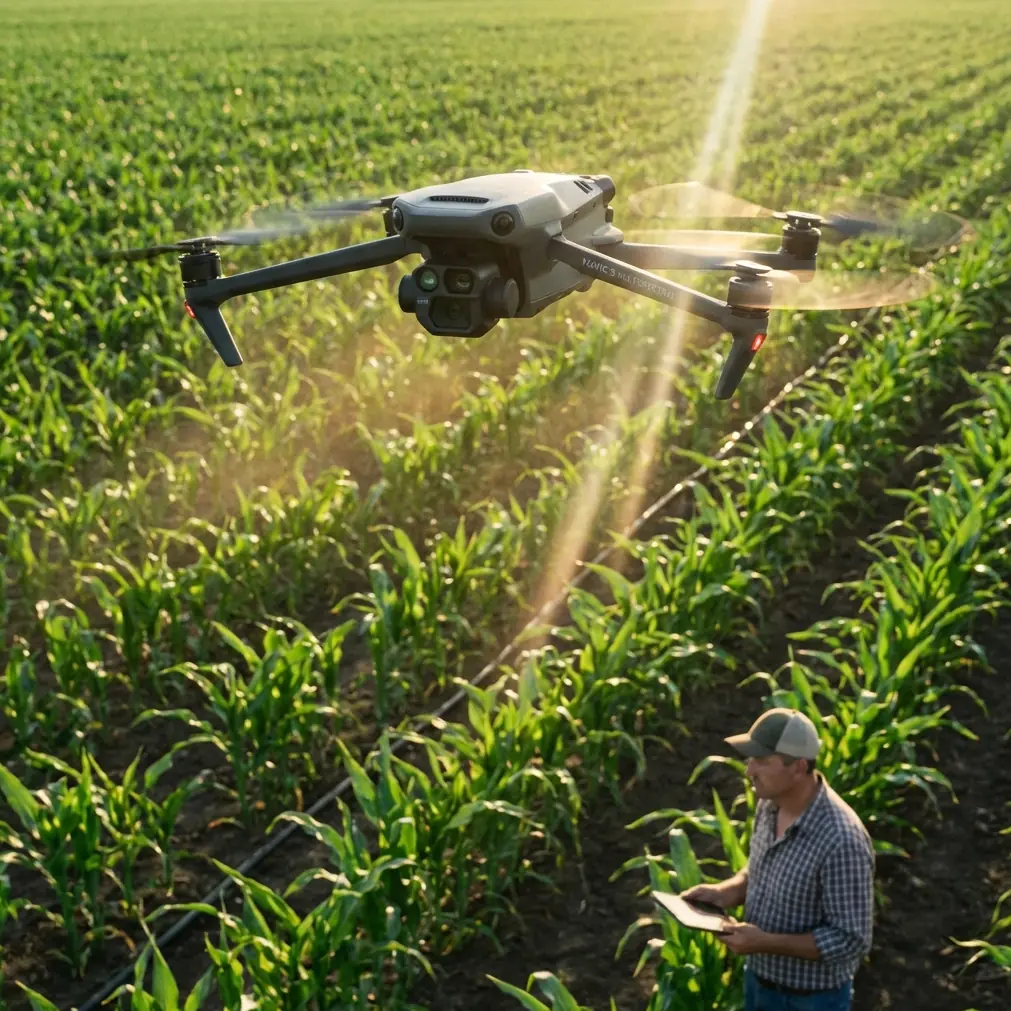
Mavic 4 Pro for Coastline Tracking: A Field Case Study in Accuracy, Drift, and Real-World Setup
META: A practical Mavic 4 Pro coastline case study focused on survey-grade thinking, camera calibration, aerial triangulation, electromagnetic interference handling, and why vertical accuracy deserves extra attention.
I spend a lot of time around photographers who want a drone to do everything beautifully, and survey teams who want it to do everything provably. Coastline work is where those two mindsets collide.
The Mavic 4 Pro sits in an interesting place for this kind of mission. It attracts image-makers because it is agile, stable, and feature-rich. It also attracts mapping-minded operators because it can be deployed quickly in places where terrain, access, and changing light make conventional data capture inefficient. But if you are tracking a coastline from higher altitude, especially along cliffs, exposed headlands, and built waterfront edges, the drone itself is only part of the story. The bigger issue is whether the imagery can hold up once you begin measuring, comparing, and revisiting the site.
That is where an older but still highly relevant photogrammetry lesson matters. A reference study on low-altitude UAV imaging and processing showed something many operators still underestimate: before flight, the camera must be calibrated to solve distortion parameters and interior orientation elements, because residual aberrations can deform the lens model and compromise downstream accuracy. The paper used DLT, or Direct Linear Transformation, to calibrate a non-metric camera and derive both interior and exterior orientation elements. That matters to anyone flying a Mavic 4 Pro over a coast, because even a brilliant aerial image is not automatically trustworthy measurement data.
Why coastline work exposes every weakness in your workflow
Coastlines are unforgiving. They contain repeating textures, reflective water, steep elevation transitions, and moving edges. Sand shifts. Vegetation moves. Waves create false boundaries. Seawalls and breakwaters generate hard geometric lines right next to organic surfaces. If you fly high to cover distance, every small camera or positioning issue becomes more consequential because the scene is broad and the revisit tolerance is tighter.
For a photographer, this usually shows up as micro-instability in the shot sequence, strange edge geometry, or inconsistent subject lock when the background is highly contrasty. For a survey or inspection team, it shows up later as error spread in the reconstruction, especially in elevation.
The reference dataset makes that point clearly. In the test area, 20 ground control points were used to analyze control accuracy after aerial triangulation, and 8 check points were distributed evenly to verify horizontal and vertical performance. The result was compliant with urban surveying and aerial photogrammetry standards. Just as useful, the paper did not pretend all dimensions behaved equally: with image resolution at 15 cm, the horizontal x and y mean errors stayed within the expected precision range, while the z error was slightly larger.
That pattern should shape how you plan a Mavic 4 Pro coastline mission.
What this means for a Mavic 4 Pro operator in the field
If I were planning a high-altitude coastal tracking run with the Mavic 4 Pro, I would not begin by thinking about cinematic modes. I would begin with geometry, calibration discipline, and interference management.
A lot of pilots assume obstacle avoidance, ActiveTrack, QuickShots, Hyperlapse, and advanced color profiles such as D-Log are the defining features. They are valuable, but on a coastline they become secondary until the flight foundation is right.
The reference paper’s calibration figures are a useful reminder of how specific this work really is. It records a focal length of 21.13651 along with distortion coefficients such as k1 at -1.80E-05, k2 at 3.75E-08, and principal point offsets including x0 at 0.007697194 and y0 at -0.101756977. Those numbers are not trivia. They represent the difference between “looks straight” and “is geometrically defensible.”
The Mavic 4 Pro is not being used here as a lab instrument in the traditional large-format survey-camera sense. It is being used as a fast, flexible capture platform in a difficult environment. That is exactly why calibration thinking matters even more. Coastal operators often fly in changing pressure, strong reflected light, and mixed surfaces that can mask alignment issues until processing begins. If the camera model is not stable, the coastline edge you compare month to month can drift for reasons that have nothing to do with erosion.
My field scenario: high-altitude coastline tracking with electromagnetic interference
Let me make this practical.
Picture a morning flight over a coastal ridge where the mission objective is to document shoreline movement and structural condition across a long waterfront segment. The launch area is near telecom equipment and utility lines above a harbor service road. The route climbs quickly to maintain safe clearance over rising ground, then runs parallel to the coast at a higher altitude for broad coverage.
This is exactly the kind of place where electromagnetic interference sneaks in and disturbs confidence before the mission even settles into rhythm.
With the Mavic 4 Pro, interference handling starts with something basic but too often ignored: antenna orientation. When signal quality becomes inconsistent near infrastructure, I do not immediately blame the aircraft. I first adjust my position and re-orient the controller antennas to maintain the strongest face toward the aircraft rather than letting them sit casually while I watch the screen. Along a coast, that simple adjustment can matter because the route often creates awkward geometry between pilot, aircraft, ridge, and reflective water surface. A weak link is not always a range problem. Sometimes it is a pointing problem.
Operationally, that change matters for more than live view comfort. Stable transmission supports consistent framing, cleaner decision-making, and more reliable execution of repeatable lines. If you are using subject tracking near a cliff edge or a harbor wall, interference-induced hesitation can produce irregular pathing that later complicates alignment. If you are shooting a Hyperlapse for shoreline change storytelling, signal uncertainty can break the visual cadence. If the mission is intended for map-derived comparisons, disrupted flight continuity can reduce overlap quality right where you need it most.
The hidden lesson in the control point errors
The reference paper’s control point table is especially interesting because it shows how real-world errors distribute rather than presenting an idealized result. Most points are fairly restrained, but some vertical values stretch more than the horizontal ones. One control point shows ErrorZ at -0.505 m, while another reaches 0.301 m. By comparison, many x and y values remain much tighter, often within a few centimeters to a few tenths.
For coastline tracking, that has direct operational significance.
If your deliverable is shoreline position, revetment outline, access road encroachment, or horizontal retreat along the beach line, the Mavic 4 Pro can be a very strong platform when flown with proper overlap and disciplined ground reference. But if the deliverable depends heavily on subtle elevation interpretation—small dune crest changes, wall settlement, or vertical deformation on complex rock edges—you should be more cautious. The reference evidence suggests what many experienced photogrammetrists already know: vertical accuracy tends to be the more vulnerable dimension, especially when capture geometry or calibration discipline is imperfect.
This does not disqualify the aircraft. It simply tells you where to be strict. For a coast mission, I would prioritize:
- robust control distribution across the length of the shoreline, not clustered near easy access points
- careful preflight camera consistency checks
- repeatable altitude and path geometry across revisits
- extra skepticism when interpreting small vertical changes from broad-area high-altitude imagery alone
That is how you turn a capable drone into a credible monitoring tool.
Where Mavic 4 Pro features actually help
Now the product-specific question: what does the Mavic 4 Pro add to this workflow beyond “it flies and records”?
First, obstacle avoidance matters along coasts more than many people expect. Not because you are dodging skyscrapers, but because headlands, masts, cranes, cables, and sudden topographic rises create irregular hazard zones. High-altitude work can breed complacency. A drone that helps maintain spatial awareness while you focus on route integrity and framing reduces mental load.
Second, ActiveTrack and subject tracking can be useful, but not in the way lifestyle marketing usually presents them. On coastline assignments, I use tracking features less for “following action” and more for maintaining attention on a moving inspection subject, such as a survey boat or shoreline maintenance vehicle, while still preserving environmental context. You still need pilot judgment, especially around reflective water and cluttered backgrounds, but these tools can support continuity when the mission blends documentation with operational observation.
Third, D-Log is not just for cinematic grading. In coastal scenes, dynamic range is often brutal: bright water, dark rock, pale concrete, haze, and shadowed recesses in the same frame. A flatter capture profile can preserve tonal information that helps later interpretation, especially when infrastructure condition or erosion features are being reviewed by multiple stakeholders. Image quality is not only an artistic matter here; it influences how confidently people read the scene.
Fourth, QuickShots and Hyperlapse have a place, but not as core survey instruments. I see them as communication tools. After the structured mapping run is complete, they can produce a clear visual narrative for clients, planners, or site managers who need to understand change over time without reading a technical report line by line. The raw mapping output answers measurement questions. The motion sequence explains the site.
Why non-metric flexibility still matters today
One of the most useful insights from the reference paper is that non-metric cameras, despite their limitations, offer short information-processing cycles and strong mobility in complex terrain. That observation still holds.
The reason teams keep reaching for platforms like the Mavic 4 Pro is not that they replace every traditional survey workflow. It is that they let professionals move quickly where access is awkward and timing matters. A coastline is the textbook example. Tides shift the visible edge. Wind windows open and close. Access routes can be narrow or unstable. The ability to deploy fast, collect imagery efficiently, and process on a short schedule is not a convenience. It is operational value.
The tradeoff is that flexibility demands rigor. If you treat a fast field platform casually, the data quality penalty appears later. If you treat it with survey logic—camera model awareness, control strategy, repeatability, and realistic interpretation limits—you get the best of both worlds.
A practical workflow I would recommend
For a Mavic 4 Pro coastline mission with high-altitude coverage, my preferred sequence is simple:
Start with a preflight calibration mindset. Confirm camera consistency, mission settings, and route repeatability. If the area includes infrastructure likely to affect signal quality, test controller orientation before the main run and be ready to adjust antenna alignment rather than standing fixed in a poor position.
Then capture the primary mapping lines with conservative overlap. Do not rush because the coast “looks open.” Open water and edge transitions can weaken reconstruction confidence. Maintain geometry that supports later aerial triangulation.
Use distributed ground control if the project requires measurement-grade outputs. The reference case used 20 ground control points and 8 check points, which is a strong reminder that verification cannot be improvised after the fact.
After that, collect supplemental obliques or contextual passes for interpretation, stakeholder communication, and infrastructure reading. That is the point where D-Log, Hyperlapse, and selected automated modes become genuinely helpful.
And finally, read the data with humility. If horizontal shoreline movement is the main question, you can often get very dependable insight. If slight elevation change is central, validate aggressively before making confident claims.
If you are coordinating that kind of workflow and want to compare field setup notes with another operator, this direct WhatsApp line is useful for practical discussion: coastline flight planning support.
The real takeaway
The Mavic 4 Pro is well suited to coastline tracking, especially when the mission benefits from quick deployment, strong image quality, and smart flight assistance. But the most important lesson does not come from a feature sheet. It comes from photogrammetric discipline.
The reference study shows that when camera distortion is addressed, aerial triangulation is tied to control points, and results are checked against both horizontal and vertical standards, UAV imagery can meet formal mapping expectations. It also shows where caution belongs: vertical error tends to be less forgiving than planimetric error, even when the overall result is compliant.
That is exactly the mindset coastal operators should bring to the Mavic 4 Pro. Use its agility. Use its imaging strengths. Use its tracking and safety tools where they genuinely reduce workload. But for any mission that aims to monitor shoreline change rather than simply admire it, start with calibration, control, and repeatability. The coast will expose every shortcut.
Ready for your own Mavic 4 Pro? Contact our team for expert consultation.