
Mavic 4 Pro for Windy Highway Survey Work
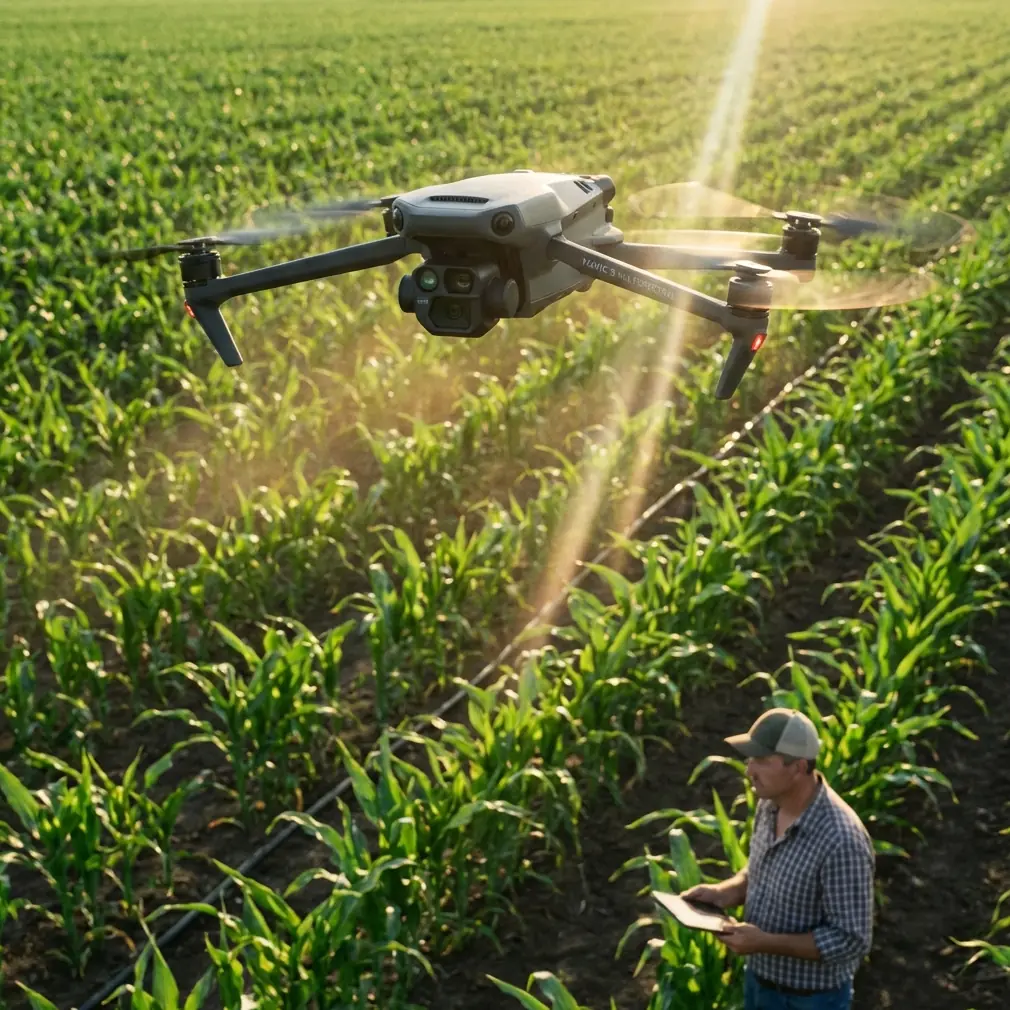
Mavic 4 Pro for Windy Highway Survey Work: A Technical Review Through the Lens of Deliverable Discipline
META: Expert review of using Mavic 4 Pro for windy highway surveying, with a focus on photogrammetry fieldwork standards, data handoff quality, and practical workflow decisions.
Highway survey work exposes every weakness in a drone workflow.
Long, narrow corridors magnify drift. Wind over cut slopes and embankments is rarely consistent. Traffic infrastructure creates repeating patterns that can confuse image matching if coverage discipline slips. And once the aircraft lands, the real test begins: whether the collected material can survive inspection, handoff, and downstream mapping without rework.
That is the right frame for evaluating the Mavic 4 Pro.
Plenty of discussions around this aircraft drift toward lifestyle features, cinematic modes, or broad claims about intelligence. For highway surveying in windy conditions, those angles miss the point. The better question is whether the platform can support a field process strict enough to satisfy photogrammetric deliverable requirements. A useful reference here is the low-altitude digital aerial photogrammetry field standard CH/Z 3004—2010, especially section 8.2, which centers on what must be submitted, how results should be checked before passing to the next stage, and how field outputs should be organized.
That standard may look procedural at first glance. In practice, it is operationally decisive.
It states that submitted results should be inspected and accepted before being used in the next process, and that the handoff materials must be accurate, clear, and complete. It also specifies that deliverables should include items such as the technical design document, field observation notebooks, calculation records, control point results and distribution sketches, field mapping drawings, an inspection and acceptance report, and a technical summary report. For corridor projects, it goes further: results should be organized by map sheet, by flight line, or by regional block depending on how control was laid out.
Those details matter more to Mavic 4 Pro operators than many realize.
Why the Mavic 4 Pro fits a highway corridor workflow
A highway job is not a one-battery beauty flight. It is a chain of linked decisions: route segmentation, control layout, image consistency, terrain-following judgment, wind margin, obstacle handling near signage and gantries, and finally the structure of the submission package. The aircraft is only valuable if it reduces uncertainty at each link.
The Mavic 4 Pro’s practical strength in this setting is not one isolated spec. It is the way several capabilities can be used to protect data integrity when the route is long and the air is unstable.
Take obstacle avoidance first. On a corridor survey, you are often working near bridge approaches, lamp poles, sound barriers, overhead signs, and vegetation intrusions along the right-of-way. In wind, lateral corrections happen more often and can become abrupt near structures. Reliable obstacle sensing does not replace route planning, but it adds resilience when the aircraft gets pushed off its ideal line. That matters because clean corridor geometry depends on repeatable spacing and stable overlap. Even small disruptions can ripple into weak tie point zones later.
Subject tracking and ActiveTrack are not mapping tools in the strict sense, but they do have adjacent value during inspection passes and documentation runs. After the primary mission is complete, teams often need supplemental visual records of embankments, drainage structures, pavement transitions, or construction interfaces. A stable tracking mode can help produce coherent reference footage of moving inspection vehicles or specific roadside assets without forcing the pilot into overcorrection in gusts. That is not a substitute for survey capture. It is a useful secondary layer in the project record.
QuickShots and Hyperlapse sit even farther from core photogrammetry, but dismissing them entirely would be lazy. On highway projects, stakeholder communication can become a bottleneck. Short automated overview sequences can help explain site context, traffic staging, or terrain relationships to non-pilot decision-makers. The key is keeping those outputs separate from survey deliverables. The standard’s emphasis on accurate, clear, and complete submission is a reminder that cinematic material should support communication, not contaminate technical datasets.
Wind changes the burden of proof
In calm weather, mediocre field discipline sometimes slips through. In windy conditions, every weakness shows up in the data.
That is where the standard’s requirement for inspection before passing results downstream becomes especially relevant. If I were building a Mavic 4 Pro highway workflow around CH/Z 3004—2010, I would treat the aircraft not as the center of the operation but as one instrument inside a documentation-heavy process.
Here is what that looks like in real use.
Before the first launch, the technical design document is not a formality. It should define corridor segmentation, expected overlap strategy, control arrangement, terrain challenges, wind thresholds, and fallback plans for bridge zones or narrow shoulders. The standard explicitly names the technical design document as a required submission item. Operationally, this means your Mavic 4 Pro mission settings should be traceable back to a stated survey design, not improvised in the field because conditions became uncomfortable.
During field collection, observation records and calculation notes also matter. The standard calls for observation notebooks and calculation records. In a modern Mavic 4 Pro workflow, that translates into preserving more than imagery alone. Flight logs, control observations, battery-to-flight matching, weather notes, and any deviations from the original mission plan should be captured in a way a downstream processor can understand. If wind forced a shorter leg, a changed altitude, or a second pass over a problematic interchange, that note can save hours during processing and quality review.
Then comes one of the most overlooked pieces: control point results and the distribution sketch. The standard requires both the control point results and a sketch of their distribution. For highways, that sketch is not bureaucracy. A corridor can fail quietly if control is too sparse, too clustered at access points, or poorly balanced across lane edges, ramps, and grade changes. With the Mavic 4 Pro, which is compact and quick to reposition, there is a temptation to rely on aircraft efficiency to compensate for weak ground planning. That is backwards. A fast aircraft increases the value of disciplined control because it can collect a lot of weakly supported imagery very quickly if the control layout is not thought through.
Deliverable organization is where professionals separate themselves
One line in the standard deserves more attention than it usually gets: field outputs should be organized according to how the project was structured. It specifies, for example, that field mapping results should be sorted by sheet, full field control results by sheet, single-flight-line control results by flight line, and mountain area block control by regional block.
For a windy highway survey, that principle is gold.
Long corridor projects often fail not during capture, but during handoff. A surveyor or processor receives a pile of imagery folders, partial notes, unnamed control files, and vague route labels. The Mavic 4 Pro may have done its part perfectly, but the job still degrades into guesswork. If you align your data organization to the logic described in the standard, the whole project becomes more robust.
In practical terms, each corridor segment flown by the Mavic 4 Pro should map cleanly to a defined package: mission identifier, chainage or route limits, control file association, weather note, field sketch, and acceptance status. If the highway was flown in separate legs because wind increased near a ridge cut, those legs should not be merged into one generic dataset. They should be preserved as distinct operational units. That makes troubleshooting much easier when one section shows weaker alignment or a questionable elevation surface.
This is also where a third-party accessory can genuinely improve capability.
On one highway-style corridor workflow, a high-bright external monitor mount and sun hood combination transformed field verification more than any headline feature ever could. In strong daylight with gusting winds, reviewing image consistency on a brighter, more readable setup reduced the chance of missing blur, angle inconsistency, or coverage gaps before leaving the site. That sounds minor until you compare it with the cost of returning to a 12-kilometer stretch because one embankment section was marginal. Accessories are often marketed for convenience; the right one can actually strengthen compliance with the standard’s requirement that results be checked and accepted before moving forward.
Image quality is only useful if the dataset stays processable
D-Log deserves a brief but careful mention. It is valuable for visual documentation, especially when highway projects include shaded culverts, reflective signage, bright pavement, and dark vegetation in the same scene. A flatter profile can preserve tonal information for later interpretation. But for pure photogrammetric work, consistency and sharpness matter more than grading flexibility. Operators should be disciplined about when they are collecting survey imagery versus supplementary visual documentation.
That distinction becomes important in mixed-purpose missions, which are common with the Mavic 4 Pro because it is easy to ask one aircraft to do everything. The risk is creating a blurred boundary between technical deliverables and communication material. The standard’s list of required outputs helps prevent that. The field mapping drawing, inspection report, and technical summary report are not the same thing as a stakeholder video package. Keep them separate. Your future self, and your processing team, will thank you.
What the Mavic 4 Pro does well in gusty corridor conditions
For windy highway work, the aircraft’s value comes from reducing pilot workload while preserving repeatability.
Obstacle avoidance helps near roadside structures. Stable autonomous support reduces the cumulative fatigue of long corridor legs. Supplemental modes like ActiveTrack can improve post-survey inspection documentation. Compact deployment helps when access points along the highway are limited or awkward. And because the platform is quick to reposition, it suits segmented corridor planning, which is often the smartest response to changing wind fields rather than forcing a single uninterrupted route.
But that same convenience creates risk. Faster deployment can encourage lighter planning. Easier flying can encourage weaker note-taking. Intelligent modes can create false confidence that the aircraft will solve environmental problems that are really survey design problems.
The standard is a useful corrective because it shifts attention back to evidence.
Was the result checked before handoff?
Is the submission accurate, clear, and complete?
Are the technical design, field records, control outputs, sketches, and inspection report present?
Are the products organized in a way that matches the control and flight structure?
If the answer is yes, the Mavic 4 Pro has probably been used well.
A practical field philosophy for Chris Park’s kind of reader
If I were advising a professional like Chris Park preparing a windy highway survey with the Mavic 4 Pro, my approach would be simple.
Use the aircraft’s intelligence to lower operational friction, not to lower standards.
Plan corridor segments around expected wind variability, not battery optimism. Build a real technical design package before flight because CH/Z 3004—2010 explicitly treats that document as part of the deliverable set. Record every meaningful field deviation because observation notebooks and calculation records are not relics; they are what make your dataset defensible. Preserve control point results and a distribution sketch in a way that reflects the actual corridor geometry. Organize outputs by flight line or mapped section rather than dumping everything into one project folder. And conduct field acceptance checks before demobilizing, because section 8.2.1 is clear that results should be inspected before they feed the next step.
That is the bigger story of the Mavic 4 Pro for highway work.
Not whether it can fly in wind. Many drones can, at least for a while.
The real question is whether it helps you bring back material that stands up to scrutiny, integrates cleanly into the next production stage, and remains intelligible months later when someone needs to trace how a specific section was captured. In that sense, the aircraft is most impressive when it disappears into a disciplined workflow.
If you are refining a corridor-survey setup and want to compare field organization methods, control strategy, or accessory choices for bright, windy roadside operations, you can continue the discussion here: message us directly on WhatsApp
Ready for your own Mavic 4 Pro? Contact our team for expert consultation.