
Mavic 4 Pro for Low-Light Field Surveying
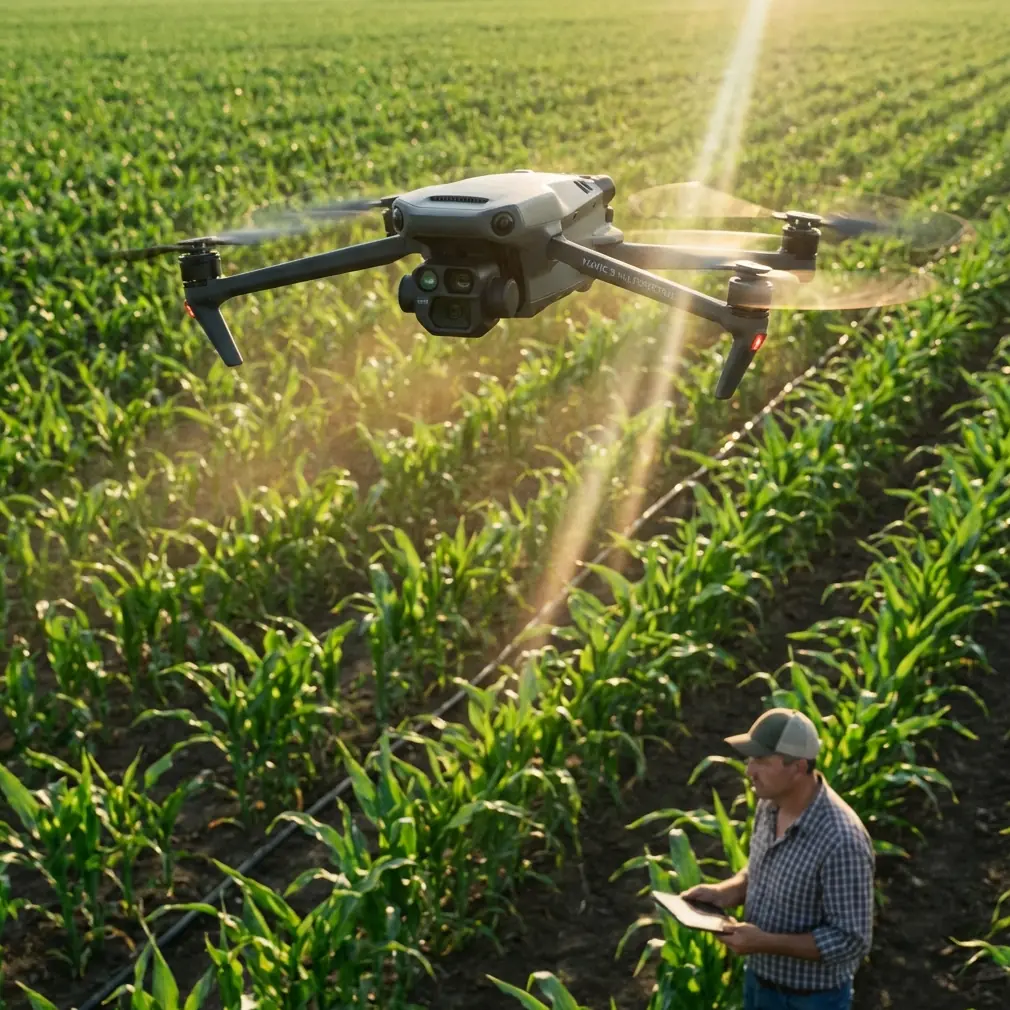
Mavic 4 Pro for Low-Light Field Surveying: A Practical Case Study from the Training Side
META: A field-tested case study on using Mavic 4 Pro for low-light surveying, with lessons from UAV education, digital training environments, obstacle avoidance, ActiveTrack, D-Log, and real operational workflow gains.
The most expensive mistake I used to see in drone programs was not a crash. It was a classroom.
Not the people in it. The room itself.
Years ago, when I was helping build training pathways for new civilian UAV operators, a lot of instruction still leaned on static models, printed diagrams, and a few disconnected demonstrations. That approach made sense in the 1990s, when aviation model classrooms were built around wall charts and physical teaching aids. It was still common in the early 2000s to see “model plus electromechanical equipment” setups carrying most of the burden. But once the mission shifted from hobby-style familiarization to practical work like surveying fields at dawn or near dusk, that teaching format started to show its limits.
Low-light field surveying exposes every weak link in pilot preparation. If the operator does not understand sensor behavior, flight path discipline, obstacle awareness, and data capture logic, the aircraft’s headline features won’t save the mission. That is where the Mavic 4 Pro becomes interesting—not as a spec-sheet object, but as a tool that fits a more modern way of learning and working.
I want to frame this through a real operational problem: surveying agricultural parcels in low light, when the window for usable conditions is short, the terrain is uneven, and the pilot often has to divide attention between safe flight and consistent image collection.
The challenge I kept seeing in the field
One recurring scenario involved early-morning field checks just before full sunrise. The logic was sound. Winds were usually calmer. Ground activity was limited. In some cases, the light angle helped reveal surface variation better than harsh midday sun. But the missions were harder than they looked.
The edges of fields were lined with trees, utility poles, irrigation hardware, or improvised fencing. Moisture in the air flattened visual contrast. Battery planning had to be tighter because repeated manual re-flights wasted the best part of the morning. And if the operator was trained mainly through static explanation rather than immersive practice, they were often overloaded the moment the aircraft got airborne.
This is exactly why the shift described in modern UAV education matters. The Chinese classroom solution in the reference material makes a point that still holds operationally: drone instruction is a strongly practical discipline, and text materials plus traditional models can no longer carry the full teaching task. Computer systems, networks, and wireless communication are no longer side tools; they have entered the course itself as both physical systems and operational procedures.
That sounds academic until you watch a new survey pilot struggle with low-light exposure decisions while also managing obstacle avoidance margins at a field boundary. Then it becomes very concrete.
Why Mavic 4 Pro changes the training-to-field handoff
The Mavic 4 Pro makes low-light surveying easier not because it removes complexity, but because it reduces the number of things the pilot has to manually juggle at once.
For field surveying, that matters more than flashy marketing language ever will.
Take obstacle avoidance. In low light, spatial judgment degrades fast, especially near dark tree lines or narrow access roads running beside a parcel. A capable obstacle avoidance system is not just a safety feature; it protects the integrity of survey coverage. Every emergency stop, abrupt manual correction, or overly cautious detour can distort the flow of the mission and create gaps or inconsistency in the image set. When the aircraft can support cleaner path confidence, the pilot’s attention can shift back to overlap, framing, and coverage discipline.
The same applies to subject tracking and ActiveTrack, even though many people associate those functions mainly with cinematic use. In practical field work, tracking tools can help when documenting moving equipment at the edge of a survey zone, following an inspection route, or maintaining consistent relation to a boundary feature during a supplemental visual pass. That is not the main surveying workflow, but in mixed farm operations, where mapping and visual documentation often happen in the same sortie window, those intelligent flight tools save time.
QuickShots and Hyperlapse may seem even less relevant to survey work, but they become useful in training and reporting. A farm manager or project stakeholder often doesn’t need raw technical data alone. They need a fast visual summary of conditions, drainage patterns, access constraints, or crop edge issues. Hyperlapse can compress environmental change over time, while QuickShots can provide context clips that help non-pilots understand the layout before the technical dataset is processed. On real jobs, those “secondary” assets often reduce follow-up questions and unnecessary repeat visits.
What modern UAV classrooms got right
The most valuable idea in the reference material is not a piece of hardware. It is the teaching philosophy.
The solution describes the progression from simple model-based instruction in the 20th century to digitally enhanced UAV classrooms using virtual reality, 3D display, and modern automatic-control course design. That progression mirrors what pilots need in the field today. Survey competence is not built from memorizing parts of an aircraft. It is built through repeated interaction with systems, scenarios, and consequences.
The reference also describes an “experience-perception led” learning environment designed to strengthen both subject immersion and the atmosphere of the discipline. For some readers, that may sound like education-sector wording. In practice, it means this: put the pilot into realistic decision environments before they face them on a live mission.
That is why I think the Mavic 4 Pro belongs in a digital-first training pipeline, especially for low-light surveying. If your training environment still treats drone operations as a sequence of isolated facts, pilots will freeze when real conditions stack up. If training integrates software, hardware, wireless workflows, and scenario-based practice, the aircraft’s smart features become force multipliers instead of crutches.
The source document also emphasizes support for a transition from passive reception to active participation. That is operationally significant. A pilot who has actively practiced route planning, image review, exposure assessment, and obstacle-response logic will use a Mavic 4 Pro very differently from someone who has simply watched demos.
A low-light field workflow that actually works
Here’s the workflow I now recommend for teams using Mavic 4 Pro in low-light field surveying environments.
First, pre-brief the site with digital tools, not just verbal instruction. Mark likely hazard lines: trees, poles, netting, sheds, and elevation changes. In training environments inspired by modern drone classrooms, this can be simulated first, then repeated outdoors.
Second, define the mission objective clearly. Are you building a structured survey dataset, documenting crop stress visually, checking drainage, or creating a blended record for agronomy review? The answer changes how you use the aircraft. Not every sortie needs the same flight mode behavior or the same image profile.
Third, use obstacle avoidance as a planning asset, not an excuse for loose route design. In low light, intelligent avoidance helps maintain safety margins, but the pilot should still fly deliberate, clean lines.
Fourth, if visual deliverables matter alongside survey data, record in D-Log when post-production flexibility is needed. Low-light scenes often contain bright sky remnants and dark ground detail in the same frame. D-Log gives more room to balance that material later for stakeholder review. This is especially useful when the client is not asking for entertainment-grade footage but still needs legible, balanced visuals that reveal field conditions accurately.
Fifth, treat ActiveTrack and subject tracking as optional support layers. If a vehicle, worker, or machine path needs supplemental documentation outside the core survey run, these tools can reduce pilot workload and keep framing consistent.
Sixth, debrief immediately after the flight. This is where the educational principles from the reference matter again. The best programs build around iterative learning. The classroom solution specifically mentions integrating hardware, software, and content to improve both learning and experience. The field equivalent is reviewing the sortie while the context is fresh: what happened, what the lighting did, where avoidance intervened, and whether the chosen visual profile supported the mission.
The educational angle most buyers overlook
Many organizations think they are choosing a drone when they are really choosing a training burden.
That burden is lighter when the aircraft works well inside a modern instruction model.
The reference document ties UAV education to broader education modernization goals and specifically points out that modernized equipment is a prerequisite. One cited policy milestone was the target to basically realize educational modernization by 2012. The date itself matters less today than the underlying principle: updated tools are not luxuries when the discipline itself has become digital, networked, and procedural.
For Mavic 4 Pro users, this means the aircraft should not be introduced as a standalone object. It should be embedded in a learning environment that reflects current drone work: scenario practice, digital review, immersive explanation, and active operator participation.
If you are building a school lab, a vocational UAV program, or a commercial training cell for agriculture and land inspection, that distinction is huge. A digital drone classroom equipped for immersive, multi-format instruction is not just better for engagement. It shortens the time between first exposure and competent field execution.
The source material even notes that this kind of environment supports hands-on building, tool use, and programming foundations that prepare students for later advanced study. In civilian UAV operations, that early technical confidence has a direct downstream effect. Operators who understand systems tend to troubleshoot calmly, adapt to changing light better, and produce more consistent survey outcomes.
Where Mavic 4 Pro stands out in this case
If I reduce this to one sentence, it would be this: the Mavic 4 Pro is most valuable in low-light surveying when paired with a training model that respects the complexity of the job.
Not every mission needs every intelligent feature. But when obstacle avoidance protects route continuity, when ActiveTrack helps on supplemental visual passes, when D-Log preserves detail for post-flight interpretation, and when the operator has learned through immersive digital practice rather than passive lecture, the aircraft becomes far more useful than the sum of its functions.
That was not always true in older training cultures. Back when instruction was dominated by charts, models, and fragmented demonstrations, pilots often reached the field knowing what buttons existed but not how decisions connected. Today, the better approach is clear. Build an experience-led environment. Use digital interaction. Train around real mission friction. Then deploy an aircraft that can translate that preparation into smooth execution.
If you’re planning a low-light surveying workflow with the Mavic 4 Pro and want to compare setup ideas for education, agriculture, or inspection teams, you can message a UAV workflow specialist here.
The real lesson from both the aircraft and the classroom reference is simple: drone capability matures when the learning environment matures first.
That is why the strongest Mavic 4 Pro results I’ve seen did not come from pilots who chased features. They came from teams that treated training, digital immersion, and field procedure as one connected system.
Ready for your own Mavic 4 Pro? Contact our team for expert consultation.