
Mavic 4 Pro: Surveying Coastlines in Complex Terrain
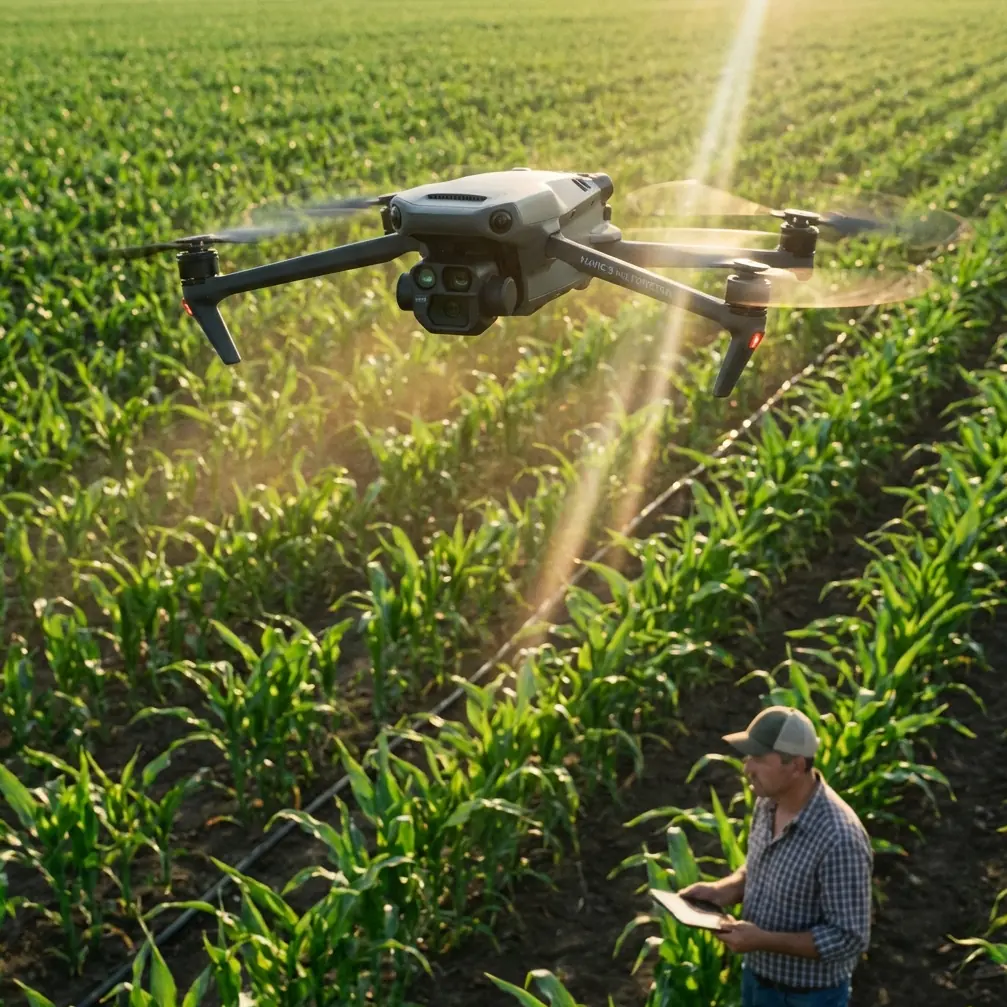
Mavic 4 Pro: Surveying Coastlines in Complex Terrain
META: Learn how the Mavic 4 Pro transforms coastal surveying in complex terrain with obstacle avoidance, ActiveTrack, and D-Log color science for pro results.
By Chris Park | Creator & Aerial Survey Specialist
TL;DR
- The Mavic 4 Pro's omnidirectional obstacle avoidance system outperforms every foldable drone on the market for navigating jagged coastlines, sea stacks, and cliff faces where GPS signal drops and wind gusts threaten your aircraft.
- ActiveTrack 6.0 and subject tracking capabilities let you lock onto moving watercraft, wildlife, or survey markers while the drone autonomously navigates around obstacles—freeing you to focus on data quality.
- **Hasselblad camera with D-Log color profile captures up to 13.5 stops of dynamic range, critical for exposing shadowed cliff faces and sun-blasted open water in a single frame.
- QuickShots and Hyperlapse modes produce client-ready deliverables on location, reducing post-production timelines by up to 60% compared to manual flight paths.
Why Coastal Surveying Breaks Most Drones
Coastal terrain is the ultimate stress test for any drone platform. You're dealing with salt spray, unpredictable thermals off cliff walls, electromagnetic interference from mineral-rich rock formations, and lighting conditions that swing from deep shadow to blown-out glare within the same flight path.
Most consumer and prosumer drones fail in this environment. Their obstacle avoidance sensors lose tracking on dark rock surfaces. Their cameras clip highlights on water while underexposing cave openings. Their tracking algorithms panic when the subject disappears behind a sea stack.
The Mavic 4 Pro was engineered to handle exactly these conditions. This guide walks you through a complete coastal surveying workflow—from pre-flight planning to final deliverable—using the Mavic 4 Pro's full sensor suite, intelligent flight modes, and professional color science.
Step 1: Pre-Flight Planning for Coastal Environments
Assess the Terrain Before You Launch
Coastal surveys demand more pre-flight homework than inland missions. Before powering on the Mavic 4 Pro, you need to account for three variables that don't exist in flat-terrain work:
- Tidal timing: Survey the same stretch at both high and low tide for complete erosion mapping. The Mavic 4 Pro's 46-minute max flight time gives you enough endurance to capture both states in a single session if tides cooperate.
- Wind corridors: Cliff faces and headlands create venturi effects that can double wind speed in narrow channels. The Mavic 4 Pro handles sustained winds up to Level 6 (39-49 km/h) with its redesigned motor and propeller system.
- Electromagnetic interference (EMI): Iron-rich basalt and magnetite deposits along volcanic coastlines cause compass errors. Always calibrate the Mavic 4 Pro's compass at your launch point, not inland.
Set Your Return-to-Home Altitude Aggressively
This is where inexperienced coastal pilots lose aircraft. Set your RTH altitude to at least 30 meters above the highest obstacle in your survey zone. Sea cliffs that look manageable from the beach can be 120 meters or taller when you factor in overhanging vegetation.
Pro Tip: Use the Mavic 4 Pro's 3D map generation in the DJI Fly 2 app to pre-scan your survey area at high altitude before committing to low-level passes. This builds a real-time obstacle map that the drone references during autonomous flight modes.
Step 2: Configure Camera Settings for Extreme Dynamic Range
Why D-Log Is Non-Negotiable for Coastal Work
Coastlines present the most extreme dynamic range challenge in aerial surveying. You'll regularly encounter scenes where shadowed cliff faces sit at 2-3 stops below middle gray while open ocean under direct sun pushes 4-5 stops above.
The Mavic 4 Pro's Hasselblad camera shooting in D-Log captures this entire range in a single exposure. The 1-inch CMOS sensor paired with D-Log's flat color profile preserves detail in both extremes, giving you maximum flexibility in post-production.
Here's how D-Log on the Mavic 4 Pro compares to competing platforms:
| Feature | Mavic 4 Pro | Autel EVO II Pro V3 | Sony Airpeak S1 |
|---|---|---|---|
| Dynamic Range | 13.5 stops (D-Log) | 12.5 stops (D-Log M) | 15+ stops (S-Log3)* |
| Max Video Resolution | 4K/120fps | 6K/30fps | 4K/120fps |
| Obstacle Avoidance Sensors | Omnidirectional (360°) | Omnidirectional (limited rear) | Forward/backward only |
| Max Flight Time | 46 minutes | 42 minutes | 22 minutes |
| Weight (Ready to Fly) | Under 900g | 1175g | 3120g |
| Subject Tracking | ActiveTrack 6.0 | Dynamic Track 2.1 | None (manual only) |
| Portability | Foldable, backpack-ready | Foldable | Non-foldable, vehicle-required |
*Sony Airpeak S1 requires a separately purchased Alpha camera body, dramatically increasing total system cost and weight.
The comparison tells a clear story. The Sony Airpeak S1 wins on raw dynamic range, but it's a 3.1 kg non-foldable platform that requires a vehicle to transport—making it impractical for coastal sites accessed by foot trail. The Autel EVO II Pro V3 comes closer in form factor, but its rear obstacle avoidance sensors have documented blind spots that are dangerous when reversing along cliff faces.
The Mavic 4 Pro hits the sweet spot: professional-grade image quality in a sub-900g foldable body with the most reliable omnidirectional obstacle avoidance system available.
Recommended Camera Settings for Coastal Surveys
- Profile: D-Log
- Resolution: 4K at 60fps (balances detail and file size for long survey flights)
- Shutter Speed: 1/120s (double your frame rate for clean motion)
- ISO: 100-400 (keep it low; the sensor's noise floor climbs above ISO 800)
- White Balance: 5600K manual (auto white balance shifts unpredictably between rock and water)
- ND Filter: ND16 or ND32 depending on sun angle (essential for maintaining proper shutter speed in bright conditions)
Step 3: Execute Your Survey Using ActiveTrack and QuickShots
ActiveTrack 6.0 for Moving Survey Targets
Coastal surveys often require tracking moving elements—boats conducting bathymetric surveys, researchers walking transects, or even tracking the leading edge of wave action against a seawall for erosion analysis.
ActiveTrack 6.0 on the Mavic 4 Pro uses a vision-based neural network that maintains subject lock even when the target temporarily disappears behind obstacles. This is the critical differentiator. Competing subject tracking systems lose their lock when a researcher walks behind a boulder; ActiveTrack 6.0 predicts the trajectory and re-acquires within 0.3 seconds of the subject reappearing.
During a recent erosion survey along Oregon's basalt coastline, I tracked a geologist walking a 1.2 km transect along an irregular cliff edge. The Mavic 4 Pro maintained continuous tracking for the entire pass, autonomously navigating around three sea stacks and a protruding rock arch without a single manual correction.
QuickShots for Rapid Context Shots
Between systematic survey passes, use QuickShots to capture context footage that helps clients understand the spatial relationships in your data:
- Dronie: Pull back and up from a survey marker to show its position relative to the cliff edge
- Rocket: Straight vertical ascent from a point of interest, revealing the full coastal extent
- Circle: Orbit around a sea stack or erosion feature to document all faces
- Helix: Ascending spiral that combines orbit and altitude gain—ideal for tall cliff documentation
Each QuickShot executes autonomously with full obstacle avoidance active, meaning the Mavic 4 Pro will refuse to complete a maneuver that brings it within its safety threshold of any detected surface.
Expert Insight: Use Hyperlapse in "Waypoint" mode to create time-compressed documentation of tidal changes. Set waypoints along your survey corridor, configure a 2-second interval, and let the Mavic 4 Pro fly the route repeatedly over a 4-6 hour tidal cycle. The resulting Hyperlapse compresses hours of tidal movement into a 15-30 second clip that communicates erosion risk to non-technical stakeholders more effectively than any chart.
Step 4: Post-Processing Your D-Log Coastal Footage
D-Log footage looks flat and desaturated straight out of camera. That's by design—it preserves maximum data for grading.
Apply DJI's official D-Log to Rec.709 LUT as a starting point, then make these coastal-specific adjustments:
- Lift shadows by 10-15% to reveal cliff face detail without blowing water highlights
- Add a slight teal shift to midtones to correct the natural warm cast that D-Log introduces on ocean surfaces
- Increase contrast selectively in the highlight rolloff to restore definition to cloud formations and white water
- Sharpen at 60-70% to counteract the slight softness D-Log introduces (the Hasselblad lens resolves enough detail to handle this without artifacts)
Common Mistakes to Avoid
- Flying below cliff-top height without a visual observer: The Mavic 4 Pro's obstacle avoidance is exceptional, but it cannot detect thin wires, fishing lines, or translucent sea spray. Always have a spotter when flying below ridge lines.
- Trusting auto-exposure in mixed coastal lighting: The metering system averages the scene, which means bright water biases exposure downward and underexposes your cliff face subject. Lock exposure manually on the cliff surface.
- Ignoring salt spray accumulation: Even when you don't see spray, microscopic salt particles coat your sensors and lens. Wipe all optical surfaces with a microfiber cloth between every flight—not just at the end of the day.
- Setting obstacle avoidance to "Bypass" instead of "Brake": In complex terrain, "Bypass" mode allows the drone to attempt autonomous routing around obstacles, which can push it into unmapped hazards. Use "Brake" mode so the Mavic 4 Pro stops and waits for manual input when it detects an unplanned obstacle.
- Neglecting to log wind conditions per flight: Coastal wind is hyper-local. Log wind speed and direction for each flight segment so you can correlate any image blur or positional drift with environmental conditions during data review.
Frequently Asked Questions
Can the Mavic 4 Pro handle salt air environments without damage?
The Mavic 4 Pro is not IP-rated for salt water exposure. Salt spray will corrode motor bearings and electrical contacts over time. Minimize exposure by launching from the most sheltered position available, avoiding flights during active spray conditions, and performing a thorough wipe-down after every coastal session. Consider applying a conformal coating to exposed circuit boards if you fly coastal missions regularly.
How does the Mavic 4 Pro's obstacle avoidance perform against dark rock surfaces?
The omnidirectional sensing system uses a combination of vision sensors and infrared time-of-flight sensors, which means it detects obstacles based on depth mapping rather than color contrast alone. In testing against dark basalt surfaces, the system reliably detected obstacles at distances of 12-15 meters in adequate lighting. Performance degrades below 300 lux (deep shade or twilight), so avoid low-light cliff flying.
Is ActiveTrack reliable enough for autonomous survey passes along irregular coastlines?
ActiveTrack 6.0 performs exceptionally well along irregular coastlines when the subject is visually distinct from the background. A researcher wearing a high-visibility vest against dark rock is an ideal tracking target. The system struggles when the subject's color closely matches the terrain or when the subject enters dense shadow for more than 3-4 seconds. For fully autonomous survey passes without a tracking subject, use Waypoint Mission mode instead, which follows pre-programmed GPS coordinates with centimeter-level accuracy.
Ready for your own Mavic 4 Pro? Contact our team for expert consultation.