
Mavic 4 Pro in Vineyard Heat and Cold: A Field Report
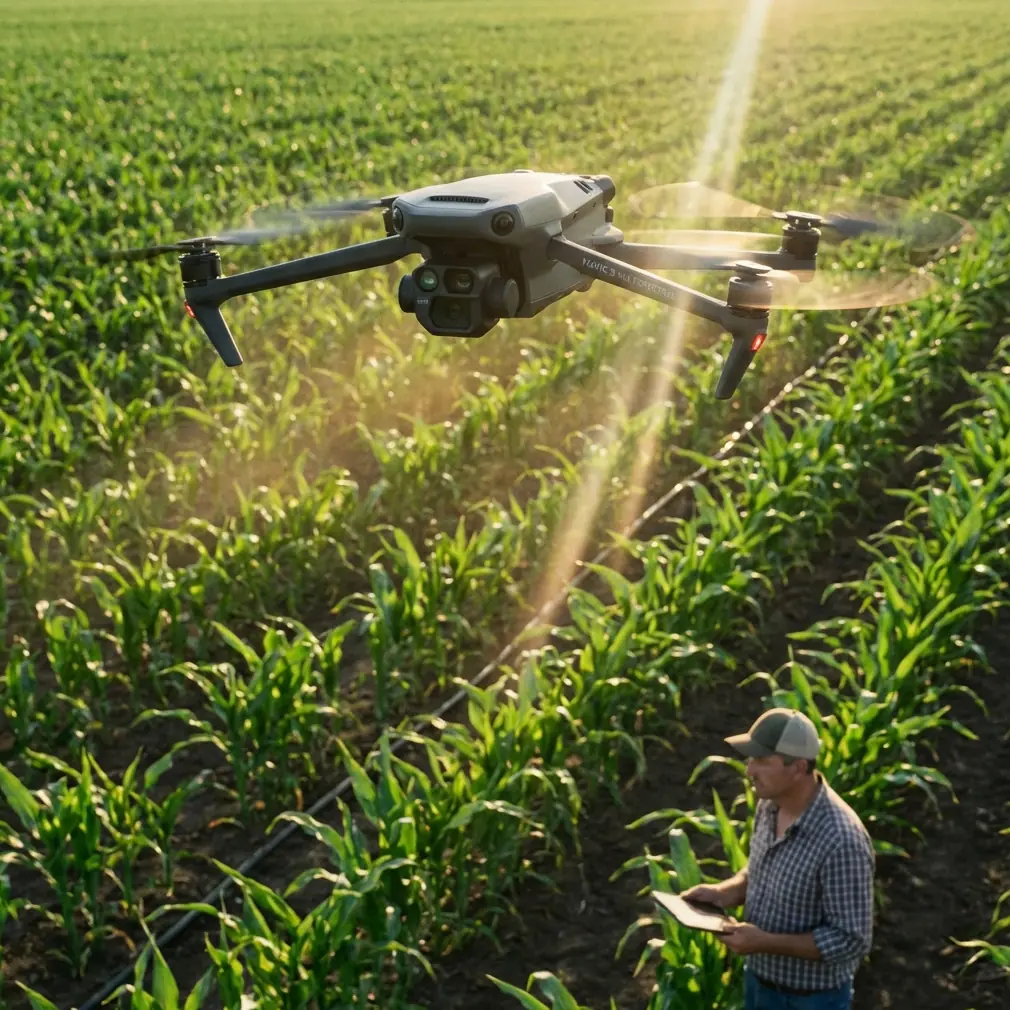
Mavic 4 Pro in Vineyard Heat and Cold: A Field Report on Control, Battery Discipline, and Safer Low-Altitude Work
META: A field-tested look at using Mavic 4 Pro around vineyards in extreme temperatures, with battery management advice, obstacle avoidance context, and why flight-control fundamentals still matter.
Vineyards punish sloppy drone habits.
They do it quietly at first. A row looks clear until wires appear against the sun. A slope changes your apparent height above canopy faster than expected. Early cold suppresses battery performance, then midday heat pushes packs in the opposite direction. Add repetitive low-altitude passes around trellis systems and even a polished aircraft like the Mavic 4 Pro becomes less about brochure features and more about discipline.
That is the frame I keep returning to when people ask whether a Mavic 4 Pro can play a useful role around vineyard operations in difficult weather. Not as a replacement for purpose-built agricultural spray platforms—because it is not that—but as a scouting, planning, documentation, and operational support tool that helps crews make better decisions before and after treatment work. In that role, it can be remarkably effective. The catch is that extreme temperatures expose the difference between casual flying and professional procedure.
What matters most is not any single intelligent feature. It is how stable flight control, obstacle awareness, camera intelligence, and battery handling stack together in a real field environment.
Why control theory still matters in a vineyard
Most operators never read academic control papers. Fair enough. But the reference trail behind rotorcraft development explains a lot about what we feel in the field.
One of the cited works in the source material compares PID and LQ control techniques for an indoor micro quadrotor, presented at IROS 2004. Another explores visual feedback control for a quadrotor helicopter at ICRA 2002. A third digs into real-time parameter identification of inertia tensor using adaptive control. Those are not abstract museum pieces. They point to the same operational truth: multirotor performance depends on the aircraft continuously estimating, correcting, and stabilizing itself under changing conditions.
In a vineyard, those changing conditions are constant. Wind spills over ridgelines. Temperature shifts alter battery behavior and available thrust margins. The aircraft’s visual system deals with repeating textures—rows, leaves, shadows, posts—that can be easy to read one second and confusing the next. When operators lean on tools like obstacle avoidance, ActiveTrack, or automated cinematic paths, they are relying on the descendants of exactly this kind of research: control loops, adaptive estimation, and visual feedback systems working in real time.
For Mavic 4 Pro users, the practical takeaway is simple. Intelligent flight features are useful because the underlying control stack is working hard beneath them. But vineyards are cluttered enough that you should never treat automation as permission to relax.
The vineyard use case people get wrong
When someone says “spraying vineyards,” many imagine the drone doing the spraying. That is usually the wrong starting point for a Mavic-class aircraft.
A Mavic 4 Pro fits better upstream and downstream of treatment. Before any spray job, it can document row conditions, identify access problems, verify canopy variation, and record wind-sensitive terrain features. After work, it can help compare coverage zones visually, track problem patches over time, and create repeatable image records for farm managers and agronomists. If your team also needs client communication or internal reporting, QuickShots, Hyperlapse, and D-Log are not just media buzzwords. They become tools for showing change over time in a way stakeholders can actually interpret.
That matters operationally. A vineyard manager rarely wants a lecture about airframes. They want to know why one block dried faster, why one corner gets hammered by wind, or why a crew lost time around a steep row end. A well-flown Mavic 4 Pro can answer those questions.
Extreme temperatures are where battery habits separate pros from hobbyists
My strongest field advice has nothing to do with camera settings. It is battery sequencing.
In cold mornings, never launch immediately after pulling a pack from a vehicle or hard case if the cells have not stabilized. In hot afternoons, never rotate a freshly landed warm pack straight back into the aircraft just because it still shows enough charge. Both habits look efficient. Both can create unstable performance windows.
Here is the tip I give crews: treat batteries like a workflow, not an accessory. I mark packs by rotation order, then build a buffer between flights so each battery has time to normalize toward a healthier operating temperature before takeoff. In cold weather, that may mean warming the pack gradually before the first launch. In heat, it means letting the battery rest in the shade with the case open rather than trapping residual heat. I do not stack fast turnarounds on the hottest pack of the day, especially when flying low over rows where escape options are limited.
That one habit reduces surprises.
Why is it so important in vineyards? Because most useful flights there are not high, open, forgiving flights. They are close to terrain, near trellis structures, and often around irregular slope transitions. A drone that suddenly feels less eager on climb-out or less predictable under load does not need to fail completely to create a bad situation. A small reduction in confidence is enough to force a rushed correction.
Battery discipline is also tied to obstacle avoidance. Pilots often think of these as separate topics. They are not. Obstacle sensing helps you avoid contact; battery performance helps ensure the aircraft has the responsiveness to execute the avoidance maneuver cleanly and repeatedly.
Obstacle avoidance in vineyards: helpful, not magical
Vineyards are strange environments for sensors. The rows are orderly, but not simple. Posts, wires, leaf walls, end rows, changing sun angle, and dust can all complicate what the aircraft sees.
This is where Mavic 4 Pro’s obstacle avoidance has real value—particularly during reconnaissance missions near trellis systems or while repositioning along uneven edges of a block. It can add a margin of safety when you are moving laterally near obstacles or adjusting altitude over terrain that rises toward the aircraft. But there is an operational catch: vineyard obstacles are often thin, repeating, or partially obscured. Wires and narrow supports can be among the hardest elements in any agricultural environment.
So I use obstacle avoidance as a second set of eyes, not as a permission slip to thread gaps.
That approach aligns with the source references on visual feedback and control. Visual systems are powerful because they let the aircraft react to what it perceives. Yet perception quality always depends on conditions. Repeating leaf patterns, glare, and low-angle sun can degrade confidence. If you know that, you fly differently. You keep cleaner sight lines. You avoid relying on automated paths too close to infrastructure. You choose lateral repositioning points before you need them.
ActiveTrack and subject tracking around field crews
Subject tracking sounds like a cinematic feature until you use it to document actual vineyard work.
If you need to follow a tractor moving between blocks, monitor crew movement for workflow review, or capture repeated passes along access lanes, ActiveTrack can save time. It helps maintain continuity in footage without forcing the pilot to hand-fly every frame. For supervisors reviewing operation flow, that continuity is more useful than flashy visuals. You can spot bottlenecks, wasted turnarounds, awkward staging points, or dust exposure patterns.
Still, this is one of those functions that should be used with limits in agricultural terrain. Tracking a moving subject near rows and support structures increases the burden on obstacle sensing and path prediction. I prefer using subject tracking where the route is visually open—service roads, row ends, staging areas—not deep inside dense trellis corridors.
That is another place where the old control literature connects directly to modern practice. Stable tracking depends on the aircraft fusing motion estimation, control correction, and visual input continuously. If one of those layers is stressed by poor lighting, repetitive textures, or abrupt directional changes, the operator needs to intervene early rather than late.
D-Log and Hyperlapse are more useful than they sound
A lot of working operators dismiss camera features until a client asks for evidence.
D-Log matters in vineyards because extreme-temperature work often means extreme contrast. Frosty mornings bring bright sky and dark rows. Harsh afternoon sun creates blown highlights on dusty roads and deep canopy shadow beneath. A flatter profile gives you more room to recover detail when preparing reports, progress reviews, or side-by-side seasonal comparisons.
Hyperlapse has a different value. It is one of the easiest ways to show environmental movement that affects spray planning: fog lift, valley wind development, shadow migration across slopes, and crew timing relative to temperature windows. That is not decoration. It is operational context.
QuickShots can also help when used intelligently. A short, repeatable automated shot from the same block edge every visit creates a clean visual record of growth stage, canopy density, and access condition over time. Simple beats flashy every time in agriculture.
The hidden challenge of row geometry
One reason vineyard flying feels harder than many new pilots expect is geometry.
Rows create optical tunnels. Slope compresses distance judgment. Turning at row ends often places the aircraft in the busiest visual environment of the mission: posts, wires, changing horizon, vehicles, and people. The aircraft can be functioning perfectly and still feel “busy” because the environment is busy.
This is why I tell pilots to brief turns, not just passes. Decide in advance where you will climb, where you will lateral out, and where you will reset orientation. If you are using the Mavic 4 Pro to support spray planning, the quality of your turnarounds often matters more than the quality of your straight lines. The useful data is usually lost not in the row, but during the rushed reposition.
Building a repeatable field routine
A professional vineyard routine with Mavic 4 Pro should be boring in the best way.
Start with weather and thermal context, not with camera mode. Walk the launch area and identify the wire hazards you can actually see. Note the ones you cannot see well from the pilot position. Sequence batteries by temperature logic, not just charge percentage. Keep the first mission simple. Use that first flight to judge wind over canopy and visual sensor confidence before trying tighter passes or tracking sequences.
For documentation, capture three layers:
- A high-level overview of the block and access conditions.
- Mid-level passes showing row uniformity, terrain transitions, and edge hazards.
- Tight visual notes only where safe and necessary.
If the day demands communication with an experienced field team, I would rather share a practical flight plan than overexplain theory. But if someone wants a quick operational check before heading out, a simple route is to send them a note here: message the field desk.
What the Mavic 4 Pro does well in this scenario
Used properly, the Mavic 4 Pro shines in vineyard support because it combines three things that matter together, not separately.
First, it gives you mobile aerial visibility in terrain where ground perspective is misleading. Second, it adds intelligent sensing and tracking that can speed up documentation without removing pilot responsibility. Third, it packages all of that in an aircraft small enough to deploy quickly during narrow weather windows.
The deeper point, though, is that its usefulness depends on respecting the fundamentals highlighted in the reference material. The old research on PID versus LQ control, on visual feedback control, and on adaptive parameter identification all orbit the same reality: multirotors are dynamic systems managing uncertainty in real time. Vineyards in extreme temperatures create exactly the kind of uncertainty that exposes weak habits.
So if you are flying Mavic 4 Pro around spray operations, think like an operator, not a spectator. Let obstacle avoidance help, but do not ask it to perform miracles among wires and trellis hardware. Use ActiveTrack where the environment is open enough to support it. Capture in D-Log when lighting is punishing. Use Hyperlapse and repeatable QuickShots to show environmental change and block progression. Most of all, run your batteries with patience.
That last point sounds small. In the field, it rarely is.
Ready for your own Mavic 4 Pro? Contact our team for expert consultation.