
Spraying Vineyards in Windy Conditions With Mavic 4 Pro
Spraying Vineyards in Windy Conditions With Mavic 4 Pro: A Field Case Study
META: A practical case study on using Mavic 4 Pro around windy vineyards, with notes on obstacle avoidance, ActiveTrack, low-light sensors, D-Log, and safer route planning for real farm operations.
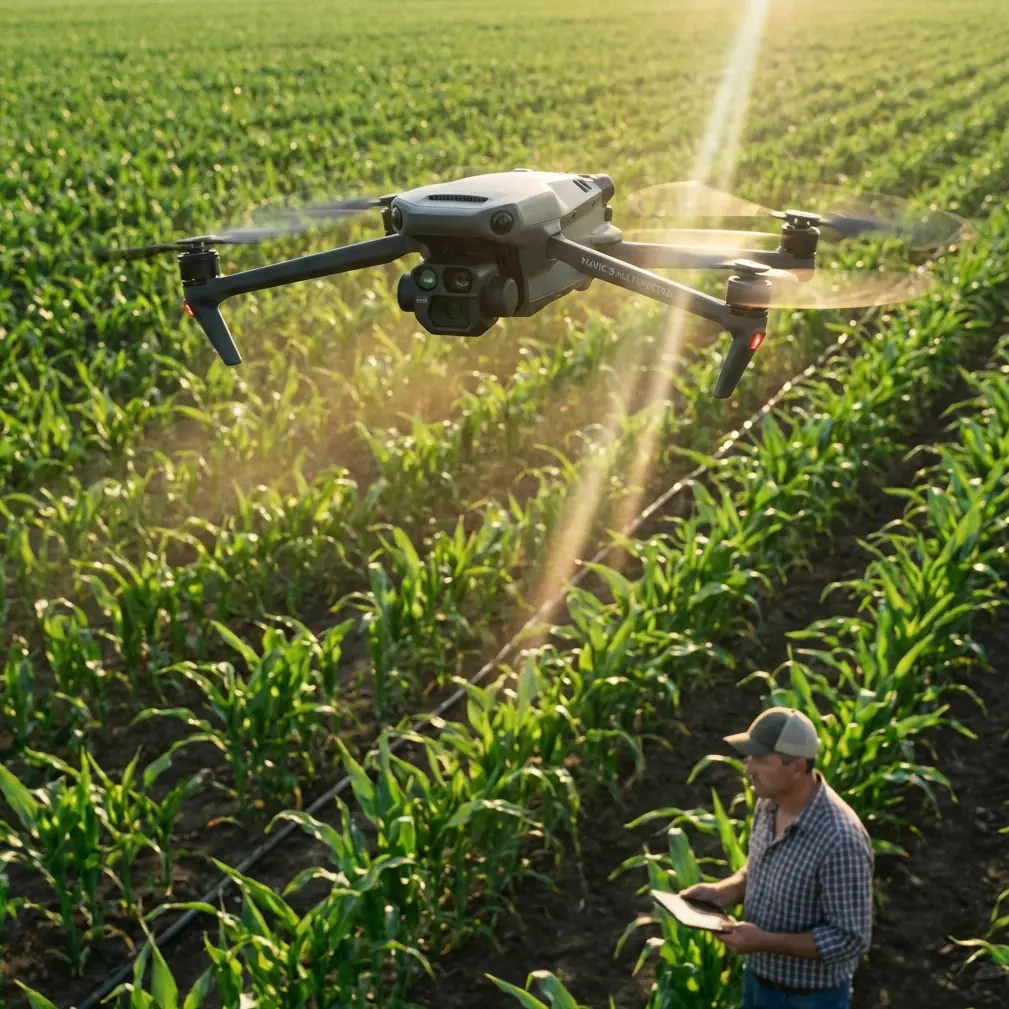
I need to start with one clear point: the Mavic 4 Pro is not an agricultural spraying drone. It is not built to carry liquid payloads or replace dedicated crop-spray platforms. But in a windy vineyard environment, that does not make it irrelevant. Quite the opposite. It can become one of the most useful aircraft on site when the job is spraying and the real challenge is deciding when, where, and how to do it safely and efficiently.
That distinction matters in the field.
When growers say they are “spraying vineyards,” the actual operation is rarely just about atomizing product. The difficult part is reading the blocks, checking wind interaction across rows, spotting drift risk near edges, identifying missed sections, and understanding how terrain, trellis lines, and shelter belts are shaping the conditions minute by minute. This is where the Mavic 4 Pro fits. It acts as an aerial decision platform before, during, and after the spray window.
I saw this play out on a steep vineyard property where wind was rolling unevenly over a ridgeline and then tumbling into lower rows. At ground level, the conditions seemed manageable. From above, the pattern was far more complicated. One corridor was usable. The next had visible turbulence where rows opened onto a gully lined with trees. That is exactly the kind of detail that can decide whether an application lands on target or drifts into the wrong place.
The role of Mavic 4 Pro in a spraying workflow
A lot of drone discussion gets stuck on specs in isolation. In vineyard work, capability only matters if it changes an operational decision.
The Mavic 4 Pro’s obstacle avoidance system is one of those capabilities. Vineyards are cluttered environments, especially in mixed terrain. You have trellis posts, wires, shelter trees, utility lines near access roads, uneven headlands, and sometimes fogging equipment parked where it should not be. During a pre-spray flight, obstacle sensing is not just a convenience feature. It gives the pilot more confidence to inspect row ends, block boundaries, and canopy transitions at low altitude without turning every pass into a high-stress manual exercise.
That becomes even more useful in windy conditions, because wind adds workload. The aircraft is already dealing with gusts, and the pilot is already making more frequent corrections. A robust sensing system reduces the chance that attention gets pulled too far toward basic collision avoidance and away from interpreting the actual site conditions.
The same logic applies to ActiveTrack and subject tracking. In a vineyard spray scenario, these features are not there for cinematic novelty. They can be useful for documenting moving ground equipment along access lanes, monitoring a tractor-based sprayer from a safe offset, or maintaining visual coverage on a utility vehicle moving between blocks while the pilot keeps attention on surrounding obstacles and terrain. Good tracking is operationally significant because it reduces the number of inputs needed during documentation flights, which frees mental bandwidth in gusty air.
Why wind changes everything in vineyards
Wind in vineyards is not one thing. It is layered.
A weather app might show a single wind speed, but a vineyard can present several microclimates in the same hour. Rows aligned with prevailing wind can act like channels. A stand of trees can create a calm pocket on one side and erratic rotor-like air on the other. A ridge can accelerate airflow over the crest. A hollow can hold cooler, calmer air longer than the upper slope.
For spraying, these differences are not academic. They affect coverage, drift, timing, and whether a block should be treated now or delayed.
The Mavic 4 Pro helps because it provides fast aerial context. Instead of relying on a single observation point, the operator can inspect multiple elevations and block exposures in one sortie. If there is dust movement on a track, leaf flutter patterns in edge rows, or canopy movement changing from section to section, you can see it before committing equipment and labor.
In one case, the aircraft was used to compare the western edge rows against the interior of the block just after sunrise. On the western side, wind was lifting more aggressively over a gap in the shelter belt. Inside the block, the canopy movement was noticeably lower. That changed the spray plan. The team delayed the exposed edge and treated the interior rows first.
That is the value proposition. Not “drone footage.” Better decisions.
A sensor system that matters in real terrain
One of the strongest reasons to use a high-end compact drone in vineyards is sensor confidence near complex vertical structure. Vineyards are deceptively repetitive. Row after row looks clean from a distance, but in reality there are many small hazards: wires at awkward heights, dead vines creating visual gaps, overhanging branches at boundaries, poles near pump stations, bird netting, and slope breaks that narrow the safe flight envelope.
The Mavic 4 Pro’s omnidirectional obstacle avoidance is operationally significant because vineyards often require lateral and diagonal movement, not just straight in-and-out passes. A drone that sees around itself better is easier to position where the information is. That matters when checking underserviced corners, turning around near shelter trees, or moving along row ends while maintaining line of sight.
The wildlife angle is real too. On one survey flight, a pair of kangaroos broke from the edge vegetation and crossed between rows just as the aircraft was moving laterally to inspect a wind-exposed boundary. A little later, several cockatoos lifted suddenly from a tree line. In environments like this, sensing and responsive flight behavior are not just about static obstacles. They help the pilot stay composed when the scene changes unexpectedly. The aircraft did not need dramatic evasive maneuvers; what mattered was the extra margin of awareness while re-positioning in a cluttered corridor.
That kind of moment sounds minor until you are on a property with gusts, tight boundaries, and active machinery. Then it becomes part of the risk picture.
Imaging is not just for pretty footage
The Mavic line gets plenty of attention for image quality, and yes, the Mavic 4 Pro is a very capable camera platform. But for vineyard operations, image quality matters because it improves interpretation.
If you are assessing canopy density variation, row uniformity, ponding after irrigation, wheel-track compaction, or the practical shape of a spray block boundary, muddy footage wastes time. Clean, detailed imagery speeds up decisions. D-Log support is especially useful when the job includes documenting conditions under harsh contrast, which is common in vineyards with bright sky, reflective soil, shaded rows, and dark shelter belts all in the same frame. A flatter recording profile preserves more flexibility in post when the footage needs to be reviewed carefully, not just viewed casually.
That is relevant after spraying too. If a manager wants a record of canopy condition before application and a separate visual check after, D-Log footage gives more room to standardize the look of those records across different times of day. You are not simply collecting video. You are building a visual reference set.
Hyperlapse and QuickShots also have more practical value than people assume. QuickShots can help a less experienced pilot capture consistent overview angles of a block for recurring reporting. Hyperlapse is useful when documenting changing fog movement, inversion lift, or the pace at which wind builds across exposed sections during the first part of the morning. Those patterns are hard to appreciate from still images alone.
A practical case study from a windy block
Chris Park, the grower managing the day’s work, was not interested in making a film. He wanted to know whether a difficult block could be treated without wasting product or creating drift risk at the top end.
The site had three challenges:
- Rows climbing toward a ridge.
- A tree line creating uneven shelter.
- Narrow access zones with equipment parked near one boundary.
Ground observations suggested the lower rows were acceptable. The concern was the top third of the block, where wind exposure changed quickly.
The Mavic 4 Pro was launched for a short pre-operation survey. The first pass was high enough to read the shape of the airflow across the site. The second was lower, following row direction and then crossing at right angles to compare canopy movement. Obstacle avoidance mattered immediately near the tree line and at the row ends, where visual clutter increased. ActiveTrack was then used briefly to follow the support vehicle moving up the service lane so the team could review spacing, turning room, and interaction with the spray equipment staging area.
During the third reposition, the wildlife moment happened: cockatoos burst from the shelter trees and crossed left to right while the drone was transitioning near the boundary. It was a reminder that vineyard environments are live environments. You are not flying through a static CAD model.
What did the flight change?
It showed that the lower center section was workable first, while the ridge rows needed to wait. It also showed a drift-sensitive zone where the shelter belt opened and wind was curling through a side gap. Without the aerial view, that corner could easily have been treated based on the calmer feel at the loading area.
After the operation, the same aircraft was used to collect visual documentation of the completed section under consistent angles. That created a simple but useful reference for team review.
What operators should actually watch for
If you are using a Mavic 4 Pro around a spraying day in vineyards, the real objective is not to fly more. It is to answer specific questions quickly.
Ask:
- Which rows are showing the strongest canopy movement?
- Are block edges behaving differently from interior rows?
- Is there a sheltered window on one side that does not exist on the other?
- Are row ends safe and clear for support equipment movement?
- Are there vertical obstacles or temporary hazards that were not there yesterday?
- Is changing light making visual assessment harder from the ground than from the air?
This is where pilot discipline matters. The aircraft’s smart features help, but they do not replace judgment. Wind can degrade tracking quality, compress safe margins, and increase battery consumption. Obstacle sensing is a layer of support, not permission to fly carelessly near wires or netting. In vineyards, the best flights are usually the shortest ones that answer the question.
Building a better workflow around the aircraft
The strongest Mavic 4 Pro operators in agriculture tend to treat the aircraft as part of a routine, not an event.
A solid vineyard workflow in windy conditions often looks like this:
- quick dawn or early-window reconnaissance
- short low-altitude checks on exposed edges
- review of imagery before committing the full spray team
- selective post-operation documentation for records and lessons learned
That approach is efficient because the drone is feeding decisions, not generating unnecessary data. If your team needs help setting up a practical vineyard workflow around pre-spray aerial checks, this direct WhatsApp line for field coordination is a sensible place to start.
Where the Mavic 4 Pro genuinely earns its place
For vineyard managers, contractors, and farm teams, the Mavic 4 Pro earns its keep when conditions are variable, visibility is deceptive, and the cost of a bad decision is higher than the cost of a short recon flight.
Its obstacle avoidance matters because vineyards are full of narrow, repetitive hazards that get harder to manage in gusts. Its ActiveTrack and subject tracking matter because moving vehicles and support crews often need to be documented without consuming all of the pilot’s attention. Its imaging pipeline, including D-Log, matters because spray planning and post-operation review rely on readable footage, not just attractive footage. And features like QuickShots or Hyperlapse, often dismissed as creative extras, can become useful tools for repeatable reporting and condition monitoring.
Most of all, the aircraft matters because windy vineyards can fool experienced people. Ground-level calm can hide exposed rows. A sheltered loading area can disguise turbulence on a ridge. A tree line can protect one lane and disrupt the next. The Mavic 4 Pro gives you a faster way to see the truth of the block before the day gets expensive.
That is the real story here. Not airborne spraying by a compact camera drone. Better judgment around spraying, powered by a compact aircraft that can safely gather the right information in a difficult environment.
Ready for your own Mavic 4 Pro? Contact our team for expert consultation.