
Mavic 4 Pro for Solar Farm Operations: A Practical Pre
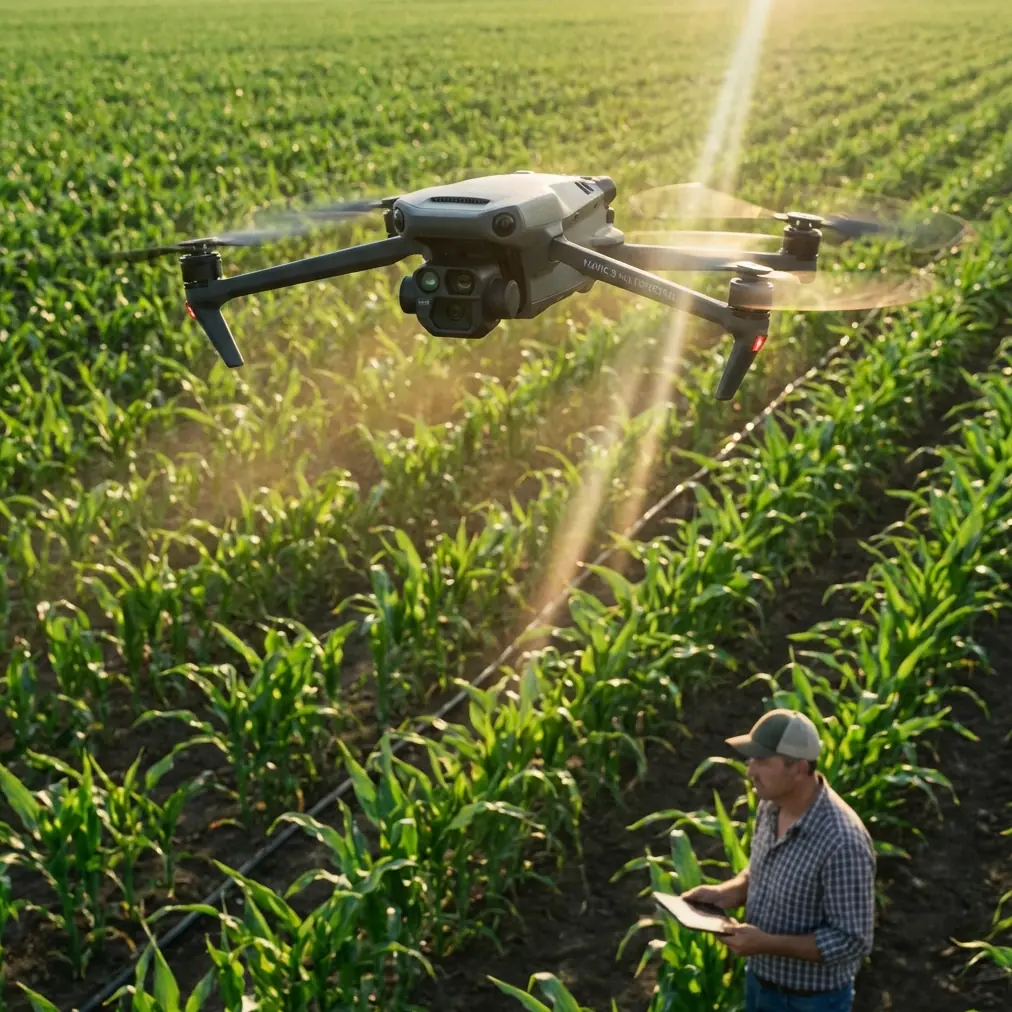
Mavic 4 Pro for Solar Farm Operations: A Practical Pre-Flight Method for Hot, Reflective Sites
META: A field-focused tutorial on preparing the Mavic 4 Pro for solar farm work in extreme temperatures, with pre-arm logic adapted from proven APM safety checks and real-world EMI mitigation tips.
Solar farms are deceptively difficult places to fly.
From a distance, they look open and forgiving. In practice, they combine heat shimmer, repetitive geometry, reflective surfaces, long working corridors, and pockets of electromagnetic noise from inverters, combiner boxes, transformers, and site power infrastructure. If you are using a Mavic 4 Pro around these conditions—whether for inspection support, mapping passes, progress documentation, cleaning assessment, vegetation review, or operation planning—the difference between a smooth sortie and a frustrating no-go often comes down to what happens before takeoff.
That is why an old-school pre-arm discipline still matters.
One of the most useful reference points here comes from APM flight-control troubleshooting. It was written to solve a common problem: pilots who could not arm the aircraft and did not understand why the machine seemed unresponsive. Even though the Mavic 4 Pro is a far more integrated platform than an APM-based build, the operational logic is still relevant. The lesson is simple: most “mystery” launch failures are not mysterious. They come from skipped checks, bad calibration, sensor disagreement, or control-path errors.
For solar farm work in extreme temperatures, that logic becomes even more valuable.
Why a legacy APM checklist still applies to the Mavic 4 Pro
The APM reference is blunt about one thing: the steps may feel repetitive, but they are necessary. That attitude is worth carrying into Mavic 4 Pro fieldwork.
On a solar site, the environment pushes several aircraft systems at once:
- navigation confidence can be affected by electromagnetic interference
- vision systems can struggle with glare and mirrored panel rows
- barometric stability can drift when the aircraft is baking on a hot launch pad
- compass confidence can drop if you power up too close to energized equipment or steel structures
- control inputs need to be predictable when the mission requires tight corridor work
Mavic pilots sometimes assume that a modern prosumer flagship will silently solve all of this. Usually it handles a lot, yes. But smart automation is not a replacement for a structured launch sequence. It works best when the aircraft starts from a clean baseline.
That is the real connection between the older APM advice and a newer aircraft like the Mavic 4 Pro: pre-flight discipline still determines whether advanced features such as obstacle avoidance, ActiveTrack, subject tracking, QuickShots, Hyperlapse, and D-Log capture are actually usable on site.
If the aircraft is not sensor-stable and orientation-stable before takeoff, the glamorous features are irrelevant.
Start with control integrity, not camera settings
A useful APM detail says the first check should be controller channel calibration, with values falling between 1000 and 1900, and the midpoint around 1500. On APM, if those values were off, the system could refuse arming altogether.
The Mavic 4 Pro does not expose that exact same channel workflow in the same way, but the operational principle is identical: verify that your control path is healthy before you think about the payload or the shot list.
For solar farm crews, this means:
- confirm sticks respond cleanly with no drift
- verify gimbal wheel behavior
- confirm custom buttons are mapped correctly
- check that flight mode selections are what you think they are
- make sure return-to-home behavior is understood for that site
- verify the home point is being recorded from a sensible launch area, not beside electrical equipment
Why this matters on a solar farm: repetitive panel rows distort your visual judgment. If you need to make a small corrective input while flying a low-altitude inspection edge, you do not want to discover at that moment that a control profile feels abnormal or that a command is reversed from what your crew expects.
The APM source specifically warns that some pilots tried to unlock one direction and failed because a channel was reversed. For Mavic 4 Pro operators, the equivalent risk is less about manual channel inversion and more about confirming that every input behavior matches your habits before you move into a glare-heavy corridor.
That is the first operational takeaway from the reference material: control verification is not admin. It is risk reduction.
IMU confidence comes before any “smart” flight feature
The second big APM insight is even more direct: accelerometer calibration is a required pre-arm condition. If not done properly, the ground station can show a warning like “pre arm ins no Calibration.”
Again, the wording is from APM, not DJI, but the principle carries over perfectly.
Your Mavic 4 Pro’s IMU underpins the entire flight stack. If the aircraft has just come out of an air-conditioned vehicle into brutal surface heat, or if it has been sitting in the sun on a case lid while the crew organizes tools, thermal transition can affect stability confidence at startup. Extreme temps do not automatically mean failure, but they do increase the penalty for rushing.
My field rule on solar farms is straightforward:
- Power up in shade if possible.
- Let the aircraft settle for a moment before launch.
- Watch for any sensor warnings instead of dismissing them.
- Do not use obstacle avoidance or ActiveTrack as a crutch until you know the aircraft is fundamentally stable.
This matters because solar sites tempt operators into automation. The rows look neat. The routes look repeatable. It is easy to think the aircraft can just handle it. But if your inertial baseline is compromised, everything built on top of it becomes less trustworthy, from hover precision to return-to-home logic to tracking consistency.
If you plan to use subject tracking on maintenance vehicles or personnel walkthroughs, or create Hyperlapse content for project progress records, sensor trust has to come first.
Compass logic matters more near inverters than many crews realize
The APM source spends time on compass calibration and GPS orientation. That is not an accident. Heading errors are among the most common roots of ugly field behavior.
For solar farm work, this is where many pilots get caught.
The site may feel open, but the local electromagnetic environment is not clean. Inverters, transformers, buried power runs, metallic fencing, and maintenance assets can all pollute the startup area. If you calibrate, initialize, or launch too close to those sources, you may poison the aircraft’s heading confidence before the mission even starts.
This is where the narrative spark around electromagnetic interference and antenna adjustment becomes practical, not theoretical.
My EMI routine for solar farms
When I suspect interference, I do three things before takeoff:
1. Move the launch point.
Do not power up right beside an inverter skid, transformer pad, service vehicle, or metal staging table. A few meters can make a real difference. On some sites, moving to a cleaner patch of ground outside the densest equipment zone solves the problem immediately.
2. Adjust controller antenna orientation deliberately.
This is one of the easiest wins. Instead of pointing antenna tips at the aircraft, orient the broadside of the antennas toward the working direction. On long solar rows, that improves link quality and helps the signal hold up as the aircraft runs down reflective corridors. It does not remove EMI at the source, but it improves the integrity of your control and transmission geometry.
3. Recheck heading behavior before committing to the full mission.
Lift into a short hover, yaw gently, and watch for any hesitation, drift, or mismatch between aircraft movement and what the display suggests. If something feels wrong, land early. Do not “test your luck” deeper into the array.
That APM note about identifying GPS orientation is a reminder that directionality matters. In a modern integrated aircraft, you are not manually labeling a GPS module shell, but you still need to respect orientation and heading confidence as mission-critical variables.
On a solar site, bad heading at startup can cascade into poor obstacle avoidance decisions, shaky ActiveTrack performance, and inefficient route execution between arrays.
Barometric behavior is easy to ignore until heat makes it obvious
One of the most useful details in the source concerns the barometer. It recommends checking whether the barometer is connected and whether its data is normal. If the readings were inaccurate, one workaround mentioned was placing a black foam piece over the barometer; if the data difference was small, that was acceptable, but if the gap was large, there was a real issue.
The exact hardware fix belongs to that APM era. The operating lesson absolutely survives.
Altitude confidence matters more on solar farms than many people assume. You may be flying relatively low over repetitive surfaces, often in hot air with rising convection. If the aircraft’s sensed altitude is unstable, your clearance management gets sloppy. Over panel rows, “close enough” is not good enough.
For Mavic 4 Pro users, the practical version is this:
- avoid launching from surfaces that radiate excessive heat straight into the aircraft
- keep the aircraft out of direct baking sunlight before startup when possible
- observe hover stability before moving into narrow working areas
- be careful with automated low-altitude passes if environmental conditions are producing visible shimmer or vertical air disturbance
The barometer detail from APM matters because it teaches a broader truth: small sensor variation is one thing; large unexplained variation is another. Do not normalize bad data just because the aircraft is advanced.
Power stability is not glamorous, but it decides whether the sortie happens
Another reference detail says to check whether the APM controller board is receiving 5.5V power, with APM1 at 4.5V. That is very specific to that platform, but the operational message applies directly to Mavic 4 Pro crews working in heat.
Extreme temperatures punish batteries, remote devices, and workflow timing.
On solar farms, the obvious battery concern is flight endurance. The less obvious issue is voltage behavior during setup and mission turnover. A battery that was left in a hot truck, cooked in direct sun, or cycled too aggressively between flights can behave very differently from one managed properly in a shaded field case.
Your pre-flight should include:
- checking battery temperature state before insertion
- rotating packs intelligently instead of grabbing the warmest one
- monitoring controller and mobile device thermal load
- reducing idle-on time during noon operations
- avoiding long waits powered up on the ground while the crew sorts non-flight tasks
Power discipline is not just about extending mission count. It protects navigation integrity, transmission stability, and predictable return behavior.
Don’t stack conflicting automation on a reflective site
The APM checklist also warns against assigning the same function to different channels. That sounds dated, but it points to a modern problem: overlapping flight logic.
On the Mavic 4 Pro, especially in complex commercial fieldwork, crews often layer too much at once—obstacle avoidance, route planning, subject tracking, custom controller behavior, camera automation, and aggressive low-altitude maneuvering in a visually repetitive environment.
That is where mistakes happen.
For solar farms, choose one primary flight logic per segment:
- manual precision pass for edge inspections
- ActiveTrack or subject tracking only where line-of-sight and spacing are clean
- Hyperlapse only after verifying drift behavior in the local air mass
- D-Log capture when dynamic range matters for panel glare and sky contrast, not by default on every quick utility sortie
The older APM warning about duplicated function assignment translates well here: if too many control and automation expectations overlap, troubleshooting becomes murky at exactly the wrong moment.
A practical launch sequence for Mavic 4 Pro on solar farms
Here is the workflow I recommend, adapted from the APM mindset and tuned for hot solar sites:
1. Choose the launch spot carefully
Stay clear of inverters, transformers, vehicles, fencing, and metal benches. Prioritize a magnetically cleaner area with some shade if available.
2. Check controller behavior first
Before obsessing over camera setup, verify stick feel, gimbal response, mode awareness, and home-point logic.
3. Let the aircraft stabilize thermally
Do not rush from a cold cabin or a hot case straight into takeoff. Give the aircraft a brief settling period.
4. Watch sensor status seriously
If the aircraft reports any IMU, compass, or positioning oddities, stop and sort them out. The old APM culture of respecting pre-arm warnings is still the right culture.
5. Use a short hover as a diagnostic tool
Check yaw response, hover steadiness, altitude confidence, and transmission quality.
6. Adjust antenna orientation for the intended corridor
On long panel rows, broadside antenna alignment toward the aircraft’s operating direction often improves consistency.
7. Delay automation until fundamentals are proven
Do not jump into obstacle avoidance-dependent flight, ActiveTrack, QuickShots, or Hyperlapse until the aircraft has shown clean basic behavior.
8. Review image intent after flight stability is confirmed
Once the aircraft is behaving properly, then decide whether D-Log is worthwhile for the mission objective. For panel glare, sky retention, and documentation quality, it often is.
When the aircraft “just won’t go,” simplify the diagnosis
The most useful gift from that APM reference is its mindset. When the aircraft seems unwilling to arm or behaves strangely, do not start guessing wildly. Work the chain:
- control path
- sensor calibration
- heading confidence
- barometric sanity
- power condition
- function conflicts
- environmental interference
That sequence solves problems faster than random menu diving.
If your team is building a repeatable solar-farm workflow around the Mavic 4 Pro and wants a field checklist tailored to high-heat sites, I usually recommend starting with a site-specific launch map and an EMI-aware setup routine. If you need help pressure-testing that workflow, you can send your operating scenario through this direct field support chat.
The Mavic 4 Pro is a capable aircraft. But on solar farms, capability is not the same thing as readiness. Readiness comes from respecting the startup chain: clean control inputs, valid inertial data, trustworthy heading, sensible barometric behavior, healthy power, and disciplined use of automation.
That is not old advice. It is durable advice.
Ready for your own Mavic 4 Pro? Contact our team for expert consultation.