
Mavic 4 Pro Scouting Tips for Mountain Vineyards
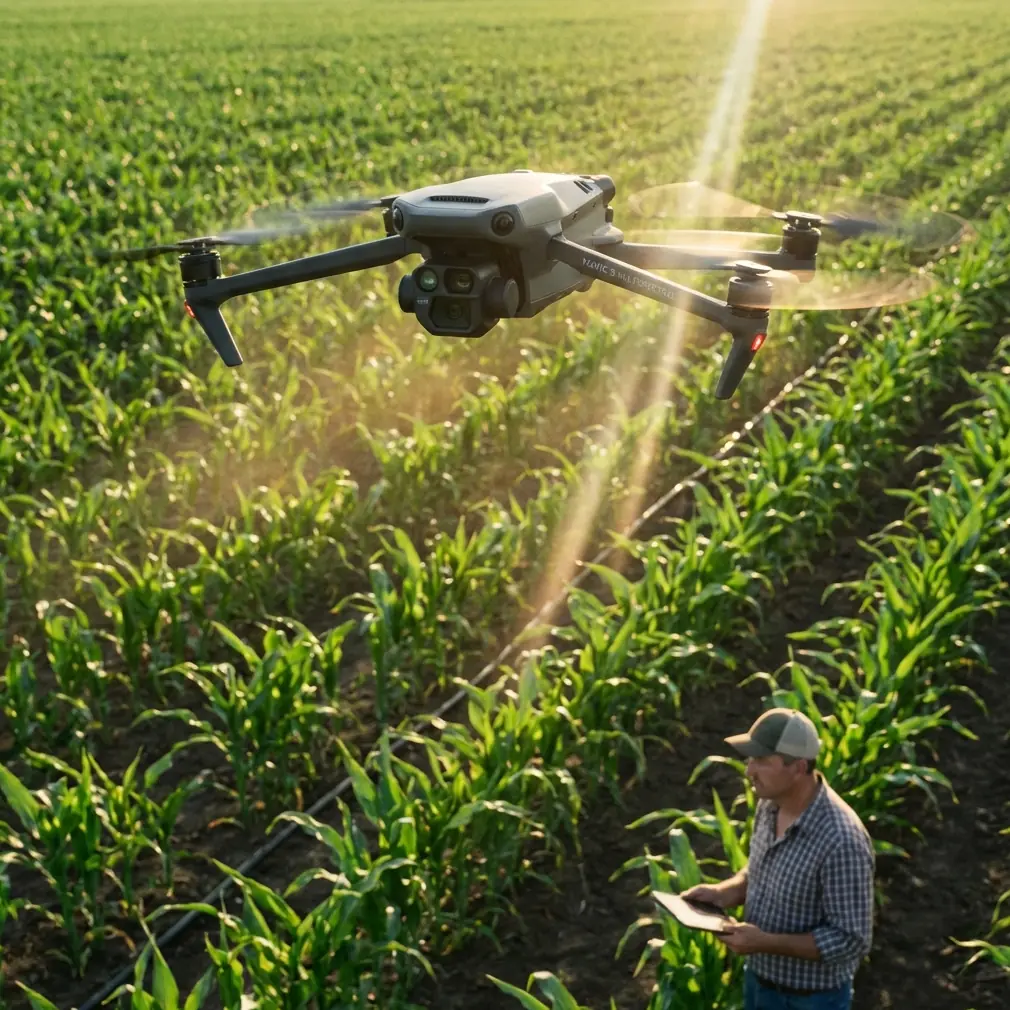
Mavic 4 Pro Scouting Tips for Mountain Vineyards: A Practical Case Study
META: A field-based look at how Mavic 4 Pro fits mountain vineyard scouting, with aerial survey logic, range discipline, antenna positioning advice, and workflow insights for fast terrain assessment.
I’ve spent enough time around steep agricultural sites to know that vineyards in mountain terrain expose every weakness in an aerial workflow. Access roads are narrow. Elevation shifts break line of sight. Weather turns faster than the forecast admits. And when the grower needs updated imagery, they usually need it now, not weeks from now.
That is where the Mavic 4 Pro becomes interesting—not as a toy with cinematic features, but as a practical aerial tool for small-area reconnaissance and repeatable field intelligence.
The reference material behind this discussion comes from an aerial photogrammetry framework comparing UAV operations with manned aircraft. Its core point is simple and still highly relevant: unmanned platforms are best suited to relatively small areas, typically within 1,000 square kilometers, and they do their best work at low altitude, generally under 1,000 meters. For mountain vineyard scouting, those two numbers matter more than they first appear to.
A vineyard operator in steep country is not trying to map a province. The job is usually more surgical. You need to inspect row condition, identify drainage patterns after rain, assess slope access, verify canopy uniformity, check road clearances, and capture enough visual context to support irrigation, maintenance, or harvest planning. That kind of mission sits squarely in the zone where a compact UAV makes more operational sense than a larger aviation solution.
Why the Mavic 4 Pro Fits the Mountain Vineyard Problem
The real advantage is not just that a drone flies low. It is that it can be deployed with almost no friction.
The source material emphasizes that UAVs are highly mobile, can launch quickly, and support fast data turnaround for urgent updates. In contrast, traditional manned aerial acquisition faces heavier approval, transport, and scheduling constraints; the source even notes that, in some cases, the process from approval to data acquisition can stretch to 3–4 months. For vineyard scouting, that delay is almost useless. A storm event, irrigation issue, or disease concern does not wait a quarter.
With a Mavic 4 Pro, the practical win is same-day intelligence. You can arrive, walk the site, choose a launch point, fly a low-altitude assessment pass, then review footage and stills before leaving the mountain. If the first run reveals a washout along a service track or a shaded moisture pocket between blocks, you can immediately refly a tighter route. That feedback loop is what makes compact UAV operations so valuable in agriculture.
The reference also notes another overlooked strength of low-altitude UAV work: the ability to collect data below cloud cover, with lower weather sensitivity and workable results even in overcast conditions. For mountain vineyards, that matters a great deal. Bright overhead sun often creates ugly contrast across slopes and vine rows. Thin cloud or muted light can actually help by reducing harsh shadows and giving you cleaner visual interpretation of canopy gaps, erosion lines, and access routes.
A Realistic Vineyard Scouting Workflow
Let’s put this into a field scenario.
You are scouting a mountain vineyard split across several terraces and contour-following rows. The owner wants three things:
- A broad visual understanding of block condition
- A safe look at steep access roads and turnaround points
- A short set of polished clips for internal discussion with managers and investors
This is exactly the kind of mixed mission where the Mavic 4 Pro can do more than one job in a single sortie.
I would begin with a conservative perimeter flight, staying high enough to understand terrain breaks but still close enough to retain detail on rows and road edges. Obstacle avoidance becomes useful here not as a crutch, but as a margin enhancer around trees, poles, cables near service structures, and sudden terrain rises. In mountain vineyards, that extra layer of awareness reduces the chance of a rushed manual correction when the slope climbs faster than it appears on screen.
From there, I’d run a set of linear passes aligned with the vine rows where possible. This gives the cleanest visual read on canopy consistency and spacing. If the goal includes media capture, ActiveTrack or subject tracking can help when following a vehicle moving slowly along an access lane or tracking a worker group crossing a service corridor for demonstration footage. The key is restraint: use tracking where the route is predictable and the scene is not cluttered with wires or sudden elevation changes.
QuickShots and Hyperlapse can also have a place, but not as filler. A short orbital or reveal move over a ridgeline can help communicate the scale and orientation of the site to stakeholders who have never walked it. A Hyperlapse sequence over changing morning fog can be useful when discussing microclimate behavior across blocks. Those features are valuable when they clarify land behavior, not when they turn an operational flight into a montage.
The Antenna Positioning Detail Most Pilots Ignore
Mountain vineyard work punishes sloppy signal discipline. This is where antenna positioning deserves more attention than most pilots give it.
If you want the best possible control and transmission stability, don’t point the antenna tips directly at the aircraft. The broadside of the antennas generally provides the strongest link zone. In practical terms, that means you want the flat face or side orientation of the antennas aimed toward the drone’s flight path, while maintaining direct line of sight as much as terrain allows.
In mountain terrain, this gets harder because the aircraft may disappear behind a ridge shoulder or drop below terrace level. So your launch position matters as much as your antenna position. Pick a spot with the widest visual and radio exposure to the working area, preferably slightly elevated relative to the main blocks but not tucked against metallic structures, parked vehicles, or dense tree cover. If you are moving between blocks, stop and reset rather than trying to stretch a compromised link from a bad location.
A few practical habits help:
- Keep your body from blocking the controller signal path.
- Rotate with the aircraft as it moves laterally across slope faces.
- Avoid standing under overhead branches or next to utility sheds.
- If the route descends behind terrain, reposition before it does.
That sounds basic, but in vineyard operations, range is often lost less from raw distance than from terrain masking and poor controller orientation. A pilot who understands antenna geometry usually gets more reliable performance than one who simply trusts the signal bars.
If you need a second opinion on setup choices in hilly sites, I’ve found it useful to share screenshots and topography notes through this direct field planning chat before a deployment.
The Image Quality Tradeoff Nobody Should Pretend Away
The reference material is honest about a weakness of UAV photogrammetry: because the aircraft is lighter and more exposed to airflow, image tilt and overlap regularity can be less consistent than with larger, more stable manned platforms. It specifically points out irregular forward overlap and side overlap caused by excessive or inconsistent image tilt, curved flight lines, and larger heading deviations. That degrades image matching and can even create missed coverage.
This is not academic. In a mountain vineyard, the wind rolls over ridges and spills through valleys in unpredictable ways. A light UAV can pitch, roll, and yaw quickly. When that happens, your neat mapping logic starts to fray. If you are trying to build a clean stitched product or compare repeat missions over time, unstable capture geometry becomes a real problem.
The operational response is not to dismiss the drone. It is to fly like the limitation matters.
For Mavic 4 Pro vineyard scouting, that means:
- Choose calmer windows, especially in early morning.
- Fly shorter segments instead of one long optimistic mission.
- Increase overlap margins when terrain and wind are inconsistent.
- Keep speed moderate on cross-slope passes.
- Refly sections that show abrupt yaw or tilt changes on review.
- Avoid forcing low battery returns from the far side of a ridge.
This is where the drone’s rapid redeployment advantage offsets its stability disadvantage. A manned aircraft may produce more uniform geometry over a broad region, but it does not give you the same freedom to immediately correct a weak section over a single vineyard block. The Mavic 4 Pro does.
Why Low-Altitude Capture Helps Vineyard Decisions
The source document states that UAV imagery offers higher resolution and is better suited to large-scale mapping needs than higher-altitude manned capture. For vineyard managers, that translates into clearer interpretation at the scale they actually manage.
Low-altitude passes can reveal:
- Missing or weak vine sections
- Runoff scars after heavy rain
- Rutting on slope access roads
- Drainage concentration near terrace edges
- Tree encroachment affecting sunlight
- Structural condition around water tanks or outbuildings
That level of detail supports action. A broad regional image might tell you where the vineyard is. A low-altitude UAV image tells you what needs attention this week.
And because UAVs can work under cloud more easily, you often get more opportunities to capture usable data in conditions where higher-altitude aerial collection would struggle or not launch at all. In mountain agriculture, flexibility beats elegance.
Using D-Log Without Slowing the Job Down
D-Log can be useful in this kind of work, especially when the site includes high-contrast transitions between bright sky, reflective leaves, dark access lanes, and shadowed terraces. The value is not that it makes footage “cinematic.” The value is that it preserves tonal latitude so you can recover detail on both sunny and shaded parts of the slope during review.
That matters when one clip needs to serve two audiences: the operations team and the communications team. The operations team wants visible ground detail. The communications team wants polished visuals for reporting. Shooting in D-Log gives you a better chance of satisfying both without needing a second dedicated media flight.
Just be disciplined. If the mission is primarily scouting, capture your critical observation passes first. Save the stylized work for the end if battery, wind, and light still cooperate.
The Best Way to Think About Mavic 4 Pro in Vineyards
Not as a replacement for every survey aircraft. Not as a pure camera platform. And not as a “one flight does everything” promise.
Think of it as a rapid-response aerial tool built for smaller operational zones where timing, access, and detail matter more than broad-area efficiency.
That matches the reference material almost perfectly. UAVs excel in small-area missions, can launch flexibly without the infrastructure burden of airport-based operations, perform well below cloud, generate high-resolution imagery, and provide fast updates for urgent needs. The same source also warns that their lighter airframes are more vulnerable to unstable image geometry and irregular overlap. Both sides of that equation show up in mountain vineyard work every single day.
Used intelligently, the Mavic 4 Pro plays to the strengths and manages the weaknesses.
Choose a clean launch point. Respect line of sight. Orient antennas correctly. Fly in segments. Use obstacle avoidance as a guardrail, not a substitute for planning. Let ActiveTrack, QuickShots, and Hyperlapse support the story of the site rather than distract from it. Capture in D-Log when dynamic range is genuinely a problem. And when the terrain or wind starts to dictate terms, reset the plan instead of fighting the mountain.
That is how a compact UAV becomes useful in real agricultural scouting: not by pretending to be bigger than it is, but by being faster, closer, and more adaptable than anything else you could reasonably bring to a steep vineyard on short notice.
Ready for your own Mavic 4 Pro? Contact our team for expert consultation.