
Mavic 4 Pro for Remote Forest Scouting: A Field Review
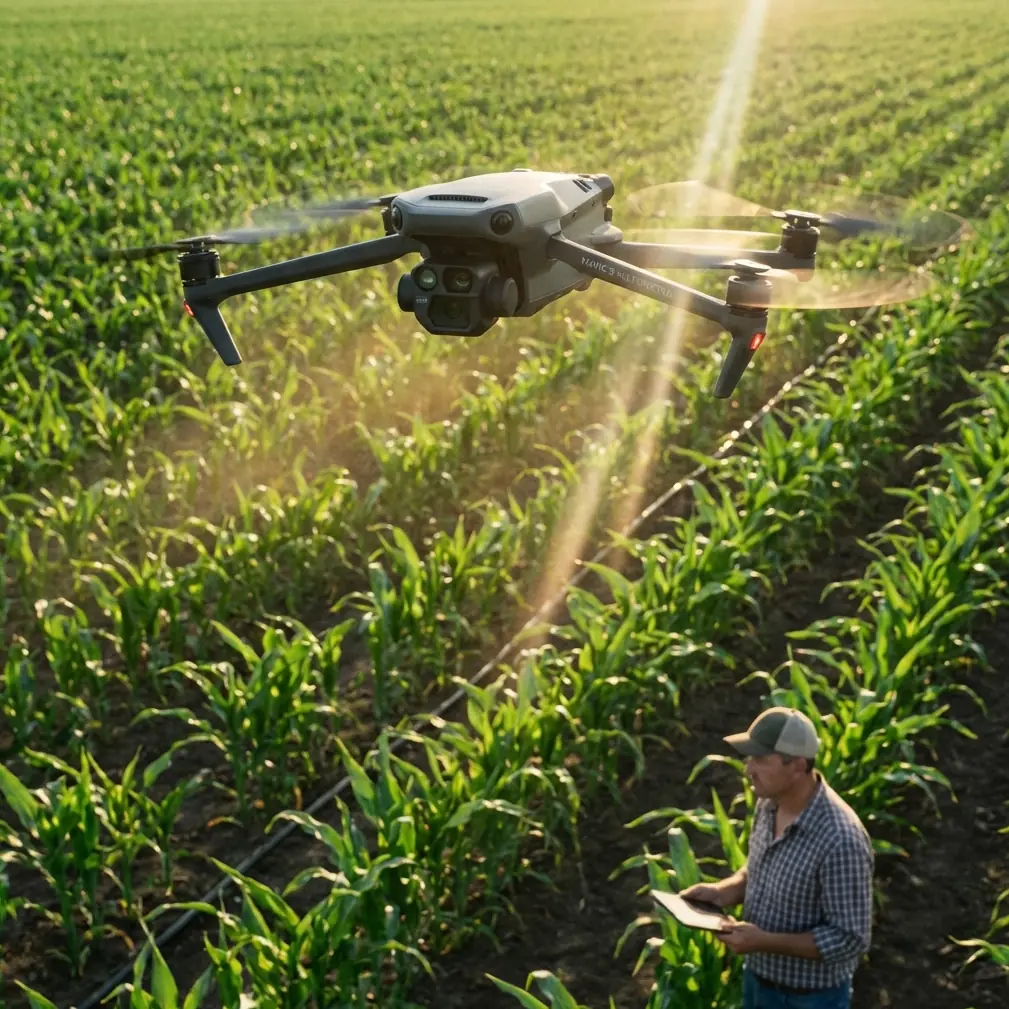
Mavic 4 Pro for Remote Forest Scouting: A Field Review Built Around Real Forestry Monitoring Workflows
META: An expert technical review of how Mavic 4 Pro fits remote forest scouting, pest monitoring, and terrain-heavy data collection using grid flight logic, orthomosaic follow-up, and practical field operations.
Remote forest scouting sounds simple until the terrain starts making decisions for you.
A ridgeline blocks line of sight. Tree canopies break visual continuity. Suspected pest damage appears as scattered discoloration, not neat polygons. Then the weather shifts. What looked like a stable morning turns into moving haze and gusts by the second battery. That is where a drone stops being a spec sheet and becomes a working tool.
I have been looking at the Mavic 4 Pro through a very specific lens: not as a general camera drone, but as a practical aircraft for civilian forestry reconnaissance in remote areas. The reference workflow behind this review comes from a forestry pest monitoring solution built around grid-based aerial scouting, full-area visual capture, and vector orthomosaic output for priority zones. That is the right framework to judge the Mavic 4 Pro, because forest management teams do not just need pretty imagery. They need repeatable evidence, location confidence, and a way to turn field observations into action.
The real forestry problem is not image capture. It is decision capture.
The reference material describes a method tailored to uneven forest terrain: a “grid-style” field aerial survey approach that produces two different outputs at once. First, broad coverage in the form of full-area photos and video. Second, higher-value mapped products for key areas, specifically vectorized orthographic outputs.
That distinction matters more than many pilots realize.
When you scout remote forest blocks, you are usually doing two jobs at once. You are trying to understand the overall condition of the landscape, and you are also trying to isolate smaller areas where intervention may be needed. A single pass of cinematic footage is not enough. The operation needs layers of evidence. Broad imagery shows distribution patterns. Orthographic data helps estimate affected area and plan response.
This is exactly where the Mavic 4 Pro becomes interesting.
Its value in forest work is not that it replaces fixed-wing survey platforms in large-area census operations. The source material makes clear that vertical takeoff fixed-wing aircraft with 90-minute endurance remain highly efficient for large-scale screening, while a multi-rotor with a 38-minute flight window and a 30x optical zoom payload is better suited to detailed inspection. That two-aircraft logic is still sound. In other words, the Mavic 4 Pro should be judged as the fine-detail, fast-deployment aircraft in the workflow rather than the sole answer to provincial-scale forest monitoring.
For remote scouting teams, that is actually good news. It means the Mavic 4 Pro fits where time, terrain access, and follow-up verification matter most.
Why a multi-rotor still makes sense in forests
In the source workflow, the multi-rotor role is explicit: detailed investigation of priority zones after broad screening identifies suspected problem areas. That maps very well to how I would deploy the Mavic 4 Pro.
A forest team rarely needs to map every hectare at maximum detail in one outing. More often, the first question is: where should we look harder? Once a suspicious patch appears in broad imagery or historical comparison, a drone with stable hovering, precise positioning, and flexible camera control becomes far more useful than a faster but less surgical platform.
That is where obstacle awareness, controlled low-speed passes, and subject-locking style flight intelligence start to matter operationally, even if those features were originally marketed for creators. In a forest context, obstacle avoidance is not about flashy autonomous flight. It is about reducing pilot workload when working near uneven canopy edges, trunks at the perimeter, or broken terrain with sudden elevation changes. It gives the operator more bandwidth to watch the data instead of fighting every micro-correction in the aircraft.
ActiveTrack and subject tracking features are often misunderstood in commercial field work. No, they are not replacing mission planning. But when you are documenting a moving ground crew route along a treatment corridor, or maintaining framing on a specific tree cluster during a manual orbit or pass, that tracking intelligence can reduce reshoots and improve consistency. Used conservatively, it is helpful.
Mid-flight weather changes are where confidence gets tested
On a recent forest edge scouting scenario, the day did what mountain-adjacent weather often does: it changed its mind. We launched in clean light with stable visibility, intending to document a suspected stress pocket in mixed woodland after a broad reconnaissance pass. Halfway through the second segment, the wind began to pulse across the slope, and a flatter section of light turned into shifting contrast under thin cloud.
This is the point where a drone’s behavior matters more than its brochure.
The Mavic 4 Pro handled the transition well because the job did not require speed; it required discipline. I shortened the route, lowered the altitude for a more protected angle near the terrain break, and relied on stable positioning and cautious obstacle sensing to keep the aircraft predictable. The difference was not dramatic in a cinematic sense. That is exactly the point. Good field aircraft become boring when conditions stop being ideal. They keep the operator inside a manageable risk envelope.
For forestry work, weather resilience is not about bravado. It is about knowing when you can still gather valid comparison data and when to stop. If your follow-up imagery is intended to support historical comparison of treatment results or pest spread, consistency matters. The reference solution specifically highlights how before-and-after comparisons help confirm outcomes. That means the drone has to deliver repeatable framing and location fidelity under imperfect field conditions.
The hidden value of “one map” management
One of the strongest ideas in the source material is not hardware-related at all. It is the concept of managing treatment targets on “one map.” Once suspected disease or pest zones are confirmed by the system, teams can quickly organize a problem list, direct field response, and track verification.
This is where the Mavic 4 Pro can punch above its weight if your operation is disciplined about data handling.
The aircraft is only one layer in the chain. The real output should be geolocated observations that can be handed off to a central management platform. If a team uses the Mavic 4 Pro to capture targeted imagery over flagged forest plots, those results need to feed a review process: suspected area, field confirmation, treatment action, and closure. The source references a full closed-loop workflow where front-line personnel submit completion, county-level managers review, city-level authorities review, and provincial departments perform sampling checks and evaluation.
Even in smaller private or regional forestry programs, the principle holds. If drone data ends with the pilot, the operation stalls. If it becomes part of a traceable issue ledger, the drone is doing real work.
Operationally, two details from the reference workflow stand out:
APP-based location tracking helps front-line personnel reach the site and makes verification easier.
For remote forest scouting, this is critical. Imagery without accessible coordinates wastes field time. When treatment crews are sent into uneven terrain, the difference between a visible patch in a video and a pinned target in a field app is the difference between efficient action and wandering under canopy.Vector orthographic imagery allows affected-area measurement for treatment planning.
This is not just a mapping luxury. If you can estimate the footprint of stress or infestation with reasonable precision, you can prioritize response, forecast labor, and compare later treatment results using the same geography. That makes the drone useful to managers, not just pilots.
Camera versatility matters more than pure resolution
The forestry monitoring references emphasize two sensor directions for pest work: optical zoom and multispectral imaging. That is revealing.
In forest health inspection, the best image is not always the widest or the prettiest. Sometimes you need compressed visual reach into a slope that is unsafe or slow to approach on foot. Other times you need spectral differentiation to spot stress patterns before they become obvious in true color.
The source system’s detailed-inspection aircraft uses a 30x optical zoom payload and allows customized use of infrared or multispectral cameras. The Mavic 4 Pro is not a drop-in substitute for every specialist payload class, especially when multispectral is mandatory. But in practical remote scouting, it can still cover a large share of the work that happens before a specialist platform is deployed.
That makes it especially useful for:
- suspected canopy decline verification
- boundary refinement of damaged zones
- route planning for field crews
- visual progress checks after treatment
- seasonal comparison flights over the same forest block
And because many forestry teams must document both operational evidence and presentation-grade visuals for stakeholders, the Mavic 4 Pro’s creator-oriented modes have a secondary value. D-Log can help preserve tonal flexibility in difficult forest contrast. Hyperlapse and QuickShots are not core survey tools, but they can support reporting, training, and communication when used carefully and clearly separated from analytical datasets.
Where Mavic 4 Pro fits in a serious forestry program
The source material recommends phased adoption: assess management needs, design the application framework, launch 1 to 2 pilot sites during spring census work, validate feasibility, collect feedback, optimize the system, and then scale. That is smart advice, and it is exactly how I would introduce the Mavic 4 Pro into forest scouting operations.
Do not start by asking whether the drone can do everything. Start by asking whether it can improve one part of the chain.
A sensible deployment model would look like this:
- use broad reconnaissance data or existing reports to flag suspect areas
- fly Mavic 4 Pro on targeted grid or perimeter missions over those areas
- capture photos, video, and where appropriate, orthomosaic-friendly imagery
- geotag and organize issues for field team follow-up
- revisit treated plots for comparative evidence
- fold findings into a standing evaluation mechanism
That last point matters because the forestry workflow in the reference material is built around recurring assessment, not one-off flights. Periodic evaluation rules and formal review criteria are part of how the program measures effectiveness. The drone is not just there to discover problems. It is there to support accountability over time.
If you are planning a forest scouting setup and want to compare field workflow options, this direct line can help you sort through deployment questions without wasting a season: message a drone workflow specialist.
The honest bottom line
The Mavic 4 Pro is not the entire forestry monitoring stack. It is not replacing long-endurance fixed-wing aircraft for massive area coverage, and it is not replacing specialist multispectral systems when spectral analysis is non-negotiable.
What it does offer is something many forestry teams actually need more often: a fast, precise, terrain-tolerant multi-rotor for remote follow-up work. In the workflow described by the source material, that role is essential. Large-scale screening tells you where to look. Detailed multi-rotor inspection tells you what is really happening.
If your mission revolves around remote forest scouting, especially in rugged terrain where conditions can shift during the flight and crews need clear, traceable targets afterward, the Mavic 4 Pro makes sense when treated as a decision-support aircraft rather than a flying camera.
That is the right way to evaluate it. Not by hype. By whether it helps you move from suspicion, to confirmation, to treatment tracking, to measurable results.
Ready for your own Mavic 4 Pro? Contact our team for expert consultation.