
Mavic 4 Pro for Urban Construction Scouting
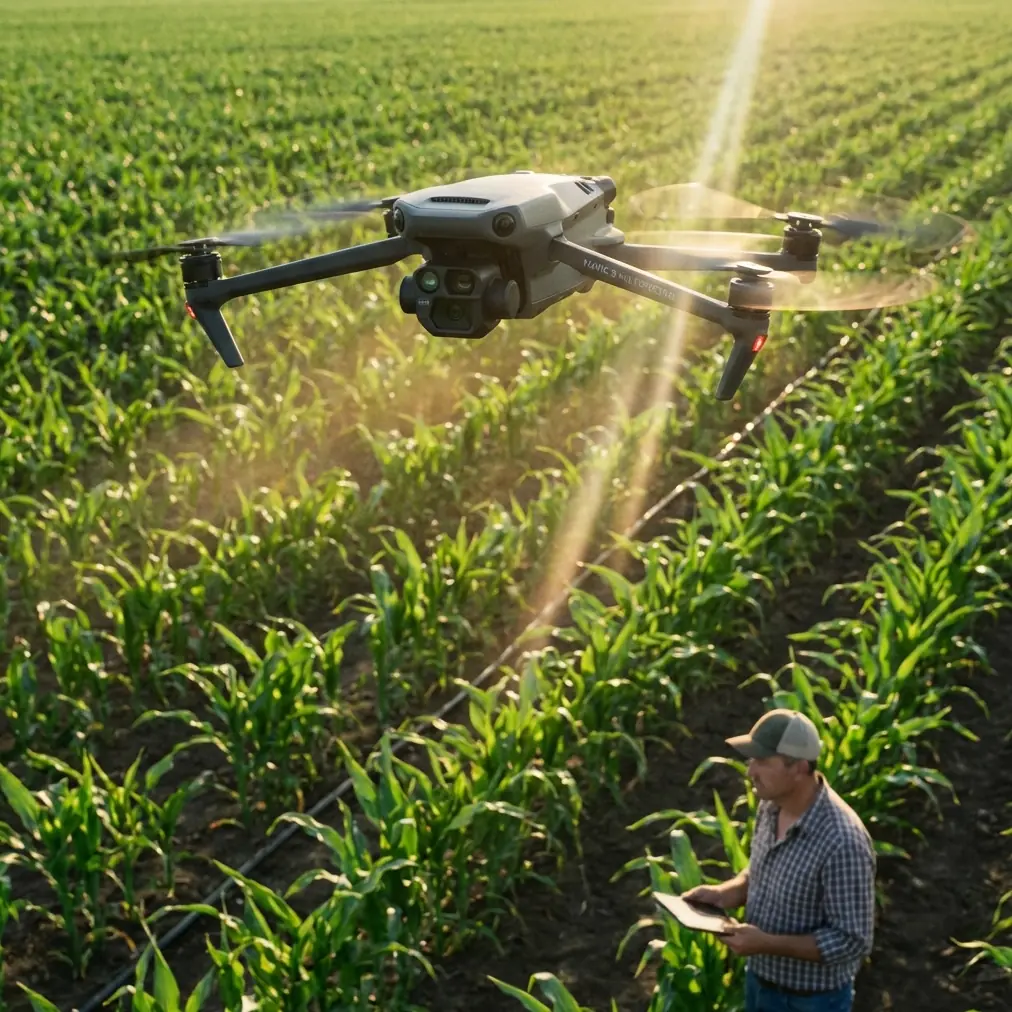
Mavic 4 Pro for Urban Construction Scouting: What “Beidou + Drone Digitalization” Actually Changes on Site
META: A field-focused look at how Mavic 4 Pro fits urban construction scouting when Beidou-linked drone digitalization and six connected platforms reshape navigation, reporting, and interference-heavy operations.
Urban construction scouting has a habit of exposing the gap between brochure specs and real flight work.
On paper, almost any capable camera drone can document a site, capture progress imagery, and produce clean visual updates for stakeholders. On an actual city job, the variables stack up fast: narrow launch zones, steel structures, signal reflections, tower cranes, concrete dust, inconsistent satellite visibility, and electromagnetic noise from dense infrastructure. Add the need for repeatable documentation, quick executive summaries, and traceable records, and the aircraft is only one piece of the system.
That is where the recent idea coming out of the Beidou and drone digitization conversation becomes more relevant than it first appears. The reference point here is concise but revealing: a new “Beidou + drone” digital ecosystem is being built around six platforms. That detail matters. Not because a construction scout needs another abstract industry slogan, but because it points to a shift in how a drone like the Mavic 4 Pro becomes useful beyond its camera payload.
For urban site scouting, the real question is no longer just, “Can the drone fly safely and get the shot?” It is, “Can the flight, the position data, the inspection workflow, and the reporting chain stay connected in a difficult city environment?”
The actual problem on urban construction sites
Construction scouting in urban areas is rarely a single mission type. One morning you may be collecting roofline context for planners. An hour later you are checking facade progress, crane clearance zones, material staging, drainage routes, or the condition of neighboring properties before a new phase begins.
These missions require three things at the same time:
- stable positioning around reflective and obstructed structures
- efficient image capture with enough cinematic and technical flexibility for different stakeholders
- a digital workflow that turns flight data into something a project team can act on
The Mavic 4 Pro sits in an interesting position here because it appeals to both technical operators and image-led professionals. That dual personality suits construction scouting. A project manager may want repeatable, reliable visual records. A photographer or communications lead may need polished footage using D-Log, QuickShots, or Hyperlapse for investor updates or public-facing progress summaries. Meanwhile, the flight team is trying to maintain safe separation from structures and keep the aircraft predictable in an interference-heavy environment.
That last part deserves more attention than it usually gets.
Electromagnetic interference is not a side issue
If you have flown around urban build sites, you already know that electromagnetic interference is not always dramatic. It is often subtle. Compass behavior can become less trustworthy near large steel elements. Signal quality may fluctuate around temporary site cabins, rooftop equipment, reinforced concrete cores, or utility infrastructure. Position hold can feel less settled in certain corners of the site than in open air nearby.
This is why antenna handling matters in practice.
With the Mavic 4 Pro, the operator’s job is not simply to “trust obstacle avoidance” and move on. It is to actively manage the radio environment. Antenna adjustment sounds basic until you are working between rising structures where line-of-sight changes every few seconds. Small changes in controller orientation can help maintain cleaner transmission paths and reduce the effect of localized interference or structural shielding. In city scouting, that can be the difference between a smooth orbit for facade review and a hesitant, stop-start pass that undermines both safety and data quality.
Obstacle avoidance remains valuable, especially when the aircraft is moving near incomplete structures or crane-adjacent areas. But avoidance systems do not replace good signal discipline. They complement it. In electromagnetic clutter, the best results often come from combining conservative route planning, careful antenna orientation, and an understanding of where the site itself may be degrading your link.
That is one operational reason the Beidou discussion deserves attention.
Why “Beidou + drone digitalization” matters to Mavic 4 Pro users
The source material gives us two key ideas: first, the pairing of Beidou and drones as a digitalization strategy; second, the claim that six platforms are being used to build a new ecosystem.
Even from that brief statement, the direction is clear. This is not just about adding another navigation acronym to a spec sheet. It is about tying aircraft operations into a broader digital environment.
For Mavic 4 Pro users scouting urban construction sites, that has several practical implications.
1. Positioning becomes part of the workflow, not just the flight
Construction teams increasingly need geospatial consistency. A set of images is useful. A set of images tied into a repeatable positional framework is far more valuable. Beidou’s inclusion in a drone-enabled digital ecosystem suggests a stronger emphasis on dependable spatial reference across planning, capture, review, and archive.
That matters when you are returning to the same urban site every week and trying to match vantage points, compare excavation progress, monitor facade completion, or confirm whether temporary access routes are being maintained. The drone is no longer gathering standalone media. It is feeding a site record.
2. Six platforms imply connected functions, not isolated flights
The phrase “six platforms” may sound vague at first, but it points to something construction teams understand immediately: digital work is fragmented when systems do not talk to each other.
A six-platform ecosystem suggests that flight operations, positioning, mission planning, data management, asset review, and possibly reporting or dispatch functions are being brought into one digital structure. Whether a team is fully integrated today or not, this is the operating direction of the industry.
For an urban Mavic 4 Pro deployment, this changes expectations. The aircraft is not judged only on image quality or flight time. It is judged on how well it fits into a chain that includes field capture, office analysis, stakeholder communication, and compliance documentation.
A scout flight that ends with files trapped on a memory card is no longer enough. The stronger model is a connected one: capture, tag, compare, distribute, verify.
Where the Mavic 4 Pro fits especially well
The Mavic 4 Pro is particularly strong when a construction site needs both precision-minded field documentation and polished visual communication.
That combination is more useful than many teams realize.
Visual progress that executives can actually read
Site managers, developers, and investors often do not need an artistic drone reel. They need clear, fast visual understanding. The Mavic 4 Pro’s shooting flexibility helps here. QuickShots can standardize compact overview clips for recurring updates. Hyperlapse can show site evolution, traffic flow around staging zones, or the pace of structural assembly in a way that compresses time effectively. D-Log gives more room in post-production when lighting changes sharply across glass, concrete, and shadow-heavy urban canyons.
Those features are not cosmetic extras. They reduce friction between technical capture and business communication.
Subject tracking in dynamic site environments
On larger urban jobs, there are moments when ActiveTrack or subject tracking can help follow moving site elements for documentation purposes, such as monitoring vehicle movement paths, material transport flows, or temporary logistical patterns in open, authorized areas. Used carefully and within safe civilian workflows, this can provide context that static overhead shots miss.
The key is restraint. On a construction site, automated tracking should serve observation, not replace operator judgment. It is most useful when movement patterns need to be visualized consistently and safely, not when the site is so cluttered that manual control remains the smarter option.
Obstacle avoidance as a margin, not a crutch
Urban construction creates awkward geometry: scaffold edges, protruding rebar zones, partially completed upper levels, suspended equipment, and temporary barriers that did not exist on your previous visit. Obstacle avoidance gives the Mavic 4 Pro a meaningful safety buffer, particularly when repositioning near structures or performing repeat passes at moderate speed.
Still, the most experienced operators treat avoidance as a backup layer. Site scouting works best when the route is designed conservatively from the start.
A better problem-solution workflow for city projects
The problem is straightforward: urban construction sites are hard on signal quality, hard on repeatability, and hard on coordination between field teams and office teams.
The solution is not a single feature. It is a stack.
First, the Mavic 4 Pro gives the pilot the core flight and imaging capability to gather useful site intelligence quickly. Second, features like obstacle avoidance, ActiveTrack, QuickShots, Hyperlapse, and D-Log let one aircraft support both inspection-minded documentation and communication-ready visuals. Third, the Beidou + drone digitalization direction matters because it frames those flights inside a broader operating system rather than treating them as isolated missions. And fourth, the idea of six platforms signals that the industry is moving toward integrated digital ecosystems where aerial capture feeds multiple downstream functions.
For a city construction scout, that stack translates into something tangible:
- cleaner repeat missions
- more consistent location-linked records
- faster handoff from field capture to reporting
- less wasted effort recreating views or explaining context manually
This is also where author background matters. Coming from a photographer’s perspective, I see the temptation to focus on image quality first. But on construction sites, image quality only becomes valuable when it is organized, repeatable, and trusted. A perfectly graded D-Log shot is still weak if nobody can match it to a site milestone or compare it against last month’s pass.
What I would prioritize before flying the Mavic 4 Pro on an urban site
If your mission is scouting rather than cinematic promotion, I would prioritize in this order:
1. Pre-identify interference zones
Walk the site and note steel density, rooftop equipment, utility corridors, and likely line-of-sight interruptions. Assume some areas will behave differently in the air than they appear from the ground.
2. Plan for antenna orientation changes
Do not lock yourself into one standing position if the route runs behind structures or along shielded facades. Antenna adjustment is a live part of the mission, especially where electromagnetic conditions shift across the site.
3. Build repeatable shot logic
Use a consistent set of overview angles, altitude bands, and directional passes so your progress archive stays comparable over time.
4. Use automation selectively
QuickShots and tracking tools can speed up recurring documentation, but use them where the site geometry is predictable and safe.
5. Tie flight output into a digital record
This is where the Beidou-linked ecosystem idea becomes practical. Your drone data should support a broader site intelligence process, not sit apart from it.
If you are building that workflow and want a direct channel for field-oriented discussion, this site operations contact link is a practical starting point.
The broader industry signal behind the headline
The headline about activating a new low-altitude economic track through Beidou and drone digitalization can sound broad. Strip away the slogan, and the operational message is sharper: drones are being repositioned as nodes in a digital infrastructure.
That distinction matters for the Mavic 4 Pro.
A drone used for urban construction scouting is no longer only a flying camera. In the right workflow, it becomes a mobile sensor platform tied to position systems, project records, visual analytics, and recurring site intelligence. The mention of six platforms is significant because it suggests scale and system thinking. The mention of Beidou is significant because it points to navigation and positional reliability as foundational to that system.
For construction teams, this is the real takeaway. The Mavic 4 Pro becomes more valuable when it is deployed not as a standalone gadget, but as the aerial edge of a connected digital process.
And in urban environments, where interference, complexity, and repetition define the job, that process often matters more than any single spec line.
Ready for your own Mavic 4 Pro? Contact our team for expert consultation.