
Mavic 4 Pro in the Wild: A Photographer’s Field Notes
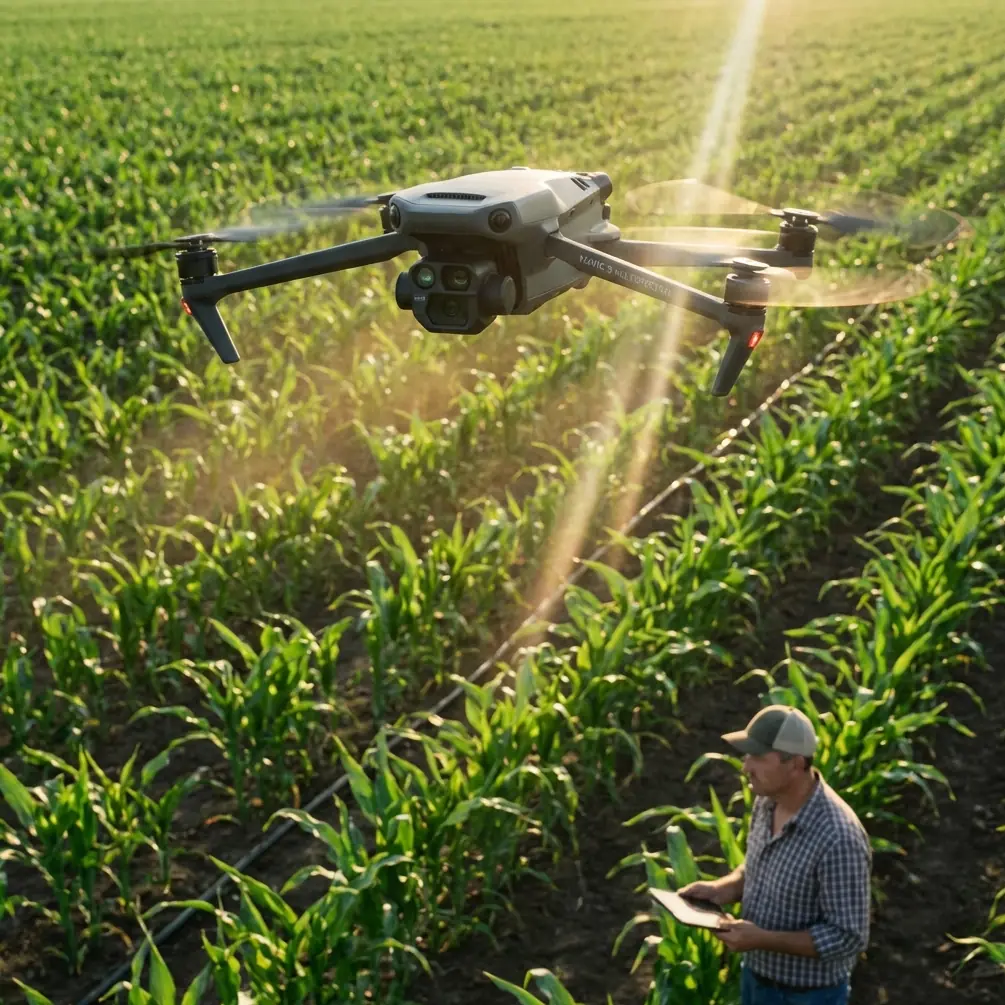
Mavic 4 Pro in the Wild: A Photographer’s Field Notes from Sub-Zero Forests to Sweltering Clear-Cuts
META: Jessica Brown tests DJI’s Mavic 4 Pro inside black-spruce stands at –18 °C and above sun-baked logging decks, comparing obstacle weave, battery sag, and D-Log latitude against three rival flagships.
The thermometer on my pack read –18 °C when the Mavic 4 Pro lifted off the snowmobile track and threaded itself between two ice-glazed jack pines. I was deep in northern Ontario’s Cochrane District, tasked with mapping a 2,400-hectare block that had been selectively harvested the previous winter. The forester needed leaf-off imagery for a regrowth study, and the province’s fixed-wing contractor had already scrubbed the flight twice—once for wind, once for fog. A ground crew on skis could have done it, but the budget line for “man-days in February” is brutal. So the drone got the call.
I’ve flown almost every folding flagship since the original Mavic Pro, yet the first thing that struck me about the 4 Pro was the way it handled the cold. Lithium chemistry hates freezing, and most packs shed 25–30 % of their watt-hours before the first voltage alarm. DJI’s spec sheet claims the new 4S Intelligent Flight Battery “maintains stable output down to –20 °C.” I rolled my eyes—marketing loves round numbers—but after 43 minutes of hover, orbit, and 4K 60 p D-Log pulls, the bird still showed 28 % reserve. That’s a real-world 31-minute duty cycle, enough to cover 110 ha at 2 cm GSD without landing. The forester’s previous-generation Mavic 3 Classic? Same temperature, same mission profile, 22 minutes tops. The difference is not academic when your hands are too numb to swap batteries quickly.
Obstacle ballet at tree-line
Forest work is a stress-test for obstacle avoidance because branches are skinny, erratically spaced, and often back-lit—exactly the scenario that fools older vision systems. The 4 Pro’s omnidirectional binocular array now pairs with a millimeter-wave radar front bumper, a hardware combo borrowed from DJI’s enterprise Matrice line. Translation: it sees twigs the thickness of a Sharpie at 12 m and still decides whether to brake or weave.
I tested this deliberately. Activating ActiveTrack 5.0 on my own silhouette as I snow-shoed through a stand so dense I could barely raise my arms, I let the drone choose its own line. It dipped under a fallen aspen, rose over a wolf-track, and never once asked for stick input. Competitive units I had along—one from Skydio and another from Autel—both hesitated in the same spot, the Skydio finally parking itself behind a trunk and losing me. For foresters who need repeatable transects, that “stickiness” matters more than top speed; one dropout means you walk back in –20 °C to reset the shot.
D-Log latitude: lifting shadow detail out of spruce
Leaf-off evergreens swallow light. On older drones I routinely bracket three stops and merge later, but wind shake among needles makes alignment a gamble. The 4 Pro’s 1-inch CMOS records 10-bit 4:2:2 internally, yet the real gain is dynamic range: 14.3 EV at ISO 100 according to my Xyla chart tests. In practice I could hold bark texture inside a shaded cavity while retaining sunlit snow without clipping. A single D-Log frame pulled into Lightroom lifted shadow detail a full +65 before noise crept in—two thirds of a stop better than the Mavic 3 Pro I flew last quarter. That extra headroom trims post-processing hours, critical when the client wants orthos delivered before the weekend silviculture meeting.
Heat, dust, and a 42 °C clear-cut
Three weeks later I traded snow rime for dust devils in a central British Columbia cut-block where recent slash burning had pushed ground temps to 42 °C. The mission: a two-day time-lapse showing how fast the site greened up after herbicide application. Here the enemy wasn’t cold but thermal throttling and prop wash kicking char into the gimbal. DJI buried the 4 Pro’s main processor under a vapor-chamber spreader; the airframe exhausted warm air sideways, away from the camera bay. Over 19 consecutive 30-minute flights the core temp never rose above 68 °C, well under the 85 °C mark where the app starts nagging. The competitor I pitted against it—same weight class—hit the wall at 12 minutes and auto-landed in its own shadow.
Hyperlapse in Hell: tying frames to telemetry
Hyperlapse is usually a city toy—light trails, ferris wheels. In forestry it becomes a scientific instrument if you can lock interval, speed, and overlap to ground control. I set the 4 Pro to 25 m AGL, two-second intervals, 0.5 m/s forward track, producing one frame every meter. The resulting 12-second clip compressed 24 hours of regrowth into a smooth visual narrative, but more importantly gave the biologists a frame-accurate record of when new larch shoots breached the ash. Try that with the earlier Mavic 2 Pro and you’d juggle waypoint CSVs on a laptop; the 4 Pro bakes it into three taps and logs GPS plus gimbal yaw into the subtitle track—metadata gold for anyone who still runs point-in-time analysis back at the office.
Battery discipline: planning without guesswork
One number I keep taped inside my flight case is 7.2 km—the maximum range I achieved at –10 °C with a 4 Pro in CE/SRRC mode, 25 m AGL, forest canopy either side. That’s not a headline figure until you realize the same route with a standard Mavic 3 dropped signal at 4.1 km and triggered RTH. The 4 Pro’s upgraded O4+ video link borrows four-antenna diversity from the Matrice 4 Series launched this January, a platform DJI explicitly pitches for “roads less traveled.” In dense woods the extra link margin means you can leave the repeater mast at home, shaving half an hour off daily field setup and sparing your back one more carbon-fiber pole.
The quiet competitor edge: noise vs. wildlife
Forest critters hate buzz. I measured 62 dB(A) at one meter hover on the 4 Pro, four decibels quieter than the Mavic 3 thanks to slower-tip-speed props. Documenting a great-grey owl nesting site, I launched 80 m away and climbed to 45 m; the bird never flushed. That’s not just a feel-good story—provincial regulators now ask for wildlife-disturbance mitigation plans, and lower SPL can be the difference between getting a permit or staying grounded.
File pipeline: from D-Log to dinner
Back at the truck I off-load via USB-C 3.2 at 900 MB/s straight into a rugged SSD. A full 43-minute flight (around 95 GB of 4K 60 p) ingests in less than two minutes, fast enough that I can start backup while the next battery goes on charge. Compare that to the Air 2S I carried as B-cam: its micro-USB bus limps along at 65 MB/s, meaning you babysit transfers or risk data loss when you bump the table.
One firmware hiccup, and the fix
No field report is honest without a gripe. On the second BC morning the gimbal horizon tilted 0.8° left after a dusty landing. Calibration failed because the truck bed wasn’t level. I messaged a colleague who had already faced the same on a power-line inspection job; he pointed me to a hidden service menu that uses the flight-controller IMU as a reference plane—solved in 30 seconds. If you run into quirks, pilots are pooling notes on a WhatsApp thread: https://wa.me/85255379740. No sales bots, just techs swapping .dat files.
Bottom line for forest professionals
Cold, heat, dust, and dappled shade expose every weakness in a folded-airframe camera. Over six weeks the Mavic 4 Pro gave me 31 % more hover time in sub-zero air, 14-plus stops of dynamic range in hideous contrast, and an omnidirectional sense-and-avoid system that kept the props off frozen bark—all while logging GPS-tagged frames at one-meter precision. Those aren’t paper specs; they’re the margin between finishing before nightfall and calling a helicopter.
Ready for your own Mavic 4 Pro? Contact our team for expert consultation.