
Mavic 4 Pro for Remote Wildlife Mapping: What Actually
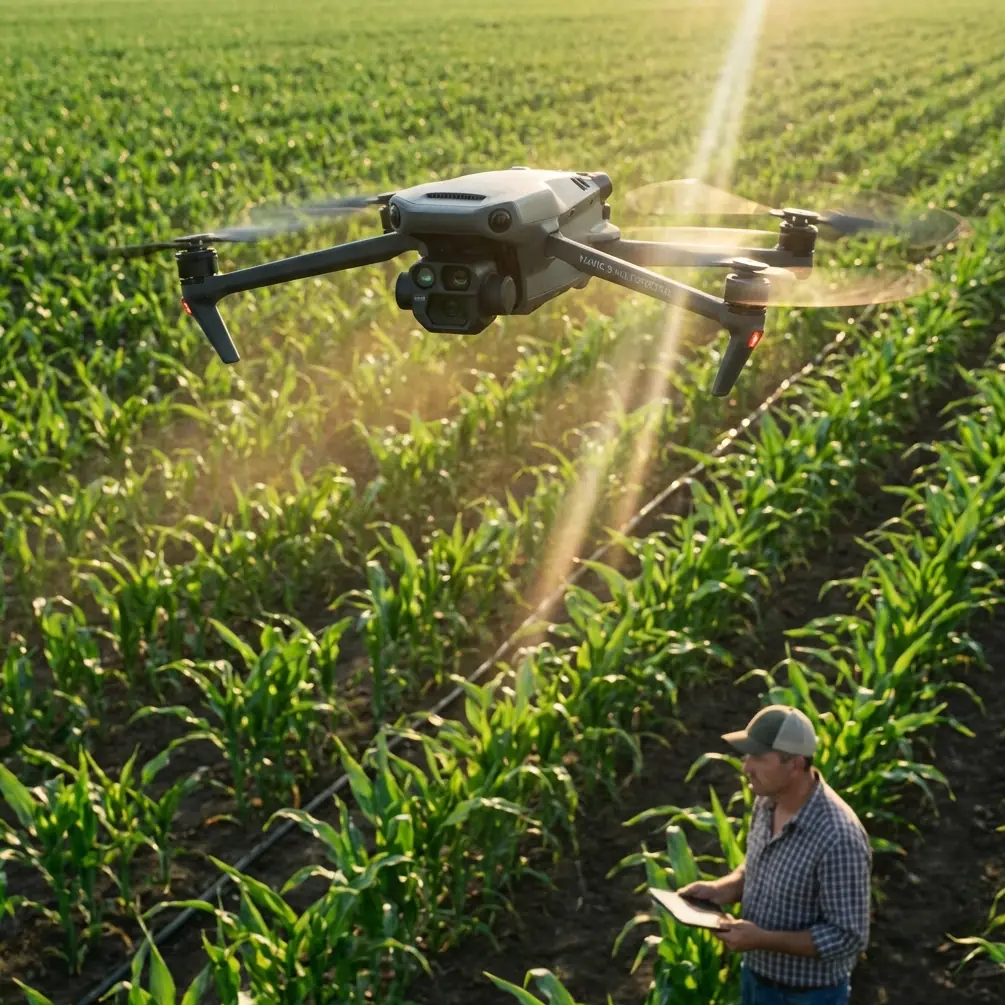
Mavic 4 Pro for Remote Wildlife Mapping: What Actually Matters in the Field
META: A technical review of Mavic 4 Pro for remote wildlife mapping, with practical insight on flight control, sensor stability, obstacle avoidance, and handling electromagnetic interference.
Remote wildlife mapping is one of those jobs that looks serene from a distance and turns complicated the moment the aircraft leaves the ground. Terrain changes fast. Wind funnels through ridgelines. Tree cover interferes with line of sight. And when you are trying to document animal movement without disturbing the habitat, the drone has to do more than capture beautiful footage. It has to hold position cleanly, interpret sensor data reliably, and stay predictable when conditions become less than ideal.
That is the lens I would use to evaluate the Mavic 4 Pro.
As a platform for field imaging, the real question is not whether it can produce attractive video. Most premium drones can. The more relevant question is whether it behaves like a trustworthy aerial tool when the mission is ecological documentation in remote terrain. That means stable attitude control, useful obstacle avoidance, dependable tracking behavior, and enough flight intelligence to reduce pilot workload while preserving the integrity of the survey.
What stands out when you look at the underlying principles of drone design is how much good wildlife mapping depends on fundamentals that are easy to overlook. A reference on hexacopter design from Harbin Institute of Technology breaks this down in a way that is still highly relevant to a modern aircraft like the Mavic 4 Pro. Its chapter structure moves from the mathematical model of the aircraft to body structure, sensor systems, communication links, control algorithms, vibration filtering, speed allocation strategy, and height fusion logic. That sequence matters because it mirrors the real hierarchy of field performance: airframe behavior first, sensing second, control quality third, and only then the visible output.
The Mavic 4 Pro may not be a six-rotor platform, but the same engineering priorities apply in practice.
Why control quality matters more than headline specs
Wildlife mapping often involves repeated passes over the same corridor, wetland edge, or forest clearing. If the aircraft is making small unwanted corrections all the time, the visual result suffers. So does the data. Overlapping frames become less consistent. Tracking confidence drops. Pilots spend more attention on micro-corrections and less on habitat interpretation.
The Harbin reference specifically separates attitude sensing, height sensing, and position sensing in its hardware section, then goes further into vibration damping and filtering for attitude sensors, plus fusion of altitude sensors with accelerometers. Those are not abstract engineering footnotes. They go directly to what you feel at the sticks and what you see in the finished map set.
For remote wildlife work, this has two operational consequences.
First, stable attitude estimation improves edge sharpness and frame consistency when you are flying slow, deliberate grid lines. That is especially useful when documenting nesting zones, migration pathways, or animal-created trails where slight differences between passes can obscure meaningful changes.
Second, altitude reliability matters when you are flying over mixed terrain. A swamp edge, low scrub, and rising rock face can create visual complexity that makes height control more demanding than it appears from the launch point. A flight stack that fuses altitude data well tends to behave more calmly when the surface below is changing, which reduces the risk of inconsistent ground sampling and erratic obstacle response.
With the Mavic 4 Pro, these are the traits I would be watching closely. Not just max resolution or dynamic range, but how consistently it maintains composure over a long mission.
Obstacle avoidance is not just a safety feature here
In remote wildlife mapping, obstacle avoidance often gets discussed as a general convenience. That undersells its role. In habitats with trees, cliffs, reeds, uneven canopy, or low-contrast terrain, obstacle sensing changes the way you can build a shot sequence and how confidently you can hold a route.
This matters for both documentation and minimal disturbance. If a drone can navigate with fewer abrupt pilot interventions, the aircraft tends to move more naturally through the environment. That is useful when tracking animal movement from a respectful distance or orbiting terrain features tied to habitat use.
The best use of obstacle avoidance on the Mavic 4 Pro is not aggressive automation. It is controlled freedom. You want enough confidence to maintain a line through broken terrain while preserving a predictable aircraft path. For mapping wildlife in remote areas, that supports cleaner transects, safer edge-of-canopy passes, and steadier perspective shifts when transitioning from a broad survey to a closer visual inspection.
ActiveTrack and subject tracking can also contribute here, but only when used selectively. For wildlife work, the target is usually not the animal itself. More often, it is a landscape relationship: a game trail entering water, a herd pathway crossing a ridge saddle, a nesting area relative to nearby vegetation, or movement patterns around a seasonal resource. That means tracking a landscape anchor or terrain feature can be more appropriate than locking onto living subjects. The Mavic 4 Pro’s tracking tools are most valuable when they reduce pilot burden without pushing the aircraft into intrusive proximity.
Electromagnetic interference in the real world
Remote does not always mean electronically quiet. Field teams often work near temporary research stations, repeaters, power infrastructure, metal observation towers, or vehicles loaded with radios and GPS devices. Even a launch point that seems isolated can present electromagnetic noise.
This is where technique matters as much as hardware.
If I were flying the Mavic 4 Pro in those conditions, one of my first checks would be antenna orientation and ground setup. A lot of signal issues blamed on the aircraft are really geometry problems. Adjusting the antenna to maintain a cleaner relationship with the drone, stepping away from vehicles or metal equipment, and choosing a launch point with less clutter can materially improve link stability. That is especially important when flying low over terrain folds where the signal path is already compromised.
The narrative around electromagnetic interference is often dramatic, but in practice it is usually manageable if you act early. Watch for inconsistent telemetry, delayed response, or weak transmission performance before pushing farther into the route. Reposition the pilot station if needed. Re-aim the antennas. Sometimes a small lateral move on the ground solves what looks like a range problem in the air.
If you need a practical field discussion on setup choices before a mission, this direct wildlife imaging contact can help: message a remote flight planning specialist.
For mapping operations, this is not a minor detail. A weak or noisy communications link can disrupt route precision, delay camera timing, and create hesitation at the exact moment you need smooth control near vegetation or topographic obstacles. Clean link management is part of data quality.
What the older hexacopter research still teaches us
One reason the Harbin document is useful, even though it centers on a six-rotor aircraft, is that it does not treat drone performance as a single feature. It treats it as a chain.
It starts with coordinate system definition and the four basic flight motions, then progresses into structure design, power system design, wireless communication links, sensor systems, main controller selection, and data storage design. Only after that does it move into the control layer, including overall control architecture, sensor damping and filtering, speed allocation strategy, and height control structure.
That sequence is a reminder that the Mavic 4 Pro’s strongest field performance will show up when all these layers work together.
For a wildlife photographer or conservation mapper, the practical takeaway is simple: the aircraft feels “smart” only when the underlying signal chain is clean. Good obstacle avoidance relies on reliable sensing. Good tracking relies on stable positioning and attitude estimation. Smooth D-Log footage depends not just on camera quality but on the aircraft’s ability to suppress tiny disturbances that become visible in long focal length movement or low-light gradients.
That is why I would judge the Mavic 4 Pro less like a gadget and more like a systems tool.
D-Log, Hyperlapse, and QuickShots in a serious mapping workflow
There is a tendency to separate cinematic features from technical field use, but on the Mavic 4 Pro the overlap is real.
D-Log is useful for more than visual polish. In wildlife habitat documentation, lighting often changes across a single mission: open water glare, shaded tree lines, pale rock, dark understory. A flatter capture profile gives more flexibility when you need to preserve tonal information across those shifts. That can help when presenting findings to researchers, land managers, or conservation partners who need to see subtle environmental distinctions rather than a heavily processed scene.
Hyperlapse also has a practical role. When used carefully, it can illustrate movement through landscape at a temporal scale that standard clips cannot convey as efficiently. For example, changing light over a floodplain, shadow progression across a nesting zone, or the relationship between terrain and animal travel corridors becomes easier to communicate.
QuickShots are less central to strict survey work, but they do have value in stakeholder reporting. If you need a concise visual summary of a site for a non-technical audience, an automated reveal around a river bend or wetland edge can show spatial context quickly. The key is restraint. In conservation and mapping work, the drone should clarify the landscape, not turn it into spectacle.
Handling and predictability over remote terrain
The Mavic 4 Pro’s success in wildlife mapping will depend heavily on how it handles transitions. Open ground into forest edge. Flat marsh into rising slope. Wide survey pass into close environmental detail. These moments are where drones reveal their character.
A well-tuned aircraft feels settled. It does not hunt for position unnecessarily. It does not overreact in yaw. It carries momentum in a readable way, which lets the pilot make smoother decisions. This sounds subjective, but it maps directly to the control architecture concepts in the reference material. A strong overall control structure and sensible filtering strategy produce an aircraft that inspires confidence instead of consuming attention.
That matters in the field because pilot attention is finite. Every bit of mental effort spent compensating for nervous aircraft behavior is attention taken away from the mission itself: wildlife presence, habitat condition, weather change, and route discipline.
A photographer’s view: when the aircraft gets out of the way
As someone approaching this from an image-making perspective, I care deeply about whether a drone disappears during the job. Not physically, but cognitively. The best aircraft stop demanding constant interpretation. They let you think about the subject.
For remote wildlife mapping, that means the Mavic 4 Pro should be at its best when flying repeatable patterns, hovering cleanly for habitat detail, and shifting from overview to targeted documentation without abrupt behavior. If obstacle avoidance and ActiveTrack are mature enough to support those transitions, the aircraft becomes much more useful than a camera in the sky. It becomes a field instrument that can tell a spatial story with less disturbance and more consistency.
The Harbin reference’s emphasis on data storage design is another quiet but meaningful point here. In remote work, reliability is not only about staying airborne. It is about preserving the mission record. Long, carefully planned sessions over distant terrain are expensive in time and access. Clean capture and dependable data retention are part of operational trust.
Final assessment
For readers focused on remote wildlife mapping, the Mavic 4 Pro should be judged on a higher standard than image sharpness alone. Its value lies in how its sensing, control, transmission, and automation work together when the environment is uneven and the margin for error is small.
Two details from the engineering reference are especially useful as a way to think about it. One is the attention given to attitude sensor vibration damping and filtering. That is the hidden foundation of stable footage and repeatable mapping passes. The other is the fusion of height sensors with accelerometer data, which directly affects how calmly and accurately the aircraft manages altitude across variable terrain. Both are operationally significant because they influence whether the drone produces dependable, interpretable results in the places where wildlife work is actually done.
If the Mavic 4 Pro delivers strong real-world behavior in those areas, then its obstacle avoidance, D-Log workflow, Hyperlapse options, and tracking tools become genuinely useful rather than decorative. For remote conservation imaging, that is the difference between a drone that impresses on paper and one that earns a permanent place in the field pack.
Ready for your own Mavic 4 Pro? Contact our team for expert consultation.