
Mapping a Mountain Solar Farm with Mavic 4 Pro
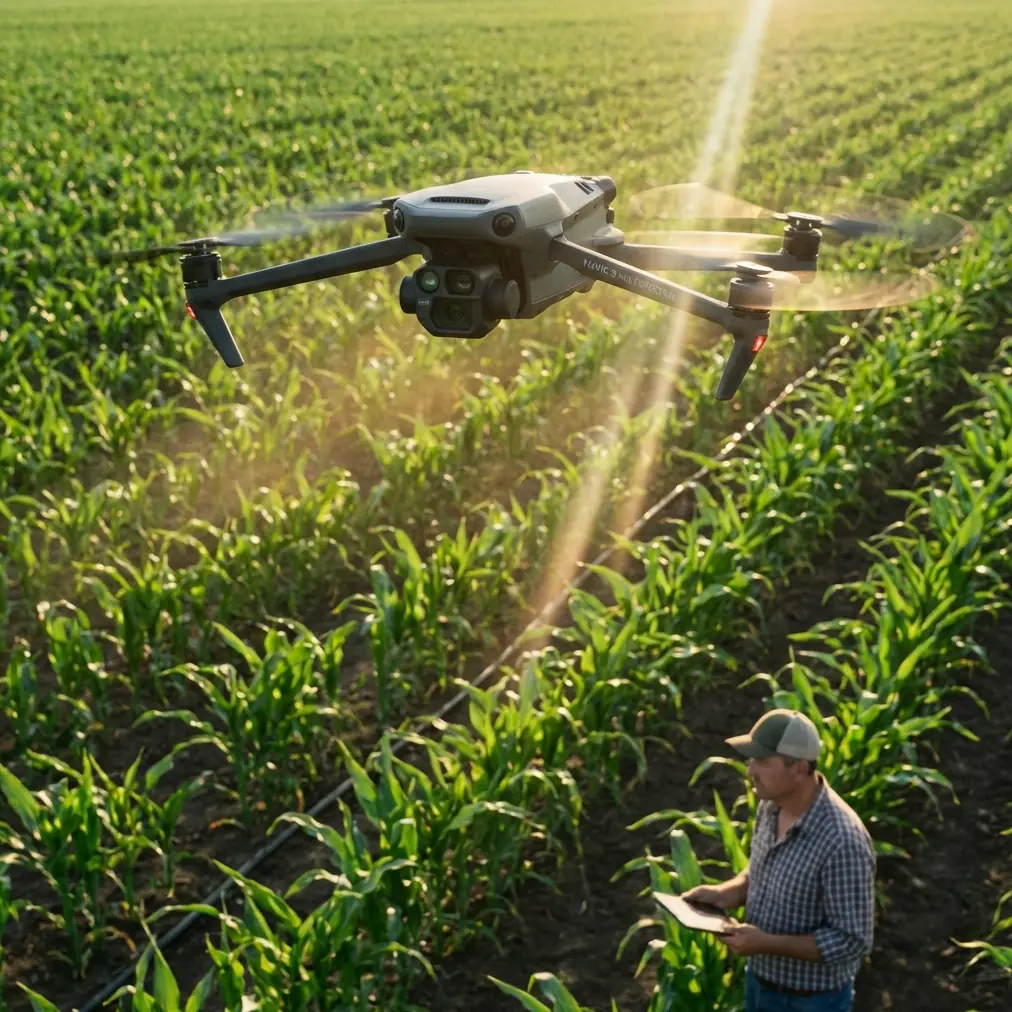
Mapping a Mountain Solar Farm with Mavic 4 Pro: A Field Workflow Built Around Accuracy, Not Hype
META: A practical case study on using Mavic 4 Pro for mountain solar farm mapping, with lessons from cadastral UAV survey standards, CGCS2000 control, RTK checkpoints, and terrain-aware data verification.
When people talk about mapping with a Mavic 4 Pro, the conversation usually drifts toward camera specs, tracking modes, or cinematic features. That misses the point for serious site work. On a mountain solar farm, the hard part is not getting attractive footage. It is producing data that still holds up after coordinate transformation, field verification, and revision against existing base maps.
That distinction matters.
I have been looking at Mavic 4 Pro through the lens of a real operational scenario: updating and validating mapping outputs for a solar installation spread across steep access roads, stepped terrain, service corridors, and panel blocks where line-of-sight changes constantly. The most useful reference for this kind of work is not a glossy marketing sheet. It is the discipline found in formal aerial surveying design documents, especially those that define how control, checking, and revision should actually happen on the ground.
One technical design reference for rural cadastral UAV surveying lays out a standard that is highly relevant here. It requires check areas to be distributed evenly at the four corners of the working area and in the middle, with no fewer than 50 check points in each area. The preferred objects for those checks are building corners, especially larger buildings, along with road edges. That sounds like a cadastral detail, but the logic transfers well to mountain solar mapping. If your validation only happens near the launch point or along the easiest road, your error profile is incomplete. Mountain sites exaggerate weak workflows. Elevation changes, irregular access, and repeating panel geometry can mask drift until it is too late.
So let’s build a realistic Mavic 4 Pro workflow around that.
The actual challenge on a mountain solar farm
A solar farm in the hills does not behave like a flat industrial estate. Roads snake along contours. Drainage lines cut across access tracks. Inverter pads and service buildings may be sparse, but retaining structures, fences, cable runs, and terraced panel rows create a dense pattern of edges. Those edges are visually useful, yet they can also confuse an operator who relies too heavily on automated scene confidence.
This is where Mavic 4 Pro becomes interesting. Its value is not just image collection. It is how efficiently it can support repeated, terrain-conscious passes over difficult ground while helping the pilot maintain safe spacing from obstacles and preserve overlap consistency. Obstacle avoidance is not a luxury in this setting. On mountain sites, it becomes an operational buffer against abrupt terrain rise, isolated poles, fence corners, and vegetation encroaching into low-level flight paths.
I would still treat automation as an assistant, not as a survey guarantee. ActiveTrack, subject tracking, QuickShots, and Hyperlapse are useful in media work and occasionally helpful for progress documentation, but they are not substitutes for survey planning. For mapping, the serious work is in control design, coordinate discipline, checkpoint distribution, and rigorous change detection. That is the standard worth borrowing from the reference material.
Why the CGCS2000 detail matters even if you are focused on a single site
One of the most useful facts from the reference document is its insistence on using newly established CGCS2000 control points to test the mathematical accuracy of an existing map after coordinate conversion. The document is explicit: only after a detection report confirms compliance should the old map be used. That is a strong reminder for anyone flying a Mavic 4 Pro over a mountain solar site that already has legacy CAD, topographic, or engineering layers.
Too many drone teams assume that if an old basemap “looks close,” it is suitable as a planning reference. That can become expensive fast. On a mountain project, a small positional mismatch can shift road edges, drainage channels, or equipment pads enough to distort cut-and-fill review, cable route planning, or expansion design. If the legacy map has been transformed into a new coordinate framework, that transformed output needs to be tested, not trusted blindly.
The reference also notes that control points linked through joint measurement with CGCS2000 coordinates can serve as the basis for map coordinate conversion and revision surveys. In practical terms, for a Mavic 4 Pro job, this means the drone is only one part of the chain. If your control framework is weak, the aircraft cannot rescue the final product. The right approach is to tie your mission into a stable control network first, then use the drone to accelerate coverage.
A field method that makes Mavic 4 Pro more useful
For mountain solar farm work, my preferred pattern is simple:
- Establish or verify control before the first serious mapping sortie.
- Fly the broad site with the Mavic 4 Pro for efficient image capture.
- Return to ground checks with RTK where the terrain, road edges, retaining features, or structures are most likely to expose residual error.
- Compare not only geometry, but also attribute consistency against the current site condition.
That last point often gets ignored. The survey design reference specifically calls for correcting mistakes such as wrong building floor counts, text annotation errors including place names and road names, land class or vegetation symbol errors, power line connection errors, omissions in independent features, and missing older pipelines. On a solar farm, the equivalent problems are not theoretical. They show up as mislabeled service roads, unrecorded culverts, retired cable trenches still shown as active, new equipment pads absent from the map, or access routes widened in the field but not reflected in the current layer stack.
The Mavic 4 Pro helps here because it makes frequent update flights practical. You do not need to wait for a major annual survey to catch map drift. A short, well-planned mission after civil works, drainage repair, road widening, or a panel block extension can reveal what changed. But again, useful imagery is only step one. The map has to be corrected systematically.
The checkpoint rule I would borrow directly
The “four corners plus center” checking pattern from the reference is one of the smartest details in the entire document. It prevents the lazy habit of validating only where access is easy. On a mountain solar site, I would adapt it like this:
- One check cluster near the highest accessible section
- One near the lowest drainage or valley-side edge
- One at each lateral boundary where terrain or access geometry changes
- One in a central operational zone, ideally near inverters, buildings, or road intersections
The reference requires at least 50 check points within each detection area. That number is not there to sound strict. It reflects the need for enough observations to reveal patterned error rather than isolated luck. On a solar farm, the most reliable check objects are road edges, equipment pad corners, fence line breaks, culvert heads, and building corners. If your site includes operation buildings or substations, those corners become especially useful because they are clearer than repetitive panel geometry.
This is one reason I like using a Mavic 4 Pro on these jobs paired with disciplined ground work. The drone covers the difficult topography quickly, and the checkpoint structure tells you whether the output is genuinely dependable across the site rather than only in one neat area.
A third-party accessory that actually improved the job
The most meaningful upgrade I have seen in this scenario was not flashy. It was a third-party high-visibility landing pad and wind-stable ground station setup used together in rough mountain conditions. On sloped service roads and dusty laydown areas, that simple accessory package reduced takeoff contamination, improved recovery consistency, and gave the crew a repeatable launch reference when moving between sectors.
That might sound minor until you have worked around solar sites where loose grit, trimmed vegetation, and uneven ground create constant friction for repositioning. Better launch discipline means fewer interruptions, cleaner optics, and less time wasted relocating to find a safe patch of ground. For teams planning similar field deployments, a practical accessory discussion is often more useful than another debate about cinematic profiles.
If you are building a mountain-site workflow and want a practical discussion about field accessories and RTK-friendly mapping setup, this WhatsApp line for deployment questions is a sensible starting point.
Where Mavic 4 Pro’s media tools still matter
Even on a mapping assignment, the Mavic 4 Pro’s creative features are not irrelevant. They just need to be used for the right purpose.
QuickShots and Hyperlapse are not mapping tools, but they are effective for stakeholder communication. A mountain solar farm often involves owners, EPC teams, O&M contractors, and local approval stakeholders who do not read raw geospatial outputs fluently. A short Hyperlapse showing road ascent, drainage relation, and panel field spread can explain terrain constraints far faster than a dense set of orthographic sheets.
D-Log also has a place, especially when lighting shifts dramatically across ridges and valleys. If you are collecting visual records for asset condition review or progress reporting, D-Log gives more room to preserve shadow and highlight detail in difficult midday mountain light. That does not make it a survey deliverable format by itself, but it improves interpretability in visual review sets.
The mistake is treating these features as proof of mapping competence. They are support tools. The survey backbone remains control, validation, and revision.
The revision threshold that should make operators pause
Another point in the reference deserves attention: if more than one-third of the checked points exceed the acceptable error threshold, the area should be remeasured. It also states that if actual ground changes exceed one-third of the mapped content in the field review, the area should be remeasured rather than lightly patched.
For mountain solar farms, that is a sharp and useful rule. If a section has undergone major grading, access road rebuilding, drainage modification, or equipment relocation, trying to “repair” an outdated map may consume more time than a fresh capture. The Mavic 4 Pro is agile enough that a full remap of that zone may be the cleaner choice.
This is where experienced teams separate themselves from casual operators. They know when to stop defending old data. They know when a site has crossed the threshold where revision becomes re-survey.
Data structure is not glamorous, but it decides usability
The reference specifies that landmark point deliverables should be submitted in an XLS format containing point number, X, Y, H, alongside coordinate system information, elevation datum, zone division, central meridian, and whether projection has been applied. That level of metadata discipline is easy to overlook when a project is drone-led.
Yet on a mountain solar farm, poor metadata can make perfectly good fieldwork hard to reuse. A clean Mavic 4 Pro orthomosaic is not enough if nobody can tell which coordinate system it aligns to, what height basis was used, or how transformed legacy layers were handled. Engineering teams, civil contractors, and GIS managers need that context to trust the output.
The practical lesson is straightforward: every flight should fit into a documented geospatial framework. Aircraft capability gets attention. Coordinate governance deserves more.
Final read on Mavic 4 Pro for this use case
If I were evaluating Mavic 4 Pro specifically for mapping solar farms in mountain terrain, I would not describe it as a magic survey box. I would describe it as a very capable capture platform that becomes genuinely valuable when it is inserted into a rigorous control-and-check workflow.
Its obstacle avoidance supports safer low-altitude operations around terrain and site clutter. Its portability helps crews cover multiple elevation bands in a day. Its imaging flexibility helps with both mapping support and visual reporting. But the real quality line comes from what the reference material makes painfully clear: distribute your checks correctly, tie your work to current control, verify transformed maps before relying on them, and correct attribute and feature errors instead of pretending geometry is the only thing that matters.
That is how a mountain solar farm gets mapped properly.
And that is the standard a Mavic 4 Pro workflow should be measured against.
Ready for your own Mavic 4 Pro? Contact our team for expert consultation.