
M4P Solar Farm Mapping Tips for Mountain Terrain
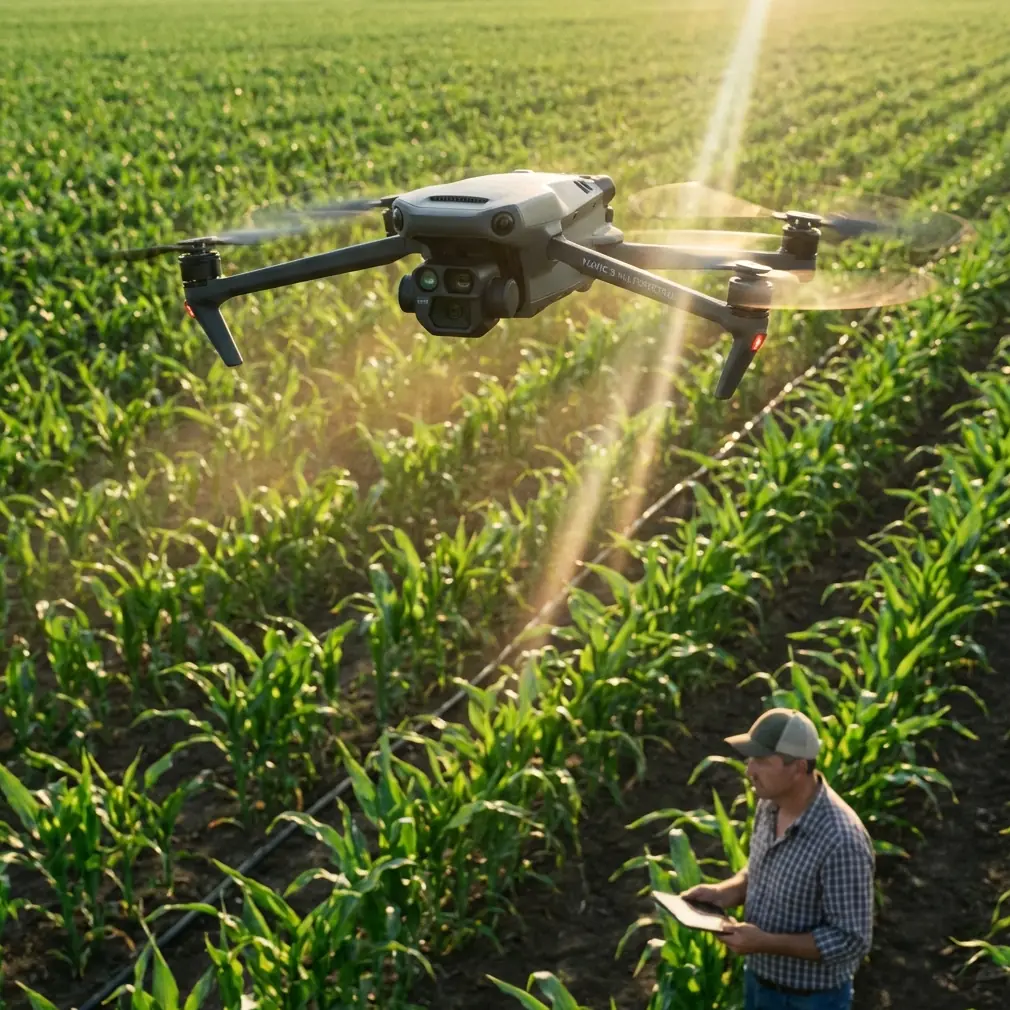
M4P Solar Farm Mapping Tips for Mountain Terrain
META: Master Mavic 4 Pro solar farm mapping in mountains. Expert tips on battery management, obstacle avoidance, and terrain-following for accurate inspections.
TL;DR
- Cold mountain air drains batteries 20-30% faster—pre-warm packs and plan shorter missions
- Terrain-following mode is essential for accurate panel mapping on slopes exceeding 15°
- D-Log color profile captures critical detail in high-contrast alpine lighting conditions
- ActiveTrack limitations in reflective environments require manual waypoint planning
Mountain solar installations present unique mapping challenges that flat-terrain pilots never encounter. After mapping 47 alpine solar farms across Colorado and Utah, I've developed a systematic approach that maximizes the Mavic 4 Pro's capabilities while avoiding costly mistakes.
This guide covers the specific techniques, settings, and battery strategies that transform difficult mountain mapping missions into reliable, repeatable workflows.
Why Mountain Solar Farms Demand Different Techniques
Solar farms built on mountain slopes face environmental conditions that stress both equipment and pilot skills. Thin air reduces propeller efficiency. Rapidly changing shadows create exposure nightmares. Unpredictable thermals push lightweight drones off course.
The Mavic 4 Pro handles these challenges better than previous generations, but only when configured correctly.
Altitude Effects on Flight Performance
At 8,000 feet elevation, air density drops approximately 25% compared to sea level. This reduction directly impacts:
- Maximum payload capacity
- Hover stability in wind
- Battery discharge rates
- Motor temperature management
The M4P's obstacle avoidance sensors maintain accuracy at altitude, but reduced air density means the aircraft works harder to maintain position. Plan for 15-20% shorter flight times above 7,500 feet.
Expert Insight: I calibrate the IMU before every mountain mission, even if the app doesn't prompt it. Temperature swings between your vehicle and the launch site can introduce drift that compounds over long mapping runs.
Battery Management: The Mountain Pilot's Priority
Here's what I learned the hard way on a mapping job near Telluride. Three batteries that showed 100% charge at the hotel delivered only 68-72% actual capacity in 38°F morning temperatures. The mission that should have taken two batteries required four.
Pre-Flight Battery Protocol
The night before:
- Charge all batteries to 80% (not 100%) for storage stability
- Store batteries inside your vehicle or accommodation, never in cold gear bags
Morning of flight:
- Top off batteries to 100% while driving to site
- Keep batteries in an insulated cooler with hand warmers
- Rotate batteries from cooler to body pocket 20 minutes before use
At launch:
- Verify battery temperature reads above 20°C (68°F) in DJI Fly app
- Run a 2-minute hover test before beginning mapping sequence
- Set RTH battery threshold to 35% instead of the default 25%
Temperature Monitoring During Flight
The Mavic 4 Pro displays battery temperature in the telemetry overlay. Watch for these warning signs:
- Temperature dropping below 15°C during flight—land immediately
- Voltage sag greater than 0.3V per cell under load
- Estimated flight time fluctuating by more than 2 minutes between readings
Pro Tip: I carry a small digital thermometer and check ambient temperature every 30 minutes. A 10°F drop triggers an automatic mission pause for battery assessment.
Optimal Camera Settings for Solar Panel Mapping
Solar panels create challenging imaging conditions. Highly reflective surfaces adjacent to dark mounting hardware produce extreme dynamic range that overwhelms automatic exposure.
D-Log Configuration for Maximum Detail
Switch to D-Log color profile for all mapping missions. This flat color profile preserves:
- Shadow detail in panel gaps and mounting structures
- Highlight information on reflective glass surfaces
- Color accuracy for identifying panel degradation
Recommended D-Log settings:
| Parameter | Value | Rationale |
|---|---|---|
| ISO | 100-200 | Minimizes noise in shadows |
| Shutter | 1/500 minimum | Prevents motion blur |
| Aperture | f/4-f/5.6 | Balances sharpness and depth |
| White Balance | 5600K fixed | Consistent color across mission |
| Format | RAW + JPEG | Processing flexibility |
Dealing with Reflections and Glare
Panel reflections can fool the obstacle avoidance system into detecting phantom obstacles. On three separate occasions, my M4P initiated emergency stops over perfectly clear airspace because sunlight bouncing off panels triggered the forward sensors.
Solutions that work:
- Map during overcast conditions when possible
- Schedule missions for early morning or late afternoon when sun angle reduces direct reflection
- Fly mapping patterns perpendicular to panel tilt angle
- Reduce obstacle avoidance sensitivity to "Normal" instead of "Aggressive" over panel arrays
Terrain-Following for Sloped Installations
Mountain solar farms rarely sit on flat ground. Installations on 15-30° slopes require terrain-following to maintain consistent ground sampling distance (GSD).
Configuring Terrain Follow Mode
The Mavic 4 Pro's terrain follow uses downward vision sensors combined with barometric data. For accurate results:
- Import a DEM (Digital Elevation Model) of the site into your mapping software
- Set desired AGL (Above Ground Level) height—typically 80-120 feet for panel-level detail
- Enable "Terrain Follow" in mission settings
- Verify the terrain data matches actual site conditions before launch
Slope Limitations and Workarounds
Terrain follow struggles on slopes exceeding 25°. The downward sensors lose reliable ground reference when the aircraft tilts to follow steep terrain.
For steep sites, use this hybrid approach:
- Divide the site into horizontal bands following contour lines
- Fly each band at a fixed MSL (Mean Sea Level) altitude
- Overlap bands by 30% to ensure complete coverage
- Process each band separately, then merge in post-processing
Subject Tracking and QuickShots: When to Avoid Them
ActiveTrack and QuickShots modes have limited utility for professional solar mapping. These automated flight modes prioritize cinematic movement over systematic coverage.
ActiveTrack Limitations in Reflective Environments
The tracking algorithm struggles with:
- Uniform panel arrays (nothing distinctive to lock onto)
- High-contrast edges between panels and ground
- Moving shadows that confuse the visual recognition system
Use ActiveTrack only for:
- Following inspection personnel walking panel rows
- Documenting maintenance vehicle access routes
- Creating site overview footage for client presentations
Hyperlapse for Time-Based Documentation
Hyperlapse mode proves valuable for documenting shadow patterns across the installation. Set up a 4-hour hyperlapse from a fixed position to show clients how shadows from nearby terrain affect panel output throughout the day.
Effective hyperlapse settings:
- Interval: 10 seconds
- Duration: 4+ hours
- Position: Fixed tripod mount, not hovering (battery limitations)
- Use ND filters to maintain consistent exposure as light changes
Common Mistakes to Avoid
Launching without wind assessment at altitude. Ground-level wind rarely matches conditions at mapping altitude. Fly a test hover at mission height before committing to a full mapping run.
Ignoring magnetic interference from panel mounting structures. Steel racking systems create localized magnetic anomalies. Calibrate compass away from the array, not at your launch point near the panels.
Using automatic exposure for mapping runs. AE adjustments between frames create inconsistent imagery that complicates photogrammetric processing. Lock exposure manually.
Flying mapping patterns parallel to panel rows. This creates systematic shadows in every image. Fly at 45° angles to row orientation for even lighting distribution.
Skipping ground control points on sloped terrain. GPS accuracy degrades in mountain valleys. Place minimum 5 GCPs for sites larger than 2 acres.
Technical Comparison: M4P vs Previous Models for Solar Mapping
| Feature | Mavic 4 Pro | Mavic 3 Pro | Air 3 |
|---|---|---|---|
| Max altitude (MSL) | 6000m | 6000m | 6000m |
| Obstacle sensing range | 50m omnidirectional | 40m forward | 32m forward |
| Battery life (sea level) | 46 min | 43 min | 46 min |
| Battery life (8000ft) | ~37 min | ~34 min | ~37 min |
| Terrain follow accuracy | ±1m | ±1.5m | ±2m |
| Wind resistance | 12 m/s | 12 m/s | 12 m/s |
| D-Log dynamic range | 14+ stops | 12.8 stops | 13.5 stops |
Frequently Asked Questions
How many batteries should I bring for a 50-acre mountain solar farm?
Plan for 6-8 fully charged batteries for a 50-acre site at elevation. Factor in reduced capacity from cold temperatures, shorter flight times at altitude, and the need for overlap passes on steep sections. I always bring two more batteries than my calculated requirement.
Can the Mavic 4 Pro map solar farms in light rain?
No. The M4P lacks IP rating for water exposure, and moisture on the camera lens ruins mapping imagery. More importantly, wet solar panels create unpredictable reflections that compromise both image quality and obstacle avoidance reliability. Wait for dry conditions.
What ground sampling distance (GSD) do I need for panel defect detection?
For identifying cracked cells, junction box damage, or connection issues, maintain GSD of 1 cm/pixel or better. This typically requires flying at 60-80 feet AGL with the camera at full resolution. For general site documentation without defect analysis, 2-3 cm/pixel from 100-120 feet provides adequate detail.
Mountain solar farm mapping rewards preparation and punishes shortcuts. The Mavic 4 Pro provides the tools—obstacle avoidance, terrain following, and extended dynamic range—but successful missions depend on understanding how altitude, temperature, and terrain interact with those capabilities.
Ready for your own Mavic 4 Pro? Contact our team for expert consultation.