
Mavic 4 Pro Guide for Wildlife Inspection in Extreme Tempera
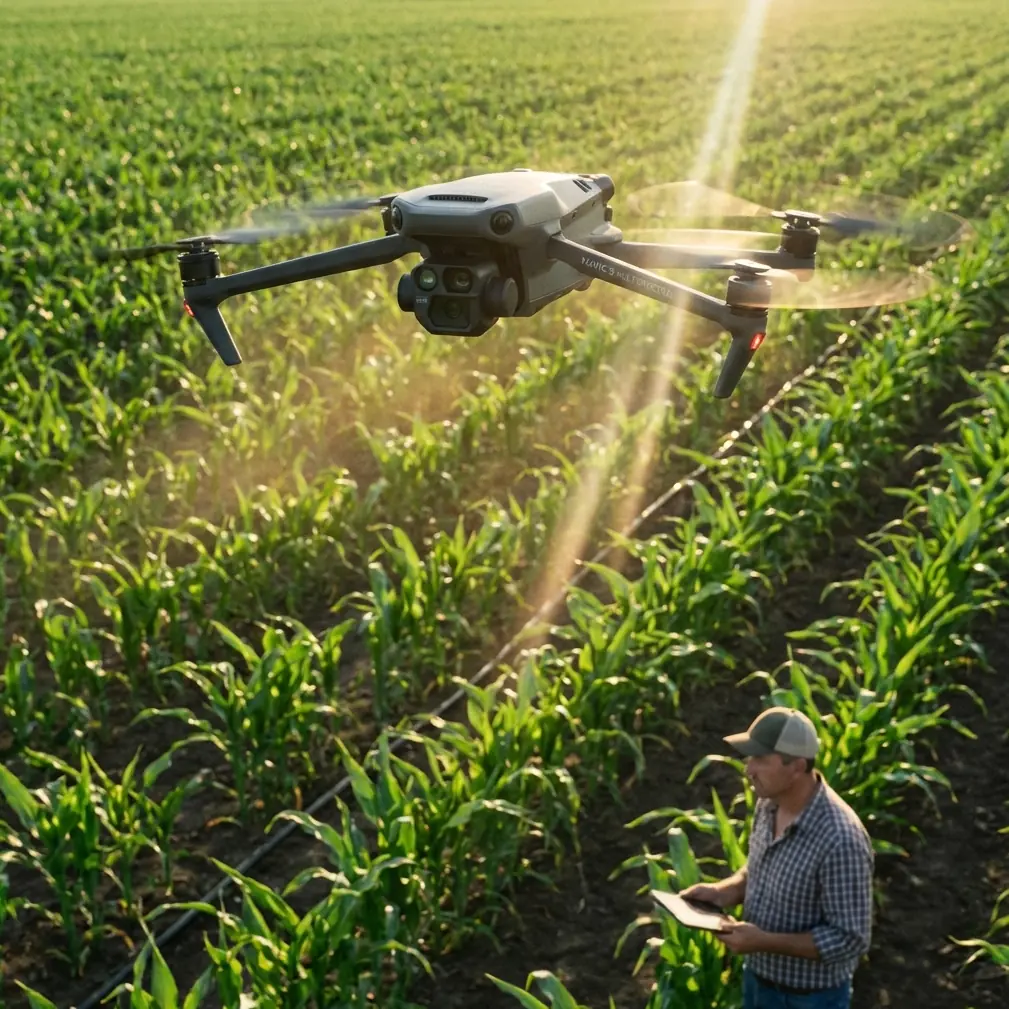
Mavic 4 Pro Guide for Wildlife Inspection in Extreme Temperatures
META: A field-focused Mavic 4 Pro tutorial for wildlife inspection in extreme heat and cold, with practical advice on battery handling, obstacle avoidance, ActiveTrack, D-Log, and safe observation workflows.
Wildlife inspection looks gentle from a distance. In the field, it rarely is.
You are often standing in wind that cuts through gloves or heat that turns a flight case into an oven. Animals move unpredictably. Light changes by the minute. Terrain can be unforgiving—rock faces, marsh edges, scrub, snow crust, bare trees, canyon walls. In those conditions, the value of a drone is not just image quality. It is distance, repeatability, and the ability to observe without adding stress to the habitat.
That is why the Mavic 4 Pro matters for this kind of work.
Not because it turns wildlife inspection into a push-button exercise. It doesn’t. What it does offer is a compact aerial platform that helps photographers, ecologists, land managers, and field inspectors gather cleaner visual records while reducing how often they need to physically enter sensitive areas. The difference is operational, not cosmetic.
A recent BBC report about robots and drones being used in Ukraine underlined a broader point: unmanned systems are increasingly being trusted to operate where sending people directly is riskier or less practical. Ignore the military setting and the civilian lesson is still clear. Remote systems are no longer niche tools. They are becoming standard instruments for observation tasks that benefit from distance, precision, and reduced human exposure. For wildlife work in extreme temperatures, that same principle applies in a much safer and more constructive context: let the aircraft go where repeated human intrusion would create disturbance, fatigue, or avoidable risk.
This guide is built around that real-world idea. If you are using a Mavic 4 Pro to inspect wildlife in punishing weather, here is how to set it up, fly it, and manage power so you come back with usable footage rather than a warning screen and a rushed landing.
Start with the mission, not the drone
Wildlife inspection is not the same as wildlife filming.
Inspection usually means you are trying to confirm something specific:
- nest occupancy
- herd location
- body condition
- movement patterns
- habitat disturbance
- fence or corridor access near animal zones
- changes in water sources
- signs of stress or displacement
That goal affects every camera and flight decision. Before launch, define what success looks like in one sentence. Something like: confirm whether the birds have returned to the cliff ledge without approaching close enough to trigger defensive behavior. Or: document the position of animals around a shrinking water source during midday heat.
Once you know the question, the Mavic 4 Pro’s automated features stop being toys and start becoming tools.
Extreme temperatures change aircraft behavior faster than most pilots expect
The first mistake I see in hot or cold wildlife missions is assuming the drone will behave the same way it did during a quick test flight in mild weather.
It won’t.
In cold conditions, battery voltage can sag earlier than expected, even when the percentage display still looks comfortable. In heat, batteries can begin the flight already warmer than ideal, especially if they have been sitting in a vehicle or dark case. Both scenarios shorten your practical margin.
My field rule is simple: never treat the published battery status as your true endurance in extreme weather. Treat it as a negotiation.
My battery management tip from field experience
When inspecting wildlife in cold environments, I keep flight batteries insulated on my body or in an inner pack layer until just before launch, but I never artificially overheat them. The aim is stability, not warmth for its own sake. A battery that starts the flight at a moderate, protected temperature usually delivers far more predictable voltage behavior than one that has been sitting exposed on a tailgate in freezing wind.
In high heat, I do the opposite. Batteries stay shaded, spaced apart, and out of sealed compartments between sorties. I also avoid immediate back-to-back relaunches after landing unless the pack has had time to cool naturally. Hot batteries plus a rushed relaunch is a classic way to discover reduced performance exactly when you need reserve power for an unplanned reposition.
That one habit has saved more missions than any camera setting.
A practical routine helps:
- Label batteries clearly.
- Rotate them in order, not randomly.
- Log ambient temperature, start percentage, and landing percentage.
- Shorten your intended flight time in temperature extremes.
- Keep your return threshold conservative.
For wildlife inspection, that matters because your best observation often happens later in the flight, once you have climbed, repositioned, and waited for the animal to settle. If your battery planning is sloppy, you end up abandoning the critical pass.
Obstacle avoidance is not a substitute for judgment
Obstacle avoidance is one of the most useful features on a drone like the Mavic 4 Pro, especially around uneven terrain and semi-hidden vertical structures. In wildlife environments, that can mean deadwood, cliffs, reeds, utility crossings, or tree lines that look obvious from the ground and disappear into low-contrast backgrounds once you are airborne.
But here is the part many pilots learn late: obstacle sensing is only as useful as the visual conditions and flight geometry allow.
Snow glare, low sun, reflective water, deep shadow, and thin branches can all complicate how confidently you should rely on automation. In extreme heat, shimmering air over rock or dirt can also make visual judgment from the live feed harder than expected. So yes, use obstacle avoidance. Absolutely. But use it as a secondary layer, not your primary brain.
For wildlife inspection, the operational significance is straightforward. A cautious obstacle strategy protects more than the aircraft. It helps you avoid sudden corrections, emergency climbs, or noisy close passes that can disturb animals during nesting, feeding, or resting.
My approach is to fly the first orbit manually and wider than I think I need. Once I understand the terrain and the subject’s behavior, I can decide whether tighter framing is justified.
ActiveTrack and subject tracking are best used sparingly around animals
The promise of subject tracking is obvious. If the animal moves, the drone follows while the operator concentrates on framing and airspace. In the right conditions, ActiveTrack can be useful for documenting movement across open terrain, particularly when you are observing from a respectful distance.
The risk is assuming that because the tracking box locks on, the shot is automatically appropriate.
Animals do not move like athletes on a clean field. They pass behind brush. They cluster. They stop suddenly. They change direction for reasons the software cannot interpret. The safer way to use ActiveTrack in wildlife inspection is as a temporary aid for broad movement, not as a commitment to chase behavior.
Operationally, this matters because the line between observation and pressure can be thin. If tracking causes repeated repositioning, altitude changes, or lateral movement that shadows the animal too closely, the mission has failed even if the footage looks polished.
A better use case is to establish a high, offset position, confirm the aircraft is not altering behavior on the ground, and then use tracking only when the movement pattern is already underway and the route is visually open.
QuickShots and Hyperlapse have a place—just not where most people think
For inspection work, QuickShots and Hyperlapse sound secondary. In many cases, they are. But dismissing them completely leaves useful documentation options on the table.
QuickShots can help capture repeatable context views of a site—shoreline shape, nesting cliff access, floodplain edges, burned habitat patches, or migration corridor boundaries. The key is using them for environmental storytelling, not dramatic reveal shots.
Hyperlapse can be especially valuable when the inspection question involves change over time rather than a single frame. Cloud cover crossing a nesting valley, animal congregation around shade in afternoon heat, or movement patterns around a water source can all become more legible in a carefully planned time-compressed sequence.
That said, automation should never increase disturbance. If the aircraft needs to remain on station for longer, make sure the altitude, noise footprint, and subject reaction remain acceptable.
Use D-Log when the environment is visually hostile
Wildlife inspection in extreme temperatures often happens in extreme light too.
Snow and dark fur. White birds against reflective water. Dry grass at noon. Forest shadow at the edge of sunlit clearings. Those scenes punish ordinary capture settings because contrast stacks up fast.
This is where D-Log earns its place. Shooting in D-Log preserves more flexibility in post when you need to recover highlights, hold detail in shadowed habitat, and produce footage that is analytically useful rather than merely attractive. If the end user includes biologists, reserve managers, or clients comparing conditions over time, cleaner tonal separation matters.
The common mistake is recording flat footage without planning the workflow afterward. If you shoot D-Log, commit to a color-managed post process. Build a repeatable correction baseline so footage from different days and temperature conditions remains comparable.
That consistency is a bigger advantage than people realize. Inspection archives become valuable when this month’s flight can be reliably compared to last month’s, not when every edit has a different visual style.
Build a low-disturbance flight pattern
The BBC piece mentioned the growing role of unmanned systems operating without direct human presence. In civilian wildlife work, that same distance advantage is one of the strongest ethical arguments for using a drone at all. But the benefit only exists if you actually fly in a way that reduces disturbance.
Here is the pattern I recommend:
1. Launch well away from the animals
Do not announce your presence at the site edge if a concealed launch point farther back is available.
2. Gain altitude before approaching
A vertical climb away from the subject area is often less disruptive than a low, direct transit.
3. Approach from the least sensitive angle
Avoid skylining directly over animals when possible. Use terrain and offset angles intelligently.
4. Pause and observe behavior
Watch for head lifting, clustering, scattering, vocal changes, defensive posture, or altered feeding.
5. Shorten the close observation window
Get the needed passes and leave. Long hovering sessions can be more stressful than a brief, efficient inspection.
This is where a well-equipped compact drone is genuinely useful. You can gather visual evidence, maintain stand-off distance, and spend less time physically entering habitat. That is the operational significance of unmanned observation in a civilian setting: fewer boots in fragile places, fewer repeated approaches, better data continuity.
A practical Mavic 4 Pro workflow for extreme-temperature wildlife inspections
If I were setting up a standard field routine, it would look like this:
Pre-field
- Check local weather, wind layers, and temperature trend.
- Define your inspection objective.
- Charge and label all batteries.
- Pack insulation for cold or shade storage solutions for heat.
- Set return-to-home altitude with terrain in mind.
- Preconfigure camera profiles, including a D-Log option.
On site
- Scout launch and recovery zones first.
- Listen before takeoff; sometimes animal presence is easier to hear than see.
- Assess whether obstacle avoidance will be reliable in current light.
- Choose manual flight for the first approach.
- Use ActiveTrack only if movement and terrain are predictable.
During flight
- Monitor subject response as closely as battery and telemetry.
- Capture wide context first, then detail.
- Log environmental notes verbally or in writing.
- Keep one eye on reserve power, especially in cold air.
After landing
- Review clips immediately for inspection usefulness, not just aesthetics.
- Let batteries return toward ambient-safe conditions before recharging or relaunching.
- Record any notable performance changes linked to temperature.
That last point builds long-term reliability. After enough missions, you will know that one battery consistently drops faster in cold, or that certain habitats make obstacle sensing less trustworthy at specific times of day. Those are not minor observations. They are the difference between controlled fieldwork and guesswork.
When to prioritize documentation over cinematic ambition
As a photographer, I understand the temptation to make every wildlife flight beautiful. Sometimes beauty is useful; it can clarify habitat relationships and communicate site conditions better than a flat record shot.
But inspection work has a hierarchy. First, do no harm. Second, gather usable evidence. Third, if the situation allows, create visual material that helps others understand the environment.
The Mavic 4 Pro is well suited to that hierarchy because it supports both technical capture and polished imaging. The trick is knowing which mode matters today.
If the animals are calm, light is stable, and your access window is short, a careful D-Log sequence with a broad establishing pass may be the right choice. If behavior is sensitive and temperatures are pushing battery performance, skip the fancy move and take the clearest, least intrusive route to the information you came for.
That discipline is what separates responsible drone inspection from recreational hovering with a telephoto screen.
Final field thought
Remote systems are becoming central to observation work because they let us extend our reach without extending our physical footprint. That larger pattern was obvious even in the BBC report’s stark example: unmanned platforms are increasingly trusted where presence is difficult, risky, or disruptive. In wildlife inspection, the same logic serves a much better purpose. You can inspect from afar, preserve habitat calm, and still come home with detailed, repeatable records.
If you are planning a Mavic 4 Pro workflow for difficult climates and sensitive wildlife sites, it helps to talk through the setup with someone who understands both the aircraft and the field constraints. You can message a drone specialist here if you want to compare mission planning ideas before your next outing.
Ready for your own Mavic 4 Pro? Contact our team for expert consultation.