
Mavic 4 Pro for Mountain Wildlife Inspection
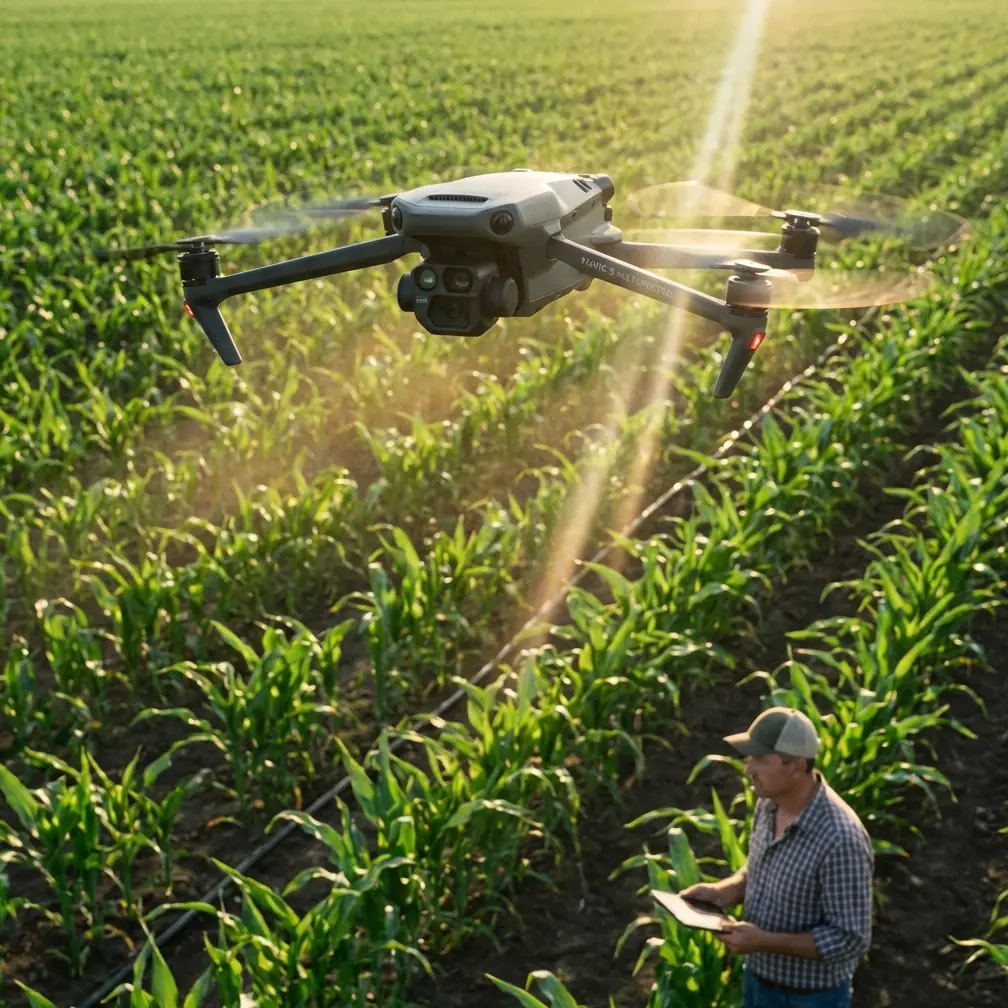
Mavic 4 Pro for Mountain Wildlife Inspection: What Panorama Workflow Still Teaches Us
META: A technical review of using Mavic 4 Pro for mountain wildlife inspection, with practical tips on panorama capture, obstacle avoidance, ActiveTrack, D-Log workflow, and battery management in remote terrain.
By Chris Park
Mountain wildlife inspection asks more from a drone than a standard scenic flight ever will. The aircraft has to hold position in unstable air, see around terrain, keep a safe margin from cliffs and tree lines, and produce footage that is useful for analysis rather than just attractive on a screen. That is why the Mavic 4 Pro deserves to be judged less as a travel drone and more as an aerial observation tool.
What makes this especially interesting is that some of the best lessons for modern field use do not come from the newest marketing claims. They come from older panoramic imaging workflows: fisheye optics, fast stitching, long depth of field, and the discipline of capturing a site so thoroughly that a viewer can inspect it later without being there in person. That basic logic maps surprisingly well onto mountain wildlife work.
Why panorama logic matters in wildlife inspection
A reference point from established aerial panorama practice is worth keeping in mind: a 360-degree panorama can be built from only a few images when a fisheye lens is involved, because a fisheye is typically defined by an angle of view reaching 180 degrees. Operationally, that matters because wide coverage reduces the amount of maneuvering needed over a sensitive habitat. Less repositioning means fewer disturbances around nesting zones, ridge perches, or game trails.
Another detail from the source material stands out even more. High-quality 360° or even 720° spherical or cylindrical panoramas can be stitched in around 2 to 5 minutes using dedicated software. That turnaround is not just a post-production convenience. For inspection teams, it changes decision speed. If you are working in a mountain valley where weather closes in fast, being able to review a broad visual record quickly helps you decide whether a second pass is necessary before wind or cloud cover shuts down the operation.
The source also emphasizes that panoramic aerial imaging is built from direct aerial imagery captured by a remote-sensing drone and then stitched into an immersive output. The practical value is straightforward: stakeholders can inspect terrain, structures, routes, or habitats remotely and still gain a 360-degree sense of place. For wildlife work, this can support den site documentation, seasonal habitat comparison, trail access planning, and non-intrusive monitoring of cliffside or alpine zones.
The Mavic 4 Pro fits this philosophy well, even if your final deliverable is not a classic stitched tour.
The Mavic 4 Pro in mountain conditions
In mountain wildlife inspection, three features tend to matter before image quality even enters the discussion: obstacle avoidance, subject tracking, and stability under changing light and wind. The Mavic 4 Pro earns its keep when these systems work together rather than as isolated features on a spec sheet.
Obstacle avoidance is not just there to prevent pilot mistakes. In steep terrain, route options collapse quickly. Tree canopies, dead snags, protruding rock faces, and narrow saddles all compress the safe airspace. A drone with reliable sensing lets you maintain a wider safety buffer from habitat features while still acquiring usable observation angles. That helps when monitoring animals that should not be approached directly.
ActiveTrack and subject tracking can also be useful, though with a caveat. In wildlife inspection, tracking should not be treated as a chase mode. It is most effective when used to maintain framing on a moving subject from a respectful offset, especially when the alternative would be repeated manual corrections that increase pilot workload. The goal is smoother observation, not pursuit. In mountain settings where an animal may move across broken terrain and drop behind sparse tree cover, dependable tracking can preserve continuity in the record.
QuickShots and Hyperlapse are often dismissed as creative features, but they have inspection value if used with discipline. A controlled orbital move around a ridge meadow can reveal lines of sight, water access, and disturbance patterns. A Hyperlapse from a fixed vantage can show cloud movement, visitor traffic, or animal use of an open corridor over time. These are not gimmicks when the output is tied to a survey question.
D-Log becomes relevant when the mission involves mixed light, which mountains almost always do. You can be dealing with snow glare, dark timber, exposed rock, and deep valley shadow in the same flight. Shooting in D-Log preserves more flexibility in grading and tonal recovery, which helps when you need to inspect subtle details later rather than simply present a bright finished video.
What older panoramic workflows reveal about modern mission planning
The reference material describes a classic hardware stack for panoramic work: DSLR camera, fisheye lens, panoramic head, tripod, and stitching software. On paper, that sounds far removed from a foldable flight platform like the Mavic 4 Pro. In practice, the old workflow still teaches one critical principle: capture planning matters more than brute-force shooting.
A fisheye lens with a 180-degree field of view can cover a vast area from a single point, and its long depth of field helps hold foreground and distant background in acceptable focus. Translate that into Mavic 4 Pro operations and the lesson is clear. In wildlife inspection, you should prioritize positions that maximize information density per hover. Instead of constantly advancing toward a subject, find a stable offset where a wide framing can document the habitat context, movement path, and terrain relationship in one sequence.
This is especially useful in mountain environments because every relocation costs battery, increases risk, and may disturb animals.
The source material also notes that even a few frames can be enough to assemble a 360-degree panoramic output. That should shape how you think about the Mavic 4 Pro’s capture routines. If the mission objective is habitat documentation rather than cinematic storytelling, a short, structured image set can outperform a long freeform flight. A compact sequence is easier to archive, easier to compare across seasons, and often easier for biologists or land managers to interpret.
Practical field workflow for mountain wildlife inspection
Here is the workflow I prefer when using a Mavic 4 Pro in this setting.
1. Start with a broad establishing pass
Launch from a position that gives you safe vertical separation from vegetation and loose terrain. Before attempting any tracking or close observational framing, make a slow perimeter pass at a respectful distance. This is where obstacle avoidance earns trust. You are not trying to get dramatic footage. You are identifying wind behavior, rotor wash sensitivity near ledges, and the best observation angle that does not pressure the animals.
If the site has a lot of vertical relief, I avoid descending straight into it. Lateral entries are usually cleaner for maintaining situational awareness.
2. Build your own inspection panorama
Even if you do not intend to export a full immersive panorama, borrow from panoramic capture logic. Hover at one stable point and gather a deliberate image set that covers the full basin, slope face, or nesting wall. The source references workflows that can generate 360° or 720° outputs in 2 to 5 minutes. That speed matters when you are back at camp or in a field vehicle and need to confirm whether you documented every zone of interest.
A stitched panoramic view can reveal missed details: access tracks, drainage patterns, disturbance edges, or alternative observation points for a second mission.
3. Use ActiveTrack selectively
If an animal is already moving across open terrain and your standoff distance is appropriate, ActiveTrack can reduce abrupt stick inputs and help preserve a consistent frame. But mountain inspection is full of false confidence traps. Sparse trees, ridge shadows, and uneven backgrounds can make manual override necessary at any moment. I use tracking as an aid, not an autopilot promise.
4. Reserve D-Log for mixed-contrast work
When the habitat includes bright sky lines, reflective water, pale rock, and shaded cover, D-Log gives you a stronger master file for later review. For quick same-day checks, standard color can be simpler. For documentation that may be revisited by a team, D-Log is usually worth the extra grading step.
5. Use Hyperlapse with purpose
If the inspection question involves movement through space over time, a short Hyperlapse from a fixed position can be useful. I have found it especially helpful for observing how fog rolls into a valley, how people use a trail corridor, or how light changes visibility on a cliff face. Those patterns often influence whether a site is practical for repeated wildlife monitoring.
A battery management tip from the field
This matters more in the mountains than most pilots realize.
My rule with the Mavic 4 Pro is to split battery thinking into ascent power, observation power, and return reserve rather than treating the pack as one continuous budget. On flat ground, pilots often estimate flight time too casually. In mountain wildlife inspection, the return leg can be the most expensive part of the mission if wind builds along the ridge or if you need to climb back out of a bowl.
The tip is simple: set your personal turn-back threshold earlier than you think you need, and make that threshold depend on terrain position, not just battery percentage. If I am below my launch elevation on the lee side of a ridge, I start planning recovery much sooner than I would over open terrain. A battery reading that feels comfortable in a park can become tight fast when the aircraft has to fight an upslope return.
Another habit helps a lot: after the first minute of flight, glance at the live battery drain trend instead of only the remaining percentage. If the pack is dropping faster than expected during climb or station-keeping, that is your clue that the wind layer is stronger than it looked from the ground. I would rather cut one observation sequence short than force the aircraft into a stressed return through turbulent air.
This is where panorama-style discipline helps again. If you capture structured, high-value image sets early, you are less tempted to burn the final portion of the battery on “just one more pass.”
Where immersive outputs still add value
The source document highlights sectors such as real estate, scenic tourism, hotels, campuses, and industrial parks, all using panoramic aerial imaging to create virtual roaming experiences that let viewers inspect a site remotely. That same model has real value in environmental and wildlife work.
A mountain habitat is often difficult for team members to revisit in person. An immersive stitched view allows biologists, landowners, field coordinators, and safety planners to review the same terrain from a common visual reference. They can assess approach routes, vantage points, vegetation bands, and disturbance zones without another field trip.
The source also mentions software functions such as automatic image recognition, batch stitching, fullscreen display, and automatic tonal blending. These are not glamorous features, but they solve practical problems. Automatic tonal blending is especially relevant in mountain scenes because exposure can vary sharply across a wide frame. Better blending means fewer distracting seams and a more trustworthy visual record.
If you want a practical discussion around mountain inspection workflows, panoramic outputs, or Mavic 4 Pro setup choices, you can message me directly here.
The Mavic 4 Pro’s real value for this kind of work
The Mavic 4 Pro is most useful in mountain wildlife inspection when you stop thinking of it as a device for collecting isolated hero shots. Its strength is that it can combine safe navigation, broad-area documentation, targeted tracking, and grading-friendly footage into one compact field platform.
The older panoramic workflow described in the source material sharpens that point. A few well-planned images can describe an entire space. A 180-degree field of view changes how efficiently a scene can be captured. A 2-to-5-minute stitching cycle changes how quickly a team can make decisions. Long depth of field helps preserve environmental context rather than reducing everything to a shallow-focus subject cutout.
Those are not outdated ideas. They are exactly the habits that make drone data more useful.
For wildlife inspection in mountain terrain, the best Mavic 4 Pro operator is not the one who flies the closest or records the most clips. It is the one who returns with a complete visual record, minimal disturbance to the site, and enough battery left to handle the mountain’s surprises.
Ready for your own Mavic 4 Pro? Contact our team for expert consultation.