
Mavic 4 Pro for Coastal Vineyard Inspection
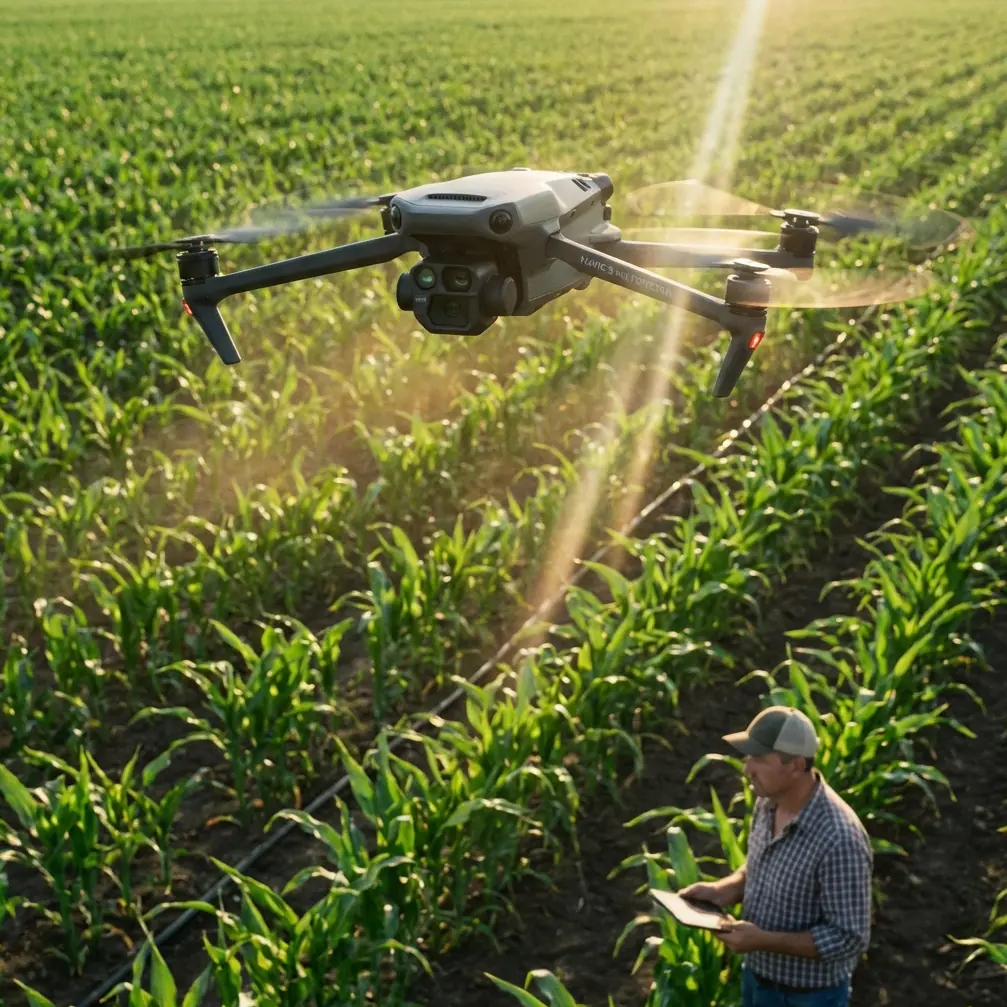
Mavic 4 Pro for Coastal Vineyard Inspection: A Photographer’s Technical Review
META: Expert review of the Mavic 4 Pro for coastal vineyard inspection, covering obstacle avoidance, ActiveTrack, D-Log workflow, wildlife safety, and practical field use.
I spend a lot of time looking at landscapes through lenses, but vineyards near the coast ask more from a drone than a beautiful inland estate ever will. Salt air, erratic wind, shifting light, tight row spacing, utility lines, trellis posts, eucalyptus windbreaks, and wildlife all compete for attention at once. That is exactly why the Mavic 4 Pro deserves to be judged less as a lifestyle aircraft and more as a working imaging platform.
For this review, I’m framing the Mavic 4 Pro around a real use case: inspecting a coastal vineyard where image quality matters, but so do route consistency, safety margins, and the ability to react when the environment stops behaving like a neat test field. If your goal is to monitor canopy vigor visually, document irrigation anomalies, assess row continuity, or simply create useful flight records for vineyard teams, the aircraft’s value rises or falls on how it handles operational friction.
That is where the conversation gets interesting.
Why coastal vineyard work is hard on a drone
A coastal property creates a strange mix of beauty and punishment. Morning fog burns off into high-contrast sunlight. Wind can be calm at takeoff and crosswise over the vines ten minutes later. Gulls, hawks, and smaller birds cut across the flight path without warning. Vine rows create repeating patterns that make visual orientation deceptively easy for the pilot and occasionally difficult for automated systems. Even a short inspection mission can include low passes along trellis lines, elevated oblique shots of slope drainage, and hovering near structures where GPS confidence may not tell the whole story.
The Mavic 4 Pro, in this context, needs to do three things well.
First, it has to see. Not just record sharp footage, but preserve tonal information in scenes where the sky is bright, the leaf canopy is dark, and reflective irrigation hardware produces brief specular spikes. Second, it has to avoid things without making the pilot fight the aircraft. Third, it has to track movement and hold line in a way that supports repeatable documentation rather than one-off cinematic luck.
Those requirements bring obstacle avoidance, subject tracking, D-Log capture, QuickShots, Hyperlapse, and ActiveTrack into practical focus. These are not checkbox features in vineyard work. They influence whether a flight generates something operationally useful or just pretty clips.
The imaging case for the Mavic 4 Pro
Most people looking at a drone for vineyard inspection start by asking whether they need a specialized agricultural platform. That depends on the depth of analysis required. If you need multispectral outputs for quantitative crop health mapping, that is a different conversation. But many vineyard teams first need reliable, high-resolution visual intelligence. They need to spot uneven growth, identify blocked rows, document edge stress near access roads, compare canopy density after weather events, and build a visual history of sections that consistently underperform.
This is where a high-end camera drone like the Mavic 4 Pro makes sense.
A strong camera system paired with D-Log gives you more room to retain subtle information in highlights and shadows during difficult light. In coastal vineyards, that matters every day. Fog banks and marine haze flatten contrast at one hour, then direct sun pushes the scene into a much harsher range by the next. If you shoot in a flatter profile like D-Log, you have better latitude to separate leaf texture from shadow mass and maintain detail in pale soil or reflective trellis wire during grading.
That sounds like a post-production benefit, but it is actually an inspection benefit too. If the image falls apart in highlight clipping or blocked shadows, your ability to review vine condition later becomes weaker. You are no longer evaluating the field. You are evaluating the camera’s compromises.
The Mavic 4 Pro’s appeal, then, is not simply that it can make a vineyard look cinematic. It is that it can preserve enough image structure to let a manager, consultant, or grower revisit a flight and notice meaningful differences.
Obstacle avoidance where vineyards actually get risky
Manufacturers love to demonstrate obstacle avoidance in forests or around architectural set pieces. Vineyards create subtler hazards. Trellis wires are thin. End posts and irrigation risers sit exactly where low-altitude turns become tempting. Windbreak trees produce irregular edges and moving branches. Service roads bring trucks, workers, and dogs into frame without notice.
In a coastal block I recently evaluated, the most revealing moment came during a low lateral pass along a row margin near a stand of cypress. A pair of gulls lifted off from the edge of the property just as the aircraft adjusted its path around protruding branches. That combination matters. Wildlife movement and stationary obstacles rarely appear one at a time in the real world. The Mavic 4 Pro’s sensor-driven obstacle avoidance is most valuable when it helps the pilot maintain separation from fixed hazards while staying calm enough to make good decisions about the moving ones.
That is operational significance, not marketing language.
If the aircraft can detect and respond to the cypress edge while giving the pilot time to climb, slow, and widen the route as birds enter the scene, the drone becomes a safer tool for both the site and the wildlife around it. In vineyard environments where flights may happen weekly during key growth periods, reducing close calls is not a nice bonus. It protects continuity. Teams keep flying when operations remain predictable and low-drama.
Good obstacle avoidance also changes how you collect inspection footage. You can work tighter to row boundaries when necessary, not recklessly, but with a clearer understanding of how the system supports you. That opens up more useful oblique angles for checking canopy gaps, erosion channels, and perimeter encroachment.
ActiveTrack and subject tracking beyond cinematic use
Subject tracking in a vineyard sounds, at first, like a feature for social media reels. It is not.
ActiveTrack and related subject tracking tools become practical when you need the drone to maintain visual consistency on a moving vehicle, ATV, or worker route during an inspection. For example, if a vineyard manager is driving boundary lines to check fencing, runoff impact, or access road conditions, the ability to keep that subject framed while preserving awareness of the surrounding topography can save time and produce a clearer field record.
The distinction is consistency. Manual piloting can absolutely do this, but manual framing often introduces small shifts in altitude, yaw, and angle that make later comparisons harder. Automated tracking, when used carefully and with sufficient separation, can smooth out those variations. That makes it easier to compare one pass to another and identify changes in surface condition, vegetation spread, or vehicle access wear.
In coastal sites, the caveat is obvious: birds and wind change everything. Subject tracking should never replace active supervision. But on the Mavic 4 Pro, the practical value of ActiveTrack is that it reduces pilot workload at the exact moment the operator needs more spare attention for environmental monitoring.
That trade matters in the field.
QuickShots and Hyperlapse are more useful than they look
QuickShots and Hyperlapse are often dismissed by technical users because they are associated with polished promo footage. That misses their secondary value. Structured automated movements are extremely useful when you want repeatable visual references.
A Hyperlapse sequence over a vineyard block, taken from the same position and at similar timing across different weeks, can reveal changes in shadow progression, fog dissipation, worker flow, and vehicle movement patterns. It does not replace mapping. It adds a temporal layer that standard inspection stills often miss.
QuickShots, meanwhile, can create fast and repeatable establishing views that document the relationship between rows, terrain, neighboring vegetation, and coastal weather conditions. A controlled reveal or orbit is not just attractive. It can become a concise briefing asset for remote stakeholders who need to understand site layout before discussing drainage, exposure, or maintenance priorities.
The Mavic 4 Pro earns points here when these modes are precise enough to be trusted as repeatable tools rather than novelty buttons.
Flight behavior in wind and changing coastal light
No serious coastal operator evaluates a drone only on calm days. If the aircraft cannot maintain stable imaging and predictable control behavior when wind begins to layer across a slope, it will not stay in your routine.
What matters with the Mavic 4 Pro is less the headline idea of power and more the quality of its corrections. In vineyard inspection, abrupt compensation can ruin usable footage even if the aircraft remains technically safe. Smooth control response and stable gimbal behavior determine whether you can inspect leaf density at the edge of a block or review the shot later without fighting micro-jitters and sudden horizon movement.
The same goes for automatic exposure behavior in rapidly changing light. Coastal haze can shift the scene from muted to reflective very quickly. A drone intended for serious review work needs to transition cleanly enough that the operator is not constantly babysitting exposure compensation. D-Log helps in post, but stable in-flight image behavior still matters because inspection flying divides your attention across navigation, line choice, battery awareness, and situational safety.
That is why I view the Mavic 4 Pro as most compelling for operators who need one aircraft to do both documentation and polished media capture. It sits at the intersection of utility and visual discipline.
Real workflow: from sortie to usable inspection record
A vineyard inspection drone is only as good as the review process it enables afterward. Here is how the Mavic 4 Pro fits a workable field routine.
Begin with a high, slow establishing pass to read wind behavior across the property. Then move into a set of lower oblique row passes, keeping enough lateral spacing for sensor performance and escape options. Capture key areas in D-Log if lighting is difficult or if long-term comparisons matter. Use ActiveTrack selectively when following a utility vehicle or worker route. Add one or two standardized QuickShots for orientation. If weather movement is part of the story, collect a Hyperlapse from a fixed point.
After the flight, sort clips by block, edge condition, drainage feature, and access route. Graded D-Log footage tends to hold up better when reviewing mixed lighting under canopy edges and bright margins. That directly improves the chance of spotting stress patterns or maintenance issues that flat, compressed-looking footage can obscure.
If you are coordinating with a grower or field manager and need to share observations quickly, I would keep the deliverables simple: one short reference reel, one set of labeled stills, and one written note identifying anomalies by block. If you need a second opinion while onsite, a quick field handoff through direct WhatsApp coordination can be more practical than waiting to build a formal report at the end of the day.
Where the Mavic 4 Pro fits, and where it does not
The Mavic 4 Pro is a strong choice for visual inspection in vineyards when the priority is a blend of high-end image capture, intelligent safety systems, and enough automation to reduce pilot workload without flattening operator control. It is especially well suited to estates that need recurring visual documentation, client-facing media, and practical field oversight from one platform.
It is less ideal if your operation requires dedicated agricultural sensors for quantified crop analysis. In that case, a specialized enterprise workflow may be the better instrument. But many vineyards are not choosing between cinema and science in such absolute terms. They are choosing whether one aircraft can produce trustworthy visual records while staying agile enough for daily reality.
That is the question the Mavic 4 Pro answers well.
What stays with me is not a spec-sheet impression. It is that moment near the cypress line, with gulls rising off the property edge and the aircraft navigating both the fixed obstacle and the changing scene without turning the flight into chaos. That is the real test. Coastal vineyard work is not clean-room flying. It is messy, bright, windy, textured, and alive. A drone that can preserve image quality, support decision-making, and keep the operator ahead of trouble is the one that earns a place in the truck.
On that standard, the Mavic 4 Pro makes a serious case for itself.
Ready for your own Mavic 4 Pro? Contact our team for expert consultation.