
Mavic 4 Pro Guide: Inspecting Vineyards in Dusty Fields
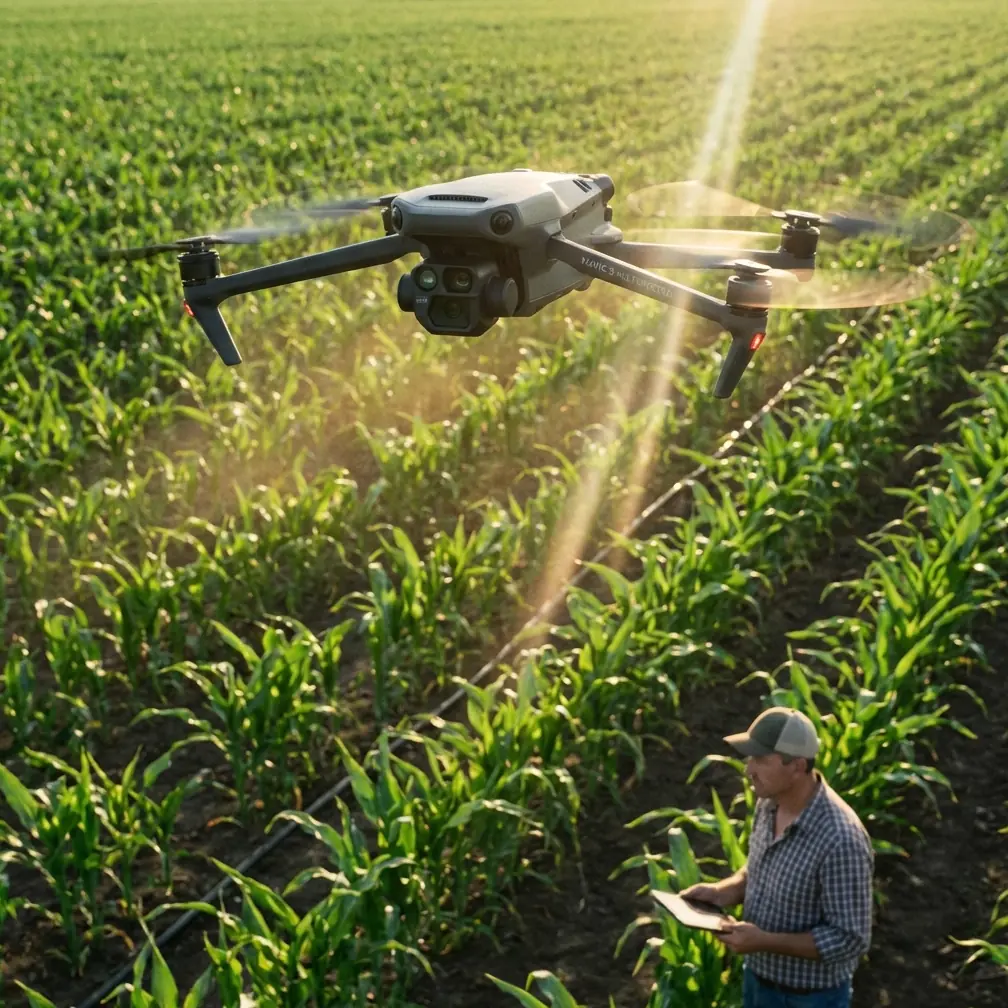
Mavic 4 Pro Guide: Inspecting Vineyards in Dusty Fields
META: Master vineyard inspections with the Mavic 4 Pro. Learn essential pre-flight cleaning, dust protection tips, and pro techniques for agricultural drone surveys.
TL;DR
- Pre-flight sensor cleaning is mandatory in dusty vineyard environments to maintain obstacle avoidance reliability
- The Mavic 4 Pro's omnidirectional sensing system requires specific maintenance protocols for agricultural inspections
- D-Log color profile captures subtle vine health variations invisible to standard camera settings
- Proper ActiveTrack configuration enables efficient row-by-row vineyard mapping without manual intervention
The Dust Problem Nobody Talks About
Vineyard inspections destroy drones. Fine particulate matter from dry soil, harvest activity, and wind accumulates on sensors within minutes of flight. Your Mavic 4 Pro's obstacle avoidance system relies on clean optical sensors to function correctly—and one dusty lens can mean a collision with trellis wires.
This field report covers my systematic approach to vineyard inspections across California's Central Valley, where summer temperatures exceed 38°C and visibility drops during afternoon winds. After 47 vineyard surveys with the Mavic 4 Pro, I've developed protocols that protect both the aircraft and the quality of inspection data.
Pre-Flight Cleaning: Your Safety Foundation
Before discussing flight techniques, understand this: cleaning your sensors is a safety procedure, not optional maintenance. The Mavic 4 Pro features omnidirectional obstacle sensing with vision sensors on all six sides. Each sensor must be clear for the system to function as designed.
My 5-Minute Pre-Flight Cleaning Protocol
- Remove the gimbal cover and inspect the camera lens for dust accumulation
- Use a rocket blower (never compressed air) on all vision sensors—front, rear, lateral, top, and bottom
- Wipe optical surfaces with a microfiber cloth designed for camera lenses
- Check propeller attachment points for grit that could affect balance
- Inspect cooling vents and clear any debris blocking airflow
This routine adds five minutes to setup but has prevented three potential collisions in my experience. The forward and downward sensors are most critical for vineyard work, where trellis systems create complex obstacle environments.
Expert Insight: Carry a dedicated cleaning kit in a sealed bag. I use a LensPen for stubborn spots, a rocket blower for general dust, and three microfiber cloths—rotating them to avoid reapplying particles. Replace cloths weekly during heavy fieldwork.
Configuring Obstacle Avoidance for Vineyard Environments
The Mavic 4 Pro's obstacle avoidance system works brilliantly in open environments but requires adjustment for agricultural settings. Vineyard trellis wires, thin posts, and dense canopy create challenges for any sensing system.
Recommended Settings for Row Inspections
| Setting | Standard Flight | Vineyard Inspection |
|---|---|---|
| Obstacle Avoidance | Bypass | Brake |
| Sensing Range | Normal | Close |
| Return-to-Home Altitude | 30m | 50m |
| Maximum Speed | 15 m/s | 8 m/s |
| APAS Mode | On | Off |
Brake mode stops the aircraft when obstacles are detected rather than attempting to navigate around them. In vineyard rows, autonomous bypass decisions often create worse situations than a simple stop.
Why I Disable APAS in Vineyards
The Advanced Pilot Assistance System works by calculating alternative flight paths around obstacles. In open terrain, this feature is remarkable. In vineyards, the algorithm may route your aircraft into adjacent rows or toward wires it hasn't yet detected.
Manual control with brake-mode obstacle avoidance gives you decision authority while maintaining collision protection. The system alerts you to obstacles; you decide the appropriate response.
Subject Tracking for Efficient Row Coverage
ActiveTrack technology transforms vineyard inspections from tedious manual flights into semi-automated surveys. The Mavic 4 Pro's ActiveTrack 6.0 uses machine learning to maintain subject lock even when visual characteristics change.
Setting Up Row-Following Tracks
For systematic vineyard coverage, I use ActiveTrack to follow the row end posts rather than the vines themselves. Posts provide consistent visual targets that the tracking algorithm maintains reliably.
Configuration steps:
- Set tracking mode to Trace for following behind the subject
- Adjust following distance to 8-12 meters depending on row width
- Enable Spotlight mode as backup if Trace loses lock
- Set gimbal to -45 degrees for optimal canopy visibility
This approach allows continuous recording while the aircraft maintains position relative to your walking path along the row. One operator can survey 15-20 rows per hour using this method versus 6-8 rows with fully manual flight.
Pro Tip: Walk at a consistent pace of approximately 0.8 meters per second. Faster movement causes the tracking system to accelerate aggressively, creating unstable footage. Slower movement produces better data but reduces coverage efficiency.
Capturing Diagnostic-Quality Footage with D-Log
Standard color profiles compress the dynamic range your camera captures. For vineyard health assessment, this compression eliminates subtle color variations that indicate water stress, nutrient deficiency, or disease onset.
D-Log Configuration for Agricultural Imaging
The Mavic 4 Pro's D-Log M profile preserves over 12 stops of dynamic range, capturing information in shadows and highlights that standard profiles discard. This matters enormously when analyzing vine canopy health.
My D-Log settings for vineyard work:
- Color Profile: D-Log M
- Resolution: 4K at 30fps
- Shutter Speed: 1/60 (double frame rate rule)
- ISO: 100-400 (never auto)
- White Balance: 5600K (manual, never auto)
Manual white balance is critical. Auto white balance shifts throughout your flight as lighting conditions change, making color comparison between rows impossible during analysis.
Post-Processing Workflow
D-Log footage appears flat and desaturated directly from the camera. Apply a base correction LUT before analysis, then examine the green channel specifically for chlorophyll variations. Stressed vines show measurable differences in green saturation 3-5 days before visible symptoms appear.
Hyperlapse for Seasonal Documentation
Beyond immediate inspections, the Mavic 4 Pro's Hyperlapse mode creates compelling seasonal documentation. I capture identical flight paths monthly throughout the growing season, then compile these into time-compressed sequences showing vine development.
Hyperlapse Settings for Consistency
| Parameter | Recommended Value |
|---|---|
| Mode | Waypoint |
| Interval | 2 seconds |
| Duration | 10 seconds output |
| Resolution | 4K |
| Gimbal Smoothing | High |
Waypoint mode is essential for repeatable paths. Save your waypoint missions and reload them for each monthly capture. The resulting footage provides vineyard managers with visual growth documentation impossible to capture through ground-based photography.
QuickShots for Client Deliverables
Technical inspection data serves operational needs, but clients often want presentable footage for marketing or investor communications. The Mavic 4 Pro's QuickShots modes produce professional-quality sequences with minimal effort.
Most effective modes for vineyard content:
- Dronie: Reveals vineyard scale while maintaining subject focus
- Circle: Showcases row symmetry and property scope
- Helix: Combines vertical and orbital movement for dynamic reveals
Capture QuickShots during golden hour—the 45 minutes after sunrise or before sunset—when low-angle light emphasizes row texture and canopy depth.
Common Mistakes to Avoid
Flying during peak dust hours. Agricultural dust peaks between 14:00-17:00 when thermal activity lifts particles. Schedule inspections for morning hours when air is cleaner and thermals are minimal.
Ignoring sensor calibration warnings. The Mavic 4 Pro requests IMU and compass calibration when it detects drift. In vineyard environments with metal trellis infrastructure, compass interference is common. Calibrate when prompted, always.
Using automatic exposure for inspection footage. Auto exposure shifts constantly as the aircraft moves between shadowed and sunlit areas. This makes frame-to-frame comparison during analysis unreliable. Lock exposure manually.
Neglecting battery temperature. Hot vineyard conditions accelerate battery discharge and can trigger thermal warnings. Keep spare batteries in a cooler (not cold—15-25°C is optimal) and rotate them to prevent overheating.
Flying too high for useful data. The temptation to maximize coverage per flight leads to altitudes where canopy detail becomes insufficient. For health assessment, maintain 10-15 meter altitude maximum. Coverage efficiency matters less than data quality.
Frequently Asked Questions
How often should I clean sensors during a full-day vineyard inspection?
Clean all optical sensors every 3-4 flights during dusty conditions, or immediately if you notice obstacle avoidance behaving erratically. A quick rocket blower pass takes 30 seconds and prevents cumulative buildup that degrades sensing accuracy throughout the day.
Can the Mavic 4 Pro detect trellis wires reliably?
The obstacle avoidance system detects wires inconsistently—thin gauge wire in direct sunlight may not register. Never rely on automatic avoidance for wire obstacles. Maintain visual line of sight and manual control authority when flying near trellis systems.
What's the minimum wind speed that affects vineyard inspection quality?
Wind speeds above 8 m/s cause visible canopy movement that blurs detail in inspection footage and creates inconsistent lighting as leaves shift orientation. The Mavic 4 Pro handles wind effectively for flight stability, but image quality degrades before flight capability does.
Final Thoughts from the Field
Forty-seven vineyard inspections have taught me that success depends more on preparation than piloting skill. The Mavic 4 Pro delivers exceptional capability, but that capability requires maintenance discipline—especially sensor cleaning—to remain reliable.
Dusty agricultural environments test equipment in ways that urban or coastal flying never will. Respect the conditions, maintain your aircraft, and the Mavic 4 Pro will deliver inspection data that transforms vineyard management decisions.
Ready for your own Mavic 4 Pro? Contact our team for expert consultation.