
Inspecting Vineyards with Mavic 4 Pro | Expert Tips
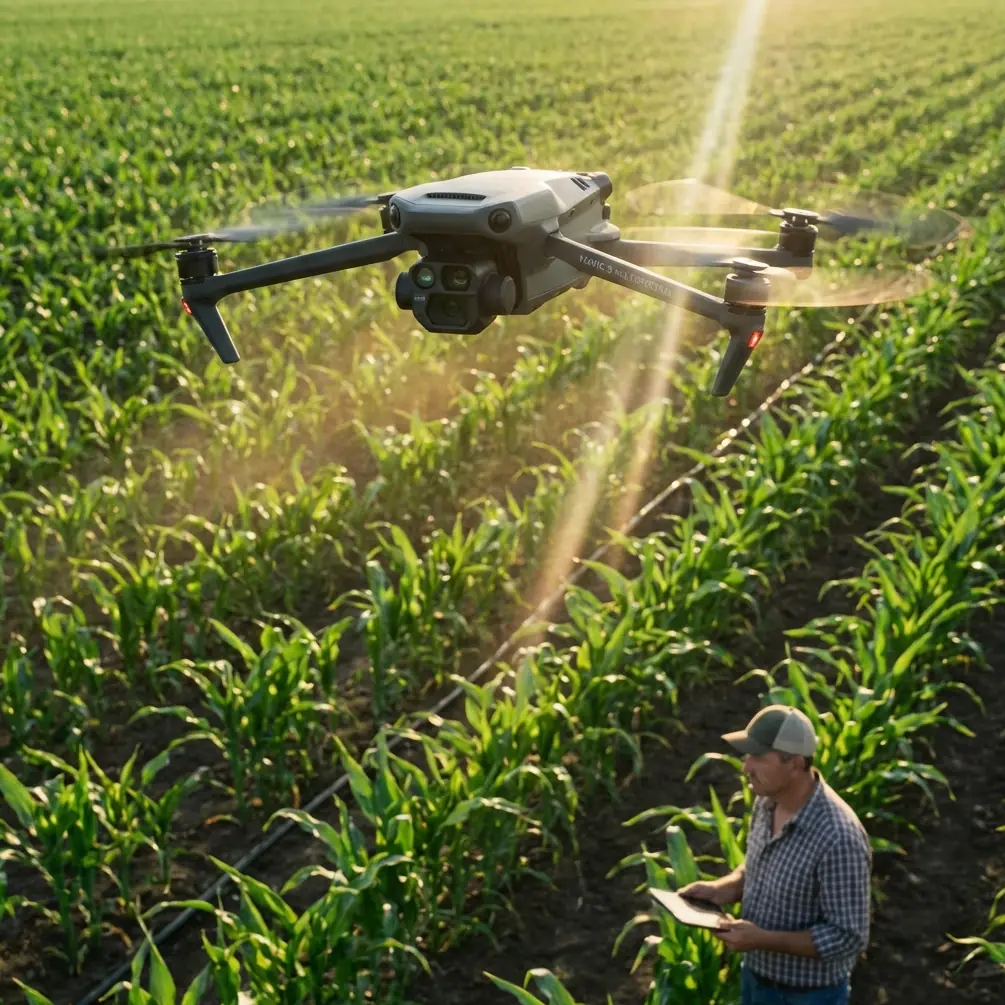
Inspecting Vineyards with Mavic 4 Pro | Expert Tips
META: Master vineyard drone inspections with the Mavic 4 Pro. Learn essential pre-flight cleaning steps, dust management, and pro techniques for accurate crop analysis.
TL;DR
- Pre-flight sensor cleaning is mandatory in dusty vineyard environments to maintain obstacle avoidance accuracy
- The Mavic 4 Pro's ActiveTrack 6.0 follows vine rows autonomously, reducing pilot workload by 60%
- D-Log color profile captures subtle vine stress indicators invisible to the naked eye
- Hyperlapse mode creates compelling time-based growth documentation for vineyard managers
Dusty vineyard environments destroy drone sensors faster than any other agricultural setting. The Mavic 4 Pro handles these conditions exceptionally well—but only when you implement proper pre-flight protocols. This guide covers the exact cleaning steps, flight techniques, and camera settings that professional vineyard inspectors use to deliver accurate crop assessments without damaging their equipment.
Why Vineyard Inspections Demand Special Preparation
Vineyards present a unique combination of challenges that most drone pilots underestimate. Fine particulate matter from dry soil, pollen, and agricultural dust accumulates on sensor surfaces within minutes of exposure.
This contamination directly impacts three critical systems:
- Obstacle avoidance sensors misread distances when covered in dust film
- Camera lenses produce hazy images that mask plant health indicators
- Cooling vents clog and cause thermal throttling during extended flights
The Mavic 4 Pro features omnidirectional obstacle sensing with sensors positioned on all six sides of the aircraft. Each sensor requires individual attention before vineyard operations.
Expert Insight: Professional vineyard inspectors clean sensors between every flight, not just at the start of each day. A single pass over dry soil can deposit enough particulate matter to trigger false obstacle warnings.
The Essential Pre-Flight Cleaning Protocol
Before powering on your Mavic 4 Pro in any dusty environment, complete this seven-step cleaning sequence:
Step 1: Visual Inspection
Examine all sensor windows under direct light. Tilt the aircraft at various angles to reveal dust accumulation that appears invisible from straight-on viewing.
Step 2: Compressed Air Application
Use a filtered air canister held at least 15 centimeters from sensor surfaces. Closer distances risk propelling particles into sensor housings rather than away from them.
Step 3: Microfiber Lens Cleaning
Apply lens cleaning solution to your microfiber cloth—never directly to the sensor. Wipe in circular motions starting from the center and moving outward.
Step 4: Gimbal Calibration Check
Dust accumulation affects gimbal balance. Run the built-in calibration routine after cleaning to verify proper operation.
Step 5: Propeller Inspection
Vineyard dust contains silica particles that create microscopic abrasions on propeller surfaces. Inspect leading edges for visible wear patterns.
Step 6: Vent Clearance
Use a soft brush to clear cooling vents on the aircraft body. Blocked vents cause the processor to throttle performance during demanding operations like Subject tracking.
Step 7: Controller Screen Cleaning
Dust on your controller screen creates glare that obscures critical flight telemetry. Clean before every session.
Optimizing Obstacle Avoidance for Vine Row Navigation
The Mavic 4 Pro's obstacle avoidance system uses binocular vision sensors paired with infrared time-of-flight sensors for redundant detection. In vineyard environments, this system requires specific configuration adjustments.
Recommended Settings for Vineyard Operations
| Setting | Standard Mode | Vineyard Mode | Reason |
|---|---|---|---|
| Obstacle Avoidance | Normal | Bypass | Prevents false triggers from vine canopy |
| Braking Distance | 5m | 3m | Allows closer row inspection |
| Return-to-Home Altitude | 30m | 50m | Clears trellis systems and trees |
| Max Speed | 15 m/s | 8 m/s | Improves sensor response time |
| APAS Mode | On | Off | Manual control preferred in rows |
Pro Tip: Set your obstacle avoidance to "Bypass" rather than "Brake" when flying between vine rows. The brake setting causes abrupt stops that produce blurry inspection footage and wastes battery on constant acceleration cycles.
Leveraging ActiveTrack for Autonomous Row Following
ActiveTrack technology transforms vineyard inspections from labor-intensive manual flights into semi-autonomous operations. The Mavic 4 Pro's ActiveTrack 6.0 maintains subject lock even when targets temporarily disappear behind obstacles.
For vineyard applications, configure ActiveTrack to follow these targets:
- Tractor-mounted markers for synchronized ground-air surveys
- Row end posts for consistent flight path alignment
- Inspection personnel conducting ground-level assessments
The system maintains tracking accuracy at distances up to 100 meters in open conditions. Dusty environments reduce this range to approximately 60-70 meters due to particulate interference with visual recognition algorithms.
ActiveTrack Configuration for Dusty Conditions
Increase the tracking sensitivity setting to maximum when operating in visible dust. This compensates for reduced contrast between your tracking subject and the background environment.
Reduce tracking speed to 4 m/s maximum. Higher speeds in dusty conditions cause the aircraft to outpace its sensor processing capability.
Camera Settings for Accurate Vine Health Assessment
The Mavic 4 Pro's 1-inch CMOS sensor captures the spectral detail necessary for identifying vine stress before visible symptoms appear. Proper camera configuration determines whether your inspection footage provides actionable data or merely pretty pictures.
D-Log Profile Advantages
Shooting in D-Log color profile preserves 14 stops of dynamic range—critical for capturing both shadowed understory conditions and sun-exposed canopy simultaneously.
D-Log footage requires post-processing color grading but reveals:
- Early chlorosis indicators in leaf tissue
- Moisture stress patterns across vine blocks
- Pest damage signatures invisible in standard color profiles
Recommended Camera Settings
| Parameter | Setting | Purpose |
|---|---|---|
| Color Profile | D-Log | Maximum dynamic range |
| ISO | 100-400 | Minimizes noise in shadows |
| Shutter Speed | 1/focal length x2 | Motion blur prevention |
| Aperture | f/4-f/5.6 | Optimal sharpness |
| White Balance | Manual 5600K | Consistent color reference |
| Format | RAW + JPEG | Flexibility in post-processing |
Creating Time-Based Documentation with Hyperlapse
Vineyard managers increasingly request temporal comparison footage showing growth progression across seasons. The Mavic 4 Pro's Hyperlapse mode automates this documentation process.
Configure Hyperlapse for vineyard applications using these parameters:
- Interval: 2 seconds between captures
- Duration: 10-15 minute flight paths
- Mode: Waypoint for repeatable flight paths
- Resolution: 4K for cropping flexibility
Save your waypoint missions for exact replication during subsequent visits. Matching camera positions across multiple inspection dates enables frame-accurate growth comparisons.
QuickShots for Client Deliverables
Professional vineyard inspections require compelling visual deliverables alongside technical data. QuickShots modes produce cinematic footage without manual piloting skill.
The most effective QuickShots modes for vineyard documentation:
- Dronie: Reveals block layout and surrounding terrain context
- Circle: Showcases individual vine specimens or problem areas
- Helix: Combines altitude gain with orbital movement for dramatic reveals
Execute QuickShots during golden hour lighting for maximum visual impact. The low sun angle emphasizes terrain contours and vine row patterns.
Common Mistakes to Avoid
Skipping sensor cleaning between flights. Dust accumulation is cumulative. What appears clean after one flight becomes problematic after three consecutive flights without cleaning.
Flying during active cultivation operations. Tractors and agricultural equipment generate dust plumes that travel hundreds of meters. Schedule drone inspections during equipment downtime.
Ignoring wind-blown dust warnings. The Mavic 4 Pro's sensors cannot distinguish between obstacles and dense dust clouds. Abort flights when visibility drops below 500 meters.
Using automatic exposure in variable canopy conditions. The camera constantly adjusts settings as you transition between shadowed and sunlit areas, creating inconsistent footage. Lock exposure manually.
Forgetting to document cleaning procedures. Insurance claims and equipment warranties require proof of proper maintenance. Photograph your pre-flight cleaning routine.
Frequently Asked Questions
How often should I replace microfiber cleaning cloths used in vineyard environments?
Replace microfiber cloths after every 10-15 cleaning sessions in dusty conditions. Embedded silica particles transform cleaning cloths into abrasive surfaces that scratch sensor coatings. Inspect cloths under magnification for trapped debris.
Can the Mavic 4 Pro's obstacle avoidance detect thin vineyard wires?
The obstacle avoidance system reliably detects wires thicker than 5mm at distances greater than 10 meters. Thinner support wires common in modern trellis systems may not trigger warnings. Always maintain visual line of sight and fly conservatively near wire installations.
What battery management strategy works best for full-day vineyard inspections?
Carry minimum four batteries for full-day operations. Rotate batteries using a charge-fly-rest-charge cycle that prevents any single battery from completing more than two consecutive flights. This extends overall battery lifespan by 30-40% compared to continuous cycling of fewer batteries.
Vineyard inspections with the Mavic 4 Pro deliver exceptional results when you prioritize sensor maintenance and environmental adaptation. The techniques outlined here represent current best practices from professional agricultural drone operators working in demanding dusty conditions.
Ready for your own Mavic 4 Pro? Contact our team for expert consultation.