
Mavic 4 Pro for Dusty Venue Inspections: What Actually
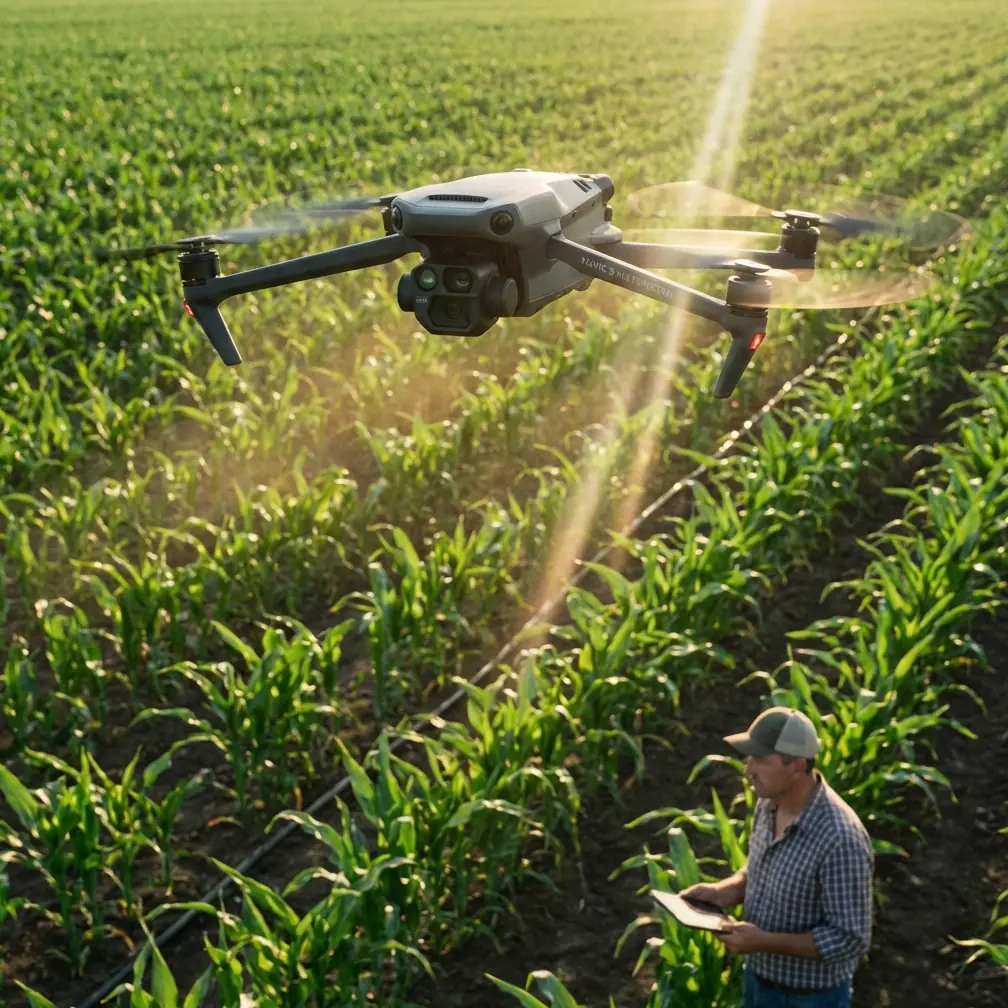
Mavic 4 Pro for Dusty Venue Inspections: What Actually Matters on Site
META: A field-focused look at using Mavic 4 Pro for dusty venue inspections, with practical advice on obstacle avoidance, ActiveTrack, D-Log workflows, and antenna positioning for stronger range and cleaner results.
Dust changes the job.
A venue that looks straightforward on paper can become awkward the moment fine particulate starts hanging in the air. Outdoor arenas, temporary event grounds, equestrian facilities, motorsport spaces, demolition-adjacent sites, and festival builds all create the same kind of friction for drone crews: visibility shifts, contrast drops, surfaces become harder to read, and pilot confidence can erode faster than battery percentage. If you are planning to inspect a dusty venue with the Mavic 4 Pro, the question is not whether the aircraft can fly the mission. The real question is how to set it up and fly it so the footage stays useful, the link stays stable, and the aircraft’s intelligent features help rather than distract.
That distinction matters because venue inspection is rarely about cinematic beauty alone. You may need to verify roofline condition, lighting truss clearance, seating integrity, fence lines, drainage paths, temporary structure placement, cable routing, or surface wear. In dusty conditions, every automated feature and every operator habit either protects that objective or gets in its way.
The core problem with dusty venue work
Dust affects three things at once.
First, it reduces visual clarity. That sounds obvious, but the operational consequence is bigger than just “images look hazy.” Dust lowers local contrast, which makes edges softer and can hide defects in concrete, metal, fabric, or roofing materials. If you are inspecting staging, suspended rigs, or grandstand access points, reduced edge definition can force extra passes and waste flight time.
Second, dust complicates sensing. Modern obstacle avoidance systems are useful, but all sensors live in the real world. Airborne particles, uneven light, glare, and repetitive textures can create conditions where pilots should trust their planning more than their automation. Obstacle avoidance is a safety layer, not an excuse to drift close to scaffolding, lighting poles, or tensile structures in poor air quality.
Third, dust changes signal behavior indirectly by changing how and where you position yourself. At venues, pilots often end up tucked under awnings, beside steel fencing, behind service vehicles, or near temporary structures. Then they wonder why range and signal quality feel inconsistent. The issue is often not the aircraft. It is antenna orientation and line of sight.
That is where the Mavic 4 Pro becomes especially interesting for this kind of assignment. Not because it magically defeats dust, but because its feature set can be used intelligently to reduce rework.
Why the Mavic 4 Pro fits venue inspection better than a generic flying camera
For dusty venue surveys, the aircraft needs to do more than capture pretty wide shots. It has to help you gather evidence efficiently.
A model in the Mavic Pro family is attractive for this work because it combines a portable footprint with advanced stabilization, subject tracking options like ActiveTrack, intelligent modes such as QuickShots and Hyperlapse, and pro-grade color options including D-Log. Those features are often discussed as creative tools. On venue inspection jobs, they become workflow tools.
Take obstacle avoidance. In a venue packed with poles, trusses, cables, canopies, barriers, and elevated signage, avoidance systems can provide a useful buffer during transit legs and wider establishing passes. That operational significance is simple: less mental load while repositioning means more attention available for framing the actual inspection target. But the experienced move in dusty air is to treat avoidance as an assistant, not a pilot. Dust can soften visual information and create uncertainty near fine structures. If you need to inspect closely, slow down, maintain stand-off distance, and manually confirm your path.
Then there is ActiveTrack and subject tracking. Most people associate those with following moving subjects. In venue work, the value can be more subtle. If you are documenting a vehicle route through a site, following maintenance crews as they move between structures, or tracing access pathways around a large arena, subject tracking can help preserve framing consistency while you monitor broader situational risks. In practice, that means the aircraft is helping hold composition while you focus on spacing, dust plumes, and nearby obstacles. Used carefully, it can make a large site feel more manageable.
QuickShots and Hyperlapse also deserve a more practical reading. They are not just social-media modes. A controlled automated move can create repeatable overview footage that helps stakeholders understand spatial relationships between entrance corridors, seating zones, service roads, and temporary structures. Hyperlapse, in particular, can reveal how dust moves across an open venue over time, which is useful when evaluating exposure around HVAC intakes, spectator areas, or production compounds. If a manager needs to understand not just where dust exists but how it drifts through the site, a time-compressed sequence can communicate that faster than a stack of stills.
And D-Log matters for a reason that inspection teams sometimes overlook. In dusty environments, highlights can get harsh while midtones flatten. Recording in D-Log preserves more flexibility for recovering subtle tonal separation later. That matters when you need to distinguish pale dust buildup from similarly colored roofing membrane, concrete patches, faded paint, or fabric wear. A file with more grading latitude gives you a better chance of extracting useful detail without pushing the image into an artificial mess.
The real bottleneck: range is often an antenna problem, not a drone problem
When pilots complain about weak range at venues, the conversation usually starts in the wrong place.
They blame interference in the abstract. Sometimes that is true. But on many dusty commercial sites, the bigger issue is poor controller positioning and bad antenna habits. This is one of the easiest performance gains available, and it costs nothing.
The practical rule is straightforward: keep clear line of sight to the aircraft and orient the controller antennas so the broad side of the signal pattern faces the drone, not the tips pointed directly at it. Many pilots instinctively “aim” the antennas like they are barrels. That is not how you get the strongest link. If the drone is out in front of you, the flat faces of the antennas should be presented toward it. Small corrections in angle can make a noticeable difference in signal stability.
This matters even more in dusty venue inspections because your operating position is often compromised. You may be standing beside metal bleachers, under a roof edge, near generator trucks, inside fencing, or behind stacked event materials. Every one of those choices can weaken your link or degrade consistency. If you are losing bars at a distance that should be routine, step out from cover before you start changing channels or blaming the airframe.
A few field habits help:
- Stand in an open area, not under a steel awning or behind service vehicles.
- Keep the controller at a natural angle where you can maintain antenna orientation as the drone moves.
- Reposition your body as the aircraft changes direction, especially on cross-site passes.
- Avoid launching from low spots if the venue has berms, seating rises, or temporary structures that can interrupt line of sight.
- If your aircraft is operating at the far side of a large arena, move with the mission rather than insisting on flying the whole inspection from one bad corner.
That is the kind of unglamorous discipline that separates a clean inspection sortie from a frustrating one.
A problem-solution workflow for dusty inspections
Let’s make this practical.
Problem: Dust lowers image quality and hides defects
If you fly in the middle of active dust movement, you force the camera to look through contamination rather than at the subject. The result is flatter, less dependable imagery.
Solution: Time your passes around dust cycles. If maintenance vehicles, forklifts, or event prep traffic are stirring the ground, wait for the plume to settle before your detail runs. Use your first battery for broad context and airflow awareness. Save your closer inspection passes for the calmer window. Record in D-Log so you retain flexibility when balancing haze and surface detail later.
Problem: Dense venue geometry raises collision risk
Temporary venues are full of awkward verticals and thin obstacles. Dust only makes depth judgment harder.
Solution: Use obstacle avoidance for transits and wider orbits, but switch your mindset when getting close. Slow inputs. Increase stand-off distance. Build your inspection around oblique angles instead of forcing head-on proximity. If a truss, roof edge, cable run, or lighting mast must be documented precisely, make more than one conservative pass rather than one aggressive pass.
Problem: Large sites are tiring to frame consistently
Venue clients often need coherent visual records, not random clips.
Solution: Use ActiveTrack or subject tracking selectively when documenting moving site operations or route-based inspections. This can keep a service cart, maintenance vehicle, or walking supervisor framed while you concentrate on safety and scene awareness. For overviews, use QuickShots and Hyperlapse as documentation tools. A repeatable motion path or time-compressed environmental view helps managers understand layout and dust behavior quickly.
Problem: Signal drops at the worst moment
A lot of “range issues” start with the pilot standing in the wrong place.
Solution: Treat antenna positioning as part of preflight, not as an afterthought. Before launch, identify where the aircraft will spend most of its time and orient yourself accordingly. Keep line of sight open and present the sides of the antennas toward the drone. If the site layout is unfavorable, relocate. A better pilot position often solves what software tweaks cannot.
What to capture if the venue inspection needs to be usable later
A dusty venue inspection is easy to fly badly because the environment encourages rushed decision-making. You launch, see the haze, grab some dramatic wide shots, and come back with footage that looks active but answers very few questions.
A stronger approach is to think in layers.
Start with a high overview pass to establish the whole site: access roads, spectator zones, structure placement, drainage lines, parking, and any visible dust source areas. Then move to medium-altitude passes that show relationships between key structures. After that, run lower-detail inspections of roofs, rigging support points, canopies, barriers, fencing, seating edges, and service corridors.
This is where the Mavic 4 Pro’s intelligent modes can actually save time. A clean automated reveal or orbit can anchor the site visually. A Hyperlapse can show dust migration over ten or fifteen minutes without forcing stakeholders to sit through real time. D-Log gives your editor or analyst more room to recover shadow and highlight nuance. And obstacle avoidance adds a safety margin while you reposition between inspection targets.
If your team needs help setting up a site-specific workflow, this field contact channel is a simple way to compare mission plans before you fly.
What experienced operators do differently in dusty conditions
They simplify.
They do not overtrust automation near fine obstacles. They do not launch from under structures just because it is shady. They do not point antenna tips at the aircraft and call it range optimization. They do not assume one battery should cover the whole site. And they do not treat log capture as a luxury when environmental contrast is poor.
They also understand that a venue inspection is part aviation job, part information job. The aircraft is only successful if the resulting material helps someone make a decision. Can the event proceed safely? Is a roof panel compromised? Are access corridors clear? Is dust buildup affecting equipment areas? Are temporary structures positioned as planned?
The Mavic 4 Pro, used properly, is strong in this role because it supports both sides of the task. It can move quickly enough to cover a large site, stay portable enough for event and facility teams, and offer automated tools that reduce operator workload. But its real strength shows up when the pilot uses those tools with restraint and purpose.
That is the difference between flying around a dusty venue and actually inspecting one.
Ready for your own Mavic 4 Pro? Contact our team for expert consultation.