
Mavic 4 Pro for Low-Light Wildlife Work: What Actually
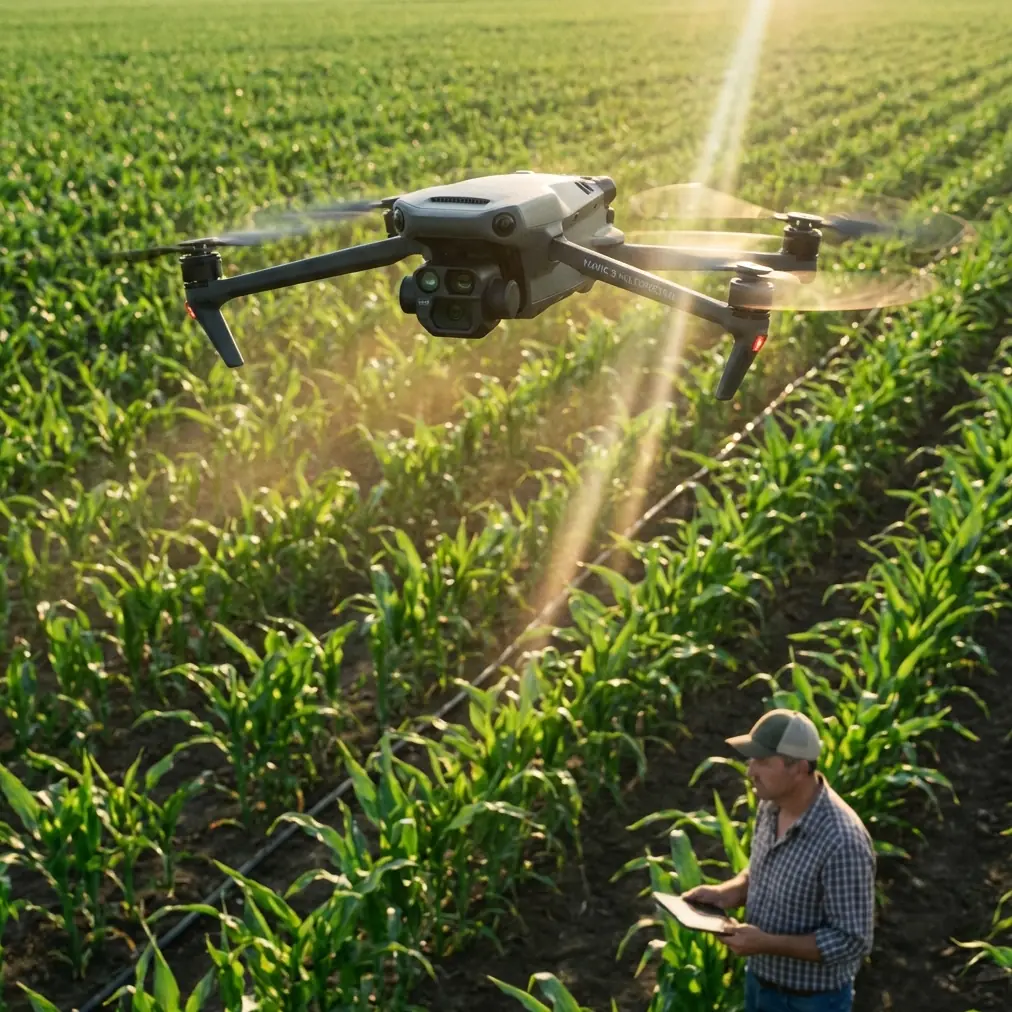
Mavic 4 Pro for Low-Light Wildlife Work: What Actually Matters in the Field
META: A technical review of Mavic 4 Pro low-light wildlife filming workflows, grounded in real aerial planning principles, image resolution demands, launch flexibility, and practical field accessories.
Low-light wildlife filming is where a drone stops being a spec sheet and starts being a field tool. The Mavic 4 Pro conversation usually gets pulled toward cinematic modes, tracking demos, and headline features. That misses the harder question: how does a drone behave when you’re on uneven ground before sunrise, trying to work quietly, launch safely, plan coverage precisely, and bring back footage that still holds up in grading?
That is the lens I want to use here.
Even though the reference workflow comes from a professional aerial survey solution rather than a consumer camera drone package, the operational logic translates surprisingly well to the Mavic 4 Pro. In fact, if you care about wildlife filming in dim conditions, those survey-style fundamentals matter more than another round of generic “best settings” advice. Planning, launch constraints, image precision, and post workflow are what separate a clean capture from a missed opportunity.
The overlooked strength: map-based flight planning mindset
One of the most useful details in the reference material is not about the aircraft itself. It is about the ground planning software: draw the work area directly on a map, let the software generate the route automatically, then upload the mission in one step. It also works offline, shows the area size, and estimates flight time and photo count.
That is a surveying workflow, yes. But for wildlife filmmakers using Mavic 4 Pro, the principle is the same: predefine the area, predict the aircraft’s time budget, and remove as many in-field decisions as possible.
Low-light wildlife shoots are rarely forgiving. Dawn activity windows are short. Bird movement along wetlands, deer crossing open edges, or herds stepping out into first light can happen within minutes. If you are still improvising your route after arrival, you are already behind. A map-first planning approach lets you decide where the drone should be before the animals are active.
Operationally, this matters for three reasons:
Battery efficiency becomes intentional.
If your route is mentally prebuilt, you spend less time hovering while figuring out framing. In low light, every extra minute airborne matters because you often need multiple takes and slower, smoother passes.You can control your risk envelope.
Wildlife environments often include reeds, tree lines, ridge edges, and reflective water surfaces. A preplanned route helps you anticipate where obstacle avoidance may intervene and where ActiveTrack or subject tracking may struggle.You can preserve quiet conditions.
The less repositioning you do, the less you pressure animals. That is not just ethical. It also improves footage, because calm wildlife produces more natural behavior.
The reference specifically notes offline mission planning. For wildlife shooters, that is more valuable than it sounds. Remote habitats often mean weak or nonexistent connectivity. If you scout and prebuild your route the night before, the Mavic 4 Pro becomes a capture platform rather than a decision-making burden at the site.
Why area estimation and shot prediction translate directly to filming
The source mentions that planning software can display survey area, estimate aircraft time, and predict image count. Replace “image count” with “usable clip opportunities,” and you have a smart mental model for wildlife work.
When filming in low light, there is always a compromise between coverage and patience. Cover too much ground and your battery disappears into transit. Stay too fixed and you may miss movement elsewhere. Borrowing from aerial mapping logic, the right question is not “How long can the drone fly?” but “How much behavior can I realistically capture in one controlled sortie?”
This is where QuickShots and Hyperlapse deserve a reality check. Both are useful, but neither should define your wildlife workflow in dim conditions. Preplanned coverage is usually more dependable than autonomous flourish. Hyperlapse can be effective for habitat context before sunrise or after sunset glow, but if the subject is an active animal, stability, predictability, and minimal disturbance matter more than stylistic automation.
That does not mean automation is useless. ActiveTrack and subject tracking can help when an animal’s motion is smooth and the airspace is clean. But under low light, tracking confidence may degrade, especially against dark tree lines or low-contrast terrain. You want tracking to be a selective tool, not your only plan.
Launch flexibility matters more in wildlife work than many creators admit
Another reference detail stands out: the Falcon 8 can use vertical takeoff from the ground or a manual hand-supported launch mode, making it far less demanding about launch site conditions.
The Mavic 4 Pro is not that exact aircraft, and it should not be treated as one. Still, the operational significance is highly relevant. Wildlife locations are often awkward. Mud flats. Frosted grass. Sandy shoulders. Uneven clearings. Tight roadside access near a marsh. You rarely get a perfect launch pad.
That is why one third-party accessory made a genuine difference in my own style of field work: a foldable landing pad. Not glamorous. Not viral. But in low-light wildlife filming, it is one of the smartest add-ons you can carry.
A landing pad solves several real problems at once:
- It reduces dust and moisture ingestion during takeoff.
- It gives your sensors a cleaner visual reference in dim conditions.
- It keeps the aircraft off dew-heavy grass, which matters during sunrise shoots.
- It creates a repeatable recovery point when visibility is low and the ground is messy.
That is the kind of accessory improvement that actually expands capability. Not because it changes the camera, but because it makes launches and landings more controlled when the environment is working against you.
If you are building out a practical field kit and want recommendations that fit this kind of workflow, I’d use this direct line for setup questions: message the drone team here.
Resolution logic: why a survey camera detail still matters to Mavic 4 Pro users
The source aircraft carries a 24.3-megapixel camera with a 20mm fixed-focus lens and can produce imagery in the 1–5 cm ground resolution range. Obviously, that language belongs to mapping and measurement. Wildlife cinematography is a different output. But the lesson is still important: image quality is not abstract. It becomes valuable when it preserves detail under constrained conditions.
In low-light wildlife filming, detail retention is under pressure from three directions at once:
- higher ISO,
- reduced shutter flexibility,
- and the need to avoid aggressive movement.
That means your camera system must hold texture in feathers, fur edges, wetland reeds, and dark environmental gradients without falling apart when graded. This is where shooting in D-Log becomes more than a colorist’s preference. It is a practical choice for preserving tonal separation at dawn or dusk, especially when your subject is dark against a slightly brighter horizon.
The survey reference’s emphasis on high-resolution imaging reminds us that not all “sharp” footage is equally useful. For wildlife, useful detail is the kind you can still shape in post without introducing noise, banding, or muddy shadow transitions.
A fixed focal logic also has a hidden lesson. The 20mm survey lens is there for consistency. In wildlife filming, consistency matters too. If you are switching framing styles too often, you risk unstable exposure behavior and a scattered edit. Mavic 4 Pro users tend to chase versatility. In low light, discipline often beats versatility. Pick a framing strategy before you launch.
Minimal control points, maximum precision: a surprising lesson for filmmakers
The reference notes that high-accuracy mapping can be completed with only a small number of control points, generally 4 to 8, distributed evenly to cover the whole area.
Again, filmmakers are not laying out ground control points for a cinematic wildlife pass. But the planning principle is gold. You do not need endless reference marks in the field. You need a few well-chosen anchors.
For Mavic 4 Pro wildlife filming, your “control points” are visual and spatial:
- the treeline opening where birds usually enter,
- the water edge that catches first light,
- the ridge contour that gives safe parallax,
- and the fallback hover location if the subject shifts unexpectedly.
If you establish 4 to 8 of these anchors during scouting, your shoot becomes coherent. You stop reacting to randomness and start working a repeatable pattern. That is especially valuable in low light, where hesitation costs both battery and behavior.
This also improves obstacle avoidance performance in practice. Sensors help, but they do not replace field memory. If you know where the reeds rise, where the dead branch overhangs, and where the terrain steps upward, you can keep obstacle avoidance as a safety layer instead of forcing it to rescue a poorly considered line.
Subject tracking in low light: use it carefully, not blindly
The Mavic 4 Pro audience will naturally care about ActiveTrack. And for good reason. When it works, it can free the pilot to focus on composition and movement quality. But low-light wildlife use is one of the least forgiving situations for automated subject tracking.
Animals do not move like athletes or vehicles. They stop abruptly, turn into cover, overlap with brush, and vanish into contrast-poor backgrounds. Even mild dawn haze can flatten separation. A tracking mode may still lock on, but “lock” is not the same as “cinematically trustworthy.”
My advice is simple: use ActiveTrack as a secondary layer once you have already defined a safe air corridor and escape path. If the animal remains in open terrain and the background contrast is stable, tracking can produce elegant lateral or trailing movement. If not, revert to manual control immediately.
This is where the preplanned mindset from the survey workflow pays off again. Autonomous tools are much more useful when they operate inside a route you have already mentally tested.
Post-production speed matters when light windows are repeated
The source highlights a clean export process into post software, avoiding the messy step of matching photos with positional data by hand. Different category, same operational truth: smooth post workflow saves time and preserves consistency.
Wildlife filming often happens over multiple mornings or evenings at the same site. If your ingest, labeling, and grading process is chaotic, you lose the ability to compare behavior patterns and light quality from one session to the next.
For Mavic 4 Pro users, that means building a disciplined post routine:
- separate ambient habitat footage from active subject footage,
- tag clips by light condition and direction,
- mark obstacle-heavy passes,
- and grade D-Log with repeatable baselines rather than reinventing each timeline.
Low-light work is cumulative. The best sequences usually come from several sessions, not one heroic flight. Efficient post management is part of field success, not an afterthought.
What this means for the Mavic 4 Pro buyer focused on wildlife
If your interest in Mavic 4 Pro is specifically low-light wildlife filming, the best way to evaluate it is not by asking whether it has smart modes. Ask whether your whole workflow becomes cleaner.
Can you previsualize the area clearly enough to conserve battery? Can you launch safely from compromised ground? Can you maintain image integrity when the light is thin? Can obstacle avoidance protect you without boxing in your creative line? Can subject tracking help occasionally without becoming a crutch? Can your footage move into post with enough consistency to build a sequence across multiple outings?
The reference material, though written for an aerial survey system, points to the right priorities. Automatic mission logic, offline preparation, realistic time prediction, flexible launch conditions, strong image capture, and low-friction post handling are not just survey concerns. They are exactly the things that make a drone dependable in wildlife work.
That is why the Mavic 4 Pro conversation should be more grounded than flashy. For this use case, success is quiet. A clean lift from damp ground. A route you already understand. A safe pass near habitat edges. A shadow-rich D-Log clip that grades beautifully. A track that works for ten seconds, then hands back gracefully to manual control. A recovery on a landing pad before the birds flush.
That is the real test.
Ready for your own Mavic 4 Pro? Contact our team for expert consultation.