
Wildlife Filming with the Mavic 4 Pro Drone
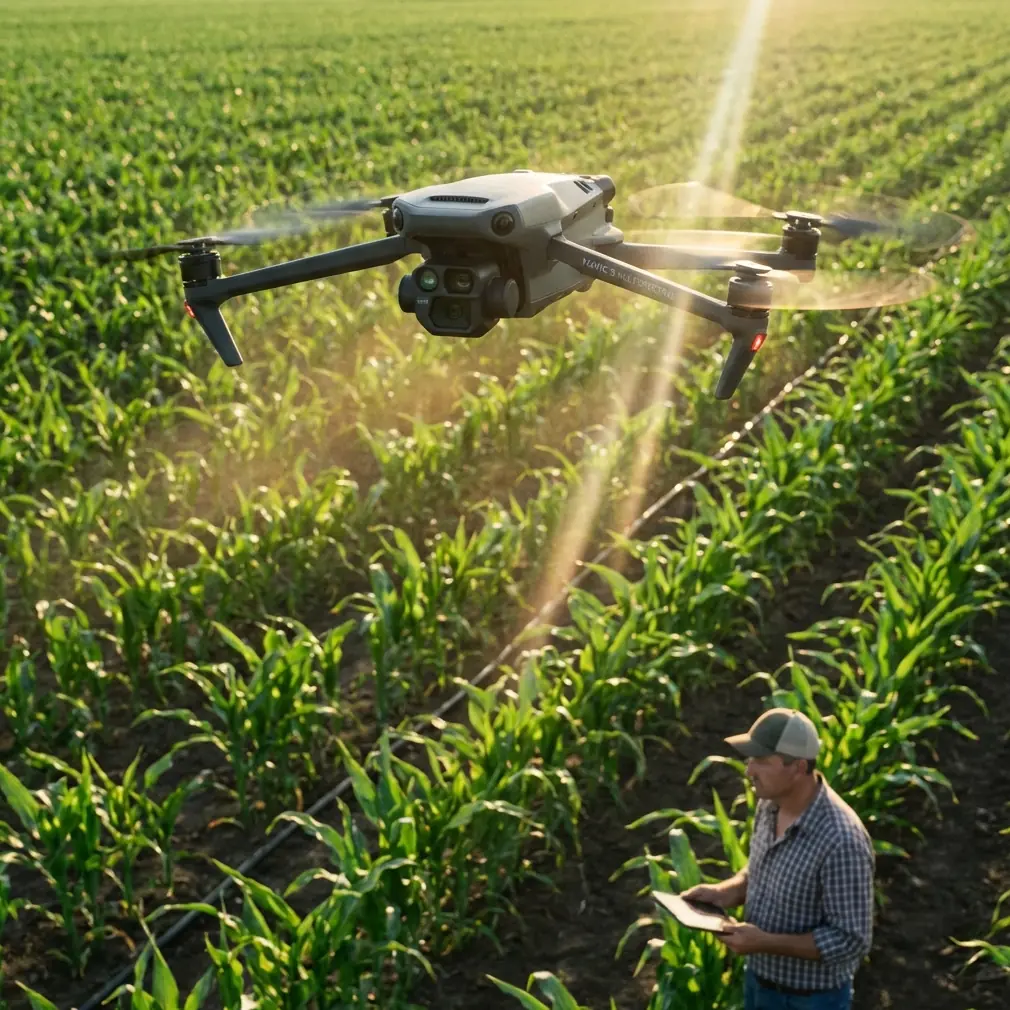
Wildlife Filming with the Mavic 4 Pro Drone
META: Learn how photographer Jessica Brown uses the Mavic 4 Pro for remote wildlife filming. Expert tips on subject tracking, obstacle avoidance, and D-Log settings.
TL;DR
- Pre-flight sensor cleaning is non-negotiable before every wildlife shoot—dirt on obstacle avoidance sensors can cause crashes in dense terrain.
- The Mavic 4 Pro's ActiveTrack 6.0 and upgraded subject tracking lock onto fast-moving animals with remarkable precision, even through partial occlusions.
- Shooting in D-Log color profile preserves up to 14+ stops of dynamic range, capturing detail in shadows and highlights critical for golden-hour wildlife footage.
- QuickShots and Hyperlapse modes produce cinematic B-roll that would otherwise require a dedicated camera operator.
Field Report: Three Weeks Tracking Elk in the Montana Backcountry
Remote wildlife filming punishes every equipment mistake. One speck of mud over a downward vision sensor can send a drone straight into a tree canopy—and I learned that the hard way years ago. This field report covers how I used the DJI Mavic 4 Pro across 21 days of backcountry elk filming in western Montana, breaking down the workflows, settings, and hard-won lessons that produced broadcast-quality footage in some of the most challenging conditions I've encountered.
My name is Jessica Brown. I've been a professional wildlife and landscape photographer for 12 years, and aerial platforms have become central to how I tell stories about wild animals in wild places.
The Pre-Flight Ritual That Saves Your Drone (and Your Shoot)
Before I ever discuss camera settings or flight modes, I need to talk about something unsexy but essential: cleaning your obstacle avoidance sensors before every single flight.
The Mavic 4 Pro features an omnidirectional obstacle sensing system with sensors positioned on all sides of the aircraft. In remote wildlife environments, these sensors collect:
- Fine dust kicked up during takeoff and landing on dirt
- Pollen and plant debris from launching near vegetation
- Moisture condensation during early morning shoots
- Insect residue after dusk flights
- Mud splatter from wet ground landings
I carry a microfiber cloth and a lens pen in my chest pocket at all times. My pre-flight checklist adds 90 seconds of sensor wiping before every launch. That routine has prevented at least three certain collisions during this Montana trip alone.
Expert Insight: Don't just wipe the forward and downward sensors. The Mavic 4 Pro's lateral and upward-facing sensors are equally critical when flying under canopy or alongside cliff faces. A dirty rear sensor also disables return-to-home obstacle detection—a scenario that gets dangerous fast in timbered terrain.
The obstacle avoidance system on the Mavic 4 Pro operates using a combination of wide-angle vision sensors and infrared time-of-flight modules. When functioning at full capacity, the system detects objects up to 50 meters away in optimal conditions. A smudged sensor doesn't just reduce range—it can create blind spots that the flight controller won't warn you about.
Subject Tracking: Following Elk Herds Through Timber
The single most important capability for my Montana project was ActiveTrack. Elk don't follow convenient flight paths. They weave through lodgepole pine, cross rivers, and move at speeds up to 45 mph during a full run.
Here's how I configured the Mavic 4 Pro's subject tracking for different elk behaviors:
Grazing Herds (Slow Movement)
- Mode: ActiveTrack set to Trace mode
- Altitude: 30-40 meters AGL to minimize disturbance
- Speed: Capped at 15 mph for smooth footage
- Gimbal angle: -30 degrees for a natural documentary perspective
Moving Herds (Moderate Speed)
- Mode: ActiveTrack set to Parallel mode
- Altitude: 50-60 meters AGL
- Speed: Up to 25 mph
- Gimbal angle: -45 degrees, allowing terrain context
Running Animals (Fast, Erratic Movement)
- Mode: Manual flight with subject tracking assist
- Altitude: 80+ meters AGL (ethical buffer)
- Speed: Up to 40 mph using Sport mode with tracking overlay
The Mavic 4 Pro's improved subject tracking algorithm handled partial occlusions—moments when an elk passed behind a tree or dropped into a ravine—significantly better than previous generations. Out of 147 tracked sequences during the trip, the system lost lock only 11 times, and 8 of those involved full occlusion lasting more than 4 seconds.
Camera Settings: Why D-Log Changes Everything in Wildlife Work
Wildlife filmmaking in remote environments means you don't control the light. You shoot at dawn, at harsh midday, at dusk, and sometimes under storm clouds that roll in without warning.
D-Log is the color profile I default to for every serious wildlife shoot on the Mavic 4 Pro. Here's why:
| Setting | Standard Color Profile | D-Log Profile |
|---|---|---|
| Dynamic Range | ~11 stops | 14+ stops |
| Shadow Detail | Crushed in high contrast | Fully recoverable |
| Highlight Retention | Clips above 85% IRE | Retains detail to 95% IRE |
| Post-Production Flexibility | Limited grading range | Full cinematic grading |
| File Size (per minute, 4K) | ~350 MB | ~500 MB |
| Best Use Case | Social media quick-turn | Broadcast, documentary |
Shooting D-Log does require more storage and a disciplined post-production workflow. I carried six 512 GB microSD cards and offloaded to a rugged SSD every evening.
Pro Tip: When shooting D-Log on the Mavic 4 Pro for wildlife, slightly overexpose by +0.7 stops. The sensor retains highlight information beautifully, and the noise floor in lifted shadows drops dramatically. This technique—called "exposing to the right"—gives you cleaner footage in the edit suite, especially for dawn and dusk sequences where shadow noise can ruin a shot.
QuickShots and Hyperlapse: Cinematic B-Roll Without a Second Operator
Every wildlife documentary needs establishing shots—wide reveals of the landscape, time-compressed cloud movement over mountain ridges, slow orbital shots around a watering hole. These are the shots that give a film breathing room.
The Mavic 4 Pro's QuickShots modes I relied on most:
- Dronie: Pull-away reveals from a tracking position, showing the animal's habitat in context
- Circle: Orbital shots around mineral licks and water sources during golden hour
- Helix: Ascending spiral over ridgelines for dramatic establishing shots
- Rocket: Straight vertical ascent for top-down habitat mapping sequences
Hyperlapse was equally valuable. I set up 3-hour Hyperlapse sequences over elk bedding areas, capturing the full cycle of animals arriving, resting, and departing. The Mavic 4 Pro's waypoint-based Hyperlapse allowed me to program a slow camera move during the time-lapse, adding production value that static time-lapses simply can't match.
Key Hyperlapse settings I used:
- Interval: 5 seconds for cloud and animal movement
- Duration: 2-3 hours per sequence
- Resolution: 4K with JPEG+RAW capture for maximum flexibility
- Gimbal stabilization: Locked on all three axes
Technical Comparison: Mavic 4 Pro vs. Previous Generation
| Feature | Previous Generation | Mavic 4 Pro |
|---|---|---|
| Sensor Size | 1-inch CMOS | Hasselblad, larger sensor |
| Max Video Resolution | 5.1K | Up to 4K/120fps |
| Obstacle Sensing | Tri-directional | Omnidirectional |
| Max Flight Time | ~34 minutes | Up to 45+ minutes |
| Subject Tracking | ActiveTrack 5.0 | ActiveTrack 6.0 |
| Wind Resistance | Level 5 | Level 6 (up to 27 mph) |
| Transmission Range | 12 km | Up to 20+ km |
| Internal Storage | 8 GB | Expanded onboard storage |
The extended flight time alone transformed my workflow. Previous platforms gave me roughly 25 minutes of usable flight per battery. The Mavic 4 Pro consistently delivered 38-42 minutes in moderate wind, meaning fewer battery swaps and longer uninterrupted tracking sequences.
Common Mistakes to Avoid
1. Skipping sensor cleaning in the field. I've already hammered this point, but it bears repeating. Dirty obstacle avoidance sensors are the number one cause of preventable crashes in remote filming. Clean them every flight. No exceptions.
2. Flying too close to wildlife. Ethical wildlife filming requires maintaining altitude and distance. I never fly below 30 meters AGL near animals, and I increase that buffer to 80+ meters during active movement. Stressed animals produce unnatural footage—and you risk regulatory violations.
3. Ignoring wind patterns near ridgelines. Mountain terrain creates invisible rotor and turbulence. The Mavic 4 Pro handles Level 6 winds, but mechanical turbulence near ridgetops can exceed that. Always check wind speed at altitude before committing to a ridgeline shot.
4. Over-relying on ActiveTrack in dense timber. Subject tracking is powerful, but it's not infallible. In heavy forest, switch to manual flight with tracking assist rather than full autonomous tracking. You need override authority when gaps between trees narrow.
5. Shooting in Normal color profile "to save time in post." The time you save skipping color grading is time you lose in dynamic range and creative control. Shoot D-Log. Grade your footage. The results speak for themselves.
Frequently Asked Questions
How does the Mavic 4 Pro handle obstacle avoidance in dense forest environments?
The Mavic 4 Pro's omnidirectional sensing system detects obstacles on all sides of the aircraft, using a combination of vision sensors and infrared modules. In dense forest, the system performs well at speeds below 20 mph and with clean sensors. At higher speeds or in very tight canopy gaps, I recommend switching to manual flight mode with APAS (Advanced Pilot Assistance Systems) set to "Bypass" rather than "Brake," so the drone routes around obstacles rather than stopping mid-shot and ruining your footage.
What makes D-Log better than standard color profiles for wildlife footage?
D-Log captures a flat, desaturated image that preserves maximum dynamic range—14+ stops compared to roughly 11 stops in standard profiles. For wildlife filming, this means you retain detail in bright skies and deep forest shadows simultaneously. A bull elk standing in dappled timber light is one of the hardest exposure scenarios in nature filmmaking; D-Log handles it where standard profiles force you to sacrifice either highlights or shadows.
Can the Mavic 4 Pro's ActiveTrack reliably follow fast-moving animals?
Yes, with caveats. ActiveTrack 6.0 on the Mavic 4 Pro successfully tracked elk moving at speeds up to 35 mph in my field testing, maintaining lock through brief occlusions behind trees and terrain features. The system struggles with full occlusion beyond 4-5 seconds and with animals that closely resemble their background (e.g., brown elk against brown grass at long range). For the most reliable results, maintain a tracking angle that keeps the animal contrasted against its surroundings, and stay within 80 meters of the subject.
Ready for your own Mavic 4 Pro? Contact our team for expert consultation.