
Mavic 4 Pro for Urban Venue Filming: What a Survey
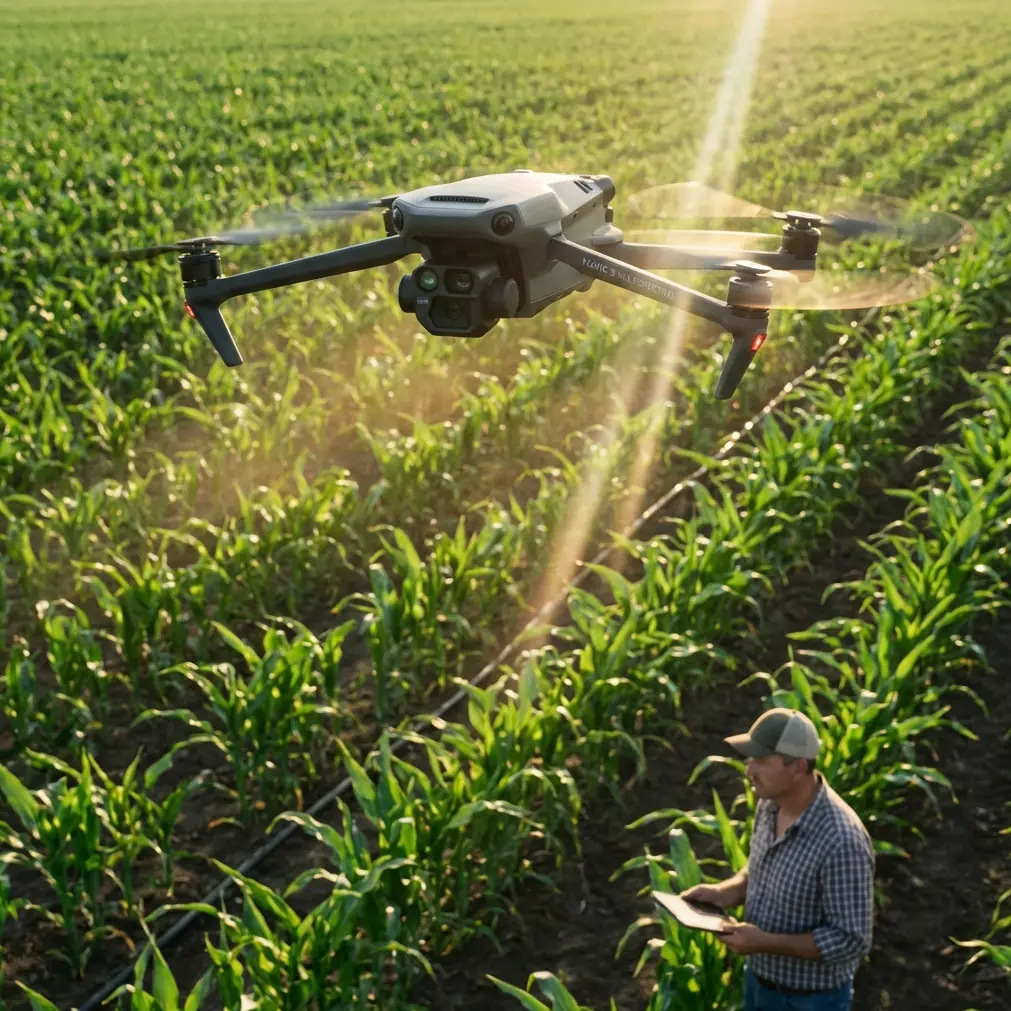
Mavic 4 Pro for Urban Venue Filming: What a Survey-Grade Drone Teaches Us About Flying Smarter
META: A technical review of Mavic 4 Pro for urban venue filming, using proven lessons from the iFly D6 mapping platform to explain flight altitude, reliability, payload thinking, and efficient capture workflows.
Urban venue filming looks glamorous in the final edit. The flight itself is usually the opposite. Tight approach paths, reflective glass, patchy GNSS reception, sudden wind tunneling between buildings, and the constant need to capture smooth, repeatable shots without wasting battery time. That is where the Mavic 4 Pro conversation gets interesting.
Rather than treating it as just another camera drone, it makes more sense to examine what serious commercial aircraft have long prioritized, then apply those lessons to a more compact filming platform. One useful benchmark comes from the iFly D6 orthophoto solution, a professional multirotor system built around structured aerial work. It is not the same class of aircraft as a Mavic, but its design priorities reveal exactly what matters when filming venues in dense urban environments: stability, weather tolerance, predictable setup, autonomous flight behavior, and payload discipline.
That frame of reference leads to a better question than “How cinematic is the Mavic 4 Pro?” The better question is this: can it deliver clean, repeatable venue footage under real city conditions, where every minute in the air has to count?
Why urban venue filming punishes weak flight platforms
City shooting exposes every compromise in a drone system. You are rarely dealing with the easy conditions found in open countryside. Wind behaves differently around hotels, arenas, rooftops, and event spaces. Obstacles are vertical and numerous. Launch zones are often improvised. Light changes fast as buildings throw long shadows over plazas and entrances.
The iFly D6 was designed for structured aerial tasks, and several of its published traits stand out immediately. It uses an integrated carbon-fiber airframe, supports precise hovering, constant-speed cruise, and route planning, and is built to handle rain, dust, and fire resistance concerns. It also claims a 40-minute flight time, a 5 km control radius, and setup in about 10 minutes thanks to foldable, quick-detach arms.
Those are not just spec-sheet ornaments. They point to the real operational truth: the best aircraft for venue work is the one that can be deployed quickly, hold position accurately, and execute repeatable movement with minimal fuss.
That matters directly to the Mavic 4 Pro buyer. In urban filming, you are not searching for brute size or a 6 kg payload capacity like the iFly D6. You are searching for the smaller aircraft that inherits the same core behaviors in a more practical form. Precision hover performance, dependable obstacle avoidance, stable tracking, and efficient preplanned motion are more valuable than raw lift.
The hidden lesson from a 36 MP mapping workflow
The iFly D6 reference package includes a standard Sony A7R payload and cites 36 million effective pixels. It also pairs the aircraft with Pix4Dmapper for automated aerial image processing. At first glance, that sounds unrelated to venue filmmaking. It is not.
A mapping workflow depends on overlap, consistency, and geometric reliability. If the aircraft drifts, accelerates unevenly, or changes altitude unpredictably, the output suffers. The same principle applies to cinematic venue work. A smooth establishing reveal over a hotel frontage or convention center depends on controlled speed, locked framing, and minimal vertical bounce. That is why features such as ActiveTrack, subject tracking, obstacle sensing, and cruise-style flight assistance are not convenience tools. They are consistency tools.
For Mavic 4 Pro users filming urban venues, this translates into a practical shooting advantage. When tracking a vehicle arriving at a venue entrance, following event foot traffic through an outdoor corridor, or performing a slow push toward a rooftop bar, the aircraft needs to maintain steady momentum while reading the environment in real time. Good subject tracking is not about flashy demos. It is about preserving shot usability.
QuickShots and Hyperlapse also become more useful when seen through that lens. In city work, time on site is often compressed. A well-executed automated orbit, dronie, or waypoint-based hyperlapse can produce content that would otherwise take several manual takes. The value is speed and repeatability, not novelty.
Optimal flight altitude for urban venue filming
If I had to give one altitude rule of thumb for venue work with a Mavic 4 Pro, it would be this: start most establishing shots in the 25 to 45 meter range, then adjust based on the building’s height, facade complexity, and surrounding obstacles.
That range tends to work because it balances three competing needs.
First, it preserves architectural presence. Fly too high and the venue becomes another anonymous roof in a crowded block. Fly too low and the viewer loses spatial context. At roughly 25 to 45 meters, you can usually show the building’s entrance logic, adjacent streetscape, and enough skyline to communicate location.
Second, it helps obstacle avoidance systems do their best work. In dense urban spaces, lower-level flying can put the aircraft into signage, cables, trees, canopies, lamp posts, and unpredictable pedestrian movement. Higher up, the path often becomes cleaner, which gives obstacle sensing and route correction more room to operate.
Third, it reduces the visual distortion of steep camera angles. If you are trying to make a venue look inviting rather than surveillance-like, moderate altitude with a gentle gimbal pitch often feels more premium than a near-vertical top-down view.
There are exceptions. A stadium reveal may need more height. A boutique rooftop venue may look strongest around 18 to 25 meters. A narrow urban courtyard can force lower, more controlled flight. But for many commercial jobs, that 25 to 45 meter band is where the Mavic 4 Pro can deliver the most versatile footage without turning the shot into a map.
The iFly D6’s route-planning orientation reinforces this point. Structured aerial platforms are built around repeatable geometry. Altitude selection is part of that geometry. For venue filming, altitude is not just a legal or safety variable. It is a composition variable and a signal-processing variable, because it affects obstacle complexity, wind exposure, and tracking reliability.
What serious drone design says about reliability
The iFly D6 was engineered with low-voltage protection, signal-loss protection, electromagnetic interference resistance, and operation in light rain. It also lists operation from -20°C to 60°C and resistance to level-6 wind. Even if a compact filming drone is not built for the same mission profile, those published traits remind us what professionals actually care about: the aircraft must remain predictable when conditions become imperfect.
Urban venues are full of imperfect conditions. RF congestion is common. Rooflines can distort wind flow. Decorative metal structures and reflective surfaces create difficult sensor scenes. Battery planning becomes more important when the ideal launch point is a long walk from the actual subject.
This is why the Mavic 4 Pro should be judged on workflow resilience as much as image quality. Obstacle avoidance is not only there to save beginners from collisions. In a venue environment, it can preserve continuity during lateral moves near facades or while transitioning from open forecourt to semi-enclosed approach paths. ActiveTrack is not merely a way to follow a person jogging in a park. It can support clean talent movement through event spaces, arrival sequences, or exterior walk-and-talk coverage.
D-Log matters here too. Urban venues often have punishing contrast: shaded entrances, bright sky, reflective glass, dark landscaping, and backlit signage in one frame. A flatter capture profile gives more room to shape the footage later without sacrificing the premium look clients expect from hospitality, real estate, or event branding work.
Setup speed is a bigger advantage than most pilots admit
One of the most revealing details in the iFly D6 material is the stated 10-minute setup time. For a larger aircraft with foldable arms and a dedicated ground terminal, that is actually a sign of efficiency. In professional fieldwork, setup time eats into battery time, daylight quality, and crew patience.
That same logic strongly favors a compact platform like the Mavic 4 Pro for venue production. Urban filming often happens in narrow schedule windows: before guests arrive, between event sessions, at golden hour, or during a short operations gap approved by site management. A drone that can be unfolded, checked, launched, and repositioned quickly will consistently outperform a bulkier system in real-world content production, even if the larger aircraft has theoretical advantages on paper.
The iFly D6 package also includes two 12S 16000 mAh batteries and a dedicated monitoring terminal. Again, the lesson is operational rather than literal. Redundancy and monitoring matter. For Mavic 4 Pro work, that means carrying enough batteries to avoid rushed shot decisions, checking live feed quality carefully before every hero pass, and planning the sequence so the most demanding moves happen first, while power reserves and pilot focus are highest.
Payload thinking without overbuilding the job
The iFly D6 supports a 6 kg payload and offers options such as infrared and oblique cameras alongside its standard full-frame photo payload. That kind of flexibility is valuable in inspection and mapping, but venue filmmakers should take a different lesson from it: match the aircraft to the mission.
For urban venue production, oversized platforms can become a liability. They require more space, draw more attention, and complicate logistics. The Mavic 4 Pro makes sense when the mission is visual storytelling rather than data acquisition at scale. You want sharp footage, stable motion, strong dynamic range, intelligent tracking, and enough automation to repeat shots cleanly.
This is why compact drones continue to dominate hospitality, property marketing, architecture promotion, and event media capture. The best tool is rarely the one with the largest airframe. It is the one that delivers the cleanest workflow from arrival to final export.
A practical urban venue shot strategy
When I plan a venue shoot, I usually divide it into four flight layers.
Layer one: context reveal.
Fly at roughly 35 to 45 meters if the airspace and surroundings allow it. This establishes where the venue sits in the urban fabric.
Layer two: facade storytelling.
Work lower, often 20 to 30 meters, using slow forward or diagonal motion. This is where obstacle avoidance and precise speed control become critical.
Layer three: human-scale movement.
Use ActiveTrack or carefully managed manual tracking for arrivals, courtyard activity, or guided walk-ins. Keep the aircraft far enough away to avoid visual intimidation while preserving subject continuity.
Layer four: stylized motion.
Capture QuickShots or Hyperlapse sequences once the essential footage is secure. These clips are valuable for social edits, opening montages, and venue recap packages.
If you are coordinating a complex site or want a second opinion on route planning, compliance, or flight structure, it can help to message a drone workflow specialist directly before shoot day.
Final verdict: what the Mavic 4 Pro should mean to venue filmmakers
The most useful way to understand the Mavic 4 Pro is not to isolate it from the wider UAV industry, but to place it in that context. A professional system like the iFly D6 shows what experienced aerial operators value most: durable construction, precise hover behavior, route planning, stable cruising, dependable setup, and image workflows that reward consistency. Its published numbers tell the story clearly—40 minutes of endurance, 5 km control radius, 10-minute setup, 6 kg payload support, and a 36 MP imaging path built for structured output.
Venue filmmakers do not need all of that mass or complexity. They do need the underlying philosophy.
For urban shoots, the Mavic 4 Pro is at its best when treated as a precision tool. Use obstacle avoidance proactively, not passively. Let subject tracking support repeatability rather than spectacle. Choose flight altitude for composition and sensor reliability, not just clearance. Shoot in D-Log when the scene’s contrast demands it. Use QuickShots and Hyperlapse where they save time and add real editorial value.
Most of all, respect the environment. Cities reward disciplined flying. The footage looks better, the operation runs smoother, and the aircraft gets to do what it does best: turn a difficult venue into a coherent visual story.
Ready for your own Mavic 4 Pro? Contact our team for expert consultation.