
Mavic 4 Pro in Dusty Forest Conditions: A Technical Review
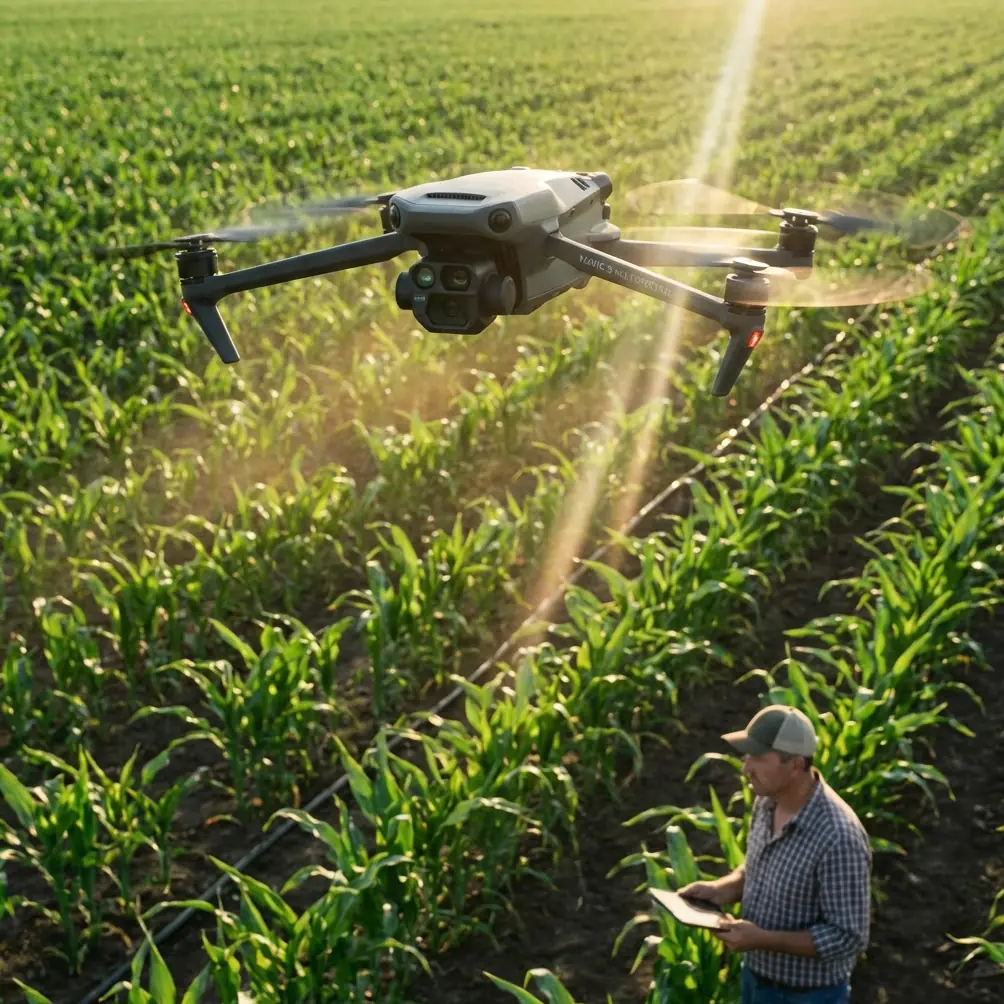
Mavic 4 Pro in Dusty Forest Conditions: A Technical Review for Real-World Filming
META: A field-tested technical review of the Mavic 4 Pro for filming forests in dusty, changing weather, with practical insights on obstacle avoidance, ActiveTrack, D-Log, QuickShots, and Hyperlapse.
Forest filming looks calm from the finished edit. The flight itself rarely is.
Dust hangs in the air long after a dry trail bike has passed. Light shifts by the minute as clouds break over the canopy. Branches appear where your eye did not expect them, especially when you are flying backward for a reveal or trying to keep a moving subject framed through uneven terrain. That is the kind of environment where a drone stops being a spec sheet and starts proving whether its design choices actually help the pilot.
For this review, I’m treating the Mavic 4 Pro as a working camera platform for a very specific job: filming forests in dusty conditions, with weather that changed mid-flight. That scenario tells you far more than a clean-day hover test ever will. The right questions are practical ones. How dependable is obstacle avoidance once the route gets visually cluttered? How well does subject tracking hold when the scene is full of trunks, shadows, and intermittent line-of-sight? What happens to image consistency when the light goes flat halfway through a run? And if the wind picks up under a shifting front, does the aircraft stay composed enough to deliver footage you can actually use?
Why this scenario matters
A forest is one of the hardest civilian filming environments for a compact drone.
Open coastlines challenge wind performance. Urban work challenges positioning and signal management. Forests challenge almost everything at once. You have contrast swings, narrow sightlines, irregular obstacles, drifting dust, and repetitive textures that can make tracking systems work much harder than they do over roads or open fields. That is why features like obstacle avoidance and ActiveTrack are not just convenience items here. They directly affect whether the operator can safely build repeatable shots.
The Mavic 4 Pro conversation often gets reduced to headline features, but in this kind of location, the real value is in how those systems combine. A drone that can recognize obstacles well but loses the subject when it ducks under partial cover creates a stop-start workflow. A drone that tracks aggressively but reacts unpredictably to branches forces the pilot to intervene constantly. A camera with strong grading latitude but unstable exposure behavior during weather shifts creates a post-production headache. Field use exposes those weak links fast.
Dust is not just a cleanliness problem
When people say they are flying in dusty conditions, they usually mean more than the body getting dirty. Dust changes the look of the scene and the way you must approach the flight.
First, it affects contrast. A dry forest trail with fine particulate hanging in the air can soften the scene and reduce separation, especially when side light catches it. That can be beautiful on camera, but it also means the image may lose crispness earlier than you expect if you are pushing distance or relying on the atmosphere to stay visually neutral.
Second, dust changes pilot behavior. In clean air, you may feel comfortable flying lower and using fast foreground passes. In dusty woodland, each close-to-ground acceleration risks throwing particulate back into frame or passing through an already suspended cloud. The Mavic 4 Pro’s operational advantage here is not that it somehow defeats dust physics. It is that its flight assistance features help you maintain a cleaner, more deliberate line, so you can avoid unnecessary corrections that stir up the shot.
That is where obstacle avoidance earns its keep. In a dense stand of trees, the ideal cinematic route is often a smooth arc or a gently rising lead shot rather than a last-second manual weave. A stable avoidance system allows the pilot to commit earlier to a controlled path. Operationally, that means fewer abrupt stick inputs, less speed bleeding, and a better chance of preserving visual continuity when the air is already messy.
The weather changed mid-flight. That is the real test.
The most telling part of this session was not the takeoff. It was the transition.
The flight started in dry, brighter conditions. Midway through, the weather shifted. Light flattened, the air became less predictable, and the atmosphere over the tree line started moving differently than it had ten minutes earlier. Every pilot knows this moment. The route you planned is still usable, but the aircraft now has to hold its composure through a scene that looks and feels different.
This is where the Mavic 4 Pro made its strongest case as a serious filming tool.
As the weather changed, the first thing that mattered was platform stability. In forest work, even a modest bump in wind can become visible because the frame contains many vertical references: trunks, saplings, edge detail, leaf clusters. Small wobbles are easier to spot than they are over water or sky. The aircraft stayed controlled enough that the shot language did not need to change. That is operationally significant. If a drone remains settled when the air turns uneven, the pilot can preserve the storyboard rather than downgrade to simpler, safer coverage.
The second factor was image flexibility. Flat light can ruin continuity if your earlier clips were built around higher contrast and directional sun. Shooting in D-Log matters here because it gives the editor room to normalize those changing conditions without forcing an overprocessed look. This is not a theoretical post-production perk. In practical terms, D-Log helps bridge two parts of the same flight that may otherwise feel like they came from different days. For creators working in forests, where clouds can roll in quickly and the canopy already fragments available light, that latitude is one of the most useful tools on the aircraft.
ActiveTrack in a forest: useful, but only if you respect the environment
ActiveTrack is one of the most misunderstood features in this category because people talk about it as though it replaces pilot judgment. It does not. In a forest, it becomes valuable when used as a shot-management assistant rather than a substitute for route planning.
When filming a hiker, cyclist, or trail runner through dusty woodland, ActiveTrack can reduce workload by keeping the subject compositionally consistent while the pilot focuses on altitude, spacing, and obstacle context. That matters in a place where your attention is split across moving branches, uneven terrain, and changing light. If the tracking locks cleanly and the operator gives the system realistic room to work, the result is a more polished follow shot with less micro-correction.
The significance of subject tracking in this setting is not just convenience. It helps preserve shot rhythm. A manually flown follow sequence through trees often shows tiny framing fixes every few seconds. Those corrections can make footage feel tense even when the movement is technically competent. ActiveTrack, when used conservatively, tends to smooth that out.
But this is also where discipline matters. Forests are full of partial occlusions. A subject disappears behind a trunk for a moment, emerges into a patch of dust, then enters mottled shadow. The pilot still needs to choose angles that give the tracking system a fair chance. In other words, the feature is strongest when paired with route design, not when asked to solve a bad line.
QuickShots and Hyperlapse are not throwaway modes here
Many experienced operators dismiss automated capture modes too quickly. In forest production, that can be a mistake.
QuickShots are useful when you need repeatable movement patterns in a constrained window of good light. If the weather is changing and you know the scene may only hold for another few minutes, having a fast way to execute a clean, stylized motion can save the sequence. The key is to use these modes selectively, in spaces where obstacle geometry is clearly understood.
Hyperlapse is even more interesting in a forest setting, especially after a weather shift. When cloud movement starts interacting with canopy texture, the forest floor can go from static to alive. A Hyperlapse sequence can capture that transition in a way standard real-time footage cannot. Operationally, this helps tell the story of the location rather than just the motion of the subject. For creators building narrative outdoor films, that contrast is valuable: one set of clips follows movement through the trail, while another compresses the environmental change that shaped the shoot.
The Mavic 4 Pro’s appeal in this workflow is that it does not force you to choose between highly manual flying and fully automated novelty. It supports a layered approach: precision manual shots for proximity work, ActiveTrack for dynamic subject coverage, QuickShots for efficient stylized motion, and Hyperlapse for environmental storytelling.
Obstacle avoidance: where the trust line sits
Obstacle avoidance is one of the LSI terms everyone expects to see, but in dusty forests, it deserves a more serious discussion than the usual “works well” summary.
The challenge in woodland is not simply detecting a large object. It is managing a route through irregular spacing while visual conditions are changing. Dust can soften the scene. Light can flicker under cloud cover. Branches are not uniform obstacles; they are layered, thin, and often hard to read at speed.
The operational significance of good avoidance here is confidence. Not blind trust. Confidence. Those are different things.
A confident pilot can hold a line more smoothly because they know the aircraft is actively helping reduce the risk of clipping an unseen edge during a composed move. That makes shots more cinematic. Blind trust leads to lazy route choices and eventually a mistake. The Mavic 4 Pro fits best into a workflow where the pilot uses avoidance as a margin of safety while still flying like every branch matters.
In practice, that means planning for wider corridors than you think you need, reducing speed before crossing from open trail into tighter vegetation, and remembering that even advanced sensing does not erase the complexity of fine branches and sudden elevation changes. Used that way, the system becomes a force multiplier rather than a crutch.
Image discipline matters more than headline resolution
People shopping this class of aircraft often fixate on maximum image numbers. Forest filmmakers should care just as much about consistency.
Dust, changing weather, and mixed light are punishing on footage that falls apart in grading. D-Log is valuable because it lets you hold together shadowed trunks, bright sky gaps, and midtone detail in the dust plume without forcing the image into a brittle baked-in look. That is especially useful when the first half of your flight has more directional light and the second half turns flatter. Matching those clips later is much easier when you preserved flexibility from the start.
A technical review should say this plainly: if you are filming forests for documentary, branded outdoor content, trail coverage, or tourism media, color workflow is not a side issue. It is central. The better your starting file handles environmental inconsistency, the less time you spend rescuing footage and the more time you spend shaping the story.
What I would recommend for this exact use case
If your job is filming in dusty forest environments with the Mavic 4 Pro, I would approach it like this:
Fly the location twice mentally before you launch. First for composition, second for escape routes. Forests give you fewer recovery options than open terrain.
Use ActiveTrack on subjects only when the route offers predictable visibility. Let the system support framing, not dictate the path.
Treat obstacle avoidance as a partner for shot smoothness, especially in transitions from open clearings into denser tree sections.
Capture key sequences in D-Log if there is any chance the weather will shift. In forest environments, it often does.
Keep QuickShots and Hyperlapse in the toolkit for moments when the landscape itself becomes part of the story, particularly once wind or cloud movement starts changing the mood.
And if you are planning a forest filming setup or want to compare flight strategies for this kind of terrain, you can message the team directly here.
Final assessment
The Mavic 4 Pro makes the most sense for forest creators when viewed as a balanced field platform, not just a flying camera. In dusty conditions, that balance matters. Obstacle avoidance helps maintain cleaner lines in cluttered spaces. ActiveTrack can reduce framing noise when following subjects through uneven terrain. D-Log becomes genuinely useful once weather shifts and continuity becomes a grading problem instead of a flying problem. QuickShots and Hyperlapse, used with intention, add efficiency and narrative range rather than gimmicks.
What stood out most in this test scenario was not a single flashy feature. It was the way the aircraft held together as conditions changed mid-flight. That is the difference between a drone that looks strong in marketing and one that keeps earning its place in a working kit.
Ready for your own Mavic 4 Pro? Contact our team for expert consultation.