
Mavic 4 Pro Field Filming: Remote Landscape Guide
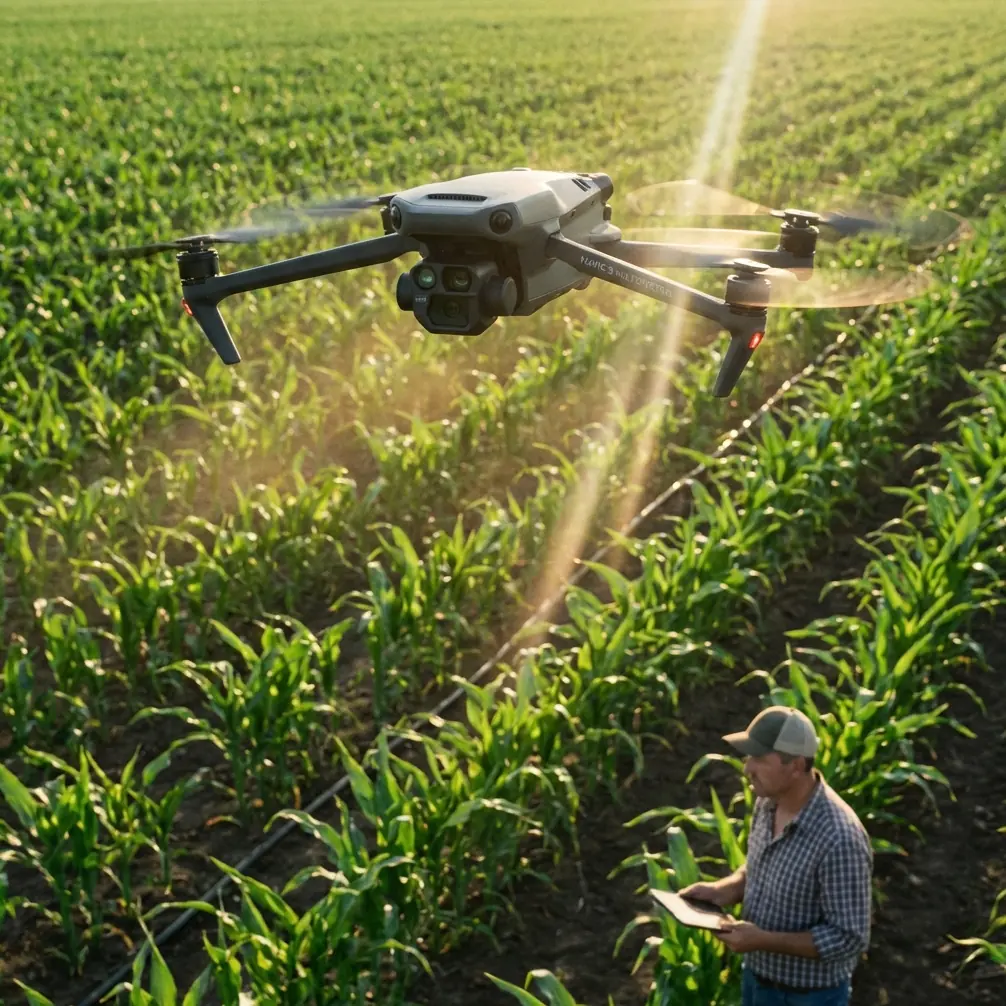
Mavic 4 Pro Field Filming: Remote Landscape Guide
META: Master remote field filming with the Mavic 4 Pro. Expert tips on obstacle avoidance, tracking modes, and D-Log settings for stunning landscape footage.
TL;DR
- Omnidirectional obstacle avoidance enables confident flying through unpredictable terrain with wildlife and hidden hazards
- D-Log color profile captures 14+ stops of dynamic range for professional-grade field footage in challenging light
- ActiveTrack 6.0 maintains subject lock on moving vehicles, animals, and equipment across vast open landscapes
- 60-minute flight time allows complete coverage of large agricultural or wilderness areas in single sessions
Why Remote Field Filming Demands Specialized Drone Capabilities
Capturing footage across open fields presents unique challenges that standard consumer drones simply cannot handle. Wind exposure, unpredictable wildlife movement, and vast distances from your launch point create scenarios where reliability becomes non-negotiable.
The Mavic 4 Pro addresses these challenges through a combination of extended range, intelligent sensing, and cinema-grade imaging. Whether you're documenting agricultural operations, wildlife behavior, or landscape cinematography, this platform delivers consistent results where others fail.
Last month, while filming wheat fields at golden hour in Montana, a red-tailed hawk dove directly toward my Mavic 4 Pro. The omnidirectional obstacle sensing detected the bird at 45 meters and executed a smooth lateral avoidance maneuver—all while maintaining frame composition. That single moment justified every engineering decision DJI made with this aircraft.
Essential Pre-Flight Preparation for Field Operations
Site Assessment and Flight Planning
Before launching in remote locations, systematic preparation prevents costly mistakes. Open fields appear simple but hide complexity.
Critical pre-flight checklist:
- Survey the area for power lines, fence posts, and irrigation equipment
- Identify potential wildlife nesting areas to avoid disturbance
- Check wind patterns at ground level AND expected altitude
- Confirm cellular or satellite connectivity for emergency RTH
- Mark visual landmarks for orientation during long-range flights
The Mavic 4 Pro's DJI Fly app displays real-time wind speed at aircraft altitude, not just ground conditions. This distinction matters enormously when filming across exposed fields where wind shear between ground and 120 meters AGL can differ by 15-20 km/h.
Pro Tip: Set your Return-to-Home altitude 30 meters higher than the tallest obstacle in your filming area. In fields, this often means accounting for grain silos, wind turbines, or tree lines at property boundaries.
Battery and Power Management
Remote field work demands aggressive power planning. The Mavic 4 Pro's 46-minute maximum flight time translates to approximately 35-38 minutes of practical filming when accounting for wind resistance and active maneuvering.
Power management strategy:
- Land at 25% battery minimum in remote locations
- Carry 3-4 batteries for comprehensive field coverage
- Use vehicle charging between flights with the 100W car charger
- Monitor battery temperature in extreme heat or cold conditions
Mastering Obstacle Avoidance in Open Terrain
Understanding the Sensing System
The Mavic 4 Pro employs omnidirectional binocular vision with a detection range of 50+ meters in optimal conditions. This system excels in field environments where obstacles appear suddenly against uniform backgrounds.
Sensing performance by obstacle type:
| Obstacle Type | Detection Distance | Avoidance Reliability |
|---|---|---|
| Trees/Poles | 45-50m | Excellent |
| Power Lines | 15-25m | Good (thin wires challenging) |
| Wildlife | 20-35m | Very Good |
| Fence Lines | 10-20m | Moderate |
| Irrigation Pivots | 40-50m | Excellent |
The system struggles most with thin wires and transparent surfaces. When filming near power infrastructure, maintain manual awareness rather than relying entirely on automated avoidance.
Configuring Avoidance Modes for Field Work
Three avoidance behaviors suit different filming scenarios:
Bypass Mode works best for general field exploration. The aircraft routes around obstacles while maintaining heading toward your intended destination.
Brake Mode suits precision work near structures. The Mavic 4 Pro stops completely when detecting obstacles, allowing you to manually navigate complex environments.
Off Mode should only be used by experienced pilots in controlled conditions. Disable avoidance only when obstacles are fully mapped and you need maximum maneuverability for specific shots.
Expert Insight: When filming livestock or wildlife, set avoidance to Bypass with sensitivity at Medium. High sensitivity causes excessive course corrections that spook animals, while Low sensitivity risks close encounters that stress both wildlife and your equipment.
Subject Tracking Across Vast Landscapes
ActiveTrack 6.0 Performance in Fields
Open terrain represents the ideal environment for the Mavic 4 Pro's tracking capabilities. Without urban clutter or dense vegetation, ActiveTrack 6.0 maintains subject lock across extraordinary distances.
Tracking performance metrics:
- Maintains lock on vehicles at speeds up to 72 km/h
- Tracks subjects at distances exceeding 800 meters from aircraft
- Recovers subject lock within 2-3 seconds after brief occlusions
- Predicts movement patterns for smoother following shots
The system excels at tracking agricultural equipment, ATVs, horseback riders, and running wildlife. Contrast between subject and background dramatically improves tracking reliability—a red tractor against green crops tracks perfectly, while a brown deer against brown stubble requires more attention.
QuickShots for Automated Field Cinematography
QuickShots modes produce professional results with minimal pilot input. Each mode suits specific field filming scenarios:
Dronie captures establishing shots that reveal landscape scale. Start close to your subject, and the aircraft flies backward and upward to reveal surroundings.
Helix creates dynamic orbital reveals around stationary subjects like barns, equipment, or landscape features.
Rocket produces dramatic vertical reveals, perfect for showing field patterns from directly overhead.
Boomerang delivers smooth curved movements around subjects, ideal for promotional agricultural content.
Color Science and Exposure for Field Footage
D-Log Configuration for Maximum Flexibility
The Mavic 4 Pro's D-Log M color profile captures the widest dynamic range available from the 1-inch Hasselblad sensor. Field environments demand this flexibility due to extreme contrast between bright sky and shadowed terrain.
Optimal D-Log settings for field work:
- ISO: 100-400 (native range)
- Shutter Speed: Double your frame rate (1/60 for 30fps)
- Aperture: f/4-f/5.6 for optimal sharpness
- White Balance: Manual at 5600K for consistency
Post-production transforms D-Log footage into vibrant final images. The flat profile preserves highlight detail in bright skies while retaining shadow information in vegetation and terrain.
Hyperlapse Techniques for Field Storytelling
Hyperlapse modes compress time to reveal patterns invisible in real-time footage. Agricultural fields transform dramatically across hours as light shifts and shadows move.
Effective Hyperlapse applications:
- Sunrise/sunset light movement across crop rows
- Cloud shadow patterns crossing open terrain
- Irrigation system operation cycles
- Wildlife movement patterns at feeding times
Set intervals between 2-5 seconds for most field Hyperlapse work. Longer intervals suit slower phenomena like shadow movement, while shorter intervals capture faster changes like equipment operation.
Common Mistakes to Avoid
Ignoring wind at altitude causes the most field filming failures. Ground-level calm often masks significant wind at filming altitude. Always check forecasts for conditions at 100-150 meters AGL.
Launching without visual landmarks creates disorientation during long-range flights. Open fields look identical from above. Identify distinctive features before launch and maintain awareness of your position relative to them.
Overrelying on obstacle avoidance near power lines risks catastrophic failure. Thin wires remain the system's weakness. Maintain 50+ meter clearance from power infrastructure regardless of avoidance system confidence.
Filming only at midday wastes the Mavic 4 Pro's capabilities. Harsh overhead light flattens terrain and eliminates the shadows that reveal texture. Schedule flights for golden hour or blue hour when possible.
Neglecting ND filters results in unusable footage with motion artifacts. Bright field conditions require ND16-ND64 filters to maintain proper shutter speed for cinematic motion blur.
Frequently Asked Questions
How does the Mavic 4 Pro handle tall grass and crop interference during low-altitude filming?
The downward-facing sensors detect vegetation at approximately 10-15 meters, triggering altitude warnings or automatic climb responses. For low passes over crops, consider disabling downward sensing temporarily while maintaining strict altitude awareness. The aircraft performs best at 15+ meters AGL over dense vegetation where rotor wash and sensor interference become non-factors.
What transmission range can I realistically expect in open field environments?
Open fields represent optimal conditions for the O4 transmission system. Expect reliable video feed at 12-15 kilometers with clear line of sight. Practical filming range depends more on visual observer requirements and battery life than transmission limits. Most field operations stay within 2-3 kilometers for safety and regulatory compliance.
Can the Mavic 4 Pro effectively track wildlife without disturbing animals?
Yes, with proper technique. Maintain minimum 50-meter distance from wildlife and approach slowly using Tripod mode for reduced noise. The aircraft's relatively quiet operation at distance allows extended observation without stress responses. Avoid direct overhead positioning, which triggers predator-avoidance instincts in most species.
Final Thoughts on Field Filming Excellence
Remote field cinematography rewards preparation, patience, and technical mastery. The Mavic 4 Pro provides tools that previous generations of filmmakers could only imagine—obstacle sensing that navigates wildlife encounters, tracking that follows subjects across kilometers, and image quality that rivals dedicated cinema cameras.
Success comes from understanding both the aircraft's capabilities and its limitations. Trust the technology where it excels, maintain manual awareness where it struggles, and always prioritize safety over footage.
Ready for your own Mavic 4 Pro? Contact our team for expert consultation.