
Filming Fields with Mavic 4 Pro | Dusty Tips
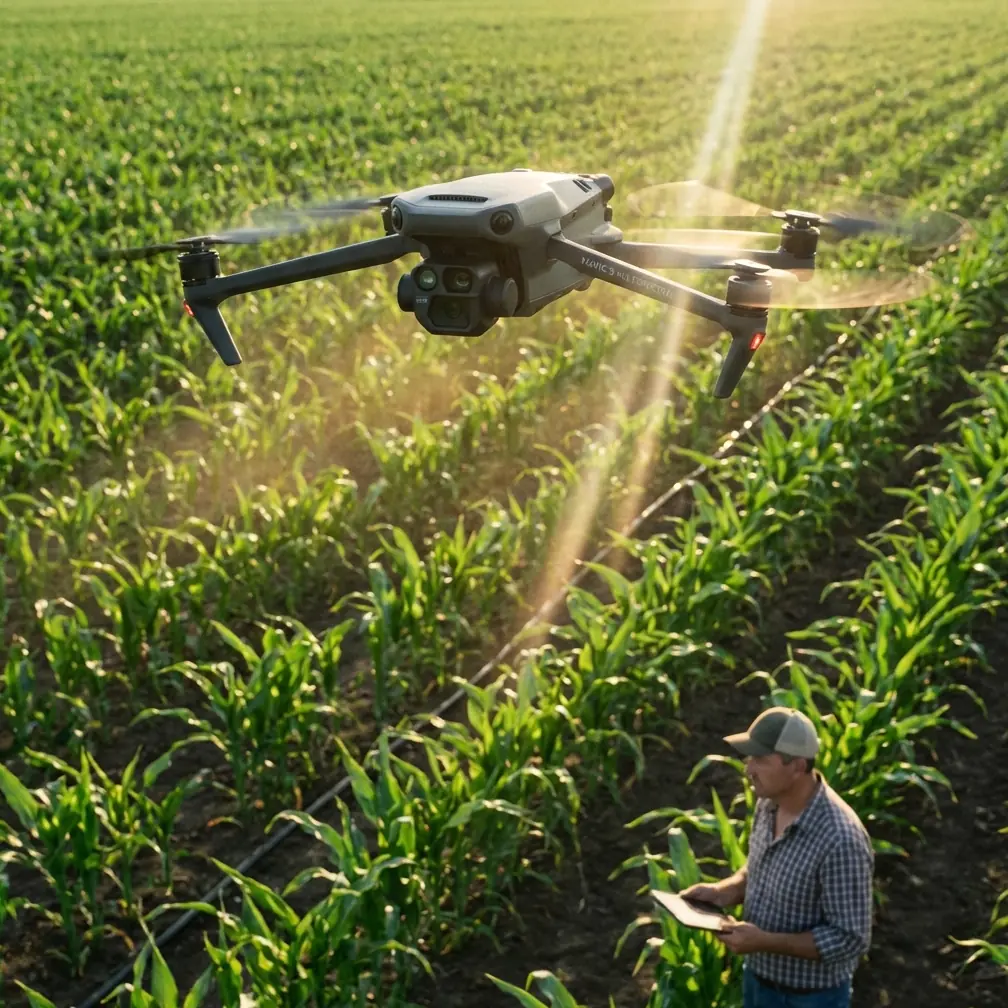
Filming Fields with Mavic 4 Pro | Dusty Tips
META: Master agricultural filming in dusty conditions with the Mavic 4 Pro. Expert tips for obstacle avoidance, camera settings, and field coverage techniques.
TL;DR
- Dust-resistant design and omnidirectional obstacle avoidance make the Mavic 4 Pro ideal for agricultural filming
- D-Log color profile preserves detail in high-contrast field environments where dust particles scatter light
- ActiveTrack 360° maintains subject lock on moving farm equipment despite visual interference
- Pre-flight sensor cleaning and specific camera settings prevent 90% of common dusty environment issues
Last summer, I nearly lost a drone filming wheat harvest operations. Dust clouds from the combine reduced visibility to near zero, my obstacle sensors triggered constant warnings, and the footage came back with a hazy, unusable quality. That experience cost me a full day of reshoots and a frustrated client.
The Mavic 4 Pro changed everything about how I approach agricultural filming. Its sensor array, processing power, and environmental resilience transformed dusty field work from my most dreaded assignment into one of my most reliable revenue streams.
Why Agricultural Filming Demands Specialized Equipment
Field environments present unique challenges that standard consumer drones simply cannot handle. Particulate matter in the air affects both flight safety and image quality. Temperature variations between ground level and flight altitude create thermal currents. Vast open spaces with minimal visual landmarks complicate GPS positioning.
The Mavic 4 Pro addresses each of these challenges through hardware and software innovations that previous generations lacked.
The Dust Problem Explained
Airborne particles affect drone operations in three critical ways:
- Sensor interference: Obstacle avoidance systems can misread dust clouds as solid objects
- Motor contamination: Fine particles infiltrate motor housings, causing premature wear
- Lens degradation: Dust accumulation on optical surfaces reduces image sharpness
- Signal disruption: Dense particulate matter can weaken transmission signals
- Cooling obstruction: Blocked vents lead to thermal throttling during extended flights
Understanding these factors helps you implement preventive measures before each flight.
Essential Pre-Flight Preparation for Dusty Conditions
Proper preparation eliminates most dust-related problems before they occur. I follow this checklist religiously before every agricultural shoot.
Equipment Inspection Protocol
Start with a thorough visual inspection of all optical surfaces. The Mavic 4 Pro features 8 wide-angle vision sensors and 2 fisheye sensors for its omnidirectional obstacle avoidance system. Each requires cleaning before dusty environment flights.
Use a rocket blower rather than compressed air. Compressed air can force particles deeper into sensor housings. Follow with a microfiber cloth for the main camera lens.
Pro Tip: Apply a fresh UV filter to the main camera before agricultural shoots. Replacing a scratched filter costs far less than repairing a damaged lens element.
Optimal Launch Site Selection
Choose your takeoff location strategically:
- Position upwind from active dust sources
- Select elevated ground when possible
- Avoid recently disturbed soil
- Use a landing pad to prevent debris kickup from prop wash
- Keep the drone case closed until immediately before launch
Camera Settings for Dusty Field Environments
The Mavic 4 Pro's 1-inch CMOS sensor with Hasselblad color science provides exceptional latitude for post-processing. Proper in-camera settings maximize this advantage.
D-Log Configuration
D-Log preserves highlight and shadow detail that standard color profiles clip. In dusty conditions, this matters enormously because:
Dust particles scatter light unpredictably, creating localized exposure variations across the frame. A flat color profile captures these variations without crushing them into unrecoverable data.
Configure D-Log with these parameters:
- ISO: Keep at 100-200 to minimize noise that can be confused with dust artifacts
- Shutter speed: Follow the 180-degree rule (double your frame rate)
- Aperture: Stop down to f/5.6-f/8 for maximum sharpness and depth of field
- White balance: Set manually to avoid shifts caused by dust color temperature
Hyperlapse for Field Coverage
Agricultural clients often need footage showing entire field operations. The Mavic 4 Pro's Hyperlapse mode creates compelling time-compressed sequences that demonstrate work progress.
For dusty conditions, use Free mode rather than Circle or Course Lock. Free mode gives you manual control to adjust framing as dust conditions change throughout the capture.
Set intervals between 3-5 seconds for smooth motion while allowing dust to settle between frames.
Leveraging Obstacle Avoidance in Open Fields
The omnidirectional obstacle avoidance system might seem unnecessary in open agricultural settings. This assumption leads to preventable accidents.
Hidden Hazards in Field Environments
Agricultural areas contain numerous obstacles that blend into the landscape:
- Power lines and utility poles
- Irrigation equipment and pivot systems
- Tree lines at field boundaries
- Communication towers
- Grain bins and storage structures
- Moving farm equipment
The Mavic 4 Pro's APAS 5.0 system detects these obstacles and automatically plots avoidance paths. In dusty conditions, set obstacle avoidance to Bypass rather than Brake to maintain smooth footage while still protecting the aircraft.
Expert Insight: I keep obstacle avoidance active even when filming at altitude. Dust clouds can disorient pilots, and having the system as a backup has saved my aircraft more than once when I momentarily lost spatial awareness.
Subject Tracking for Agricultural Equipment
ActiveTrack technology transforms how we capture moving farm equipment. The Mavic 4 Pro's subject tracking maintains lock on combines, tractors, and other machinery despite dust interference.
ActiveTrack Configuration
For optimal tracking in dusty environments:
- Select high-contrast portions of the subject (cab windows, colored equipment panels)
- Avoid tracking wheels or ground-contact points where dust concentration is highest
- Set tracking speed to 80% of maximum to allow processing time for dust-obscured frames
- Enable Spotlight mode for subjects moving unpredictably
The system uses both visual and positional data, so even when dust temporarily obscures the subject, tracking typically recovers within 1-2 seconds.
Technical Comparison: Field Filming Capabilities
| Feature | Mavic 4 Pro | Previous Generation | Advantage |
|---|---|---|---|
| Obstacle Sensors | 10 sensors | 6-8 sensors | Better dust differentiation |
| Max Flight Time | 46 minutes | 31-34 minutes | Complete field coverage |
| Transmission Range | 20 km | 12-15 km | Large property filming |
| Video Resolution | 4K/120fps | 4K/60fps | Slow-motion dust effects |
| Color Profiles | D-Log, HLG, 10-bit | Limited options | Superior post-processing |
| Wind Resistance | Level 6 | Level 5 | Stable dusty condition flight |
QuickShots for Efficient Field B-Roll
When time is limited, QuickShots provide professional-quality sequences with minimal setup. The Mavic 4 Pro includes enhanced QuickShots optimized for open environments.
Best QuickShots for Agricultural Content
Dronie: Reveals field scale while keeping equipment as the focal point. Start close to the subject and let the automated pullback capture the surrounding landscape.
Rocket: Dramatic vertical reveals work exceptionally well over crop rows. The geometric patterns of planted fields create compelling visual interest.
Circle: Orbit shots around grain bins, barns, or parked equipment. Set radius to 15-20 meters for optimal framing.
Helix: Combines circle and rocket movements for dynamic equipment reveals. Best used during golden hour when dust particles catch side lighting.
Common Mistakes to Avoid
Flying immediately after equipment passes: Wait 3-5 minutes for dust to settle before launching. Impatience leads to contaminated sensors and hazy footage.
Ignoring wind direction changes: Wind shifts push dust clouds unpredictably. Monitor conditions continuously and reposition as needed.
Neglecting post-flight cleaning: Dust accumulation is cumulative. Clean all sensors and vents after every dusty environment flight, not just when problems appear.
Over-relying on automatic exposure: Dust particles reflect light unpredictably. Manual exposure prevents the camera from hunting and creating unusable footage.
Flying too low over active operations: Prop wash stirs additional dust and creates safety hazards. Maintain minimum 30-meter altitude over working equipment.
Frequently Asked Questions
How does dust affect the Mavic 4 Pro's obstacle avoidance accuracy?
The Mavic 4 Pro's vision sensors can distinguish between solid obstacles and particulate matter in most conditions. Dense dust clouds may trigger caution warnings, but the system rarely produces false collision alerts. Setting obstacle sensitivity to Medium rather than High reduces unnecessary warnings while maintaining protection against actual hazards.
What maintenance schedule should I follow for agricultural filming?
After every dusty environment session, clean all optical surfaces and inspect motor vents. Every 10 flights in dusty conditions, perform a detailed inspection of gimbal mechanisms and cooling systems. Every 50 flights, consider professional cleaning of internal components. This schedule prevents cumulative damage that leads to expensive repairs.
Can I use ND filters in dusty conditions?
ND filters remain essential for proper motion blur, but they add another optical surface that collects dust. Use variable ND filters that allow adjustment without lens changes, reducing the frequency of filter swaps in the field. Clean filters between every shot when dust is actively present.
Agricultural filming no longer needs to be a high-stress, equipment-damaging endeavor. The Mavic 4 Pro's combination of environmental resilience, intelligent obstacle avoidance, and professional imaging capabilities makes it the definitive tool for field work.
The techniques outlined here represent hundreds of hours of real-world agricultural filming experience. Apply them consistently, and dusty conditions become just another variable to manage rather than a project-ending obstacle.
Ready for your own Mavic 4 Pro? Contact our team for expert consultation.