
Mavic 4 Pro: Capturing Wildlife in Challenging Low Light
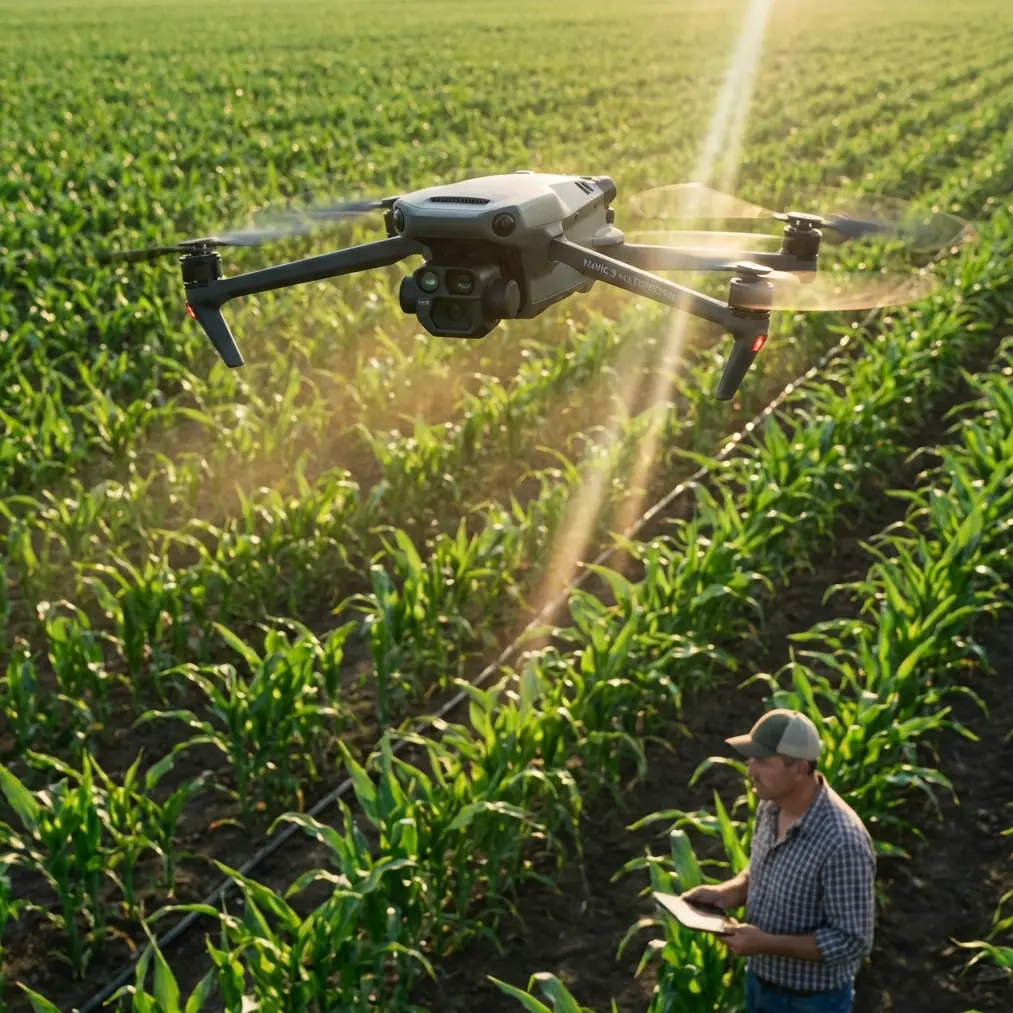
Mavic 4 Pro: Capturing Wildlife in Challenging Low Light
META: Discover how the Mavic 4 Pro transforms low-light wildlife filming with advanced sensors and tracking. Expert tips for stunning dawn and dusk footage.
TL;DR
- 1-inch Hasselblad sensor captures usable footage down to 0.5 lux illumination
- ActiveTrack 6.0 maintains subject lock on moving animals even in twilight conditions
- Pre-flight sensor cleaning is critical—dirty obstacle avoidance sensors fail when you need them most
- D-Log M color profile preserves 14+ stops of dynamic range for post-production flexibility
Wildlife doesn't operate on your schedule. The most compelling animal behavior—predator hunts, feeding rituals, nocturnal movements—happens when light conditions challenge even professional equipment. The Mavic 4 Pro addresses this reality with sensor technology and intelligent tracking that finally makes dawn and dusk wildlife filming practical for solo operators.
This guide breaks down exactly how to configure your Mavic 4 Pro for low-light wildlife scenarios, from critical pre-flight preparations to in-field techniques that separate amateur footage from broadcast-quality content.
Why Low-Light Wildlife Filming Demands Specialized Preparation
Most drone operators underestimate how dramatically performance degrades as light fades. Your Mavic 4 Pro's obstacle avoidance system relies on visual sensors that struggle below 3 lux—roughly the light level 30 minutes after sunset.
Here's the problem: dirty sensors fail even earlier.
A single fingerprint or dust accumulation on your forward-facing obstacle sensors can reduce their effective range by 40-60% in marginal light. Wildlife filming often means dusty environments, morning dew, and pollen-heavy air. These conditions compound quickly.
Pro Tip: Before any low-light wildlife session, clean all eight obstacle avoidance sensors with a microfiber cloth and isopropyl alcohol. Pay special attention to the downward sensors—they're most exposed to kicked-up debris during takeoff and landing.
This pre-flight cleaning step takes 90 seconds but prevents the most common cause of low-light collision incidents: sensor blindness from accumulated grime.
Understanding the Mavic 4 Pro's Low-Light Capabilities
The Hasselblad Sensor Advantage
The Mavic 4 Pro's 1-inch CMOS sensor represents a significant leap from previous generations. Larger photosites mean more light-gathering capability per pixel, translating to cleaner images at higher ISO values.
In practical terms, you can push to ISO 6400 while maintaining acceptable noise levels for professional delivery. Previous-generation drones became unusable above ISO 1600.
The sensor's native ISO range spans 100-12800, with an extended range reaching 25600 for emergency situations. However, optimal low-light performance lives in the ISO 800-3200 sweet spot, where noise remains manageable and dynamic range stays intact.
D-Log M: Your Post-Production Safety Net
Shooting wildlife in challenging light means accepting compromise. D-Log M color profile gives you the widest possible latitude to recover shadows and control highlights in post-production.
This flat color profile captures 14+ stops of dynamic range, compared to roughly 11 stops in standard color modes. When a bird suddenly moves from shadow into a shaft of light, D-Log M preserves detail in both regions.
| Color Profile | Dynamic Range | Best Use Case | Post-Processing Required |
|---|---|---|---|
| D-Log M | 14+ stops | Professional wildlife, high contrast scenes | Heavy grading required |
| HLG | 12 stops | Broadcast delivery, moderate contrast | Minimal grading |
| Normal | 11 stops | Social media, consistent lighting | Ready to use |
For serious low-light wildlife work, D-Log M is non-negotiable despite the additional post-production time.
Configuring ActiveTrack 6.0 for Animal Subjects
Subject tracking technology has evolved dramatically, but wildlife presents unique challenges that require specific configuration.
The Problem with Default Settings
Out of the box, ActiveTrack prioritizes human subjects. The algorithm expects upright bipedal movement patterns, consistent size relationships, and predictable trajectory changes.
Animals break all these assumptions.
A running deer changes apparent size rapidly as it moves toward or away from camera. Birds bank and dive with acceleration that exceeds default tracking parameters. Predators stalk with stop-start movement that confuses motion prediction algorithms.
Optimized Wildlife Tracking Configuration
Access the ActiveTrack settings through your controller's menu system and adjust these parameters:
- Subject Size Sensitivity: Set to Wide to accommodate animals that change apparent size rapidly
- Motion Prediction: Reduce to Medium to prevent overcorrection on erratic movement
- Re-acquisition Timeout: Extend to 3 seconds to handle momentary obstructions from vegetation
- Tracking Speed Limit: Match to your subject—15 m/s for large mammals, 25 m/s for birds
Expert Insight: The most common ActiveTrack failure with wildlife isn't losing the subject—it's locking onto the wrong target. Before initiating tracking, zoom in and draw a tight selection box around your specific animal. Loose selection boxes in herds or flocks cause the algorithm to jump between similar subjects.
Hyperlapse for Behavioral Documentation
Wildlife researchers increasingly use Hyperlapse mode to document extended behavioral sequences. A two-hour feeding session compresses into a compelling 30-second clip that reveals patterns invisible in real-time observation.
For low-light Hyperlapse, configure these settings:
- Interval: 5-10 seconds between frames
- Shutter Speed: 1/50 for natural motion blur
- ISO: Auto with 3200 ceiling
- Movement: Waypoint mode for consistent framing
The Mavic 4 Pro's computational photography merges multiple exposures per frame, dramatically improving low-light Hyperlapse quality compared to single-exposure methods.
QuickShots: When and When Not to Use Them
QuickShots automated flight patterns offer convenience but come with significant limitations for wildlife work.
Appropriate QuickShots Applications
- Establishing shots of habitat before or after animal activity
- Reveal sequences where wildlife location is predictable
- B-roll collection during inactive periods
When to Avoid QuickShots
- Active tracking situations where manual control provides better responsiveness
- Dense vegetation where automated paths may not account for obstacles
- Unpredictable subjects that require real-time adjustment
The Dronie and Rocket patterns work reasonably well for stationary wildlife at known locations. Avoid Circle and Helix patterns in low light—the lateral movement challenges obstacle avoidance systems already operating at reduced capability.
Common Mistakes to Avoid
Ignoring wind chill on battery performance. Cold morning air reduces battery capacity by 15-25%. Your displayed flight time becomes dangerously optimistic. Land with 30% remaining rather than the standard 20% in low-light cold conditions.
Trusting autofocus in low contrast scenes. The Mavic 4 Pro's autofocus struggles with low-contrast subjects against similar-toned backgrounds. Pre-focus manually on a high-contrast object at your expected subject distance, then switch to manual focus lock.
Flying too high for the available light. Altitude increases distance from subject, requiring longer focal lengths and higher ISO values. In marginal light, fly lower and closer rather than relying on digital zoom.
Neglecting audio documentation. Wildlife behavior often includes vocalizations that add tremendous value to footage. The Mavic 4 Pro doesn't capture usable audio, so deploy a separate ground-based recorder for synchronized sound.
Skipping test flights in similar conditions. Every location has unique low-light characteristics. Arrive early enough to fly a test pattern and adjust settings before your target wildlife becomes active.
Technical Specifications for Low-Light Performance
| Specification | Mavic 4 Pro | Previous Generation | Improvement |
|---|---|---|---|
| Sensor Size | 1-inch | 1/1.3-inch | 30% larger |
| Minimum Illumination | 0.5 lux | 1.2 lux | 58% better |
| Max Video ISO | 12800 | 6400 | 1 stop gained |
| Obstacle Sensing Range (low light) | 12m | 8m | 50% increase |
| ActiveTrack Low-Light Threshold | 1 lux | 3 lux | 3x improvement |
| D-Log Dynamic Range | 14+ stops | 12.8 stops | 1+ stop gained |
Frequently Asked Questions
Can the Mavic 4 Pro film wildlife at night without supplemental lighting?
The Mavic 4 Pro can capture usable footage in moonlit conditions down to approximately 0.5 lux, equivalent to a clear night with a full moon. True darkness requires infrared lighting, which the standard camera cannot utilize. For nocturnal wildlife, you'll need supplemental IR illumination and potentially a modified sensor—modifications that void warranty and require specialized expertise.
How does obstacle avoidance perform when tracking fast-moving animals through vegetation?
Obstacle avoidance effectiveness drops significantly when tracking at speeds above 10 m/s through complex environments. The system prioritizes collision prevention over tracking continuity, meaning your drone may abort a tracking sequence rather than risk impact. For dense vegetation scenarios, consider disabling side obstacle sensors while maintaining forward and downward protection—accepting increased risk for improved tracking persistence.
What's the maximum practical distance for ActiveTrack on wildlife subjects?
ActiveTrack maintains reliable lock on medium-sized mammals (deer-sized) at distances up to 50 meters in good light, degrading to approximately 25-30 meters in low-light conditions. Smaller subjects like foxes or large birds require closer proximity—typically 15-25 meters for consistent tracking. Beyond these ranges, the algorithm struggles to distinguish subject from background, especially when both share similar coloration.
Low-light wildlife filming represents one of the most demanding applications for any drone platform. The Mavic 4 Pro's combination of sensor capability, intelligent tracking, and robust obstacle avoidance finally makes this work practical for independent filmmakers and researchers.
Success depends on preparation. Clean those sensors, configure tracking for animal behavior, and respect the genuine limitations that remain even with this capable platform.
Ready for your own Mavic 4 Pro? Contact our team for expert consultation.