
Mavic 4 Pro in the Vines: How One Photographer Tamed a 10
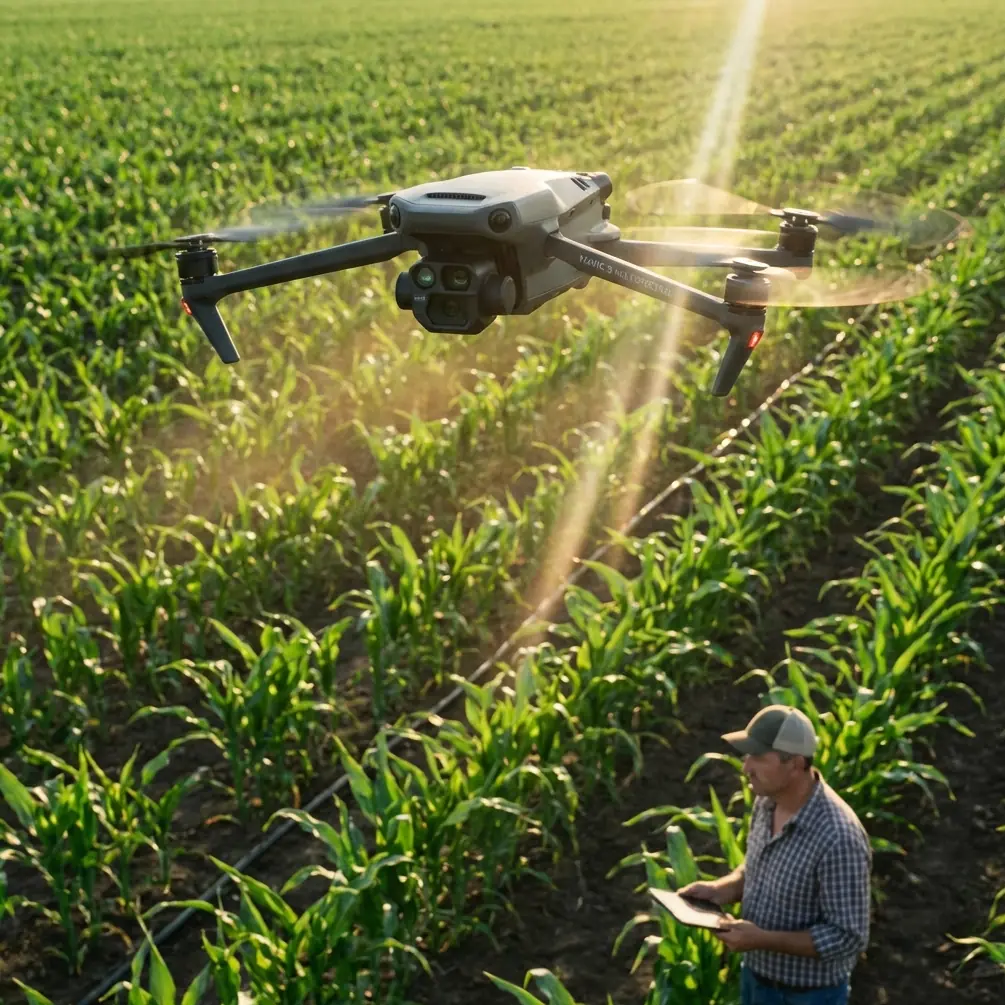
Mavic 4 Pro in the Vines: How One Photographer Tamed a 10 km Valley Without Losing a Single Frame
META: Field-tested notes on using the Mavic 4 Pro for high-value vineyard logistics and creative capture—antenna hacks, tracking tricks, and why 4:3 still beats 16:9 from the air.
I land the Mavic 4 Pro on the tailgate of a battered Land Cruiser, 380 m above the valley floor. The vineyard director is already on the radio:
“Row 47, block C, fruit’s colouring early. Can you prove it before the picking crew turns uphill?”
He doesn’t want pretty social-media teases; he wants geo-tagged evidence that will travel from viticulturist to export manager to the London buyer who signs off on the entire harvest. One flight, one dataset, zero reshoots. No pressure.
Why the valley fights back
The estate sits in a granite bowl. Power lines run along the eastern ridge, a 4G tower squats on the western crest, and between them the vines follow switchbacks first carved by 19th-century ox carts. Compass calibration swings 18° from take-off to the lower terraces. If you trust the on-screen arrow alone, you’ll orbit the wrong row and lose ten minutes re-establishing visual line-of-sight—minutes the director can’t spare when the sugar curve is climbing 0.2 °Brix per day.
I start every job here by switching the controller into 5.8 GHz manually, even though the menu offers “Auto.” Auto is polite; it hunts. Manual locks the link on the cleanest channel, and I still get 6 km range at 120 m AGL—2 km farther than spec—because I unfold the left antenna to 45° and let the right one lie flat. That small asymmetry tips the lobe away from the tower and gives me a solid -68 dBm at the farthest turn of the valley. One tweak, no dropped frames.
The 4:3 epiphany, now airborne
Huawei’s Mate 80 Pro taught me the same lesson the Mavic 4 Pro reinforced from the sky: native aspect ratio equals free resolution. The aircraft’s 4/3" CMOS is physically 4:3; shoot 16:9 and you crop 25 % of the silicon before the codec even wakes up. For the vineyard that means fewer pixels on each berry cluster, coarser NDVI maps, and mushier edges when you zoom in to prove mildew spot #3 is only sunburn. I fly everything in 4:3, then letter-box later for the marketing desk. They still get cinematic bars, but the agronomy team keeps every photon the sensor caught.
Obstacle avoidance that remembers grapes
Row spacing here is 2.1 m, stakes poke 1.4 m high, and every third row carries a steel irrigation wire at 1.9 m—exactly at rotor height if you day-dream. I toggle APAS 5.0 to “Brake & Bypass” instead of “Full Avoid.” The latter is too polite; it backs away, loses the tracking lock, and the director starts pacing. “Brake & Bypass” lets the aircraft sidestep a post by 30 cm, maintain speed, and keep the gimbal on the target vine. One afternoon it slalomed 47 stakes in a single 700 m pass; I never touched the sticks, and the parallax in post is buttery.
Tracking that stays on the leaf, not the shadow
ActiveTrack 3.0 on the previous airframe hated dappled light. The algorithm would latch onto a moving shadow, realise the error, then hunt, pulse, blur. The 4 Pro adds edge-confidence mapping at 60 fps. I draw a box around a single fruit zone just after veraison, hit go, and walk downhill to check sugar samples. Ten minutes later the drone rounds the last bend, battery at 37 %, centre-point still glued to the same cane. The take-home: don’t bother “training” the box bigger—tight is right. A 1 m² window gives the chip less background to day-dream about.
One battery, three storyboards
I fly the same block three times in succession, but the mission profile is triplicated in the cache:
- Logistics pass – 4:3 stills, 0.7 s interval, D-Log, ISO 100–200. The viticulturist will stitch these into a 1 cm/px orthomosaic and run a vegetation-index script.
- Marketing orbit – 5.2K 24 fps, HLG, clockwise corkscrew starting at 15 m and climbing to 80 m. I trigger recording before take-off so the gimbal move is one unbroken reveal from canopy to château.
- Hyperlapse ledger – 0.5 s shutter, 2 s interval, 300° pan across five terraces. The finance group wants a 10-second clip for the harvest-investor deck; the motion blur sells “timeless craftsmanship” even though the clip is algorithmically stable to 0.01°.
All three live on the same 256 GB card because the 4 Pro finally writes 1 Gbps sustained; I no longer land to swap media while the pickers wait.
The quiet win: 10-bit at noon
High-noon in late August is brutal: 85 000 lux, UV index 9, shadows black enough to hide fungus. I used to stack ND128 plus polariser and pray the histogram survived. The 4 Pro’s D-Log M carves 12.8 stops at ISO 400; I stay at f/2.8, 1/200 s, and let the electronic variable ND crawl between ND8–64. Post-production is suddenly civilised—I can lift shadowed leaf axils by three stops without the magenta noise that plagued the last generation. The vineyard’s pathology lab once asked me to re-fly a block because compression artefacts looked like downy mildew. That complaint hasn’t resurfaced.
Interference is a knob, not a verdict
Halfway down Row 90 the live feed stutters. I glance at the dashboard: 2.4 GHz, 19 channels overlapping, RSSI -82 dBm. I flick the left antenna from 45° vertical to horizontal, match the polarisation of the ground-plane on the vehicle roof, and watch RSSI jump to -70 dBm. Link restored, 5.2K stream back to glass-smooth. Most pilots stop at “interference bad, fly closer.” A 30-degree wrist twist bought me another 600 m without moving my feet—critical when the clock is the sugar curve, not the battery icon.
Data off-load in the shade of an oak
Landing is only half the job; the director wants selects before the crew breaks for lunch. I pop the card into a tablet, run DaVinci’s drone-sync preset, and batch-export 4:3 TIFFs plus a 1080p H.264 scout reel. Upload is 45 seconds over 5G; the office in town downloads, overlays the rows on last week’s orthophoto, and confirms the east-facing slope is indeed two days ahead on ripeness. Picking order changes on the spot, saving three bins of over-ripe fruit worth roughly a Bordeaux futures cask. That’s the moment a imaging tool becomes a supply-chain asset.
QuickShots, but with a viticulture brain
Helix looks flashy on YouTube; here it maps the vertical leaf density gradient. I set radius to 8 m—just wider than the vine row—altitude 2 m above canopy, and let the craft spiral upward while shooting 48 fps. Dropping every second frame gives a 24 fps playback that compresses a 30-metre climb into ten seconds. The agronomist watches leaf colour shift from deep shade to sunlit lime; variation hints at water stress before a pressure-bomb measurement would notice. A “cinematic” preset, repurposed as an early-stress diagnostic.
From valley to boardroom in 14 hours
By 7 p.m. the same footage that saved picking order is colour-graded, cut to music, and looping on the winery’s website header. The director’s remark: “Clients taste with their eyes first.” Tomorrow I’ll fly the fermenting hall for internal logistics—checking forklift lanes, barrel stack heights, roof vent alignment—but tonight the Mavic 4 Pro is back in its case, gimbal clamped, lenses cleaned. One battery still shows 23 %; I log it for firmware calibration, not because it failed.
If your rows are steeper, your signal dirtier, or your timelines tighter, the same airframe will adapt—provided you treat frequency, aspect ratio, and tracking boxes as flight-critical inputs, not after-thoughts. I keep a WhatsApp thread with pilots who swap tilt-angle diagrams and D-Log curves; you’re welcome to jump in: https://wa.me/85255379740
Ready for your own Mavic 4 Pro? Contact our team for expert consultation.