
M4P Delivery Tips for Coastal Vineyard Operations
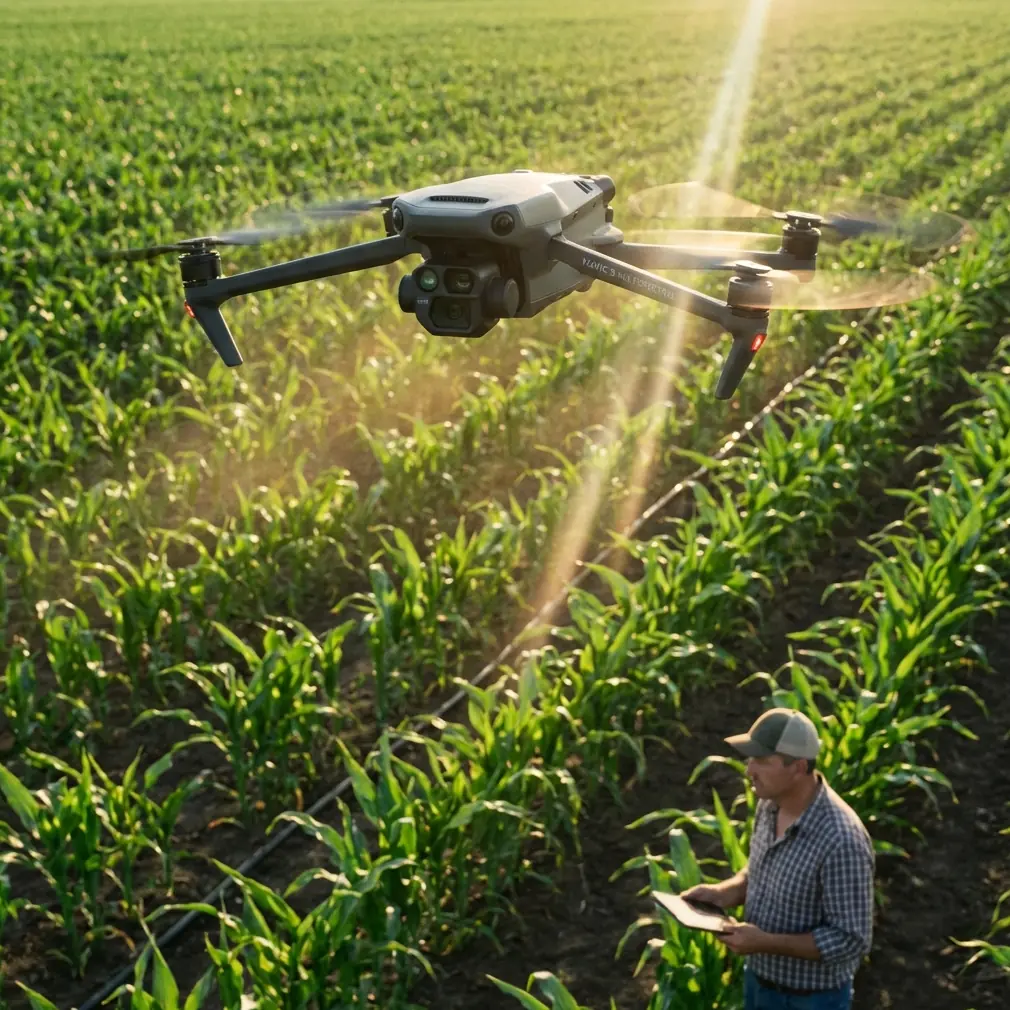
M4P Delivery Tips for Coastal Vineyard Operations
META: Master Mavic 4 Pro delivery flights over coastal vineyards. Expert tips on battery management, obstacle avoidance, and D-Log settings for stunning aerial results.
By Chris Park | Creator & Aerial Operations Specialist
TL;DR
- Coastal vineyard flights demand aggressive battery management—land at 30% charge minimum due to unpredictable headwinds and salt-air temperature drops
- The Mavic 4 Pro's omnidirectional obstacle avoidance system is essential when navigating trellis rows, but requires manual sensitivity adjustments near wire structures
- D-Log color profile captures the full dynamic range of sun-drenched vine canopies against dark coastal fog, giving editors maximum flexibility
- ActiveTrack 6.0 paired with Subject tracking locks onto vineyard workers and equipment for compelling documentary-style deliverables
Why Coastal Vineyards Are One of the Hardest Drone Environments
Coastal vineyard shoots will expose every weakness in your flight planning. Between marine layer fog rolling in without warning, corrosive salt air, and erratic thermals rising off sun-baked hillside rows, this environment punishes lazy preparation. The Mavic 4 Pro handles it remarkably well—but only if you understand the aircraft's limits and adjust your workflow accordingly.
I spent three weeks this past harvest season delivering aerial content packages for four vineyards along California's Central Coast. What follows is a technical breakdown of the gear settings, flight strategies, and hard-learned lessons that made those deliverables possible.
Battery Management: The Lesson That Almost Cost Me a Drone
Here's the field tip that changed everything for me. During my second vineyard contract, I was flying a Hyperlapse sequence over a 12-acre Pinot Noir block perched on a coastal bluff. Battery read 38%. Plenty of juice for the return trip—or so I thought.
A sudden onshore gust hit 25 mph, and the Mavic 4 Pro's return-to-home calculation instantly jumped. The aircraft clawed its way back, landing at 8% battery. That's a margin I never want to see again.
My Coastal Battery Protocol Now
- Hard deck at 30% battery—no exceptions, even on calm days
- Pre-flight battery warming: Keep batteries in an insulated bag at 20–25°C until launch, especially during foggy mornings where ambient temps drop to 10°C
- Carry a minimum of 5 batteries per half-day shoot; coastal headwinds reduce effective flight time from ~45 minutes to roughly 28–33 minutes
- Log wind speed at takeoff and at altitude—coastal laminar flow often means calm ground-level air masks 15+ mph winds at 60m AGL
- Rotate batteries in pairs: While one flies, the second charges on a portable hub; the third cools down from the previous flight
Pro Tip: The Mavic 4 Pro's intelligent battery system reports cell-level voltage. Before each flight, check that no single cell deviates more than 0.03V from the others. Salt air accelerates micro-corrosion on contacts, and unbalanced cells cause mid-flight power drops that the standard percentage readout won't warn you about until it's critical.
Camera Settings for Vineyard Deliverables
Vineyard clients typically want two categories of content: agronomic survey imagery for their viticulture team and cinematic marketing footage for their tasting room screens and social channels. The Mavic 4 Pro's Hasselblad camera system handles both, but you need distinct setting profiles.
Agronomic / Survey Flights
- Shoot in JPEG + DNG for fast processing in mapping software
- Mechanical shutter to eliminate rolling shutter distortion over geometric trellis patterns
- ISO locked at 100–200; let shutter speed float
- Nadir angle (90°) at consistent 50m AGL for orthomosaic stitching
- Overlap: 80% frontal, 70% lateral
Cinematic / Marketing Flights
- D-Log color profile is non-negotiable—coastal light produces extreme contrast between bright fog-reflected sky and shadowed vine corridors; D-Log preserves approximately 14+ stops of dynamic range
- Frame rate: 4K at 60fps for slow-motion flexibility, 4K at 24fps for final hero shots
- ND filters: ND16 for midday, ND8 for golden hour, ND4 for overcast marine layer conditions
- Manual white balance locked at 5600K to maintain consistency across clips
Expert Insight: Many creators overlook the Mavic 4 Pro's 10-bit color depth in D-Log. This matters enormously for vineyard work. Autumn vine canopies shift through dozens of subtle yellow-to-crimson gradients. An 8-bit pipeline will introduce visible banding in these transitions during color grading. Always confirm your recording format is set to H.265 10-bit before launching.
Obstacle Avoidance in Trellis Row Environments
The Mavic 4 Pro's omnidirectional obstacle avoidance system uses a combination of wide-angle vision sensors and ToF (Time-of-Flight) modules to detect objects in all directions. In open environments, it's exceptional. In vineyards, it requires nuance.
The Wire Problem
Vineyard trellises use thin gauge wire—12 to 14 AWG galvanized steel—strung between posts. These wires are often invisible to vision-based obstacle detection systems. The Mavic 4 Pro performs better than previous generations, but I still observed occasional failures to detect single wires below 2mm diameter at speeds above 5 m/s.
My Obstacle Avoidance Configuration for Vineyards
- APAS mode set to "Brake" rather than "Bypass"—you do not want the aircraft autonomously rerouting through a trellis row
- Minimum altitude of 8m AGL when flying along rows; this clears the tallest trellis systems with a safe margin
- Reduce max flight speed to 6 m/s in the DJI Fly 2 app when operating within 20m of structures
- For dramatic low-altitude shots between rows, switch to Manual/Sport mode and fly line-of-sight only—accepting full responsibility for collision avoidance
ActiveTrack and Subject Tracking for Vineyard Storytelling
Vineyard clients love footage that follows their winemaker walking through rows at dawn, or tracks a harvest crew loading bins onto a flatbed. The Mavic 4 Pro's ActiveTrack 6.0 and enhanced Subject tracking make these shots repeatable and smooth.
Best Practices
- Draw the tracking box tightly around your subject—loose framing causes the algorithm to lose lock when the subject passes behind vine canopy
- Use Spotlight mode for static orbital shots around a single worker
- Use Trace mode for follow-behind walking shots down vine corridors
- QuickShots Dronie and Rocket work beautifully for social media clips; start with the subject filling 40% of the frame for optimal reveal effect
Technical Comparison: Mavic 4 Pro vs. Common Alternatives for Vineyard Work
| Feature | Mavic 4 Pro | Air 3S | Mini 4 Pro |
|---|---|---|---|
| Sensor Size | 1-inch Hasselblad CMOS | 1-inch CMOS | 1/1.3-inch CMOS |
| Max Flight Time | ~45 min | ~42 min | ~34 min |
| Obstacle Avoidance | Omnidirectional (Vision + ToF) | Omnidirectional (Vision) | Omnidirectional (Vision) |
| Color Profile | D-Log, HLG, D-Log M | D-Log M, HLG | D-Log M |
| ActiveTrack Version | 6.0 | 5.0 | 4.0 |
| Max Video Resolution | 4K/120fps | 4K/100fps | 4K/60fps |
| Wind Resistance | Level 6 (~13.8 m/s) | Level 5 | Level 5 |
| Weight | ~900g | ~720g | ~249g |
| Bit Depth (Max) | 10-bit | 10-bit | 10-bit |
| Hyperlapse Support | Yes (Free, Circle, Course Lock, Waypoint) | Yes | Limited |
The Mavic 4 Pro's Level 6 wind resistance is the decisive advantage for coastal work. On days when the Air 3S would be grounded, the M4P holds position and delivers stable Hyperlapse sequences.
Common Mistakes to Avoid
- Flying without ND filters in coastal light: Even overcast marine layers produce intense reflected luminance off fog. Without filtration, your shutter speed climbs too high and footage looks jittery and hyper-sharp
- Trusting obstacle avoidance near wires blindly: As detailed above, thin trellis wires can evade detection. Always maintain visual line of sight in structured environments
- Ignoring salt air maintenance: After every coastal shoot day, wipe down the aircraft body, gimbal, and battery contacts with a dry microfiber cloth. Weekly, use a contact cleaner pen on battery terminals
- Launching from vineyard soil: Prop wash kicks up dust and organic debris directly into motors and sensors. Carry a portable launch pad (minimum 75cm diameter)
- Skipping test footage in D-Log before the shoot day: D-Log footage looks flat and desaturated on-screen. Clients watching over your shoulder may panic. Show them a quick before/after grade on your tablet before you fly so expectations are set
- Forgetting to disable automatic RTH altitude adjustments: In hilly vineyard terrain, the auto-calculated RTH altitude may be insufficient to clear ridgeline obstacles. Set a manual RTH altitude of at least 80m
Frequently Asked Questions
Can the Mavic 4 Pro handle foggy coastal conditions safely?
The Mavic 4 Pro's vision sensors require adequate visibility to function. Light fog—where you can see the aircraft at 200m+—is generally flyable, and the obstacle avoidance system continues to operate at close range. Dense fog that reduces visibility below 100m is a no-fly condition. Moisture condensation on the lens is the more practical concern; carry lens wipes and a small silica gel pack in your field kit.
What Hyperlapse settings work best for vineyard time-lapses?
For vineyard Hyperlapse sequences, use Waypoint mode to define a smooth path along a row or across a hillside. Set the interval to 2 seconds, output resolution to 4K, and total duration to a minimum of 600 frames for a 25-second final clip. Shoot during the golden hour transition for maximum visual impact as shadows lengthen across the vine rows. Lock exposure manually to prevent flicker.
How does Subject tracking perform when the target moves behind vine canopy?
ActiveTrack 6.0 on the Mavic 4 Pro uses predictive algorithms to maintain lock when a subject is briefly occluded by vine canopy. In my testing, the system reliably re-acquired subjects after occlusions lasting up to 3 seconds. For longer obstructions—such as a person walking behind a dense row for 5+ seconds—the tracking will drop. The solution is to fly at a higher angle (30–45° gimbal pitch) so the camera maintains a downward line of sight over the canopy tops.
Final Thoughts
Coastal vineyard work is demanding, rewarding, and endlessly photogenic. The Mavic 4 Pro has become my primary tool for these contracts because it combines the sensor quality, wind resistance, and intelligent flight modes needed to deliver professional results in an unforgiving environment. Master your battery protocol, respect the obstacle avoidance system's limitations, and shoot in D-Log—your clients and your edit timeline will thank you.
Ready for your own Mavic 4 Pro? Contact our team for expert consultation.