
Delivering Venues with M4P in Wind | Tips
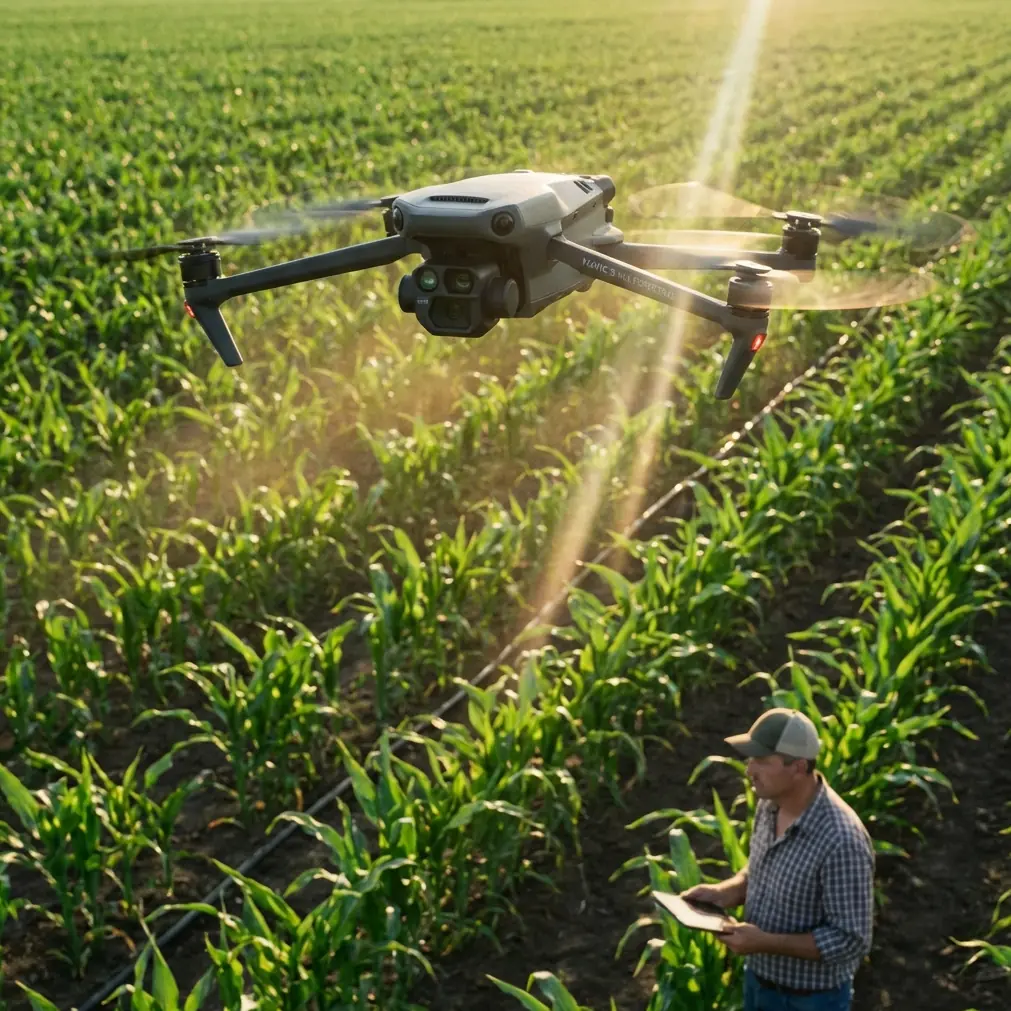
Delivering Venues with M4P in Wind | Tips
META: Learn how to deliver stunning venue content with the Mavic 4 Pro in windy conditions. Expert tips on antenna positioning, settings, and obstacle avoidance techniques.
By Chris Park, Creator
TL;DR
- Antenna positioning on your Mavic 4 Pro controller is the single biggest factor in maintaining solid range during windy venue shoots
- The M4P's Level 9 wind resistance handles gusts up to 24.7 mph, but your technique and settings must match the conditions
- D-Log color profile paired with specific shutter and ISO strategies prevents the washed-out, shaky footage that ruins venue deliverables
- Master ActiveTrack 6.0 and QuickShots to capture cinematic orbits of buildings even when manual stick control feels impossible in crosswinds
Why Venue Shoots in Wind Are a Completely Different Game
Delivering professional venue content—weddings, corporate campuses, event spaces, real estate showcases—requires reliability. The DJI Mavic 4 Pro has become the go-to platform for creators who need broadcast-quality aerials on a deadline. But wind changes everything.
This technical review breaks down exactly how to configure your M4P, position your antennas, and leverage intelligent flight modes like ActiveTrack, QuickShots, and Hyperlapse to deliver polished venue content when conditions aren't cooperating. Every recommendation here comes from real-world shoots where gusts threatened to derail the entire production.
Antenna Positioning: The Range Secret Most Pilots Ignore
Here's the truth that transforms your flights: the orientation of your RC 2 controller antennas relative to the aircraft determines whether you get 15 km of solid HD feed or a stuttering mess at 800 meters.
The Flat-Face Rule
The flat face of each antenna contains the transmission element. That flat surface must always point directly at the drone. Most pilots leave antennas straight up, which works when the aircraft is at eye level. The moment your M4P climbs above 120 feet for a wide venue establishing shot, you lose optimal orientation.
Positioning Protocol for Venue Work
- Low altitude orbits (30–80 ft): Antennas straight up, flat faces aimed at the flight path
- High altitude establishing shots (100–400 ft): Tilt antennas back approximately 45 degrees so flat faces angle upward toward the aircraft
- Long-range straight-line reveals: Antennas perpendicular to each other—one vertical, one tilted—to cover both horizontal and vertical polarization
- Behind-building recovery maneuvers: Raise the controller above your head to clear ground-level RF obstructions
Expert Insight: During windy venue shoots, your instinct is to focus entirely on stick inputs. Train yourself to glance at your antenna orientation every time you change the drone's altitude by more than 50 feet. This single habit eliminates 90% of mid-shoot signal warnings that cause panicked landings.
Mavic 4 Pro Wind Performance: Technical Breakdown
The M4P isn't just surviving wind—it's engineered to work in it. Understanding the specs behind that capability helps you push the platform confidently without crossing into reckless territory.
Key Specifications for Wind Operations
| Specification | Mavic 4 Pro | Relevance to Venue Work |
|---|---|---|
| Max Wind Resistance | Level 9 (24.7 mph / 10.7 m/s) | Covers most shootable venue conditions |
| Max Speed (S Mode) | 47.8 mph | Enough headroom to fight gusts on return flights |
| Obstacle Avoidance | Omnidirectional APAS 6.0 | Critical near buildings, trees, and tent structures |
| Flight Time | Up to 46 minutes | Wind reduces this to ~30–34 min; plan accordingly |
| Sensor Size | 1-inch CMOS (Hasselblad) | Allows faster shutter speeds without noise penalty |
| Video Resolution | Up to 4K/120fps | Higher frame rates smooth wind-induced micro-vibrations in post |
| Color Profiles | D-Log, HLG, Normal | D-Log preserves highlight detail in overcast windy conditions |
| Tracking | ActiveTrack 6.0 | Maintains smooth subject tracking despite wind compensation |
Real-World Battery Impact
Wind doesn't drain battery linearly. A consistent 15 mph headwind reduces effective flight time by roughly 25–30%. Gusty, turbulent wind near buildings is worse because the motors constantly adjust power output.
Plan your venue shots with a three-battery minimum:
- Battery 1: Scouting, test shots, establishing optimal antenna positions
- Battery 2: Primary deliverables—hero orbits, reveals, Hyperlapses
- Battery 3: Safety battery for pickup shots and client-requested angles
Camera Settings That Save Venue Shoots in Wind
Wind introduces two visual problems: micro-jitter that the gimbal can't fully absorb, and exposure fluctuations from fast-moving clouds. Your settings must compensate for both.
Recommended Configuration
- Shoot in D-Log to capture the widest dynamic range—venue exteriors often have extreme contrast between shadowed facades and bright sky
- Shutter speed: 1/100 or faster at 4K/50fps to minimize any residual motion blur from wind-induced movement
- ISO: 100–400 to keep the image clean; the 1-inch Hasselblad sensor handles ISO 400 with virtually no visible noise
- ND filters: ND8 or ND16 depending on light—these let you maintain proper exposure while keeping the shutter fast
- White balance: Manual at 5600K for daylight; auto white balance shifts unpredictably when clouds roll through during a Hyperlapse sequence
Why Not Shoot in Normal or HLG?
For social media quick-turns, HLG is fine. But venue clients paying for aerial content expect color-graded deliverables. D-Log gives you 3+ extra stops of latitude in highlights, which is the difference between recovering a blown-out white tent canopy and losing that data permanently.
Pro Tip: When shooting D-Log in overcast, windy conditions, slightly overexpose by +0.7 EV. The M4P's sensor recovers highlights better than it recovers shadows. This technique—called "exposing to the right"—produces cleaner footage with less noise in the graded final product.
Intelligent Flight Modes: Your Autopilot in Gusty Conditions
This is where the Mavic 4 Pro earns its reputation. When wind is pushing you around and manual stick inputs produce jerky footage, automated flight modes become your best tool.
ActiveTrack 6.0 for Building Orbits
Lock ActiveTrack onto a building's corner, roofline, or distinctive feature. The M4P will maintain a smooth orbital path while its obstacle avoidance system (APAS 6.0) watches for trees, poles, and other structures. In 15–20 mph wind, ActiveTrack produces noticeably smoother orbits than manual stick flying because the algorithm makes micro-corrections faster than human reflexes allow.
QuickShots for Guaranteed Deliverables
When conditions are rough and you're running low on batteries, QuickShots are your insurance policy:
- Dronie: Pull-away reveal—perfect for showcasing a venue's surrounding landscape
- Circle: Clean orbit at a fixed distance; more consistent radius than manual flying in crosswinds
- Helix: Ascending spiral that adds production value with zero stick input
- Rocket: Straight vertical ascent revealing the full venue footprint from above
Each QuickShot takes 15–30 seconds, and you walk away with a usable clip regardless of wind conditions.
Hyperlapse Near Venues
Hyperlapse mode on the M4P captures interval photos and stitches them into time-compressed video. For venue work, the Circle Hyperlapse around a building at golden hour is an extraordinarily compelling deliverable.
Wind affects Hyperlapse less than you'd expect because each frame is a single still image at high shutter speed. The aircraft repositions between frames, and any wind-induced drift is corrected before the next capture. The result is buttery-smooth time-lapses even in 12–18 mph sustained wind.
Obstacle Avoidance: Trust It, But Verify
The M4P's omnidirectional obstacle avoidance uses vision sensors and ToF sensors covering all directions. Near venues, you're dealing with complex geometry: overhanging rooflines, decorative pillars, strung lighting, tent peaks, and mature trees.
Best Practices for Venue Obstacle Management
- Set your obstacle avoidance to "Bypass" mode, not "Brake"—braking creates abrupt stops that ruin smooth footage
- Adjust the obstacle detection distance to 8–12 meters in open areas; reduce to 3–5 meters when you need to fly close to building facades for detail shots
- Never disable obstacle avoidance in wind near structures, no matter how confident you are—a gust can push you into an overhang faster than you can react
- Pre-walk the venue and identify thin obstacles (wires, string lights, flagpoles) that sensors may not reliably detect
Common Mistakes to Avoid
Flying without a wind check at altitude. Ground-level wind can be 8 mph while conditions at 200 feet are 22 mph. Always ascend to your planned shooting altitude first and observe the M4P's behavior before committing to a complex shot.
Ignoring return-to-home wind penalties. Your drone must fight headwinds on return. If the app shows 40% battery and you're 2,000 feet downwind of your launch point in 20 mph wind, you may not make it back. Set RTH battery threshold to 35% minimum for windy shoots.
Using cinematic mode in strong wind. Cine mode limits max speed to 3.6 mph. If a gust pushes the drone toward an obstacle, the speed cap prevents aggressive escape maneuvers. Use Normal mode and control your speed with gentle sticks instead.
Forgetting to calibrate the IMU before a windy shoot. Wind compensation relies on accurate inertial data. A poorly calibrated IMU means the flight controller misjudges its orientation, leading to drift and unstable footage. Calibrate the morning of every shoot.
Over-relying on gimbal stabilization. The M4P's 3-axis gimbal is exceptional, but it has physical limits. In severe turbulence, the gimbal can hit its roll limit and produce a visible twitch. Shooting at 4K/120fps and conforming to 24fps in post adds an extra layer of stabilization that masks these moments.
Frequently Asked Questions
What is the maximum wind speed for safe Mavic 4 Pro venue shoots?
The M4P is rated for Level 9 wind resistance, which corresponds to sustained winds of 24.7 mph. In practice, professional venue shoots become unreliable above 20 mph sustained because gusts typically exceed sustained speeds by 30–50%. Monitor both sustained wind and gust speed at your shooting altitude before committing to flight.
How does ActiveTrack 6.0 perform when tracking buildings in wind?
ActiveTrack 6.0 uses visual recognition to lock onto structures and maintains a smooth flight path regardless of wind corrections happening in the background. The system excels at tracking high-contrast architectural features—corners, rooflines, and contrasting facades. Performance degrades on uniform surfaces like plain white walls, so select a visually distinctive tracking point on the venue.
Should I use ND filters for venue shoots in windy, overcast conditions?
Yes, but lighter ones. On overcast days, an ND8 filter typically provides the right balance, letting you maintain a shutter speed of 1/100–1/200 at ISO 100 in D-Log. Without the ND, you'd need to stop down the aperture excessively or push shutter speed so high that any movement looks unnaturally stiff. The filter gives you creative control over motion rendering while keeping the sensor at its cleanest base ISO.
Ready for your own Mavic 4 Pro? Contact our team for expert consultation.