
Mavic 4 Pro for Solar Farm Delivery in Low Light
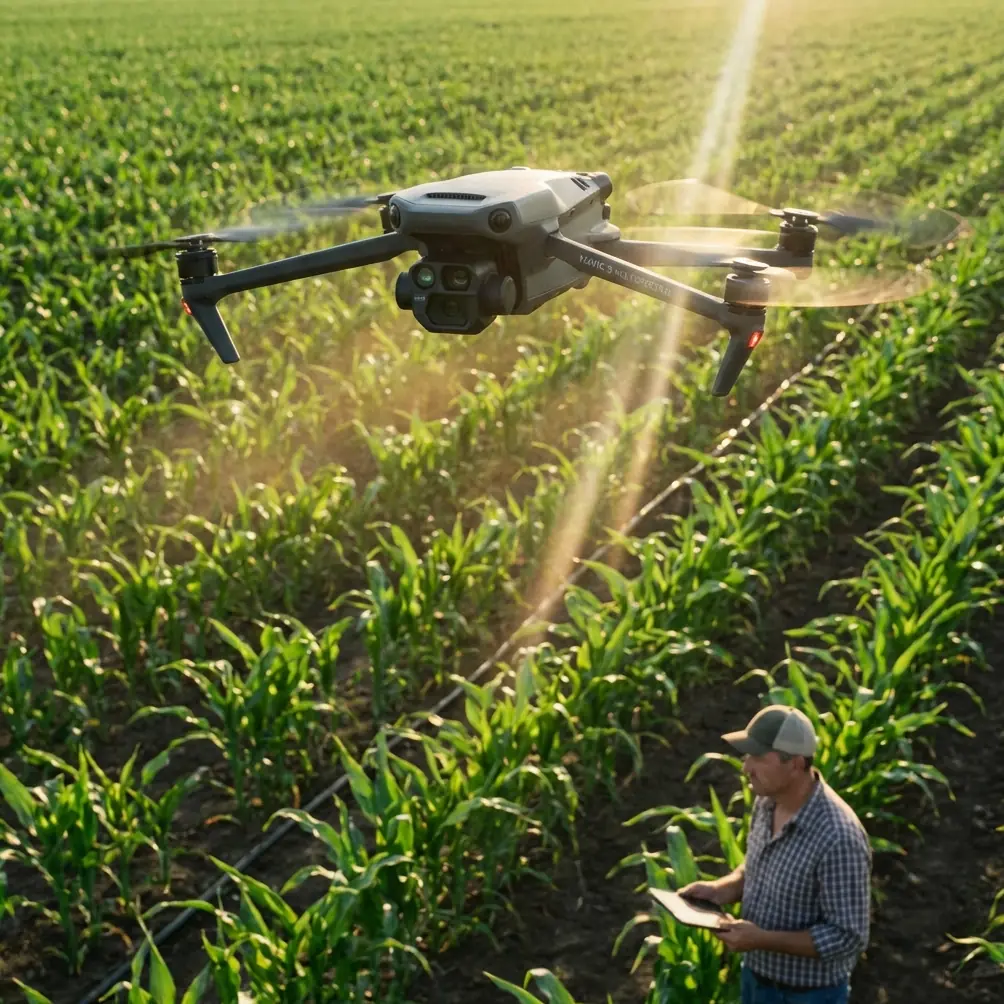
Mavic 4 Pro for Solar Farm Delivery in Low Light: What Actually Matters When the Weather Turns
META: A field-focused look at how the Mavic 4 Pro handles low-light solar farm delivery, obstacle avoidance, subject tracking, D-Log workflows, and changing weather during real commercial operations.
Low-light work at a solar farm sounds simple until you are actually out there.
Rows of panels flatten your sense of depth. Service roads disappear into shadow. Reflective glass confuses your eyes, and changing weather can strip contrast from the scene in minutes. If the mission involves delivering a small part, tool, or sensor package across a large site near dusk or early morning, the aircraft has to do more than just stay airborne. It needs to hold a line, read the environment well enough to avoid collisions, and give the pilot clean visual information when the light is no longer doing you any favors.
That is the frame where the Mavic 4 Pro becomes interesting.
Not as a hype object. As a working platform.
For solar operators, EPC teams, maintenance contractors, and site managers, low-light delivery is rarely about speed alone. The real problem is consistency under compromised visibility. You may need to move a replacement connector to a technician at the far end of the array before weather closes in. You may need to bring a memory card, measurement device, or inspection accessory to a team already positioned in a muddy section of the site. On paper, that sounds like a straightforward logistics hop. In the field, it becomes a test of obstacle avoidance, route discipline, camera readability, and confidence when the sky shifts mid-flight.
The operational problem: low light hides risk in plain sight
Solar farms are deceptive environments for drones. They look open. They are not.
Yes, there are wide corridors between panel blocks. But there are also fence lines, power infrastructure, maintenance vehicles, narrow staging areas, uneven terrain, and the occasional cable run or temporary equipment left where it should not be. In low light, every one of those becomes harder to judge. A drone that feels perfect at midday can become far less comfortable to operate when contrast drops and surface detail starts to vanish.
This is where obstacle avoidance stops being a spec-sheet checkbox and starts becoming part of the mission plan.
A pilot delivering across a solar site in dim conditions needs two things at once: enough automation to reduce workload and enough direct control to make conservative decisions. The Mavic 4 Pro’s obstacle avoidance and subject tracking toolset matter here because they reduce the chance of minor environmental errors turning into a flight interruption. If a ground technician is moving along a service lane and the aircraft is tasked with keeping visual relation to that person or vehicle, ActiveTrack-style subject tracking can help maintain orientation without forcing the pilot to divide attention between framing, position, and terrain references.
That sounds like a camera feature. In this environment, it is really a workload feature.
Why subject tracking matters in a delivery-style workflow
At a large solar site, “deliver to the technician” is often less precise than it sounds. The receiver may not be standing still. They may be walking between string inverters, moving toward a maintenance buggy, or repositioning near a combiner box. In low light, finding and reacquiring that person manually can waste time and battery while increasing pilot stress.
This is where subject tracking and ActiveTrack become operationally useful. Not because the aircraft should be treated as autonomous, but because the tracking system can help maintain continuity when the receiver shifts location while the pilot manages descent path, wind compensation, and clearance.
The significance is practical: fewer abrupt corrections, less visual searching, and a smoother final approach.
For a commercial operator, that translates into safer handoff procedures and more predictable battery planning. If the weather is changing, predictability matters even more than raw performance.
When the weather changed mid-flight
The mission that sticks with me was not dramatic on paper. Early evening. Light already thinning. A technician on the far side of a solar field needed a small diagnostic item before conditions got worse overnight. The route out was clean enough at launch: manageable wind, usable ambient light, no immediate precipitation.
Halfway through the flight, the weather shifted.
Cloud cover thickened first, and what had been soft evening light dropped into something flatter and grayer. Then the wind began to move across the site in uneven pulses. Not violent, but enough to force constant correction if the aircraft was not stable. The panel rows below lost definition. Reflections changed. Patches of the service road that had been easy to read ten minutes earlier started blending into the darker ground.
That is where you stop caring about brochure language and start caring about whether the aircraft gives you useful information.
The Mavic 4 Pro held its composure in a way that mattered. Obstacle sensing and positioning confidence became more valuable as the visual scene deteriorated. The camera feed remained usable enough to preserve route awareness. Instead of fighting the aircraft, the pilot could make measured inputs, keep separation from structures, and focus on the delivery point rather than constantly rescuing the flight path.
The significance of that moment was not just “the drone handled bad weather.” Many drones can remain airborne in less-than-ideal conditions. What matters is whether the pilot’s workload spikes when the environment changes. On a solar farm in low light, a manageable workload is the difference between a clean mission and a risky one.
D-Log is not just for pretty footage
A lot of commercial buyers hear “D-Log” and think content creation. That misses the point in industrial use.
For teams documenting low-light operations around solar assets, D-Log has real value because it preserves more flexibility in post. If you are recording the route, the handoff zone, or weather conditions for internal review, training, or client reporting, a flatter image profile gives you more room to recover detail from shadows and control highlights reflecting off panel surfaces.
That matters on solar sites because panel arrays create tricky contrast patterns. Even a modest shift in cloud cover can push parts of the frame into deep shade while other sections catch glare. D-Log gives post-production more room to balance those extremes. For operators building SOPs, incident reviews, or workflow documentation, this is not cosmetic. It improves traceability.
And traceability matters in commercial drone work. If a team wants to show how a low-light delivery route was flown, where obstacles existed, and how weather degraded visibility across the site, footage with stronger grading latitude is simply more useful.
QuickShots and Hyperlapse still have a place here
QuickShots and Hyperlapse are easy to dismiss in a logistics-focused conversation, but that would be shortsighted.
On a solar project, the same aircraft often has to support multiple departments. One hour it may assist with small-item transport or visual support. The next, it may be asked to produce progress media, stakeholder updates, or time-based documentation of weather movement over the site. Hyperlapse can be useful for showing cloud buildup, shifting site access conditions, or changes in crew activity across a large area. QuickShots, used carefully and legally within site procedures, can help create repeatable visual assets for reporting or handover documentation.
The operational significance is fleet efficiency. A drone that can support both delivery-adjacent field work and polished site documentation reduces equipment fragmentation. For smaller operators, that matters.
Low-light delivery is really a systems question
People often ask whether a drone is “good in low light,” as if that answer lives in one feature. It does not.
For solar farm delivery work, low-light capability is a systems question made up of several parts:
- How reliable is the aircraft’s obstacle avoidance when scene detail drops?
- How stable is the camera view when weather begins to move in?
- How manageable is pilot workload during route changes?
- Can subject tracking help maintain awareness of the receiver?
- Is the recorded footage useful later for documentation and review?
The Mavic 4 Pro makes sense in this context because it addresses those questions as a package rather than forcing the operator to choose between camera capability and practical flight assistance.
That combination becomes especially relevant at utility-scale sites, where distance and repetition magnify every small problem. A tiny navigation hesitation repeated over several sorties becomes lost time. A slightly unclear live view becomes a missed turn or an overly cautious detour. A weak documentation workflow becomes confusion later when teams try to reconstruct what happened during a weather-affected mission.
What a better workflow looks like on site
A disciplined solar farm delivery workflow with the Mavic 4 Pro usually looks less glamorous than people expect.
You launch with a conservative route. You identify likely obstacle zones before takeoff. You brief the receiver on their location and whether they will remain stationary or move. You use subject tracking only where it genuinely reduces workload. You keep obstacle avoidance as an aid, not a substitute for planning. You record in a profile such as D-Log when the mission also needs documentation value. And when weather changes, you downgrade ambition immediately.
That last point matters.
When cloud thickens or wind patterns become uneven, the right response is not to prove what the aircraft can survive. It is to simplify the mission: widen margins, reduce speed, reassess landing or handoff options, and protect the return leg. The Mavic 4 Pro is useful precisely because it supports that conservative style. It helps the pilot stay methodical.
For companies building internal drone programs, that is a stronger selling point than flashy claims. A platform that helps ordinary pilots make fewer bad decisions under pressure is worth far more than one that only shines in perfect conditions.
The human factor: confidence without complacency
One of the more underrated qualities in a field drone is how it affects pilot behavior. If the interface, camera feed, and flight aids are coherent, the operator tends to stay calmer. Calm pilots make better spacing decisions. They communicate more clearly with ground crews. They are more likely to abort when conditions deserve an abort.
That is where the Mavic 4 Pro earns its place in a solar environment.
It supports confidence, but it does not remove the need for judgment. In low-light delivery work, that balance is exactly what you want. Too little assistance and the pilot gets overloaded. Too much trust in automation and the mission becomes sloppy. The right platform sits between those extremes.
If you are building or refining this kind of workflow and want to compare configurations or field practices, it helps to message a drone specialist directly before standardizing procedures across a site.
So, is the Mavic 4 Pro a fit for solar farm delivery in low light?
If the job is moving small mission-critical items across a solar site while preserving safety, visibility, and documentation quality, yes, it is a credible fit.
Not because one isolated feature solves the problem. Because the package does.
Obstacle avoidance matters when panel rows, vehicles, and infrastructure become harder to read late in the day. Subject tracking and ActiveTrack matter when the receiving technician is not standing exactly where they were when you launched. D-Log matters when the mission footage may later need to explain lighting conditions, route choices, or operational constraints. QuickShots and Hyperlapse matter because commercial drones rarely serve only one department forever.
And when the weather changes mid-flight, which it often does on large exposed sites, the real value is not theatrical resilience. It is the ability to stay controlled, readable, and predictable while the pilot makes conservative decisions.
That is what low-light solar farm delivery demands.
Not hype. Not feature worship. Just an aircraft that keeps the job manageable when the site gets darker, the wind shifts, and the mission still has to get done.
Ready for your own Mavic 4 Pro? Contact our team for expert consultation.