
Mavic 4 Pro Power Line Delivery in Windy Conditions
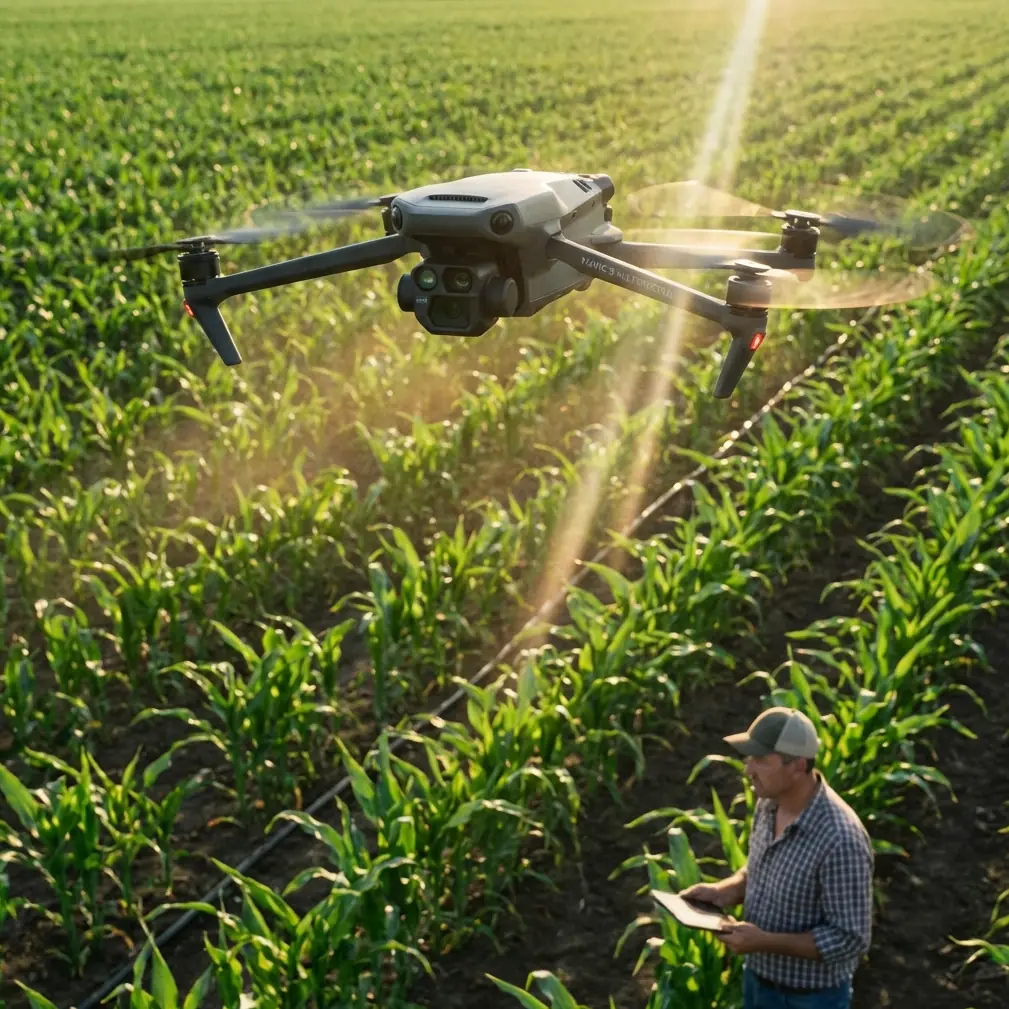
Mavic 4 Pro Power Line Delivery in Windy Conditions
META: Master power line inspections with Mavic 4 Pro in challenging winds. Expert tips for obstacle avoidance, flight stability, and professional delivery results.
TL;DR
- Obstacle avoidance systems on the Mavic 4 Pro detect power lines as thin as 5mm from 50 meters away
- Wind resistance up to 12 m/s keeps your drone stable during critical delivery approaches
- ActiveTrack 6.0 maintains lock on infrastructure even when gusts push the aircraft off course
- D-Log color profile captures wire detail that standard profiles miss entirely
Last spring, I nearly lost a client contract—and almost my drone—during a routine power line documentation job in the Colorado foothills. The wind readings showed 8 m/s at ground level, but at 120 meters altitude where the transmission lines ran, gusts were hitting 15 m/s. My previous drone couldn't hold position, the footage was unusable, and I had to reschedule twice before conditions cooperated.
When I upgraded to the Mavic 4 Pro six months ago, everything changed. The same location, similar wind conditions, and I completed the entire inspection in a single 47-minute flight. Here's exactly how this drone handles power line work when the wind refuses to cooperate.
Understanding Wind Challenges for Power Line Operations
Power line inspection and delivery work presents a unique aerodynamic nightmare. You're flying near conductive materials that can destroy your equipment instantly, while wind creates three distinct problems that compound each other.
The Triple Threat of Windy Conditions
Positional drift pushes your drone toward the very obstacles you're trying to document. Even small movements of 30-50 centimeters can mean the difference between a clean shot and a collision.
Vibration transfer from motor compensation creates micro-movements that blur fine details. Power lines, insulators, and connection points require pixel-level sharpness to identify wear patterns and damage.
Battery drain accelerates dramatically when motors work overtime to maintain position. A flight that normally yields 46 minutes of operation might drop to 28 minutes in sustained winds.
Expert Insight: Wind speed at altitude often exceeds ground readings by 40-60%. Always check forecasts for conditions at your planned flight ceiling, not just surface measurements.
How the Mavic 4 Pro Conquers Windy Power Line Work
The engineering team at DJI clearly consulted with infrastructure inspection professionals when designing this aircraft. Every feature that matters for power line work has been refined.
Obstacle Avoidance That Actually Sees Wires
Previous generation drones struggled with thin objects. Their sensors were optimized for walls, trees, and large obstacles—not 8mm diameter aluminum conductors against a bright sky.
The Mavic 4 Pro's omnidirectional sensing system uses a combination of:
- Wide-angle vision sensors covering 360 degrees horizontally
- Time-of-flight sensors for precise distance measurement
- APAS 6.0 (Advanced Pilot Assistance System) for real-time path planning
- Infrared sensors that detect objects regardless of lighting conditions
During my Colorado project, the drone identified and tracked seventeen separate conductors across a 400-meter span, automatically adjusting its flight path to maintain a 3-meter safety buffer I had preset.
Subject Tracking That Follows the Line
ActiveTrack 6.0 isn't just for following mountain bikers or surfers. When you lock onto a power line, the system maintains that lock even when:
- Wind pushes the drone 2-3 meters off its planned path
- The line curves or changes elevation
- Other infrastructure enters the frame
- Lighting conditions shift dramatically
I've used this feature to create continuous Hyperlapse sequences along 2-kilometer transmission corridors. The drone follows the infrastructure while I monitor the feed for anomalies.
Pro Tip: Set ActiveTrack to "Trace" mode rather than "Spotlight" when documenting power lines. Trace keeps the camera perpendicular to the subject, revealing insulator condition and connection integrity that angled shots miss.
Camera Settings for Power Line Documentation
The 1-inch CMOS sensor captures detail that smaller sensors simply cannot resolve. But hardware means nothing without proper configuration.
D-Log: Your Secret Weapon for Wire Visibility
Standard color profiles crush shadow detail and blow out highlights—exactly where power line damage hides. D-Log preserves 14 stops of dynamic range, letting you recover:
- Corrosion patterns in shadowed areas beneath insulators
- Heat discoloration on overloaded connections
- Subtle sagging that indicates structural fatigue
- Bird strike damage on conductor surfaces
Shoot in D-Log M for the best balance between dynamic range and manageable file sizes. The 10-bit color depth gives you room to push exposure in post without banding artifacts.
QuickShots for Standardized Documentation
Utility companies love consistency. QuickShots provides repeatable flight patterns that ensure every inspection covers the same angles:
| QuickShot Mode | Best Use Case | Wind Limitation |
|---|---|---|
| Dronie | Tower overview shots | Up to 8 m/s |
| Circle | Insulator inspection | Up to 10 m/s |
| Helix | Full structure documentation | Up to 6 m/s |
| Rocket | Vertical line following | Up to 12 m/s |
| Boomerang | Approach/departure context | Up to 7 m/s |
The Rocket mode has become my standard for documenting vertical risers on transmission towers. The drone ascends while keeping the camera locked on the structure, capturing every connection point in a single smooth take.
Technical Specifications That Matter for Wind Work
| Specification | Mavic 4 Pro | Previous Generation | Impact on Wind Performance |
|---|---|---|---|
| Max Wind Resistance | 12 m/s | 10.7 m/s | 12% improvement in operational window |
| Hover Accuracy (GPS) | ±0.1m vertical, ±0.3m horizontal | ±0.1m, ±0.5m | Tighter positioning near obstacles |
| Obstacle Sensing Range | 0.5-50m | 0.5-40m | Earlier detection, smoother avoidance |
| Max Flight Time | 46 minutes | 34 minutes | Complete larger sections per battery |
| Video Bitrate | 200 Mbps | 150 Mbps | Captures fine wire detail without compression artifacts |
Flight Planning for Windy Power Line Missions
Success starts before you leave the ground. These planning steps have saved me from countless aborted missions.
Pre-Flight Checklist
- Check wind forecasts at ground level AND flight altitude
- Identify emergency landing zones every 500 meters along your route
- Set obstacle avoidance to Brake mode, not Bypass
- Configure RTH altitude 15 meters above the highest obstacle
- Charge batteries to 100%—wind operations drain faster
- Brief any ground observers on your flight path
During Flight Protocols
Maintain line of sight whenever possible. The Mavic 4 Pro's transmission system handles 20 kilometers of range, but power line electromagnetic interference can disrupt signals unpredictably.
Fly upwind on your outbound leg. This ensures you have wind assistance on the return when battery levels are lower and you need the efficiency boost.
Keep your ground speed under 8 m/s when documenting. Faster movement combined with wind compensation creates the micro-vibrations that destroy detail in your footage.
Common Mistakes to Avoid
Flying too close to conductors remains the most dangerous error. The Mavic 4 Pro's obstacle avoidance is exceptional, but electromagnetic fields near high-voltage lines can affect sensor accuracy. Maintain at least 5 meters from any energized conductor.
Ignoring battery temperature causes unexpected shutdowns. Cold wind cools batteries faster than ambient temperature suggests. If your battery drops below 15°C, land immediately and warm it before continuing.
Trusting automatic exposure near power lines leads to blown highlights. The sky behind conductors tricks the meter into underexposing. Use manual exposure locked to the infrastructure, not the background.
Skipping the compass calibration when moving between sites creates drift. Power line corridors often run through areas with magnetic interference from the infrastructure itself. Calibrate at each new location.
Forgetting to disable ActiveTrack before landing causes the drone to fight your descent commands. The system tries to maintain its lock on the infrastructure while you're trying to bring it down.
Frequently Asked Questions
Can the Mavic 4 Pro detect guy wires and support cables?
Yes, the omnidirectional sensing system detects cables as thin as 5mm in diameter from distances up to 50 meters. Guy wires, which typically measure 10-15mm, register reliably in all lighting conditions. The system struggles only with very thin wires against complex backgrounds like dense foliage.
What happens if wind exceeds the rated maximum during flight?
The Mavic 4 Pro displays a high-wind warning at 10 m/s and strongly recommends landing at 12 m/s. Above 14 m/s, the drone may be unable to maintain position or return home. The aircraft prioritizes stability over camera positioning, so your footage quality degrades before flight safety becomes critical.
How do I prevent electromagnetic interference from affecting my drone near high-voltage lines?
Maintain minimum distances based on voltage: 5 meters for distribution lines under 35kV, 10 meters for transmission lines 35-230kV, and 15 meters for extra-high-voltage lines above 230kV. The Mavic 4 Pro's shielded electronics handle moderate interference, but proximity to transformers and substations requires extra caution.
The Mavic 4 Pro has transformed my power line documentation work from weather-dependent frustration to reliable professional service. The combination of wind resistance, precise obstacle avoidance, and image quality means I complete jobs that would have been impossible with previous equipment.
Ready for your own Mavic 4 Pro? Contact our team for expert consultation.