
Delivering Construction Sites in Low Light With Mavic 4 Pro
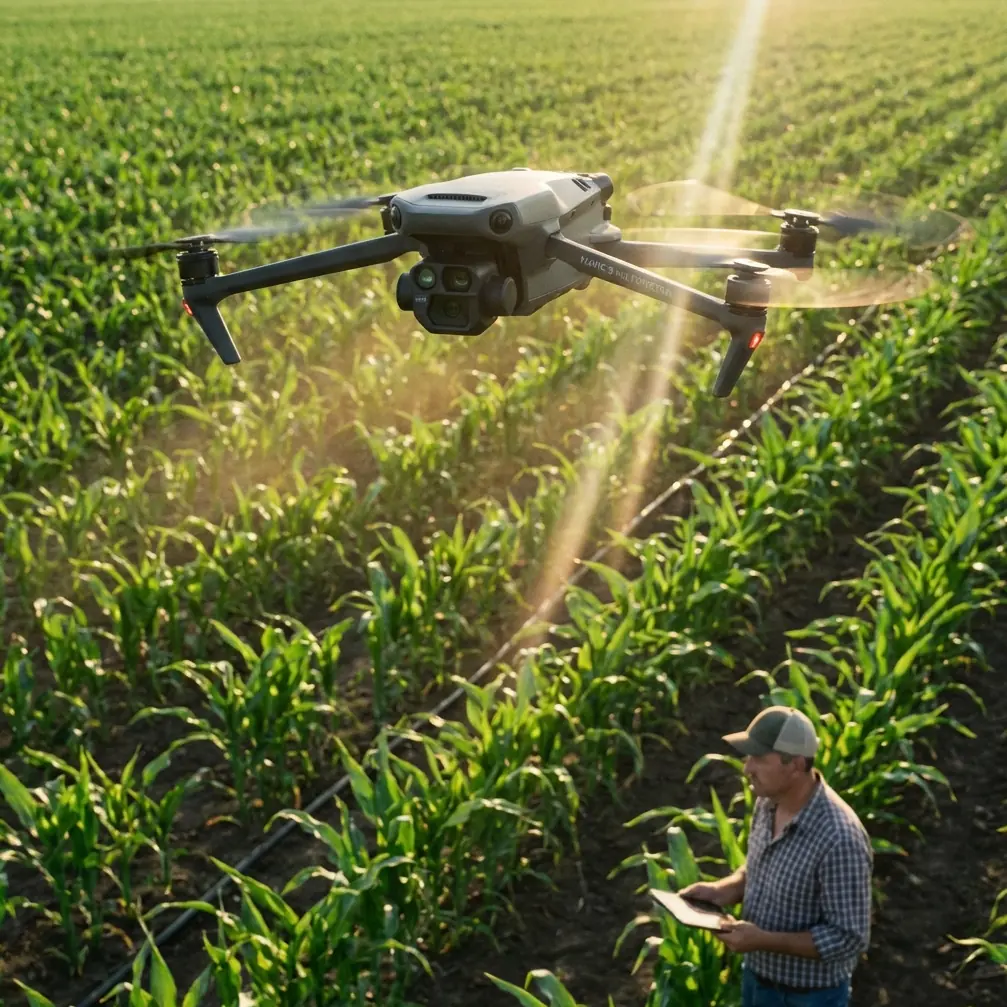
Delivering Construction Sites in Low Light With Mavic 4 Pro: A Field Tutorial Shaped by the New U.S. Approval Climate
META: Practical tutorial for using Mavic 4 Pro on low-light construction deliveries, with battery management, obstacle avoidance, ActiveTrack workflow, and why the FCC’s Sees.ai approval matters for U.S. drone operations.
Low-light construction work exposes every weak habit a drone operator has.
You notice it in the first minute: depth perception gets worse, cranes disappear into the background, rebar stacks become dark geometry, and the margin for error shrinks even before the payload leaves the ground. If your goal is delivering small tools, documents, sensors, or urgent components across a live construction site, the Mavic 4 Pro can be a useful platform only if the workflow is disciplined. The aircraft matters, but the operating method matters more.
This tutorial is built for that exact scenario. Not broad hobby flying. Not cinematic sightseeing. A real site, fading light, moving equipment, dust in the air, and a team waiting on the other side.
There is also a bigger industry reason this topic matters now. On April 15, 2026, DroneLife reported that the FCC granted conditional approval to the Sees.ai v.USA 1.0 uncrewed aircraft system, exempting it from the FCC’s Covered List restrictions. That is a very specific regulatory signal. It suggests there may be a viable path for foreign drone systems to operate inside U.S. requirements, even if the details remain limited. For professionals flying platforms like the Mavic 4 Pro in commercial environments, that development changes the conversation from simple hardware preference to compliance strategy, documentation, and operational trust.
That may sound abstract. It is not. If you are delivering around a construction site in the U.S., your client is not only evaluating whether the aircraft can fly in low light. They are also asking whether the system, the workflow, and the data handling fit an increasingly serious approval environment.
So let’s get practical.
Start by redefining “delivery” on a construction site
Most low-light site deliveries should be thought of as short-distance precision transfers, not transport missions.
That distinction helps. It forces you to limit payload class, simplify route planning, and choose landing or handoff points that reduce exposure to machinery, workers, and unfinished structures. On a construction project, speed is useful, but predictability is what keeps the operation acceptable to site management.
With the Mavic 4 Pro, the right use case is usually one of these:
- moving lightweight inspection items to an upper floor staging point
- carrying urgent paperwork or markup prints between site zones
- transferring small measurement tools or compact sensors
- supporting twilight progress checks while combining delivery with quick visual review
The aircraft’s obstacle avoidance and subject tracking features are helpful here, but neither should be treated as a substitute for route design. In low light, every automated system benefits from cleaner operating geometry. A simple corridor with known vertical clearance is better than trying to weave through active steel, scaffolding, and cable runs.
Why the FCC-Sees.ai decision matters to Mavic 4 Pro operators
The DroneLife report is not about the Mavic 4 Pro directly. Still, it matters.
The FCC’s conditional approval of Sees.ai v.USA 1.0 did two things at once. First, it exempted that specific system from Covered List restrictions. Second, it hinted that foreign-origin systems may still have a route into U.S. commercial acceptance if they can satisfy security expectations. The article also noted that public details about v.USA 1.0 remain limited, which is operationally significant in its own right.
Here is why.
When details are limited, operators are left with a familiar burden: proving their workflow is trustworthy even when the market lacks complete transparency. That affects procurement, client onboarding, and site access approvals. If you are deploying a Mavic 4 Pro for construction support, expect more questions about firmware control, data handling, connectivity practices, and mission boundaries than you would have seen a few years ago.
Operationally, that means your preflight package should include more than weather and battery status. It should also include:
- a written mission scope
- a data capture plan
- a statement of whether cloud sync is disabled or controlled
- crew roles for launch, visual observation, and delivery handoff
- geofencing and return-to-home settings tailored to the site
The FCC move around Sees.ai is a signal, not a blanket answer. For Mavic 4 Pro users, the lesson is straightforward: capability gets you noticed, but documented control gets you approved.
Build the low-light route before the drone powers on
Low-light errors often begin with a route that was designed in daylight logic.
Construction sites change by the hour. A path that looked wide at 4:30 p.m. can become a cluttered hazard by 6:15 p.m. once materials are shifted and temporary lighting creates glare or shadow pockets. Before launch, walk the route physically if possible. Not just the takeoff point. The route.
I look for four things:
Vertical traps
Tower crane lines, temporary power, pump booms, hanging netting, and exposed formwork.Visual confusion zones
Areas where bright floodlights crush contrast and make dark obstacles harder to separate in the live feed.Wind breaks and gust channels
Half-finished structures often create weird air movement around corners and lift shafts.Emergency hold points
Safe hover pockets where the aircraft can pause if workers move unexpectedly into the planned drop area.
This is where obstacle avoidance earns its place. On paper, it sounds like a protective layer. In practice, its real value on a low-light construction mission is confidence management. It gives you a second line of awareness while you maintain the first. That matters when your attention is divided between aircraft position, payload status, worker movement, and ambient light loss.
Still, obstacle avoidance performs best when it is helping a clean plan, not rescuing a bad one.
Camera settings are not just for footage
A lot of operators treat D-Log, QuickShots, Hyperlapse, and ActiveTrack as creative tools. On a construction site, they can also support communication and documentation if used correctly.
For the actual delivery leg, keep things simple. You want stable exposure, legible surfaces, and minimal distraction. But before or after the handoff, the Mavic 4 Pro can produce site visuals that save time for project managers.
D-Log for post-shift review
D-Log is useful when the site has mixed lighting: floodlights, fading sky, lit interiors, and dark raw concrete all in one frame. That wider grading flexibility can help if the footage will be reviewed later to confirm route conditions, landing area readiness, or progress around the drop zone.
Operational significance: in low light, preserving highlight and shadow detail can make a review clip far more useful than a standard high-contrast file, especially when the team wants to verify whether a delivery path was consistently clear.
ActiveTrack and subject tracking for escort scenarios
If a designated receiver is walking to a handoff point, subject tracking can help maintain visual context around that person’s position. I am careful with this. It is not about chasing workers around a site. It is about controlled visual reference in a pre-briefed corridor.
Operational significance: when a site receiver is moving through a partially lit area, ActiveTrack can reduce camera workload so the pilot can focus more attention on altitude, lateral clearance, and obstacle picture.
QuickShots and Hyperlapse for site communication, not the delivery itself
These modes are not something I recommend during an active payload transfer. But immediately after the mission, a short programmed move or a Hyperlapse sequence can provide managers with a compact visual update on work zones, crane positions, or access pathways. On busy projects, that kind of quick visual summary often becomes more valuable than people expect.
My battery management rule for low-light deliveries
This is the field tip I wish more pilots learned early: in low light, I mentally subtract one battery bar from whatever I think I have.
Not literally on the display. In my planning.
Here is why. Evening construction flights usually involve more hovering, more caution, more stop-and-confirm moments, and more route corrections than daylight runs. Add lower temperatures on some sites and the battery drain pattern gets less forgiving. You can finish the job with plenty of reserve on paper and still drift into a bad decision cycle if the receiving area is delayed or workers are not ready.
My rule is simple:
- launch only if the mission can be completed with a reserve that feels excessive
- plan the return as if headwind will worsen
- do not begin the delivery leg if the handoff zone is still being organized
- never use “we’re already here” as a battery strategy
A practical version of this is the 50/30 rule I use on tight commercial site runs:
- target payload handoff before the pack reaches roughly 50 percent
- aim to be committed to the return with no less than about 30 percent unless the route is extremely short and verified clear
That is not a universal flight standard. It is a discipline tool. It prevents the most common low-light mistake: stretching the final minutes because the mission is almost done.
The Mavic 4 Pro is more useful when the pilot is willing to end a run early and relaunch with a fresh battery instead of squeezing one pack for convenience. On construction jobs, crew patience is easier to recover than aircraft margin.
A sample low-light delivery workflow
Here is the workflow I recommend for small-item transfers across a construction site.
1. Confirm the site lighting map
Identify where fixed lights create glare, where shadows hide protrusions, and where upper levels are less visible than they appear from the ground.
2. Mark a conservative route
Choose the simplest path with the fewest elevation changes. If there are cranes, booms, or temporary lines nearby, widen your corridor.
3. Set return-to-home thoughtfully
A generic return altitude is risky on changing job sites. Make sure your settings reflect current structure heights, not last week’s memory.
4. Brief the receiver
The handoff point should be static, visible, and free of casual foot traffic. If the receiver is moving, establish a stop point before the aircraft arrives.
5. Check obstacle avoidance status
Do not assume. Confirm. In low light, I want every relevant sensing aid available, but I also want to know exactly how the aircraft is expected to behave if it detects an obstacle.
6. Keep the live feed readable
Avoid overcomplicating exposure. You are flying a mission, not making a showreel. If the image is too dark to interpret reliably, stop and adjust before continuing.
7. Deliver, hold briefly, then exit cleanly
Once the handoff is complete, don’t linger over the work area. Climb or retreat along the planned exit path and regain a safer buffer.
8. Log anomalies immediately
If a floodlight blinded the camera, if a steel member created an unexpected visual dead zone, if the receiver moved late, write it down. The next flight gets safer only if the last one was documented honestly.
The compliance conversation clients are starting to have
Because of developments like the FCC’s conditional approval of Sees.ai v.USA 1.0, clients are starting to separate “can it fly” from “can we approve it.” That distinction matters for every operator using a Mavic 4 Pro in commercial construction.
Even though the DroneLife report stressed that public information on Sees.ai’s approved system is limited, the message is clear enough: regulators may allow pathways for foreign drone systems, but acceptance is likely to hinge on how clearly security and operational controls are addressed.
That affects site work directly. If you want repeatable access to construction clients, your operational packet should answer questions before legal or IT teams ask them. Explain where imagery goes. Explain what radios are active. Explain whether the mission is purely visual line of sight, whether footage is retained, and how the aircraft is configured before launch.
The pilots who keep winning work are not just better fliers. They remove uncertainty.
If your team is building that kind of low-light construction workflow and wants a practical discussion, you can message us here to compare setup choices and field procedures.
Final field advice for Mavic 4 Pro at dusk
The best low-light delivery pilots are usually the least dramatic people on site.
They do not improvise routes because someone is in a hurry. They do not trust a sensor more than a site walk. They do not burn the last quarter of the battery trying to avoid a second trip. They use the Mavic 4 Pro’s obstacle avoidance, tracking tools, and image options as support systems, not magic.
And now there is a wider industry layer on top of that discipline. With the FCC granting conditional approval to Sees.ai v.USA 1.0 and exempting it from Covered List restrictions, U.S. operators have a fresh reminder that the future of commercial drone work will be shaped by more than flight performance alone. Approval pathways, transparency, and security alignment are becoming part of the operational skill set.
For construction deliveries in low light, that is not bad news. It simply rewards the crews who are already doing the basics well: plan tightly, document clearly, manage batteries conservatively, and never let fading daylight convince you that “close enough” is good enough.
Ready for your own Mavic 4 Pro? Contact our team for expert consultation.