
Mavic 4 Pro in Harsh Field Conditions: A Practical Case
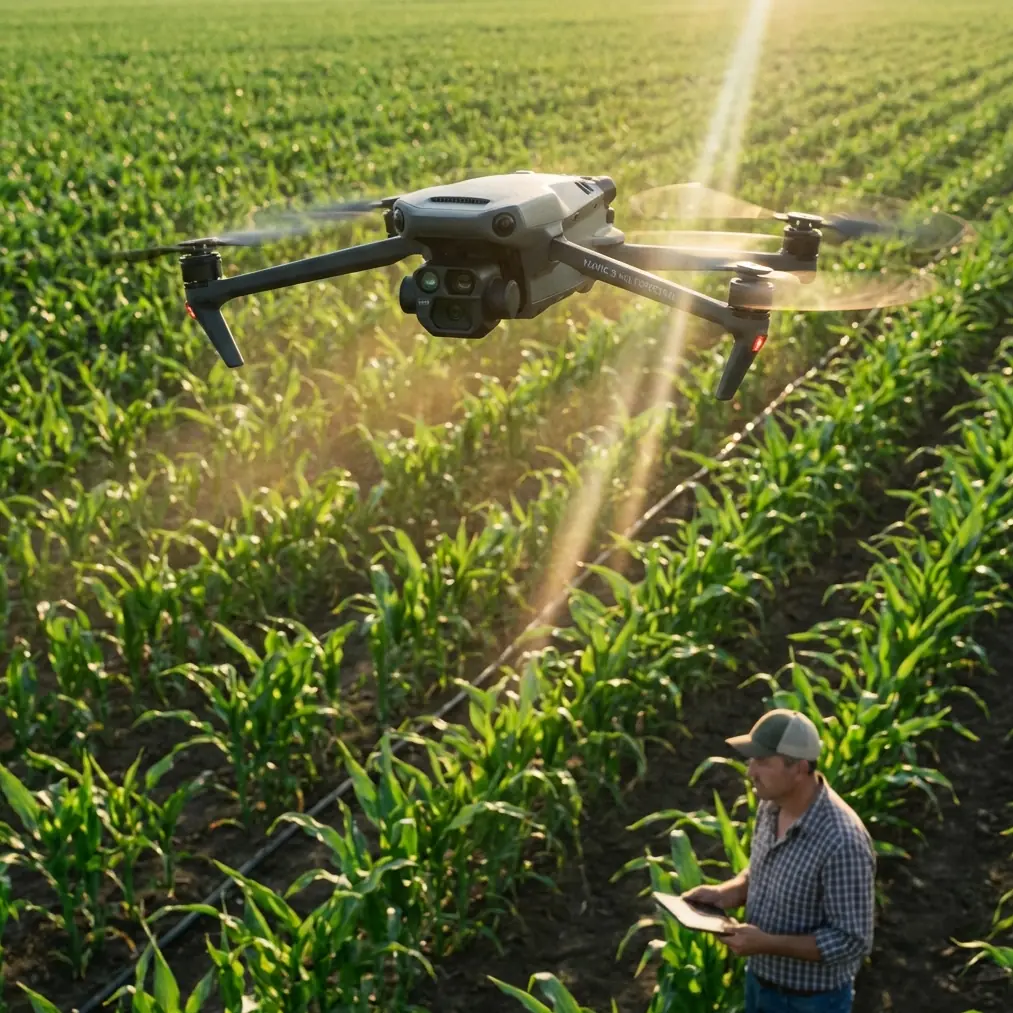
Mavic 4 Pro in Harsh Field Conditions: A Practical Case Study for Mapping-Critical Work
META: A field-focused Mavic 4 Pro case study on capturing farmland in extreme temperatures, with lessons on elevation accuracy, terrain complexity, water-adjacent mapping, and workflow decisions that matter.
When people talk about using a Mavic 4 Pro over fields, the conversation usually drifts toward image quality, tracking, or cinematic flight modes. That misses the point for real fieldwork.
Out in agricultural blocks, reclaimed land, irrigation corridors, and mixed terrain parcels, the hard part is not getting footage. It is getting usable data when the environment fights back. Heat shimmer. Cold batteries. Low-contrast ground. Wet edges near canals. Uneven terrain that looks simple from the road but becomes messy the second you try to build a dependable elevation model.
This case study is built around that reality.
I approached this from the perspective of a creator-operator, but also with the discipline of a survey-aware UAV professional. The aircraft in focus is the Mavic 4 Pro. The scenario: capturing fields in extreme temperatures, while trying to preserve enough consistency for mapping-style outputs and repeatable visual documentation. The key lesson came from an old but still highly relevant photogrammetry principle in the reference material: elevation error is never one-size-fits-all. It changes with terrain category, water conditions, and operational difficulty. That single idea reshapes how a Mavic 4 Pro mission should be planned.
The field job that looked easy on paper
The site was a broad agricultural zone with flat production areas, raised access roads, drainage cuts, and a few water-adjacent sections where the ground transitioned into shallow wet margins. At first glance, it suggested a standard grid mission and maybe a second creative pass for progress visuals.
That assumption would have been a mistake.
The reference document separates terrain into categories such as flat land, hilly ground, mountainous areas, and high mountain areas. It also treats water separately, using underwater slope angle bands like α < 3°, 3° ≤ α < 10°, 10° ≤ α < 25°, and α ≥ 25°. That may sound far removed from a Mavic 4 Pro field flight, but operationally it is the difference between a smooth workflow and a misleading deliverable.
Why? Because the drone sees a field as texture, light, and geometry. The final model, though, is judged by elevation behavior. Flat cropland and embankment edges do not tolerate the same assumptions. Wet zones add another layer of uncertainty, especially when the waterline is visually ambiguous or sediment changes the apparent surface.
So instead of treating the mission as one flight over “a field,” we broke it into surface behavior zones.
What extreme temperatures actually changed
Temperature stress influenced nearly every decision.
In hot conditions, the issue was not just battery endurance. The bigger problem was mid-day instability in image consistency. Thermal shimmer over fields can subtly degrade reconstruction quality even when the footage looks fine on the controller screen. In cold conditions, the concern shifted toward battery performance, speed control, and keeping motion predictable during low-level passes.
That made the Mavic 4 Pro’s automated assistance valuable, but only if used selectively. Obstacle avoidance helped on perimeter runs near tree lines and utility edges, especially when attention had to stay on exposure and line spacing. ActiveTrack and subject tracking were useful for documenting moving agricultural equipment during secondary visual sequences, but they were not the core of the mission. The core was repeatability.
This is where many field operators overuse smart features. QuickShots and Hyperlapse can absolutely support client-facing reporting, especially for showing crop progress or drainage patterns over time. But if you are also trying to derive meaningful terrain insight, those modes are supporting actors. The lead role belongs to disciplined flight geometry and consistent capture conditions.
I used D-Log for the visual documentation segment because harsh sun and reflective wet patches pushed dynamic range hard. That gave more room to balance highlights on water-adjacent edges and recover shadow detail along berms. For analysis-oriented passes, consistency mattered more than style.
The reference detail that changed the mission plan
One line in the source material deserves more attention than it usually gets: for digital elevation models, the permissible value should be chosen according to the model scale and terrain category, following the contour interval rules used for topographic mapping.
That matters because it forces the operator to think backward from the intended output.
Too many drone missions start with whatever altitude feels convenient, then hope the model will be “good enough.” The reference turns that around. If the end product is a DEM or terrain-informed field record, then terrain type governs expectations from the start. Flat agricultural plots can appear forgiving, but small elevation inaccuracies there can hide drainage defects, irrigation pooling, or grading irregularities. In more broken terrain, the same nominal capture pattern may produce inconsistent vertical behavior unless overlap, viewing geometry, and edge coverage are adapted.
For the Mavic 4 Pro, that translated into a simple rule on this job: no single mission template for the entire property.
The flat central blocks received a more efficient capture pattern. The raised boundaries, drainage edges, and transition zones got denser attention. Not because the drone demanded it, but because the terrain did.
Water margins were the real trap
The second crucial detail from the reference was even more practical: when water mapping is difficult, when water depth exceeds 20 cm, or when engineering accuracy demands are lower, the mapping tolerance for water areas may be relaxed by 1 times. The original source also notes that concealed or difficult-to-survey general areas may be relaxed by 50%.
That is not permission to get sloppy. It is a warning label.
Along the field edges, shallow irrigation channels and saturated ground created exactly the kind of ambiguity that can fool photogrammetry. The camera may see reflections, suspended sediment, submerged vegetation, and a vague edge between land and water. If you force those surfaces into the same confidence level as dry ground, you risk presenting false precision.
With the Mavic 4 Pro, the practical response was threefold:
Separate wet-edge interpretation from dry-ground mapping.
The visual boundary was documented carefully, but not treated as equally reliable terrain everywhere.Adjust expectations where water depth and visibility reduced confidence.
The source threshold of more than 20 cm is operationally useful because it reminds you that once depth increases, the apparent bottom and true surface relationship gets less dependable for standard aerial interpretation.Use the drone for layered evidence, not just one model.
I combined nadir-style field coverage with lower-angle visual passes to show canal condition, bank stability, and vegetation encroachment. The Mavic 4 Pro’s imaging flexibility helped build a more honest record than a single orthographic output could.
That is one of the most underrated uses of this class of aircraft. It is not only a flying camera. It is a tool for separating what is measurable, what is inferable, and what should be flagged as uncertain.
Where a third-party accessory earned its place
The best upgrade on this project was not exotic. It was a third-party battery warming and storage solution paired with a high-visibility sun hood for the controller.
The battery side mattered in cold starts. Stable battery temperature reduced the performance dip that can show up early in the flight and made the first mapping run less hesitant. The sun hood mattered in the opposite extreme. On bright field days, especially over pale soil or reflective wet strips, it improved screen readability enough to catch subtle framing and exposure issues before they turned into a post-processing surprise.
Neither accessory changed the Mavic 4 Pro itself. Both changed operator confidence. That is usually the better investment.
If you are comparing setups for field capture in harsh climates and want to sanity-check accessories or workflow choices, I’d point people to this direct WhatsApp line for field-kit discussion: https://wa.me/85255379740
What the Mavic 4 Pro did well in the field
The aircraft’s biggest strength in this scenario was balance.
It could handle disciplined agricultural coverage, then pivot into visual storytelling without changing platforms. That matters for farms, land consultants, agronomists, and rural project managers who need both technical context and communication-ready media from the same day in the field.
A few areas stood out:
Stable transition between documentation styles
After the structured capture runs, I used ActiveTrack for moving equipment along service roads and irrigation lines. That added context to the final report. A static map can show where a route exists. A tracked pass can show whether access is actually usable under current field conditions.
Obstacle handling near mixed edges
Obstacle avoidance was most useful around shelterbelts, isolated poles, and uneven edge growth. In open farmland, people sometimes dismiss it as irrelevant. That is shortsighted. The risk is often not in the center of the field. It is on the approach, turnaround, or low-altitude side pass where attention is divided.
Flexible visual outputs for stakeholders
QuickShots and Hyperlapse were not mission-critical for the terrain work, but they were effective for stakeholder communication. A short time-compressed sequence over the field edge made drainage progression easier to explain than a still image ever could. That matters when the audience includes landowners or project managers who do not think in contour logic.
Better highlight control with D-Log
Harsh temperature days often coincide with harsh light. D-Log helped preserve recoverable detail in reflective sections and dusty surfaces with bright specular hits. That gave the reporting package a cleaner, less brittle look while maintaining enough visual nuance to support interpretation.
The lesson most pilots skip
The smartest thing we did was lower our confidence where the environment deserved it.
That sounds negative, but it is the mark of mature drone operations. The reference material makes this explicit through its tolerance adjustments. Hidden or difficult general areas may be relaxed by 50%. Difficult water-area mapping may be relaxed by 1 times under certain conditions. Those are not bureaucratic footnotes. They are operational truths.
If your field mission includes flat plots, hilly margins, embankments, drainage trenches, or shallow water, you are not collecting one kind of surface. You are collecting several, each with different reliability. The Mavic 4 Pro gives you enough control and imaging versatility to handle that well, but only if you stop pretending the whole site behaves the same way.
This is especially relevant in extreme temperatures. Environmental stress already chips away at consistency. Add variable terrain and wet surfaces, and any lazy assumption gets amplified.
A better way to think about “capturing fields with M4P”
The Mavic 4 Pro is not just for pretty crop flyovers. It becomes far more valuable when you treat it as a field evidence platform.
That means:
- using terrain categories to set capture strategy rather than flying one generic grid
- recognizing that DEM expectations should match model scale and landform complexity
- treating water-adjacent zones with caution, especially once depth moves beyond 20 cm
- accepting that difficult or concealed areas may justify looser tolerance, rather than fake precision
- using smart flight features as support tools, not substitutes for planning
For agricultural users, land improvement teams, and site documentation professionals, that mindset is where the aircraft starts paying back in real operational value.
The flight itself may last under an hour. The consequences of bad assumptions can last through an entire project cycle.
The Mavic 4 Pro handled the heat, the cold, and the mixed field geometry well. But the strongest result did not come from the drone alone. It came from respecting the limits described in photogrammetry standards and then building a field workflow around them. That is what turns a capable UAV into a dependable one.
Ready for your own Mavic 4 Pro? Contact our team for expert consultation.