
Mavic 4 Pro in Low Light: A Field Report From the Edge
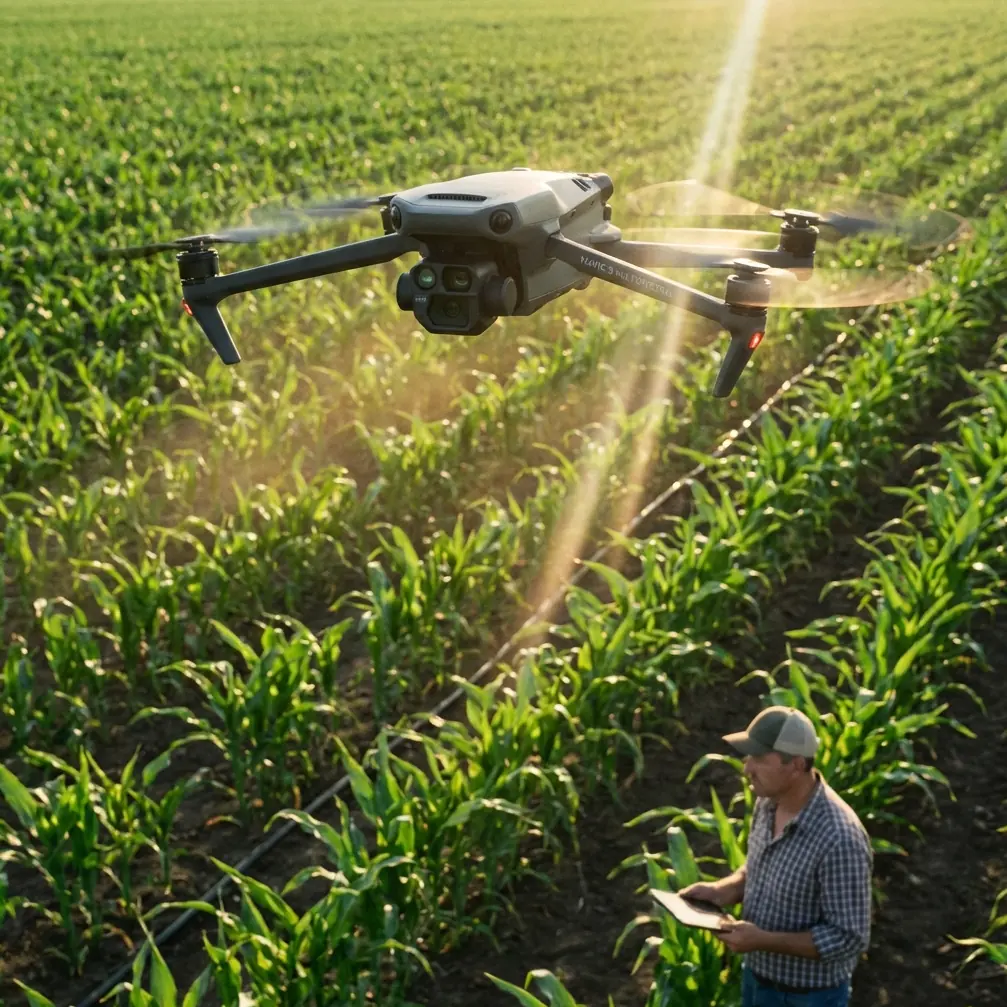
Mavic 4 Pro in Low Light: A Field Report From the Edge of Civil Twilight
META: A field-tested look at using the Mavic 4 Pro for low-light field capture, with practical advice on obstacle avoidance, D-Log workflow, tracking limits, and a critical pre-flight cleaning step.
Low-light flying reveals what a drone is really made of.
Midday footage can flatter almost any modern camera platform. Give it broad daylight, clean contrast, and a forgiving scene, and even average flight decisions can look competent. The real test comes when the light starts to drain out of a landscape and the terrain turns visually ambiguous. That is especially true over agricultural fields, where repeating rows, irrigation lines, dust, haze, and sparse edge detail can confuse both the pilot and the aircraft.
If your goal is to capture fields in low light with the Mavic 4 Pro, you need to think beyond exposure. This is not just a camera problem. It is a sensing problem, a flight planning problem, and a discipline problem.
That is why one of the smartest habits before a dusk mission has nothing to do with ISO or shutter speed. It is cleaning the aircraft properly before takeoff, especially the vision sensors and camera glass. On paper, that sounds minor. In practice, it can be the difference between reliable obstacle avoidance behavior and a drone that hesitates, detours unpredictably, or throws warnings just as the light drops below your comfort zone.
I treat this as non-negotiable. Before any evening launch, I wipe the front, rear, downward, and lateral sensing surfaces, then inspect the main lens for smudges that might bloom highlights from distant lamps, farm buildings, or vehicle headlights. Low light amplifies contamination. A faint fingerprint that barely matters at noon can scatter enough light at dusk to soften micro-contrast, reduce scene clarity, and undermine autofocus confidence. The same logic applies to obstacle sensing: dirt, pollen, and residue reduce the quality of what the system sees when it already has less visual information to work with.
That matters because field work at twilight often tempts pilots into flying lower than they should. The geometry looks simple from above, but utility poles, fence wires, tree margins, pivot equipment, and uneven rises along drainage cuts can become hard to judge when the scene turns monochromatic. Obstacle avoidance is a support system, not a license to relax. On the Mavic 4 Pro, its real value in low light is not just stopping you from hitting something obvious. It is buying you extra decision time when detail is thinning out and depth cues are weaker than they look on the screen.
The pilots who get consistently usable low-light footage from farmland are usually the ones who build margin into the whole mission. They launch earlier than needed, establish their route while the scene still holds shape, and use the fading light for the capture pass rather than for setup. That distinction is operationally significant. You want the aircraft, home point, return path, and obstacle map established before visual conditions degrade. Once the field drops into that blue-gray phase where crop rows flatten into texture and hedgerows merge into a dark band, every mistake costs more time and more battery than it should.
This is also where the Mavic 4 Pro’s tracking tools need a sober mindset. ActiveTrack and broader subject tracking features are useful, but low light reduces the margin for automation. If you are tracking a combine, utility vehicle, or a person walking a field perimeter, the aircraft may still maintain lock well enough in dim conditions, but reliability is shaped by contrast, subject separation, and background complexity. A white truck on a dark dirt road is one thing. A dark ATV moving along a tree-lined boundary at dusk is another. Tracking works best when you set it up while the subject is still clearly defined and the route is free of hidden vertical hazards.
I have seen experienced operators overestimate what automation can do in failing light. The mistake is not using ActiveTrack. The mistake is assuming it sees the scene the way your brain sees the scene. Human perception fills in missing detail. Vision systems do not improvise that way. They need enough clean visual data to classify the subject and the environment. That is one reason the pre-flight cleaning step matters so much. If the sensors are already fighting reduced ambient light, do not make them fight dust as well.
Camera settings deserve equal discipline. The Mavic 4 Pro gives you room to shape a low-light image, but field conditions punish indecision. I generally want shutter speed tied first to the kind of motion I am capturing. If I am shooting slow lateral reveals over rows or irrigation patterns, I can tolerate a slower shutter than I would for fast orbiting or aggressive forward movement. The temptation is to let shutter fall too far just to preserve a lower ISO. Sometimes that works. Often it turns crop texture into mush and makes small yaw corrections look worse than they felt in real time.
D-Log is especially useful here, not because it magically fixes underexposure, but because it preserves grading flexibility in difficult tonal scenes. Twilight over open land often compresses the image into subtle shadow separations rather than bright highlights. If you expose carelessly, the field becomes a flat block and the sky turns noisy long before the clip reaches the edit. D-Log helps protect those tonal transitions, particularly when the horizon still carries a thin seam of light and the foreground is sliding into darkness. The operational significance is simple: if your final deliverable needs to show field boundaries, crop texture, moisture variation, or machinery movement without crushing everything below midtone, a flatter recording profile gives you more room to recover balance later.
That said, low-light field work is not a contest to see how dark you can fly. It is a timing exercise. The best window is usually not full darkness but the period just before it, when the sky still provides enough environmental fill for the aircraft’s sensing and your composition still has structure. There is a big visual difference between “low light” and “too late.” The first gives you atmosphere. The second gives you noise, weak subject separation, and nervous flying.
QuickShots and Hyperlapse can be effective in this window, but only if you adapt them to the terrain. Over open fields, a standard automated move can look elegant because the geometry is clean and repetitive. The risk is that automation encourages you to accept a path you would not manually choose. At dusk, I prefer to preview the airspace manually before committing to any repeatable automated pattern. Hyperlapse is particularly sensitive to stability, route consistency, and changing light levels. If the field contains isolated trees, grain bins, irrigation rigs, or power structures, those elements can either anchor the sequence beautifully or wreck it if you have not built enough clearance into the move.
Battery strategy becomes more serious in low light than many pilots admit. Not because darkness drains cells faster, but because uncertainty drains confidence faster. When the view gets murky, pilots take longer to confirm orientation, longer to validate return paths, and longer to decide whether the shot is complete. That eats reserve. In agricultural environments, where the landing zone may be dusty, uneven, or bordered by tall grass, it is smart to end with more battery than you think you need. Precision matters more when visual references are fading.
I also advise checking the takeoff area for dust before launch and after landing. Dry field edges can throw fine debris into the air, and that material has a bad habit of settling exactly where you do not want it: on the lens cover, gimbal housing, and sensor windows. A clean aircraft at the start of the flight does not guarantee a clean aircraft midway through the session if you are doing multiple sorties from the same patch of dirt. If I am running several evening flights, I inspect the aircraft between every pack. It takes less than a minute and prevents the sort of creeping image degradation that people often blame on the camera instead of contamination.
For creators documenting agricultural operations, the Mavic 4 Pro shines when you lean into what low light does well. It simplifies busy scenes. It emphasizes shape over color. It makes machine lights, dust trails, irrigation reflections, and boundary lines feel more deliberate. The strongest footage I get in fields at dusk is rarely the most technically ambitious. It is the footage with clear intent: a measured tracking pass along crop rows, a slow rise revealing the last ambient light on a field edge, a static hover capturing movement below, or a restrained orbit that keeps the horizon stable and the scene readable.
This is also one of the best times to think like an editor while you fly. Ask what the sequence needs. If the answer is context, fly higher and slower. If the answer is machinery detail, lower your altitude but reduce lateral speed and watch for obstacles that disappear into silhouette. If the answer is atmosphere, hold the frame longer than feels natural in the field. Low-light footage often becomes more powerful in the edit when given time to breathe.
The Mavic 4 Pro can absolutely handle this kind of work, but only if the operator respects the conditions. Low light over farmland is deceptively clean from a creative standpoint and deceptively demanding from an operational one. The tools are there: obstacle avoidance for additional spatial awareness, ActiveTrack for controlled subject follow work, D-Log for post flexibility, QuickShots and Hyperlapse for structured motion. But those features only deliver when the basics are handled first.
And the basics start before the motors spool up.
Clean the lens. Clean the vision sensors. Verify your route while there is still usable detail in the scene. Build your shot list around the light you actually have, not the light you wish were there. Use automation selectively, not hopefully. Keep extra battery margin. Recheck the aircraft if you are launching from dusty ground.
Those habits may not sound cinematic, but they are the reason cinematic footage survives the real world.
If you are planning a low-light field workflow and want to compare settings, route ideas, or sensor prep practices with another pilot, I would point you to this direct chat link: https://wa.me/example. Sometimes one practical conversation saves an entire evening mission.
The Mavic 4 Pro rewards careful operators. In bright conditions, that can be easy to miss. In low light, it becomes obvious fast.
Ready for your own Mavic 4 Pro? Contact our team for expert consultation.