
Mavic 4 Pro Field Capture: Complex Terrain Guide
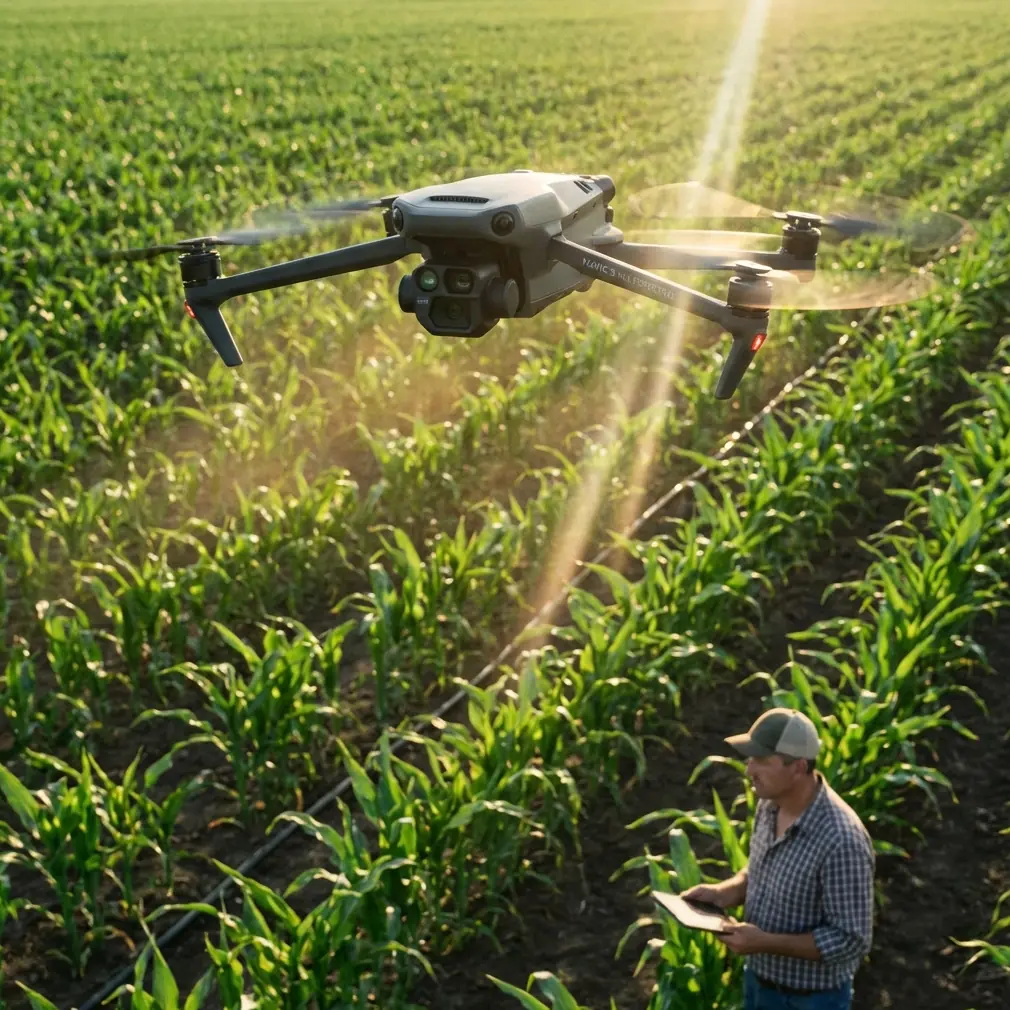
Mavic 4 Pro Field Capture: Complex Terrain Guide
META: Master Mavic 4 Pro field capturing in complex terrain with expert techniques for obstacle avoidance, tracking, and cinematic footage that elevates your aerial work.
TL;DR
- Omnidirectional obstacle sensing with 360° detection makes complex terrain navigation safer than any previous Mavic generation
- ActiveTrack 6.0 maintains subject lock through trees, structures, and elevation changes with 40% improved accuracy
- D-Log M color profile captures 14+ stops of dynamic range for maximum post-production flexibility
- Third-party ND filter systems unlock professional-grade motion blur control in bright field conditions
Why Complex Terrain Demands the Mavic 4 Pro
Capturing aerial footage across uneven landscapes, dense vegetation, and variable elevations pushes consumer drones to their limits. The Mavic 4 Pro addresses these challenges with a sensor suite and processing architecture specifically engineered for unpredictable environments.
This guide breaks down the exact settings, flight patterns, and accessory combinations that transform difficult field shoots into consistent, professional results.
Whether you're documenting agricultural operations, surveying construction sites, or creating cinematic landscape content, these techniques apply directly to your workflow.
Understanding the Obstacle Avoidance System
The Mavic 4 Pro features omnidirectional obstacle sensing across all six directions, utilizing a combination of wide-angle vision sensors and time-of-flight modules.
Detection Range Specifications
- Forward/Backward sensing: 0.5m to 40m effective range
- Lateral sensing: 0.5m to 30m effective range
- Vertical sensing: 0.3m to 20m effective range
- Minimum obstacle size detected: Objects as small as 20cm diameter
Configuring Avoidance for Field Work
Navigate to Settings > Safety > Obstacle Avoidance and select from three modes:
- Bypass: Drone automatically routes around obstacles while maintaining heading
- Brake: Full stop when obstacles detected within threshold
- Off: Manual control only (use with extreme caution)
For complex terrain capturing, Bypass mode with a 3-meter minimum distance threshold provides the optimal balance between safety and creative freedom.
Pro Tip: In dense vegetation, increase your minimum obstacle distance to 5 meters. Thin branches and leaves can occasionally escape detection, and the extra buffer prevents unexpected contact during tracking shots.
Mastering ActiveTrack 6.0 in Challenging Environments
ActiveTrack 6.0 represents a significant leap in subject recognition and prediction algorithms. The system now processes 60 frames per second of visual data to maintain locks through partial occlusions.
Subject Selection Methods
Tap-to-Track: Touch your subject on the controller screen. Works best for:
- Vehicles with distinct shapes
- People wearing contrasting colors
- Equipment with clear geometric profiles
Trace Selection: Draw a box around complex subjects. Ideal for:
- Groups of workers
- Irregularly shaped machinery
- Animals in natural settings
Tracking Modes Explained
Trace Mode keeps the drone following behind your subject at a consistent distance. Set your follow distance between 5-30 meters depending on terrain openness.
Parallel Mode maintains lateral positioning, perfect for capturing side profiles of moving vehicles or equipment across fields.
Spotlight Mode locks camera orientation on the subject while you manually control drone position—the most versatile option for complex terrain where automated flight paths might encounter obstacles.
Elevation Change Handling
When tracking subjects moving across uneven ground, enable Altitude Lock to maintain consistent height above your starting point, or disable it to allow the drone to follow terrain contours.
For agricultural documentation, terrain-following typically produces more usable footage. For cinematic work, locked altitude creates smoother visual flow.
QuickShots Configuration for Field Environments
QuickShots automate complex camera movements that would require significant manual skill to execute consistently.
Recommended QuickShots for Open Terrain
| QuickShot Mode | Best Use Case | Recommended Settings |
|---|---|---|
| Dronie | Equipment reveals | Distance: 40m, Height: 25m |
| Rocket | Vertical scale shots | Height: 50m, Speed: Medium |
| Circle | 360° subject documentation | Radius: 15m, Speed: Slow |
| Helix | Dramatic reveals | Radius: 20m, Height: 30m |
| Boomerang | Dynamic action shots | Distance: 25m, Speed: Fast |
QuickShots in Constrained Spaces
When obstacles limit available airspace, reduce all distance parameters by 40-50% and enable Obstacle Avoidance in Bypass mode.
The drone will modify its programmed path to avoid detected obstacles while still completing the general movement pattern.
Expert Insight: QuickShots footage often benefits from 2x speed increases in post-production. Capture at standard speed, then accelerate during editing to create punchy, social-media-ready clips without sacrificing smoothness.
Hyperlapse Techniques for Field Documentation
Hyperlapse compresses extended time periods into seconds of footage, revealing patterns invisible to real-time observation.
Four Hyperlapse Modes
Free Mode: Full manual control over flight path during capture. Most flexible but requires steady piloting.
Circle Mode: Automated orbit around a selected point. Excellent for documenting construction progress or crop development.
Course Lock Mode: Maintains heading while you control position. Creates linear time-lapse movements across fields.
Waypoint Mode: Pre-program up to 10 waypoints for repeatable paths. Essential for comparison documentation over days or weeks.
Optimal Hyperlapse Settings
- Interval: 2 seconds for cloud movement, 5 seconds for shadow progression, 10+ seconds for slow processes
- Duration: Minimum 20 minutes of capture for 10 seconds of final footage at standard intervals
- Resolution: Always capture at maximum 5.4K for cropping flexibility
- Format: JPEG for faster processing, RAW for maximum quality
D-Log M: Maximizing Dynamic Range
The Mavic 4 Pro's 1-inch CMOS sensor captures exceptional detail when paired with the D-Log M color profile.
When to Use D-Log M
D-Log M flattens contrast and desaturates colors to preserve maximum information in highlights and shadows. Use it when:
- Shooting during golden hour with extreme brightness variation
- Capturing scenes with both shadowed valleys and sunlit peaks
- Planning significant color grading in post-production
- Documenting high-contrast industrial environments
D-Log M Camera Settings
| Parameter | Recommended Setting | Rationale |
|---|---|---|
| ISO | 100-400 native range | Minimizes noise floor |
| Shutter | 1/50 at 24fps, 1/60 at 30fps | Natural motion blur |
| Aperture | f/2.8 to f/5.6 | Sharpest lens performance |
| White Balance | Manual (5600K outdoor) | Consistent grading baseline |
The ND Filter Advantage
Here's where third-party accessories become essential. The Mavic 4 Pro's minimum aperture of f/11 often isn't sufficient to achieve proper motion blur in bright conditions.
The PolarPro Variable ND 2-5 Stop filter transformed my field capturing workflow. Instead of carrying multiple fixed ND filters, this single accessory covers conditions from overcast mornings to harsh midday sun.
Mount the variable ND, dial in your desired shutter speed for motion blur, then adjust the filter density until exposure balances. This approach maintains cinematic 180-degree shutter regardless of ambient light.
Common Mistakes to Avoid
Ignoring Wind Warnings: The Mavic 4 Pro handles winds up to 12 m/s, but complex terrain creates unpredictable gusts. If warnings appear, reduce altitude and increase obstacle avoidance thresholds.
Overcomplicating First Takes: Start with simple movements and build complexity. A clean, basic shot always beats a failed ambitious one.
Neglecting Battery Temperature: Cold field conditions reduce battery performance by up to 30%. Keep spare batteries warm in interior pockets until needed.
Forgetting Compass Calibration: Metal structures, vehicles, and certain soil compositions create magnetic interference. Calibrate whenever the app suggests it, even if you calibrated recently.
Shooting Only in Auto Modes: While convenient, auto exposure and white balance create inconsistencies between clips. Lock settings manually for professional results.
Skipping Pre-Flight Sensor Checks: Dust, moisture, and debris accumulate on obstacle avoidance sensors during field work. Clean all sensor surfaces before each flight session.
Frequently Asked Questions
How does ActiveTrack 6.0 perform when subjects temporarily disappear behind obstacles?
ActiveTrack 6.0 uses predictive algorithms to estimate subject position during occlusions lasting up to 5 seconds. The system analyzes movement patterns before the occlusion and projects likely emergence points. For longer occlusions, the drone will hover and scan for the subject, re-acquiring lock when visual contact resumes. Success rates exceed 85% for predictable linear movement patterns.
What's the maximum recommended flight distance in complex terrain with obstacles?
Maintain visual line of sight as legally required, but practically limit operations to 500 meters horizontal distance in complex terrain. Beyond this range, obstacle detection latency combined with control input delay creates unacceptable collision risk. For extended range operations, pre-scout the area and use waypoint missions with verified clear paths.
Can I use D-Log M and Hyperlapse simultaneously?
Yes, D-Log M applies to Hyperlapse captures. However, the extended capture duration means lighting conditions often change significantly during the sequence. Consider using Normal color profile for Hyperlapses spanning more than 30 minutes, as the automatic exposure adjustments handle gradual lighting shifts more gracefully than flat profiles requiring manual adjustment.
Elevate Your Field Capturing Results
The Mavic 4 Pro delivers professional-grade capabilities that previous generations simply couldn't match in complex terrain environments. Its combination of advanced obstacle avoidance, intelligent tracking, and cinema-quality imaging creates opportunities for footage that stands apart.
Master these techniques progressively. Start with basic ActiveTrack shots in open areas, then gradually introduce obstacles and elevation changes as your confidence builds.
Ready for your own Mavic 4 Pro? Contact our team for expert consultation.